As
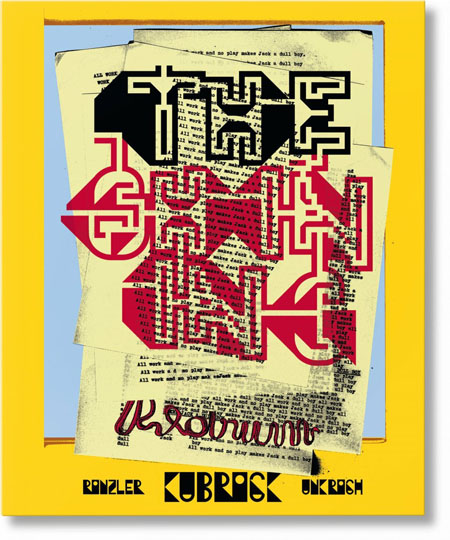
a huge fan of Stanley Kubrick’s 1980 film version of Stephen King’s 1977 novel The
Shining, which I saw at the age of fifteen and was completely terrified by,
it is a daunting task indeed to watch any other (excuse the pun) incarnation of
this fantastic story as seen through the eyes of another filmmaker without
being drawn back to Mr. Kubrick’s much-maligned interpretation that was
initially criticized but subsequently revered by some as the greatest horror
film ever made. The Shining is a film that has affected me profoundly in
ways that only a handful of other films ever have. I felt a compelling
obsession with it that was nearly impossible to verbalize. It was my second
Jack Nicholson film, and it made me a lifelong fan of his; it introduced me to
pre-existing music and its use in a contemporary film; and perhaps, most
significantly, it was my introduction into the world of Mr. King’s writings.
Having read the novel a mere two months after seeing the film for the first
time, I was completely surprised to see how much Mr. Kubrick altered the source
material. Much has been written about his decision to jettison nearly all but
the bare bones plot of a former alcoholic schoolteacher-turned-writer taking on
the position of the caretaker of a Colorado hotel during the winter months with
his wife and young son. The film’s most vocal critic is perhaps the author
himself who, while acknowledging Mr. Kubrick’s genius as a film director, has
never held back his disdain for The Shining for which he wrote a
screenplay that was subsequently rejected by the director in favor of his own
collaboration with novelist Diane Johnson. Mr. King’s disappointment in the
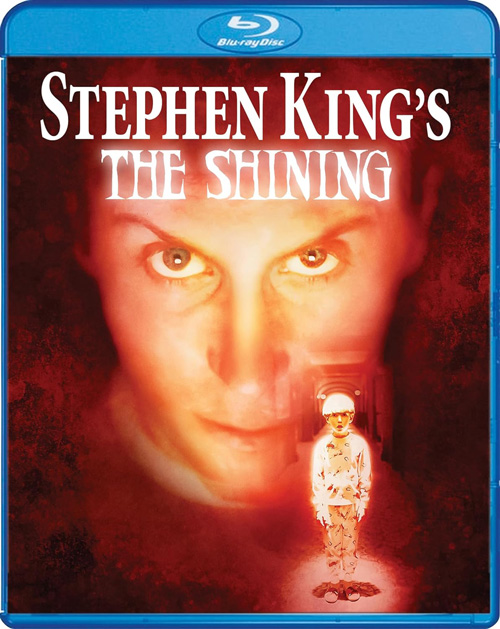
film made him vow to make his own version one day, and The Shining, as
presented in a three-part mini-series on ABC in April and May of 1997 and
directed by Mick Garris, is the result.
Jack
Torrance (Stephen Webber) is a recovering alcoholic who has been fired for beating
up a student following the latter cutting the former’s car tire after an
argument. To say that Jack is skating on thin ice would be an understatement,
even after many AA meetings. His marriage is on the rocks with his wife Wendy
(Rebecca De Mornay) following him breaking their son Danny’s (Courtland Mead)
arm after a drinking bout. All he really wants is quiet time to write his play.
Taking care of the remotely located Overlook Hotel during the brutal winter
months is his opportunity to do just that. Stuart Ullman (Elliott Gould), the stern
and surly hotel manager, has been apprised of Jack’s past and is not too
pleased to have to offer him the job as a favor. Dick Halloran (Melvin Van
Peebles), the Overlook’s head chef, gives Wendy and Danny a tour of the
kitchen, and discovers that he shares
the gift of the Shining with Danny, a force described as a “psychic ability to
see visions of the past, present, and future, as well as communicate
telepathically with others who possess similar abilities.”
Once
on their own following the hotel’s seasonal shutdown, the Torrances spend time
acclimating themselves to the quiet solitude of the hotel and their quarters. It
does not take long for them, however, to realize that strange things are going
on in their midst. Unfortunately for Jack, there are evil forces at work that
threaten to unravel the very fabric of his family unit as well as his sanity. Evidence
of past horrors that occurred within the hotel begin to emerge in the form of an
undead and decaying woman in room 217, an anthropomorphized topiary, a hornet’s
nest of not-quite-dead wasps, and a scrapbook of news articles providing
evidence of the hotel’s sordid history. Wendy’s attempts to seduce her husband
into a night of lovemaking while dressed seductively are spurned multiple times
by a distracted Jack who is thinking of incorporating elements of the Overlook
into his play while also dealing with the demons of his alcoholism. In the
midst of this is their seven-year-old son Danny who plays referee between them while
trying to make sense of all that conspires to destroy his family. It isn’t long
before the ghosts of the Overlook’s past begin to show up in their evening
gowns and Jack loses his grip on reality, attempting to destroy his family
while Danny telepathically summons Mr. Halloran who comes to their rescue.
At
four-and-a-half hours, this version of The Shining is highly faithful to
Mr. King’s story and, except for the genuinely frightening woman in Room 217,
there is little in the way of tension and scares. Steven Webber does an
admirable job of portraying a man modeled after Mr. King himself who is trying
to go sober and keep his temper in check. Rebecca De Mornay, who was just
twenty years-old when she was cast in late 1980 as an understudy in Francis
Ford Coppola’s extravagant One from the Heart (1982) and found overnight
fame as Lana in Paul Brickman’s highly successful Risky Business (1983)
opposite Tom Cruise, plays Wendy much closer to Mr. King’s original vision in
his novel. She is a strong-willed mother fiercely protective of her young
charge against the adversity unfurling within the family unit. The film is
ultimately undone by the not-ready-for-prime-time computer-generated imagery
effects (CGI) that come off as silly and unfinished.
It
is impossible to avoid comparisons between this and Mr. Kubrick’s film, the
scariest film I have ever seen and which has only become more revered,
iconoclastic, studied and analyzed in the years since its original release, so
I will tread lightly. There are many areas that make Mr. Kubrick’s version,
which was faked on backlots and massive sets at Elstree Studios in England, a
standout. In his film, the Overlook, as represented by Oregon’s Timberline
Lodge, became a character of its own. The Torrance’s, as played by Jack
Nicholson, Shelly Duvall, and Danny Lloyd, felt as though they were really and
truly snowbound and had absolutely no recourse from the outside world. The same
cannot be said for the hotel in this version which, ironically, is the very
hotel that inspired the story: the Stanley Hotel in Estes Park, Colorado.
The
one area that neither film version touches upon that is a big fear of Danny’s
in the novel of the notion his parents will divorce, which is further
italicized to emphasize innate fear. The other words that do make their
way into both films are, of course, REDRUM and MURDER.
The
miniseries is now available on a double disc Blu-ray from Scream! Factory. Blu-ray
Disc One contains Parts One and Two, and Blu-ray Disc Two contains Part Three
and additional scenes that were cut from the film. The film begins with a
disclaimer: “To provide the most complete version of the film, a few scenes
have been upgraded from the best available, non-Interpositive source.” This
verbiage will go over the heads of the uninitiated, and as such it merely
states that the folks at Scream! Factory did their best to locate the best
available film elements for this high-resolution transfer. I must admit that
even to my trained eyes, I had difficulty differentiating between the best film
elements and whatever less-than-stellar footage was used in the transfer, which
is excellent. There is a highly enjoyable audio commentary by author Stephen
King, director Mick Garris, actor Steven Weber, actress Cynthia Garris, visual effects
supervisor Boyd Shermis, makeup supervisor Bill Curso, and cinematographer
Shelly Johnson that is worth the price of the movie alone. They give great
insight into how the film came to be, especially author King who discusses
staying at the Stanley Hotel in October 1974 with his wife. He explains that,
had the concierge not asked the Kings if they could pay cash to stay overnight,
the book would never have come to be. Talk about a fortuitous exchange. He also
talks about his own experiences and struggles with alcoholism and his relation
to Jack Torrance.
Director
Garris discusses how his version is not intended as a remake of Stanley
Kubrick’s film (which would have been a fool’s errand) but instead a filmed
representation of author Mr. King’s novel, and discusses the challenges of
making a film of a beloved book and working with a child actor, made easier
thanks to Dawn Jeffory-Nelson, an acting teacher. She appears as an unwitting
victim in David Schmoeller’s ultra-creepy Tourist Trap (1979), and worked
extensively with young actor Mead. Steven Weber provides his insights into
working with Ms. De Mornay and how the most difficult scene they did consisted
of nine pages of dialog and had to be in the can in one day.
The
film was originally released on DVD in 2003 and the commentary and additional
eleven scenes that run a total of sixteen-minutes appear to have been ported
over from that release. The image quality of this new double-disc Blu-ray,
however, easily bests that DVD so if you are a fan of this film this is a
worthy upgrade.
Woody Allen’s Chekhovian-titled Hannah and Her Sisters
(1986) is reportedly only twenty percent of what he actually wrote for the film
on his Olympia SM-3 typewriter, which he has owned for decades and written all
of his films on. Given how extraordinary this outing is, one can only wonder what
the remaining projected film would have looked like. Conceived of as his answer
to Ingmar Bergman’s Fanny and Alexander (1982) which ran three hours
theatrically and nearly five-and-a-half hours on Swedish television as a
mini-series, Hannah is considered by many to be Mr. Allen’s finest hour,
although I am in the minority as I view Another Woman (1988) as his best
film, with Hannah coming in at a very close second.
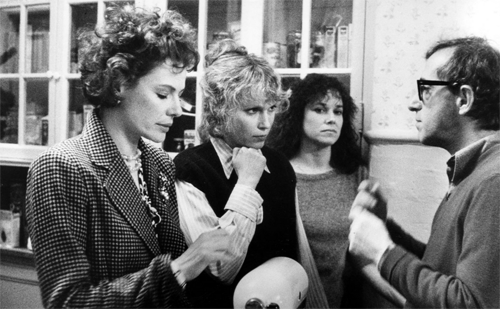
Hannah is a sumptuous film, the first Woody Allen outing to be
photographed by the late great cinematographer Carlo
Di Palma who would go on to work on eleven more films with Mr. Allen. He
captures the visual splendor of New York and all its beauty and ugliness over a
two-year period between Thanksgiving holidays. It is also a family affair. Hannah
is a housewife/actress and is played wonderfully by Mia Farrow. Her parents are
her real-life mother, Maureen O’Sullivan, and actor Lloyd Nolan, who used to be
actors as well. Hannah is married to businessman Elliot (Michael Caine) and
they have a good number of children who are all played by Ms. Farrow’s and Mr.
Allen’s real-life adopted offspring. Hannah’s sisters consist of the
emotionally adrift Lee (Barbara Hershey), who is in a relationship of sorts
with the hermetic painter Frederick (Max von Sydow) and the actress-wanna-be Holly
(Dianne Weist) who always appears to be on the verge of a breakdown between
bouts of ingesting nicotine and alcohol following auditions. As with previous
Allen outings, especially his 1979 film Manhattan, Hannah revolves
around myriad romantic entanglements, but it is not all fun and games. Elliot
is intensely attracted to Lee who is a lost soul and is pulled to him thanks to
Frederick’s older age and insouciance. Holly and her actress friend April
(Carrie Fisher), with whom she runs a catering company to make ends meet, battle
it out for the affections of David (Sam Waterston), an erudite architect who
uses opera and fine wine as his tools of choice to woo them both.
As if this were not enough, Mickey (Woody Allen) is a television
producer/hypochondriac and is Hannah’s ex. He has a near-death experience when
he becomes convinced that he has a brain tumor and ponders the meaning of life,
questioning his parents and his co-worker played by Julie Kavner while also
looking to religion for answers, but stopping short after speaking with a Hare
Krishna, confirming the absurdity of shaving his head, wearing long robes, and
dancing around at airports. Though most of the action is that of a serious
theme (Crimes and Misdemeanors would take this to even further horrific
heights in 1989), the film also balances it with outright hilarity. The ending
is perhaps one of the most hopeful and positive in all the Woody Allen
filmography.
Hannah boasts two celebrated cinematic moments. The first occurs in a
restaurant among the sisters as Lee tries desperately to hide her affair from
Hannah who simultaneously attempts to talk Holly off the ledge when she announces
her decision to take off a year to try and find herself. The camera circles the
triumvirate in a 360-degree maneuver that illustrates Lee’s increasing
discomfort with the situation at hand as the tension mounts.
The second comes near the film’s end when Mickey notices Holly
perusing titles in Tower Records and engages in a humorous and heartfelt exchange
with her. The scene is done in one take and is a highlight.
Among Woody Allen fans the question has usually been which do they
prefer: Annie Hall (1977) or Manhattan (1979). They can add Hannah
to the mix. This was Ms. Farrow’s fifth outing with Mr. Allen and she does a
wonderful balancing act of being the confused wife of an adulterer and the
sister of a neurotic.
After being lensed in the fall of 1984, Hannah opened
nationwide on Friday, February 7, 1986 to near universal acclaim, leaving Mr.
Allen wondering how had he failed, the idea being that if you make something
that just about everyone loves, you must be making something that fails to be interesting
or challenging!
Hannah won Oscars for Best Original Screenplay for Woody Allen, Best
Supporting Actor for Michael Caine (who will never live down his unavailability
to accept the Oscar in person as he was away filming Jaws IV), and Best
Supporting Actress for Dianne Weist. It is one of his best-scored films,
boasting a soundtrack of both upbeat and melancholic tunes.
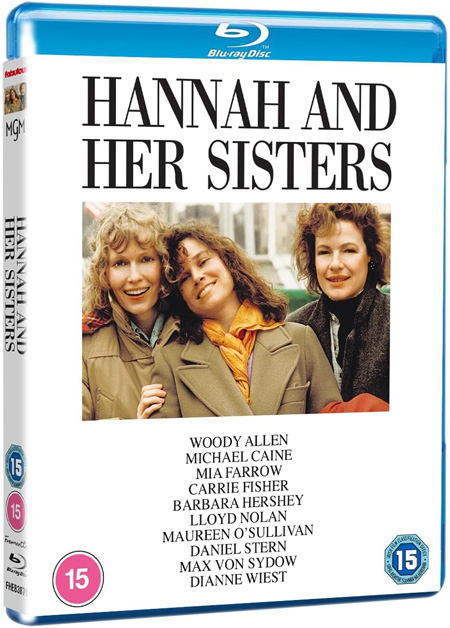
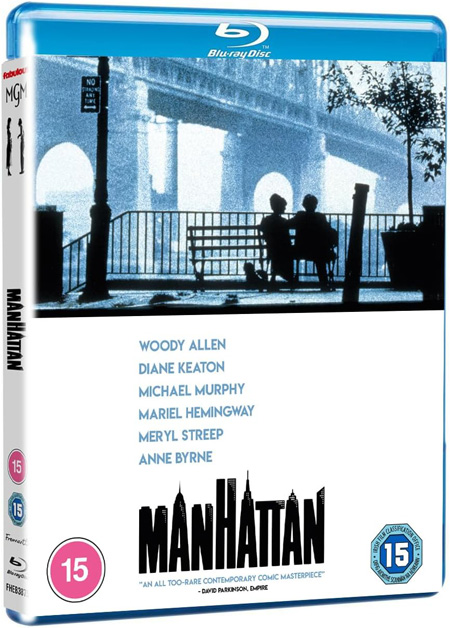
The film is available in a Region B Blu-ray from Fabulous Films, the
fine company that released Manhattan. The
source material is terrific and the film’s warmth shines through.
Click here to purchase this from Amazon’s UK site.
I
have never understood religious cults, and I still don’t. How someone can
permit themselves to be brainwashed into following a self-appointed “religious
leader” and hang on their every word represents, to me, a soul searching for acceptance
or love that they believe has been denied them. My initiation into the existence
of cults was in the December 4, 1978 issues of both Time Magazine and Newsweek
Magazine. Their reports about the Jonestown murders in Guyana, which completely
shocked my sensibilities with images of dead adults and children lying face
down in filth, were the stuff of nightmares. This horrific event has spawned
books, documentaries, and jokes about “drinking the Kool Aid” when referencing one’s
blind commitment to a ridiculous situation. An article two months later in my
local newspaper about “witches,” pagan practices, bowls of blood and animal
ribcages in the woods less than ten miles from where I lived did little to assuage
my fears about them. David Koresh, the leader of the religious sect
referred to as the Branch Davidians, led his followers into the Mount Carmel
Center, a compound in Waco, Texas, which culminated in a standoff with law
enforcement in April 1993 with most of them dying in a storm of bullets and
fire. NXIVM, the organization founded by Keith Raniere five years later
masquerading as a self-help and personal development program group, came under
fire for being a cult following reports of sex trafficking of branded women.
Hollywood is no stranger to films about such
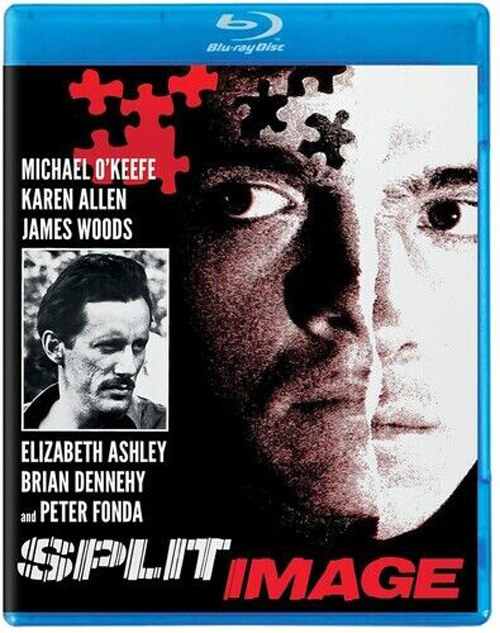
subjects. Most of them are cut from the cloth of genre and horror films. Split
Image (1982) is a bit of a different take on this terrifying subject as
seen through the eyes of suburbanites and therefore is far more relatable. Directed
by Ted Kotcheff between April and June in 1981 just before he unleashed John
Rambo on the world with his phenomenal First Blood, also released in
1982. Split Image was originally reported on under the title of Captured
when it was featured in the wonderful but short-lived bi-monthly movie magazine
published in 1982 called “Coming Attractions.” I saw the film on CED Videodisc nearly
40 years ago and was amazed at how little I recalled of it.
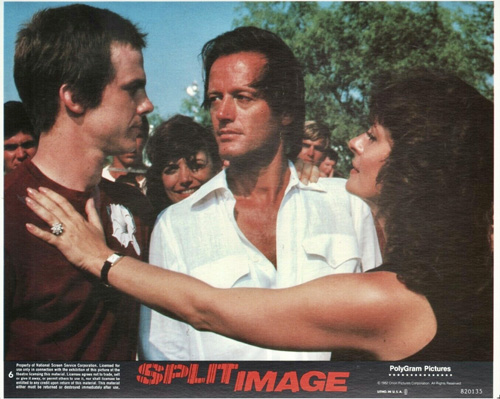
Danny Stetson (Michael O’Keefe of Lewis John
Carlino’s 1978 film The Great Santini) is a parallel bars athlete eyeing
college. He lives with his parents Kevin and Diane (Brian Dennehy and Elisabeth
Ashley) and younger brother Sean (Ronnie Scribner of Tobe Hooper’s 1979 TV-Movie
Salem’s Lot) in a sprawling house like the killer’s in Dario Argento’s Tenebrae
(1982), complete with large see-through windows and a built-in pool. By chance
he meets a beautiful young woman named Rebecca (Karen Allen of Steven
Spielberg’s Raiders of the Lost Ark in 1981) who engages in small talk about
big subjects. Accompanying her to a weekend outing, he is introduced to scores
of people at a retreat called Homeland who welcome him with open arms –
literally – and who all chant and engage in reciting positive affirmations while
discussing Jungian archetypes such as the duality of man. The happy and joyous
atmosphere completely rubs him the wrong way when he meets the group’s leader,
Neil Kirklander (played wonderfully by Peter Fonda), but he stays and sleeps on
the premises and one night makes a break for freedom. Bill Conti’s score here
is recognizable as the precursor to his wonderful score to Robert Mandell’s
thriller F/X (1986). Confronted by Kirklander, he eventually falls under
his spell and informs his mother that he will not be coming home. He undergoes
a ritual whereby he renounces his identity as Danny and is reborn as “Joshua,”
prompting a visit from his parents that results in a near donnybrook
precipitated by his temperamental father.
Split Image, which opened in New York on Friday, November 5,
1982, does a decent job of exploring the practice of capturing and “deprogramming”
an individual who has fallen under the spell of a cult and this is done by
Charles Pratt (played by the incomparable James Woods) who, somehow, makes his
living “deprogramming” people. After kidnapping “Joshua” with his parents’
permission, he forces him to undergo “treatment” to bring “Danny” back to life.
Many of these scenes look as though they came out of a horror film, and it
makes one wonder how much of this was imagined by the writers and how much is
based on factual circumstances such as this. The film looks at the ethics of “interventions”
and how it can alter a person’s free will and their ability to make their own
choices. Like Irwin Winkler’s At First Sight (1992), it waivers between
being compelling and occasionally feels a little “TV Movie of the Week”-ish by
today’s standards.
The film is now available from Kino Lorber on
standard Blu-ray. Some of the shots within the house appear to be a little
darker than they should be, but it is probably just how the film was shot. Mr.
Kotcheff does an expert job of framing the film for 2.35:1 anamorphic
photography, which is a huge step up from the pan-and-scan transfer of the
early 1980’s.
This is a sparse disc in the way of extras, however
the major one is the feature length audio commentary by film historian and filmmaker Daniel Kremer who
mentions his own movie, Raise Your Kids on Seltzer (2015), which is
about retired “deprogrammers”. When I was in middle school, Ralph L. Thomas’s
1981 film Ticket to Heaven appeared in my Weekly Reader issue and
I had a much different idea of what that film was about. It turns out that
deprogramming is the theme, and Mr. Kremer also mentions Blinded by the
Light, which was released in 1980, and starred both Kristy and Jimmy
McNichol, directed by cinematographer John A. Alonzo. This is a very
entertaining and informative commentary which also touches on Mr. Kotcheff’s
other films and placing him into the auteur category.
The
Blu-ray also comes with the following trailers: Split Image, Gorky
Park, 52 Pick-Up, The Bedroom Window, The Wanderers,
and The Hard Way.
After the dramatic, Ingmar Bergman-esque directorial turn he took
with Interiors (1978) which came unexpectedly on the heels of
his masterfully hilarious Oscar-winning film Annie Hall (1977),
Woody Allen turned back to contemporary New York for a daring film that was
shot in black-and-white and scored with the music of George
Gershwin. Proclaimed as the only truly great American film of the 1970s by
film critic Andrew Sarris, Manhattan is a joy to behold from
start to finish and is quite simply one of the most romantic-looking films of
all-time (though its subject matter in the era of the MeToo movement will
indubitably raise more than a few eyebrows with the allegations of sexual
molestation launched against Mr. Allen). Gordon Willis’s beautiful
photography married with the sumptuous Gershwin music makes me wish that
filmmakers would make black-and-white films today. There are some who do, admittedly,
but they appear to only do it within avant-garde and independent circles.
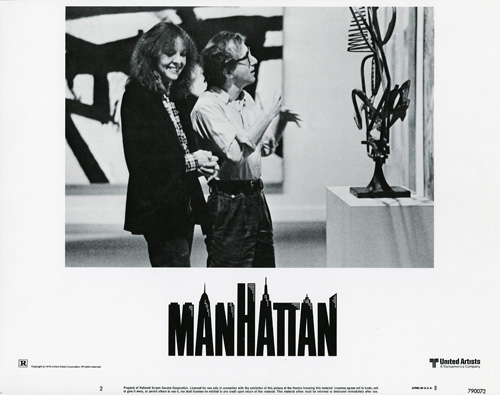
Manhattan, released on Wednesday, April 25, 1979, stars Mr.
Allen as Isaac Davis, a television writer who is unfulfilled with his life as a
comedy writer. His second ex-wife Jill (Meryl Streep) has left him for
another woman and is writing a book about their marriage. Isaac is 42 and
is dating Tracy (Mariel Hemingway) who is 25 years younger than he is and is
still in high school. He feels very guilty about this, but genuinely cares
for her (this plot point was reportedly inspired by Mr. Allen’s affair with
actress Stacy Nelkin on the set of Annie Hall which was
shooting in 1976, though her part was eventually cut from that film). His
friend Yale (Michael Murphy) is writing a book about Eugene O’Neill and is
married to Emily (Anne Byrne) but has started an affair with high-strung and
neurotic Mary Wilkie (Diane Keaton) whom Isaac initially cannot tolerate but
increasingly grows fond of. Throughout the film we are confronted by these
characters who cannot seem to put their finger on what they want and stick with
it. They are not inherently bad people. They just keep making questionable
decisions. By the end of the film, the only person who seems to have their
head on straight is Tracy and the film ends, like Mr. Allen’s Hannah
and Her Sisters (1986), on a very positive and upbeat note.
The real star of the film is Manhattan itself, with its pulsating
and bustling people and automobiles. Rarely has the city looked so
luminous and beautiful onscreen (if ever). Gordon Willis, the revered
cinematographer of The Godfather films and a good number of Mr.
Allen’s early works, captures Gotham in all its beauty even during an era
when the city was beset by social decay. For the first time in his career,
Mr. Allen forgoes the relative constraints of the 1.85:1 flat ratio to the far
more accommodating 2.35:1 anamorphic Panavision vista and the results makes one
ache for further use of this format.
Manhattan was penned by Mr. Allen and Marshall
Brickman, who also co-wrote Annie Hall. The dialogue in Mr.
Allen’s films has always been a strong point, but here it really shines. His
use of long, uninterrupted takes that first surfaced in Annie Hall
shine here Rarely have onscreen walks and chats been so fascinating.
Manhattan was also one of the first movies to appear
on home video in the widescreen format, which retained much (but not all) of
the film’s original image. I have owned Manhattan on
letterboxed VHS, letterboxed laserdisc with a gatefold, letterboxed DVD, and I
must say that this Region B anamorphically-enhanced Blu-ray courtesy of Fabulous Films is beautiful.
It would be wonderful if Mr. Allen would be open to providing
commentary tracks on his older films, specifically this one which,
unbelievably, he reportedly was so displeased with that he imposed on United
Artists to shelve it and offered to do another movie for free.
Thankfully, they did not take him up on it.
Click here to purchase this from Amazon’s UK site.
Would
you go see a horror film billed as “Makes Night of the Living Dead Look
Like a Kids’ (sic) Pajama Party! Scream so they can find you!!!” Somebody did.
Released in New York City on Wednesday, March 7,1973 as the second feature on a
double bill with Mario Bava’s R-rated 1971 film Twitch of the Death Nerve
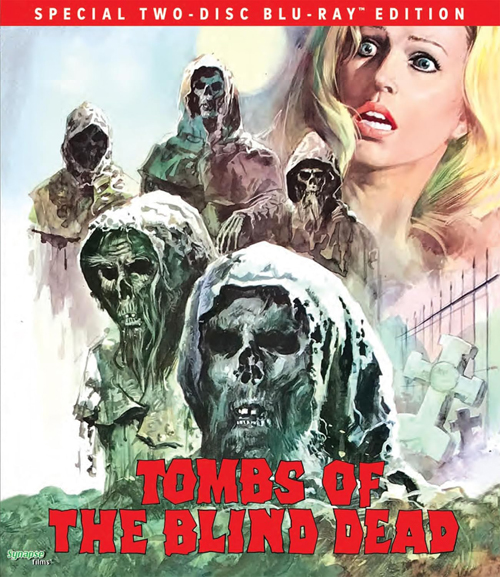
(the U.S. title of A Bay of Blood), Amando de Ossorio’s The Blind
Dead actually was given a theatrical release in a watered down, PG-rated
version minus blood, gore and nudity. It is also a tighter cut of the original
(known as Tombs of the Blind Dead) as it also dispenses with some
prolonged meandering that gets old real fast. Does the truncated Stateside
version triumph over the longer original Spanish cut of the film? That depends
on the viewer. As a purist who prefers a director’s original vision, I applaud
the efforts of the uncut version.
Lensed
in 1971 in Spain and Portugal at some truly creeping locales, Tombs of the
Blind Dead, clearly influenced by George A. Romero’s aforementioned highly
successful Night of the Living Dead (1968), is one of the better Spanish
horror films to come out of the 1970s, so much so that it spawned no less than
three follow-ups all written and directed by the original’s writer/director: Return
of the Blind Dead (1973), The Ghost Galleon (1974), and Night of
the Seagulls (1975). The madness begins when Virginia White (María Elena
Arpón) encounters her old college lover Betty Turner (Lone Fleming) at a public
pool. Their congenial attitude quickly becomes strained when Virginia’s friend
Roger Whelan (César Burner) shows up and immediately takes a more-than-platonic
liking to Virginia, inviting her on a train ride that he is taking with Betty.
Female resentment ensues and Virginia takes it upon herself to jump off the
train midway, baggage in hand, and goes off into the ruins of a town named
Berzano that the train deliberately bypasses due to an unsavory past. Making
creepy and effective use of the Monasterio de Santa Maria la Real de
Valdeiglesias, Pelayos de la Presa, Madrid, Spain, the director follows
Virginia through the decrepit structures and, unbelievably, camps out solo
overnight! Her presence awakens the buried corpses of the Knights Templar from
their crypts who attack and kill her, her body found by the train conductor the
next morning when on the return trip. Betty and Roger look for Virginia in
Berzano, and out of nowhere, two police detectives emerge to question them about
their relationship to Virginia. It’s a peculiar entrance into the scene, as
though they were standing “stage left” and issued in front of the camera by the
offscreen director. Betty and Roger make their way to the requisite
know-it-all, The One who comes in at the eleventh hour to explain the goings-on
to them, in this case Professor Candal (José Thelman), who explains to them
(and the audience) who manipulates them into finding his son, and the this
leads to a showdown with the Knights and sets up the film for a continuation.
Spanish horror films of this era were on a par with their Italian giallo
counterparts as both genres flourished with exemplary outings from both
countries. Narciso Ibáñez Serrador’s La Residencia (1969), aka The
Finishing School and The House That Screamed, while not a zombie
film, is beautifully lensed and ends with a creepy and original denouement. Francisco
Lara Polop’s La Mansión de La Niebla (1972), known here as Murder
Mansion, boasts beautiful artwork that belies an otherwise pedestrian
thriller. Jorge Grau’s The Living
Dead at Manchester Morgue (1974), known also as Let Sleeping Corpses Lie
and here in the States as Don’t Open the Window, is, on the other hand,
a key zombie film from this era and is generally regarded quite correctly as
one of the best, and has received stunning Blu-ray treatment from Synapse
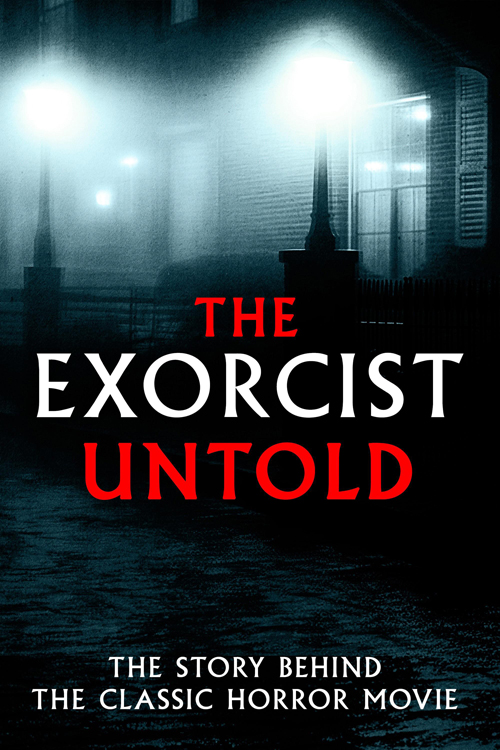
William Friedkin’s The French Connection(1971) swept the 1972 Academy Awards ceremony and went on to become a smash hit with both critics and audiences alike. During promotion of the film months earlier, Mr. Friedkin received a copy of The Exorcist from William Peter Blatty, a writer whom he had met five years earlier and whose script of a project he was offered he brushed off. Fascinated by this new novel, The Exorcist, Mr. Friedkin agreed to direct the film.
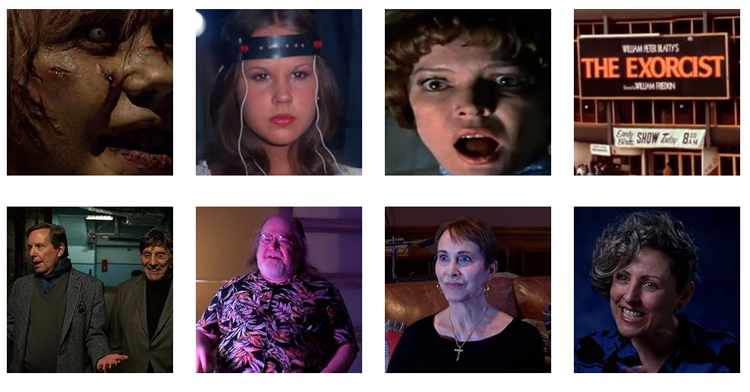
Revered the world over as the scariest movie ever made, The Exorcist is staunchly referred by both its writer and director as a detective story about the nature and mystery of faith. Neither gentleman was interested in making a horror film, but given the film’s marketing campaign in 1973, few could have believed that it was anything but a horror film. My late grandmother had recalled more times than I care to admit that when she was seventeen, she was terrified to go and see James Whale’s Frankenstein (1931) because the film’s poster provided this warning as such: “If you have a weak heart and cannot stand intense excitement or even shock...We advise you NOT see the production...If, on the contrary, you like an unusual thrill, you will find it in "Frankenstein". A bit of reverse psychology never hurt anyone…certainly not the box office anyway! The new documentary, The Exorcist Untold, which does not appear to be licensed by Warner Brothers, is directed by Robin Bextor, runs 70-minutes and provides us with a glimpse of the hysteria that gripped the world as unsuspecting audiences stood for hours in less-than-comfortable weather to see the film adaptation of the best-selling novel. The book initially went unknown upon its 1971 publication as there was little publicity surrounding it. There is a case to be made that actor Robert Shaw’s drunkenness prior to his scheduled 1971 appearance on The Dick Cavett Show resulted in him being cancelled and replaced with author Blatty. This interview made such an impression on Mr. Cavett’s audience that The Exorcist became the number one best-selling novel the following week.
The documentary, which features anecdotes and comments from experts in diversified backgrounds, makes one thing plain: no one today who did not see The Exorcist during its initial December 1973 release can come close to comprehending what it was like to see it theatrically at that time. In the absence of social media and the constant interconnected nature of contemporary life, major newspapers of that era reported on audiences vomiting or passing out in the theatres. The film was a major shock to their systems and gave rise to debates, both publicly and privately, on God and the Devil. Experts weigh in and generally agree on the film’s power while collectively repudiating the much-maligned and fast-tracked John Boorman sequel four years hence. HoweverExorcist III: Legion (1990) receives praise from Mr. Blatty’s family. There is also a discussion about how Mr. Friedkin discovered Mike Oldfield’s Tubular Bells, the first album release on Sir Richard Branson’s Virgin Records label and used the opening of the album as a counterpoint to the action on the screen. Instantly recognizable now and referred to as “The Exorcist Theme,” this led to millions of copies of the album selling on the basis of its use in the film.
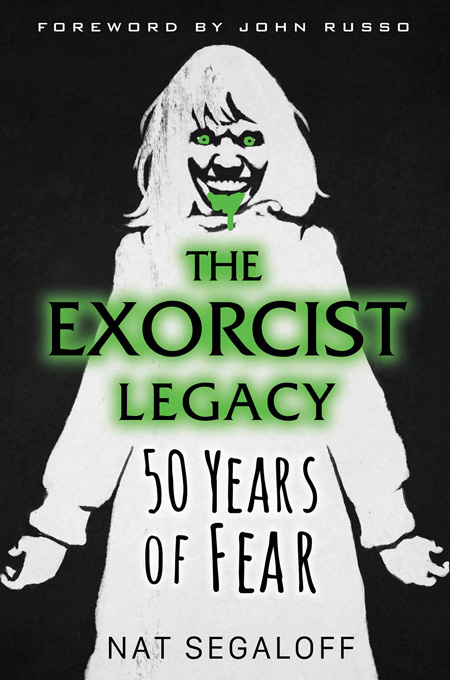
Mr. Friedkin’s biographer, the always eloquent and erudite Nat Segaloff, speaks at length about Mr. Friendkin and the film. He is the author of The Exorcist Legacy: 50 Years of Fear and is an excellent authority on the subject.He discusses Mr. Friedkin’s unorthodox methods of getting a natural reaction from an actor, which would probably not go over well today! Here’s hoping that an expanded version of his excellent Hurricane Billy: The Stormy Life and Films of William Friedkin (1990) gets an update and reissue.
One portion of the documentary that I found delightful and was news to me is a section discussing the iconic stair steps in the film. As a film fanatic, I enjoy seeking out the locations to favorite films of mine and seeing how they have changed in the years since. The French Connection, being my favorite film, was the first film’s locations that I sought out in July 1990. Many of these locales are now gone, but I was lucky enough to visit them back then. I have made my way to The Exorcist steps twice since 2008, and in October 2015 a ceremonial plaque was dedicated and unveiled at the base of the steps to commemorate the film’s location. Both the writer and director were on-hand at the unveiling. This event is included in the documentary.
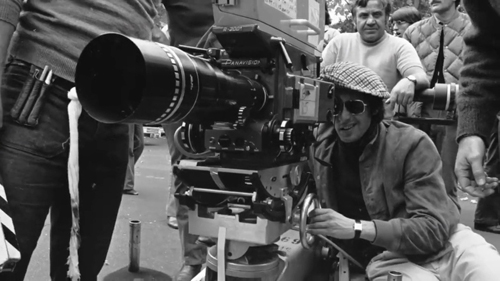
There is also a good deal of behind-the-scenes footage, discussions of what was left on the cutting room floor, mentioning the Manson killings coming on the heels of the end of the “Flower Children” era and the on-going Vietnam War, and a lot of footage of first-time audience reactions and their impressions.
The film refers to The Exorcist as “a compelling supernatural murder mystery with a moral theme.”
A must-see for fans of the film.
(Note: this review is derived from a screener link.)
Click HERE to view online or purchasethe DVD of The Exorcist Untold on Amazon.com. Click here to order from Amazon UK.
If Stanley Kubrick’s 2001: A Space Odyssey
(1968), Joseph Sargent’s Colossus: The Forbin Project (1970), Sir Ridley
Scott’s Blade Runner (1982), Simon Wincer’s D.A.R.Y.L. (1985),
and the television show Small Wonder (1985 – 1989) are all about
anything that we can be absolutely sure of, they are about prescience and the
coming of “Artificial Intelligence.” Following Stanford University professor John
McCarthy’s 1955 Dartmouth workshop and his introduction of the term “Artificial
Intelligence,” or “AI” as it is generally referred to now, AI means many things
to many different people today. When these outings reached audiences, they were
merely regarded as science fiction, though today there is an argument to be
made that they should be reappraised as science fact. AI was not a term used
when those films were released and has only come into universal parlance with
the release of OpenAI’s ChatGPT in November 2022. One wonders how Alan Turing,
Marvin Minsky, Allen Newell, and Herbert A. Simon, the four men all regarded as
the “founding fathers” of Artificial Intelligence in the early 1950s, would
have regarded these stories and if they were in line with their notions of AI.
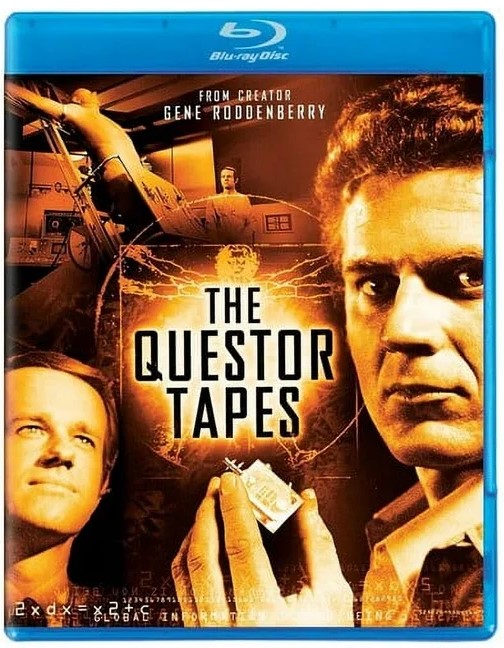
Richard Colla’s The Questor Tapes is a
made-for-TV movie that was largely ignored by audiences despite its interesting
premise of a scientist named Emil Vaslovik (Lew Ayres) and his desire to build
a superhuman android named Questor, expertly portrayed by veteran actor Robert
Foxworth. Filmed in 1973 and intended to be the pilot for a projected NBC
series, Questor was the brainchild of Gene Roddenberry, a television
screenwriter and producer who is best known for both being confused with author
Ray Bradbury as well as being the creator of the initially unsuccessful but
later wildly popular sci-fi television series Star Trek. Broadcast on
Wednesday, January 23, 1974, Questor begins with a team of scientific
and electronic experts who, following the disappearance of Vaslovik, attempt to
bring his vision to fruition despite being unable to decode the programming
tape while also accidentally erasing most of the tape’s contents – a nod to the
Watergate scandal of the time?
Geoffrey Darrow (John Vernon) is the new head
of the project, and he butts heads with Vaslovik’s assistant, Jerry Robinson
(Mike Farrell), who interrupts the data transfer and insists that the
programming should be done with the partially erased tapes. When the android
fails to respond, the “experts” leave the facility, dejected. While alone,
Questor, bald and naked, whirrs to life and, in a positively ridiculous
sequence, begins to transform itself from an “it” to a “him” (wait until you
see how it adds hair to its chrome dome), managing to dress itself in clothing
that perfectly fits. Questor sets off on a journey to search for Vaslovik and
hopes to understand his purpose while attempting to fill in the blank spots due
to the erased portions of his memory tapes. To do this, he enlists the help of a
reluctant Robinson. Questor begins by talking the way that a robot would be
perceived to speak, but through his travels with Robinson he begins to sound
more and more human. There is a humorous sequence after the duo make their way
to London and need to obtain more money. Questor solves this issue by using programmed
intelligence to gain the upper hand in a casino sequence that would be later
used by Tom Cruise and Dustin Hoffman in Barry Levinson’s Rain Man
(1988) and by Jessica Alba in the “Cash Rules Everything Around Me” episode
from October 2000 of the James Cameron-created series Dark Angel.
They make their way to a wealthy Lady Helena
Trimble (Dana Wynter) who worked with Vaslovik and he gleans more info from her
as to his creator’s whereabouts, though he is shot in a park by a soldier and is
summarily returned to the laboratory. Following his repair, Questor sets off to
Mount Ararat, allegedly the location of Noah’s Ark, and locates Vaslovik in a
cave thanks to some nifty matte work by the late great Oscar-winning artist
Albert Whitlock. Vaslovik, as it turns out, is also an android – shades of Blade
Runner? Who can forget the revelatory stuttering of Felix Flankin at the
end of Jules Bass’s 1967 outing Mad Monster Party? I will leave it up to
you, the reader, to have a look at the film to explain the rather involved denouement
but suffice it to say Mr. Roddenberry had a knack for creating projects that
initially went nowhere, then revisiting them and turning them into hits. While Questor
was initially conceived of as a series, with the movie intended as the series
pilot, creative differences between Mr. Roddenberry and NBC forced it to be nixed
and promoted as a one-off movie-of-the-week (known in the industry as an MOW)
which, I feel, explains the film’s abrupt ending. Many of the ideas touched
upon, including the notion of automatons and androids, made their way into the
highly successful Star Trek: The Next Generation (1987 – 1994).
Questor explores themes common to other films
of a similar ilk: What gives us our identity and what constitutes humanity? How
do we, as humans, quench our thirst for knowledge and curiosity? Both Mr. Foxworth
and Mr. Farrell possess good chemistry and it would have been nice to see where
the series went.
The laboratory portions of the film were shot
at the California Institute of Technology in Pasadena. While the technology of
1973 was considered to be “state-of-the-art” and then destined to become
“soon-to-be-obsolete” as all technology inevitably does (at least according to
Moore’s Law), it’s a kick to see how the experts reach their conclusions as to
how Questor will react to the environment. The special effects are, as you can
well imagine, dated, however the ideas are just as thought-provoking and
visionary and never more topical than when viewed now in an era when robots are
poised to man 18-wheelers, serve customers at fast food joints, and perform
minimum wage tasks deemed repetitive and boring.
Kino Lorber has released the film on Blu-ray,
and it looks great. There is an informative and spirited commentary track by
film historian and screenwriter Gary Gerani. Extraordinarily
knowledgeable and enjoyable to listen to, I will seek out other films that he
speaks on. His commentary encompasses brief but thorough bios of the leading
performers and makes comments on much of the onscreen action, how the sequences
were accomplished, while also delving into matters of the plot and how they
relate to the here-and-now. A first-rate commentary that easily lends itself to
repeated playback.
Rounding out the extras are trailers for the
film, as well as for Fear No Evil (1969), Scream, Pretty Peggy
(1973), Buck Rogers in the 25th Century (1979), The Groundstar
Conspiracy (1972), The Black Marble (1980), and Fuzz (1972).
I
was introduced into the world of Billy Idol’s music in late 1983 when my
younger sister discovered his music. His signature hits “White Wedding (Part
1)” and “Dancing with Myself” from his self-titled 1982 album emanated from her
room daily and I found his energy to be infectious. At that time, his follow-up
album, the widely popular Rebel Yell, was just released (it’s now forty
years-old!) and it really put him on the map, setting him apart from the group
he burst on to the scene with in 1976: the short-lived Chelsea, and then later,
Generation X. With guitarist Steve Stevens, who has been with him ever since,
and a group of musicians, Billy Idol, whose surname was inspired by one of his
teachers labeling him as an “idle” student, began his Rebel Yell tour
and was Yours Truly’s first foray into the world of rock concerts. Since then,
he has toured the globe and garnered legions of fans the world over.
A
self-professed history buff and environmentalist, Billy teamed with then-New
York Mayor Bill de Blasio in February 2020 just weeks before the COVID-19
shutdown to promote a public awareness Anti-Idling campaign in New York City to
remind drivers that motor vehicles are forbidden to idle for no more than three
minutes, and no more than one minute in a school zone. So, he’s very
pro-environment.
In
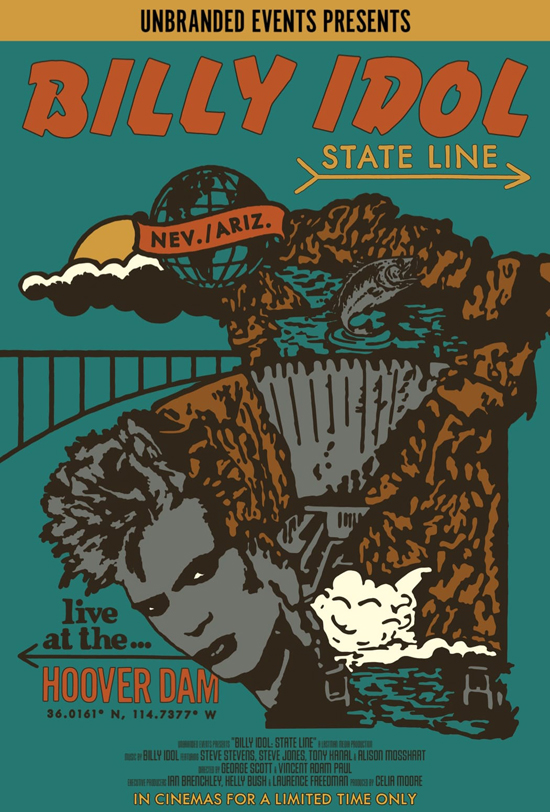
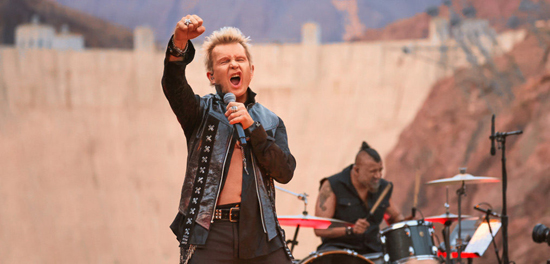
April of this year, Billy did something that no artist has ever done before: he
performed a concert at the Hoover Dam in Boulder City, NV, which was filmed for
the new concert film Billy Idol: State Line, playing in theaters this
week. The first 20 minutes of the film reveal that Billy would have been a
history professor had he not been in a band (I for one am glad that he never
got his teaching license) and gives a brief history of the construction of the
modern engineering marvel. Amazingly, this is Billy’s maiden voyage to Hoover
Dam and you can tell that he is stunned by it.
He
plays an acoustic set at the foot of the dam with Steve Stevens of “Eyes
Without a Face” and “Rebel Yell” before taking the stage or, in this case the
Hoover Dam helipad, to belt out “Rock the Cradle of Love,” “Dancing with
Myself,” “Flesh for Fantasy,” “Eyes Without a Face,” his trademark cover of
“Mony Mony,” “Blue Highway,” “Rebel Yell,” “Hot in the City,” and “White
Wedding (Part 1).”
Will
this venue become a mecca for future bands?
This
is a must-see on the big screen for Billy Idol fans.
See
the press release below for more information:
BILLY IDOL: STATE LINE MAKES U.S. THEATRICAL DEBUT NOVEMBER
15
FILM
DOCUMENTS THE FIRST CONCERT EVER PERFORMED AT HOOVER DAM
IDOL
CONTINUES WATER CONSERVATION ACTIVISM WITH PUBLIC SERVICE ANNOUNCEMENTS IN
CONJUNCTION WITH U.S. DEPARTMENT OF THE INTERIOR
Billy Idol: State Line, a Vertigo Live concert film documenting the rock legend’s
April show at the famed Hoover Dam - the first ever concert performed at
the location - is set to make its U.S. theatrical debut on November 15, 2023.
The movie highlights the history and significance of Hoover Dam and includes
performances from two unique sets of Billy Idol’s iconic hits: a full band
concert at sunset with special guests that electrified and illuminated the
surrounding Black Canyon and an acoustic duo set on the roof of the powerhouse
at the foot of Hoover Dam straddling the Colorado River, directly on the
Nevada/Arizona state line. Tickets and additional info on film screenings can
be found at billyidolstateline.com, with additional screenings to be
added shortly.
For
both sets, Idol is joined by his collaborator and lead guitarist of over forty
years, Steve Stevens. Performed in front of only 250 fans, the full band
set features special guests Alison Mosshart (The Kills, The Dead
Weather), Steve Jones (Sex Pistols, Generation Sex) and Tony Kanal
(No Doubt). See the film’s trailer here.
“Our
show at Hoover Dam was a monumental and surreal career highlight,” notes Idol.
“I’m excited to get State Line out into the world. With this film we set out to
highlight the continued importance of one of the most inspiring infrastructural
achievements of the 20th Century, while also bringing the power of rock n roll
to a stunning, magical location. I think we more than succeeded on both
accounts.”
Idol’s
first-person experience of the Colorado River Basin drought conditions while
shooting the film at Hoover Dam inspired his ongoing efforts to promote the
importance of water conservation, including appearing in a series of public
service announcements being released by the U.S. Department of the Interior.
See Idol’s most recent P.S.A. with Secretary of the Interior Deb Haalandhere.
Of
his activism relating to water conservation, Idol adds, “The drought conditions
prevalent in the American West are severe and impossible to ignore. It takes
all of us conserving water in whatever ways we can to preserve the future of
our natural resources for our grandkids and beyond. I’m proud to help amplify
this issue in whatever way I can.”
Billy
Idol: State Line is
produced by Lastman Media for Vertigo Live in collaboration with the Waldorf Astoria Las Vegas and is distributed theatrically
throughout North America by Unbranded Events and U.K./rest of world via
Kaleidoscope Entertainment.
Idol
will also perform in Las Vegas the same day as Super Bowl LVIII in
February; see below for a complete list of tour dates.
For
46 years, Billy Idol has been one of the definitive faces and voices of
rock’n’roll. Between 1977 and 1981 Idol released three albums with Generation X
as their camera-ready frontman. In 1982 he embarked on a
transatlantic/trans-genre solo career that integrated the bold and simple lines
of punk and rock’n’roll decadence. Touring consistently around the world for
the last ten years and showing no signs of slowing down, Idol released both The
Roadside EP in 2021 and The Cage EP in 2022 on Dark Horse Records,
earning praise from fans and critics alike. In January, Idol cemented his name
among Hollywood legends with the first Walk of Fame Star of 2023.
Idol
recently wrapped the first-ever Generation Sex tour in the U.K. and E.U. The
punk supergroup is comprised of Idol and Tony James from Generation X, and
Steve Jones and Paul Cook from Sex Pistols. November 10 marks the 40th
Anniversary of Idol’s seminal record Rebel Yell, with an expanded
edition of the album due in early 2024.
Paramount Home Video has released a set of five horror films in 4K UHD format. Here is a breakdown of the films included in the set.
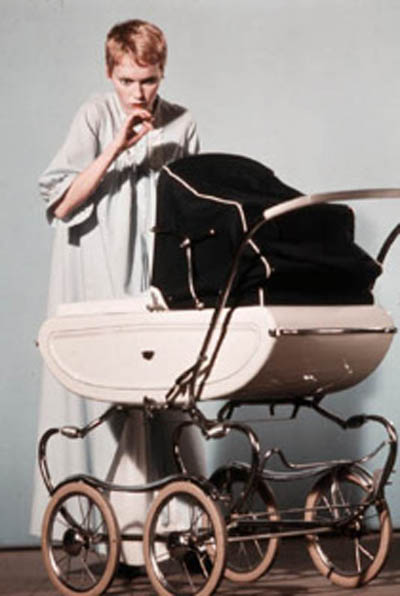
Rosemary’s Baby(1968)
I
was in the minority of those left unimpressed by Roman Polanski’s Rosemary’s
Baby (1968), based upon the 1967 novel of the same name by Ira Levin. I
never saw what the fuss was about and could not find it even remotely scary
when I originally saw it in the 1980s on VHS. I rewatched the film when the
Criterion Collection released it on the now-out-of-print Blu-ray in October
2012 (if you have that version, hold on to it) and I realized that I had an
incorrect reading of it. I believe that the terror that oozes from the screen is
directly attributed to Rosemary Woodhouse’s (Mia Farrow) new life in the
enormous Dakota Apartments (made famous by Mark David Chapman following his
murder of John Lennon in December 1980) which is surrounded by people who
initially make her feel safe and welcomed, but slowly begin to reveal their
true natures which are malevolent and evil. Her husband Guy (maverick
independent film director and actor John Cassavetes) is a struggling actor who understudies
for a Broadway play and is suddenly fast-tracked to the lead role by the
inexplicable blindness that befalls the play’s lead actor (portrayed by an
off-screen Tony Curtis over the phone) following a discussion with two nosy
neighbors (Sidney Blackmer and Ruth Gordon as Roman and Minnie Castavet,
respectively) who ingratiate themselves into their lives. Coincidence? Guy is often
short-tempered with his wife, but midway through the film he suddenly has a
burst of fatherhood when he suggests to her that they have a baby.
Overwhelmingly happy, Rosemary soon becomes suspicious of the people around her
during her pregnancy. They are revealed to be a coven of witches, and Rosemary
is carrying Satan’s child during a disturbing sequence of supernatural
impregnation that she believes was just a dream.
Rosemary’s
Baby is the ultimate gaslighting movie. It
is also a movie that, I would imagine, would work to great effect on the psyche
of female audience members for a variety of reasons, not the least of which is
due to knowing what the outcome of Rosemary’s pregnancy is, and knowing that no
one, not even the doctor (Charles Grodin) she has foolishly and naïvely
confiding in regarding her suspicions regarding the coven, can or is even willing
to help her. The film is set against a backdrop of complete normalcy, and when
that normalcy is slowly eroded by the Devil’s minions in sheep’s clothing, it’s
too much for us and Rosemary to bear. It’s also a film about betrayal, and it’s
shocking to see how Guy willingly confesses to her that he had no problem
selling her out to this life inorder to make an easy life for themselves,
something he sees as a bonus. Her reaction to him and to the (offscreen) face
of her baby is complete disbelief, and Ms. Farrow is more than capable of
carrying the film. Rosemary’s horrifically contorted face when she sees her
baby for the first time, Out of the Cradle Endlessly Rocking (sorry, Walt…), is
all that the audience needs to know that the evil has come full circle.
Rosemary’s
Baby turns 55 this year. Filmed in the
final four months of 1967 and released on Wednesday, June 12, 1968, it takes
place in 1965 and 1966. Ruth Gordon won a Best Supporting Actress Oscar for her
performance. It is widely considered to be one of the greatest horror films of
all time, and it was selected for preservation in the National Film Registry by
the Library of Congress in 2014. The film spawned a TV-movie follow-up in 1976
with Patty Duke.
(Photo: Cinema Retro Archive)
The
new package contains the film in 4K UHD on one disc, and the film on a standard
Blu-ray, the latter boasting the following extras:
Rosemary's
Baby – A Retrospective
– this piece, originally shot in 2000 for the DVD, runs just under 17 minutes
and includes comments from the late film producer Robert Evans, the late
production designer Richard Sylbert, and Roman Polanski.
Mia
and Roman – this piece runs
roughly 23 minutes and contains a lot of nice behind-the-scenes shots taken
during filming on location in New York City, with input from actress Mia Farrow
and director Roman Polanski.
Theatrical
Trailer
50th
Anniversary "Redband" Trailer
This
is a nice upgrade to 4K that will make you feel as though you’re watching it in
a cinema again, though the lack of a feature-length commentary by film
historians is disappointing given the film’s stature in the genre, making one
wonder if the director is just against this sort of thing. Steven Spielberg and
David Lynch do not offer commentaries on their works, sadly.
NOTE:
It has come to Paramount’s attention that there is an error on this pressing,
and they are going to correct it with a disc replacement program. Apparently
there is a line of dialog missing from the film! When you purchase this box
set, click on this link to request the replacement discs which
should become available in the next several months.
Pet Sematary(1989)
Stephen
King published two frightening and best-selling novels in 1983: Christine
and Pet Sematary. Attempting to sandwich these massive tales into films
that ran less than two hours is a near impossible task and neither film, the
former directed by John Carpenter and the latter by Mary Lambert, is completely
successful in this regard. Lensed between August and November 1988 and released
on Friday, April 21, 1989, Pet Sematary begins with a familiar nod to
Dan Curtis’s creepy Burnt Offerings (1976) as Dr. Louis Creed and his
wife Rachel (Dale Midkiff and Denise Crosby) leave the Windy City and arrive at
their new Ludlow, Main home with their young daughter Ellie (Blasé Berdahl) and
even younger son Gage (Miko Hughes). The house is located right in front of a
major road that trucks whiz by at a high rate of speed, setting up the roadway
as the imminent threat. Jud Crandall (Fred Gwynne), the family neighbor, takes
them to the Pet Sematary and explains how children bury their pets there. This
proves convenient when the family, sans Louis, visit Rachel’s parents
for Thanksgiving, and Ellie’s cat Winston Churchill (“Church” for short) is
killed by a truck. Jud takes Louis to a location beyond the Pet Sematary called
the Micmac Burying Ground dating back to ancient Native American days. Buried
pets have come back to life, though their personalities are different, and this
is no exception with Church. The idea is to save Ellie the grief of losing him.
Following
Ellie’s displeasure of the now-reanimated Church’s smell, Gage finds himself in
the path of a truck and, following his death, Louis digs up his corpse
and heads for the Micmac Burying Ground despite verbal warnings from Jud. Unfortunately,
Gage comes back as a meanie, killing those around him until a final showdown
with his father.
Despite
being written by author King, the screenplay never really manages to get above
the level of a gross-out horror film. The subject of grief is best left to
serious dramas (think Ingmar Bergman) as director Mary Lambert can only give us
what’s on the written page as a truncation of an oversized novel, is fairly
schematic at best. Whereas the novel is more of a deep-rooted mediation on the
nature of the overwhelming emotion of grief over the death of a child, the film
focuses more on the horrific aspects of the deaths at hand. It does seem to be
enough, however, to satisfy genre fans.
Bonus
Content (on both 4K UHD Blu-ray and Standard Blu-ray Disc):
Feature-length
commentary by director Mary Lambert
Pet
Sematary: Fear and Remembrance –
this piece is in high definition and runs about 7 minutes. Select members of
the film’s cast and crew look back on the film and its reception.
Pet
Sematary: Revisitation –
this piece is in high definition and runs about 10 minutes. The director discusses
the film’s production, how she came to direct the movie, and restoring the
film.
Still
Galleries – this is in high
definition and consists of a large selection of photos separated into four
sections.
Storyboards
Introduction by Mary Lambert
– this intro runs 1 minute in length. She explains how they derived the new
transfer from the original camera negative and how the storyboards came to be.
Storyboards – this feature is extensive and
recalls the image galleries of the laserdisc days. By using the left and right
buttons on the remote control, you can navigate what is essentially a visual
representation of the film. Very cool!
Behind
the Scenes – this is a
stills gallery that, like the storyboards, can be navigated in a similar
fashion, showing images on the set of shooting during the summer of 1988.
Marketing – nice section of stills containing
the marketing of the film for both theatrical and home video exhibition.
The
following extras are only on the standard Blu-ray, though I will never
understand why they do not replicate all extras on both discs as there is more
than enough room to do so:
Stephen
King Territory – this
is a nice piece from 2006 that is shot in standard definition for the then-DVD
release and runs about 13 minutes. It discusses the autobiographical genesis
for the story, which really happened to Mr. King’s family and daughter.
The
Characters – also from 2006
and shot in standard definition, this runs 13 minutes and looks at the
motivations behind the characters and the cats used on the set. They had an
ingenious method of making the cat’s eyes glow maniacally with an attachment to
the Panavision cameras.
Filming the Horror – running 10 minutes, Mary Lambert
discusses how the script came to her and while she read Stephen King’s novels, she
did not consider herself to be a horror film director. Miko Hughes, who was
two-and-a-half-years old when he played Gage, appears to have had a fun time on
the set!
Smile(2022)
David
Sandberg’s 2013 short film Lights Out is a brilliantly frightening,
just-under-three-minute film about a woman seeing a strange creature in her
kitchen and bedroom. It is widely available on Youtube and is one of the
scariest movies I have seen in my 42 years of watching horror films and
thrillers. It provided the basis for an unnecessary, feature-length film of the
same name three years later, also directed by the same person, who has gone on
to direct Annabelle: Creation (2017), as well as other projects. Likewise,
Parker Finn is a director who made a short film called Laura Hasn’t Slept
(2020), starring Caitlin Stasey and Lew Temple as her somnologist. It’s the
second short he made after his impressive and creepy The Hidebehind
(2018), a nearly ten-minute now-you-see-me, now-you-don’t bit of computer
trickery that will make you think twice about trekking solo in a forest. In Laura
Hasn’t Slept, which is just under twelve minutes, Laura tells her therapist
that she has a recurring nightmare wherein a frightening man is constantly
smiling at her. While I appreciated the effort of this film and experienced no difficulty
in determining the ending, the prospect of sitting through the theatrical
version entitled Smile simply did not sit well with me. My disappointment
with Lights Out nearly made me pass on Smile, and I am glad that
I reconsidered.
Unlike
most of the horror films marketed today, Smile is every bit as
terrifying as its marketing campaign has professed. Like The Blair Witch
Project (1999), Smile feels like the sort of film that would
emotionally bifurcate the audience into those who love it and those who hate
it. In terms of genre tropes, the film’s most obvious cinematic antecedent is
David Robert Mitchell’s superb It Follows (2014), and a nod to the
film’s title can be further traced back to the malevolent chauffeur, played
with icy stillness by the late Anthony James in Dan Curtis’s Burnt Offerings
(1976). While it is true that familiarity can often breed contempt, this does
not make Smile any less frightening. There is credence to the notion
that although the film might offer up a less-than-compassionate view of mental
illness and handle the subject flippantly, the movie should ultimately be
judged for what it sets out to do: scare you. It may not be completely
original, but it is no less frightening.
Sosie
Bacon, the daughter of Kevin Bacon and Kyra Sedgwick, gives a bravura
performance as recently engaged Rose Cotter, a psychiatrist who meets a new
patient, Laura Weaver (Caitlin Stasey, the actress from the short film), who fails
to convince Rose that she is being chased by a demon that possesses people by
smiling at them. Rose’s training misinterprets this as an episode of some sort
of psychosis until Laura screams and reacts violently to something in the
examination room invisible to Rose. Laura’s terror suddenly turns inexplicably serene
wherein she effortlessly cuts her own throat with a broken plant’s pot while
smiling maniacally at Rose, who reacts with complete terror. Unbeknownst to
Rose, a terrible curse that plagued Laura has now been transferred to her. It
takes Rose a while to make this realization. In the interim, she blames what
she experiences on overworking, reluctantly taking a week off at the urging of
her manager. Her fiancée (Jesse T. Usher) wants to help her but feels
powerless. Rose begins to have hallucinations, and as the audience we see what
she sees. Her mother’s painful death becomes a force that she needs to reckon with
and is a major reason why she works as hard as she does. The hallucinations
become more and more unnerving. With the aid of her ex-boyfriend cop Joel (Kyle
Gallner), she begins looking into murder cases wherein people having died by
suicide that they committed in front of another person, and they themselves
have also witnessed a suicide. A turning point occurs when Robert Talley (Rob
Morgan of Netflix’s Stranger Things, in a small but powerful role), a
murderer currently in prison, managed to escape the clutches of the entity.
With Joel’s help, Rose goes to the prison to see him. He tells Rose that the
entity feeds on other people’s trauma. Apparently, the only way to relieve
oneself of this curse is to murder someone else in front of a witness to thereby
transfer the trauma on to them (again, similarly like in It Follows). Rose
attempts to do this, yet it turns out to be another hallucination. By the end
of the film, Rose confronts her childhood trauma at her now-abandoned childhood
home in an unsatisfactory ending that paves the way for a sequel.
Thematically
similar to Rosemary’s Baby in that the protagonist knows the truth and
cannot seem to convince anyone around them that they are not crazy, Smile,
while certainly not original, manages to take a familiar horror genre trope and
seriously make it its own, packing a powerful emotional punch with several
genuine jump scares nearly on a par with Gary Sherman’s Death Line
(1972) and William Peter Blatty’s Exorcist III: Legion (1990). In order
for a film like this to work, the performances need to be believable and they
are all spot-on.
Bonus
Content (on 4K Ultra HD Disc):
Audio
Commentary by director Parker Finn
– this is a feature-length discussion by the film’s director who speaks about
the movie scene by scene regarding what he wanted in the scenes and what he
got. I normally shy away from such commentaries as I am not interested in a
blow-by-blow description of the film, but the director speaks so intelligently
about it that he is a constant pleasure to listen to.
Something's
Wrong with Rose: Making Smile
(HD) – at just under 30 minutes, this is a behind-the-scenes look at what it
took to make the film in the midst of the COVID-19 pandemic.
Flies
on the Wall: Inside the Score
(HD) – Smile has one of the creepiest scores that I have ever heard, and
it was composed by Cristobal Tapia de Veer. In under nine minutes, we are
treated to his vast studio and his methods of creating ungodly sounds for the
film.
Deleted
Scenes with Optional Commentary by director Parker Finn – there are two scenes provided here
with an optional commentary and add depth to Rose’s character. These run just
under 12 minutes. I would have loved to have had these scenes added as an
optional cut of the film viewable through seamless branching.
Laura
Hasn't Slept – Original Short with Introduction by director Parker Finn – this is the short film that
Paramount scouts saw at South By Southwest in Austin, TX that paved the way for
Smile. It runs about 11 minutes.
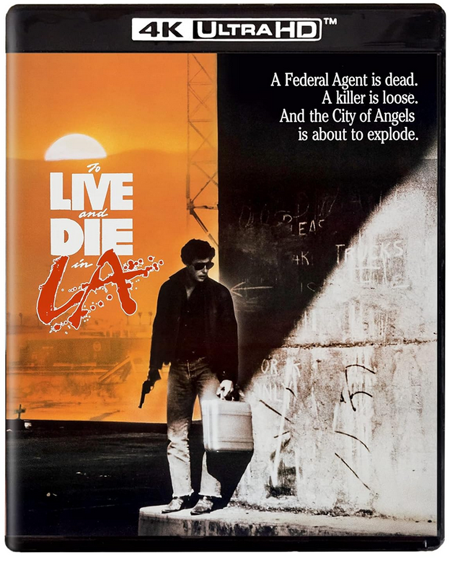
I
hated William Friedkin’s 1985 police thriller, To Live and Die in L.A., when I first saw it. The mixture of
Eighties-style pop music by Wang Chung and the disreputable characters were, I
felt, meretricious and off-putting. Even the car chase seemed lackluster. I
also hated Dario Argento’s Four Flies on Grey Velvet (1972), James
Toback’s Fingers (1978) and David Lynch’s Blue Velvet (1986) during
my first viewings. Revisiting these titles soon afterwards made me realize that
I failed to fully appreciate or understand them. My ignorance of film was evident!
To
Live and Die in L.A., which
opened nationwide on Friday, November 1, 1985 to lukewarm notices and
underwhelming box office despite being championed by a four-star review by Roger
Ebert, is a highly stylized, dark, and uncompromising crime thriller that
boasts a then-unknown cast with a story and a pace that feels more suited to
the 1970s. It also contains what I consider to be the greatest car chase ever
filmed and edited for a major motion picture, which took no less than five
weeks to plan and shoot.
Having
seen Mr. Friedkin’s brilliant Oscar-winning East Coast police thriller The French Connection (1971), this West
Coast-based yarn centers on a Secret Service agent, Richard Chance (William
Petersen), whose best friend and partner Jim Hart (Michael Greene) has been
murdered in cold blood by artist/currency counterfeiter Rick Masters (Willem
Dafoe) just days prior to his retirement. This plot device occurred before it
became a familiar film trope, and this
is easily one of the best films of the 1980s. Chance has one goal: to put
Masters away for life with no regard for how he has to do it. Truthfully, he
would prefer to kill him. This causes many issues for his new partner John
Vukovich (John Pankow) whose familial lineage of law enforcement officers and his
“by the book” methodology conflicts with Chance’s no-bullshit headstrong attitude.
Vukovich’s unwillingness to go outside the boundaries of acceptability is
tested when: Chance surreptitiously removes crucial evidence from a crime scene
in order to get to Masters; Chance, without Vukovich’s knowledge, springs a
prisoner friend (John Turturro) of Masters to get him to testify; and most
notably forces Vukovich to go along with a plan to obtain cash needed to get
closer to Masters while nearly dying in what is arguably cinema’s most exciting
getaway car chase sequence. What makes the chase work so well is that it’s
physical, it’s possible (though highly improbable), and it’s not done in a Fast and the Furious, over-the-top sort
of way. Nor is it perfunctory as it comes as a result of an important plot
point, nearly besting the director’s own French Connection subway/car
chase with a headlong ride straight up the 710 Long Beach Freeway while driving
in the wrong direction against traffic.
Chance
also beds a willing parolee (Darlanne Fluegel) who gives him information on
current convicts in return for money to provide for herself and her son
Christopher. Like the inexorable Popeye Doyle in The French Connection who will stop at nothing to put drug dealers
and users away, Chance, like his surname, will stop at nothing to capture and
punish Masters. The difference between the two films is that the former paints
Brooklyn and New York City as gritty and almost despairing cities whereas the
latter bathes the frame in a Los Angeles that we have not seen before or since.
While also gritty, grimy and dark, this is a Lotus Land that is also highly
glossy and enticing, with beautiful people who are about as real as the
counterfeit bills that Masters manufactures. The overall theme and central
conceit of To Live and Die in L.A. is
fraudulence. People use each other for their own personal gains. Masters is an
artist but hates what he paints and burns his work in frustration. Since he
cannot find joy or satisfaction in his own originality, he resorts to copying
others, in this case $20, $50, and $100 bills in a procedure that is
painstaking, difficult, and now archaic.
Like
The French Connection, To Live and Die in LA is also based on a
book of the same name, this one a novel written by former Secret Service Agent
Gerald Petievich. What makes the film remarkable is the opening sequence which
features a martyr who shouts “Allahu Akbar” just before blowing himself up on
the roof of a hotel where then-President Reagan is giving a speech. This scene
made little sense to me upon my maiden viewing but is eerily prescient of the religious
extremism that has made its way to America’s shores.
The
performances are excellent all around. William Petersen, whose film debut was
as a bar bouncer in Michael Mann’s Thief (1981),
is terrific as Chance and plays him as a daredevil whose cowboy nature seals
his fate and makes him a dangerous person to be around. This is established in
an early sequence wherein Chance bungee jumps off the Vincent Thomas Bridge in
San Pedro, CA. In addition to the martyr sequence, this could also be one of
the earliest instances of this now highly popular activity’s depiction in a
film. John Pankow is also quite good as Chance’s conflicted partner. The stand-out
is Willem Dafoe as Masters, fresh from Walter Hill’s 1984 outing Streets of
Fire. His icy expressions and demeanor can change on a moment’s notice
without warning. Darlanne Fluegel, who heartbreakingly left us far too soon
following an early onset of Alzheimer’s Disease, is mysterious as Chance’s muse.
I first saw her in Battle Beyond the
Stars (1980). Debra Feuer is striking as Masters’ girlfriend and
confidante. The late Dean Stockwell is great as Masters’ lawyer - you can
almost see him prepping himself for the role of Ben in David Lynch’s aforementioned
and masterful Blue Velvet the
following year. Steve James is an actor I always liked ever since I first saw
him in the “Night Vigil” episode of T.J.
Hooker in 1984. He started in the industry as a stunt man in films as
diverse as The Wiz (1978), The Wanderers (1979), The
Warriors (1979), Dressed to Kill
(1980), and He Knows You’re Alone (1980)
prior to onscreen acting. Here he plays Jeff, one of Masters’ clients and his
performance, though small, shines. He also appeared in the William Friedkin
TV-movie C.A.T. Squad in 1986, which
was also written by Mr. Petievich. His premature death in 1993 from what is
rumored to be the medical treatment that he received after a cancer diagnosis
is a tremendous loss to the entertainment industry.
To Live and Die in L.A. has been released on home video many
times in the United States and is now available on 4K UHD Blu-ray courtesy of
Kino Lorber. The extras, which are ported over from the 2016 SHOUT! Factory
Special Edition Blu-ray and the 2003 MGM/UA Home Video DVD, are all included
and are as follows:
Disc
One:
-
4K UHD Blu-ray remastered from the original camera negative.
-
Audio Commentary by Director William Friedkin from 2003 – this runs the full length
of the film and is the only bonus to be included on both the 4K UHD disc and
the standard 1080p Blu-ray.
Disc
Two:
-
Standard 1080p Blu-ray down-converted from a 4K remastering from the original
camera negative.
-
Audio Commentary by Director William Friedkin from 2003.
-
Taking a Chance: Interview with Actor William Petersen (20:42, in high definition,
from 2016) – Gary Sinise read for the role of Richard Chance with the casting
director, but the role instead went to William Petersen after he read for it at
William Friedkin’s New York City apartment. A second reading with actor friend
John Pankow solidified their roles.
-
Renaissance Woman in L.A. Interview with Actress Debra Feuer (14:56, in
high definition, from 2016) – Ms. Feuer reminisces about how wonderful the
experience was for her. Despite the sexual angle of the film which made her
uncomfortable, the cast and crew made her receptive and accepted on the set. Her
role is small but important and I would love to see her in more films.
-
Doctor for a Day: Interview with Actor Dwier Brown (08:53, in high
definition, from 2016) – Dwier Brown talks about his excitement over reading
for the film. He would later go on to appear as Phil Sterling in Mr. Friedkin’s
1989 druid-horror film The Guardian, and humorously recalls how the
director forgot that he was in To Live and Die in L.A.
-
So in Phase - Scoring To Live and Die in L.A. Interview with Composers Wang
Chung (12:44, in high
definition, from 2016) – It’s amazing that Mr. Friedkin heard Wang Chung’s 1984
album Points on the Curve, in particular the song “Wait,” and explained
that that was the vibe that he wanted from the album for the film score. While
there is a soundtrack album available for this film, it’s incomplete, and I
hope that one day a full soundtrack album, remastered from the original master
tracks, will be issued. Wang Chung recalls some interesting anecdotes in this
onscreen interview.
-
Wrong Way - The Stunts of To Live and Die in L.A. Interview with Stunt
Coordinator Buddy Joe Hooker (35:39, in high definition, from 2016) – The
famous stunt man discusses the intricacies and challenges of filming one of the
most dangerous car chases ever mounted for a film. The director was all about disorienting
the audience, and that notion comes into play here in how the chase was staged
and ultimately executed.
-
Counterfeit World - The Making of To Live and Die in L.A. Documentary
(29:52, in standard definition, from 2003) – This is a fun look behind the
scenes with mini interviews from many of the cast and crew involved, with
discussions regarding the characterizations as portrayed by the actors and
actresses to filming the famed car chase.
-
Deleted Scene and Alternate Ending with Introductions (13:07) – this is
the ridiculous ending that the director shot to please the studio executives
and thankfully was never used. You won’t believe it when you see it.
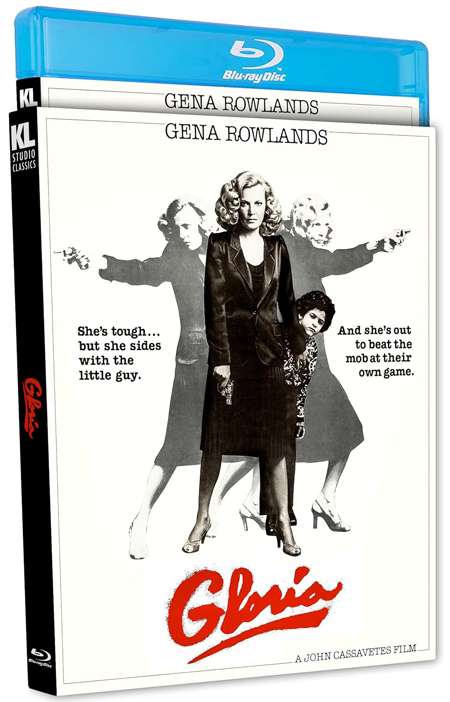
Something
happened to me while watching John Cassavetes’s film Gloria that, to my
knowledge, has never, ever happened before and probably will never, ever happen
again. Towards the end of the film, the titular heroine exits a cab and asks
the cabbie for the time, and she replies, “It’s 9:20.” Unbelievably, this was
the exact time of day that it was on my clock as I watched the film in the
evening. In films, people give the time to others when asked (Charles Martin
Smith is told that it’s “a quarter to twelve” when attempting to purchase
alcohol in George Lucas’s 1973 film American Graffiti), but the
phenomenon of the onscreen reel time being in synch with the offscreen real
time is something that I have not experienced before, and it got me to thinking
about how certain things happen by mere happenstance.
The
cinema of John Cassavetes is an acquired taste as he was a maverick who made many
films on his own terms. If the general audience loved his work, it would
infuriate him and he would recut the film, as was the case with 1970’s Husbands,
a film that was released, critically acclaimed, pulled out of release and
re-cut into a completely different film, culled from roughly 240 hours of raw
footage. Co-star Ben Gazzara stated that his favorite version of the film ran
four-and-a-half hours. The director often employed members of a small but loyal
acting troupe headed by his wife, Gena Rowlands, who portrays the titular
heroine in this film, shot between July and September 1979 and released in New
York on Wednesday, October 1, 1980. She received her second Oscar nomination
for her performance here, the first being for A Woman Under the Influence
in 1974, also under the direction her husband.
Gloria is a film mired in Manhattan, Harlem
and the Bronx in New York. The film opens with nighttime establishing shots of
the New York skyline to the music of Bill Conti best known for the theme to Rocky
(1976). The Statue of Liberty and several bridges are luminescent and invoke Richard
Donner’s Superman: The Movie filmed there two years earlier. The
daylight exposes the filthy streets and the people who inhabit them. A six-year-old
Puerto Rican boy, Phil Dawn (John Adames), narrowly escapes being killed by the
Mafia following his mob accountant father’s (Buck Henry of all people) involvement
with them turned sour. Phil is saddled with a copy of the Bible, which in
reality is incriminating evidence that the Mafia wants back in their hands. His
parents and siblings all become collateral damage as he and the family friend,
Gloria, bolt and attempt to get away. Gloria is part of the Mafia. She
possesses street smarts and packs heat, unflinchingly firing upon her enemies
in broad daylight, though no cops appear to be anywhere in sight. Like the
interior of Marcellus Wallace’s suitcase in Quentin Tarantino’s Pulp Fiction
(1994), this Bible proves to be a MacGuffin to keep Gloria and Phil on the run.
Initially,
Gloria and Phil cannot stand one another, and the former appears to be
reluctant to be saddled with the latter despite her promise to Phil’s parents
to take care of him. Eventually, they grow on one another and, dare I say it,
even develop a mutual affection. John Adames proves himself to be a capable
actor though, to my knowledge, this is his sole screen credit. The film,
despite reportedly being disparaged by its director (who probably would have
been happy to completely recut it), is a showcase for its leading actress, who
is always fascinating to watch.
Gloria was released on Blu-ray in August 2018 by
Twilight Time and that pressing contained an isolated musical score. There is a
new pressing of the film, this time by Kino Lorber, and the results are
unspectacular. This is not a carp about Kino,since they always do a bang-up job
on their Blu-ray releases. The
film image is dark at times, especially in the beginning scenes in the
apartment building (look fast for Tom Noonan as a Mafia soldier), and it looks
as though it was transferred from a theatrical print, minus the reel-change cue
marks. I am only assuming this to be the case (though I am probably incorrect),
or perhaps this was how it was either photographed or developed as the liner
notes are absent of the usual declaration boasting a high-definition transfer
from the film’s original camera negative.
The only extras to speak of on this pressing
are theatrical trailers for Gloria, Sidney Lumet’s Gloria remake
from 1999, Gorky Park (1983), 52 Pick-Up (1986), Code of
Silence (1985), Number One with a Bullet (1987), and Lonely are
the Brave (1962).
The first time that I heard of the name Nat Segaloff was in
1990 when I purchased his new book at the time, Hurricane Billy: The Stormy
Life and Films of William Friedkin. I eagerly read through it in no time as
The French Connection, Mr. Friedkin’s Oscar-winning film for Best
Picture and Best Director among others, is my favorite film. It was his fifth
feature as a director, and it put Mr. Friedkin on the map following the
disappointing box office performance of his first four films. However, the
critical praise and box office success of this real-life-inspired police drama
which contains two of cinema’s greatest action set pieces would not truly
prepare audiences for his follow-up film.
Mr. Friedkin’s The Exorcist, a film adaptation of the
best-selling 1971 William Peter Blatty novel of the same name, opened
theatrically on Wednesday, December 26, 1973 on no less than twenty seven
theater screens, one of which was the Cinema 57 which was part of the Sack Theatre
chain in Boston, MA. Mr. Segaloff was a publicist and was tasked with playing
door guard to a top-secret pre-arranged screening of the film on Christmas
morning to a handful of critics who were there to get their reviews in their
respective papers earlier than usual. This incident is recounted in his preface
to his latest book, The Exorcist Legacy: 50 Years of Fear, the title of
which brings to the forefront the shocking revelation of just how many years
have transpired since Regan MacNeil’s head spun around. The film is something
that I had heard about for years prior to becoming a fan of scary cinema and I
was unsure how much of it was rumor or fact. I recall purchasing The
Exorcist on VHS in February 1986 seven months before I saw The French Connection.
It was in the oversized clamshell box by Warner Home Video and while I was
impressed with it, it did not scare me in the slightest. However, I have spoken
to other people who saw the film in their teenage years and refused to view it
ever again. A September 1996 viewing of the film to a sold-out screening at
Radio City Music Hall, introduced by both lead actress Ellen Burstyn and the
director in-person, solidified the film’s stature as a masterpiece in my mind.
The release of the film on DVD in a 25th anniversary edition whetted
the appetite of those who would see the film theatrically two years later when The
Exorcist: The Version You’ve Never Seen was released which would include
changes and additional footage. The Blu-ray of the film in 2010
in the extended director’s cut was by no means the final word, as in 2013 a 40th anniversary
Blu-ray added a nice documentary and extended interviews with the author. Just
in time for the 50th anniversary, the film is now bowing in 4K UHD.
Following a foreword by John A. Russo of Night of the
Living Dead fame, Mr. Segaloff begins his book, which is comprised of
sixteen chapters and lasting just over three hundred pages in length, from the
correct presumption that the film is a misunderstood classic. He agrees with
the assessment by both Mr. Blatty and Mr. Friedkin that the film is many things
except the horror film that it is widely revered as since the time of its
release, though audiences have other opinions. We are treated to many interesting
tidbits: the hilarious story of how Mr. Friedkin met Mr. Blatty and how the
former’s honesty solidified a working relationship and lifelong friendship with
the latter, with Mr. Friedkin being the sole director that Mr. Blatty wanted
from the get-go; Warner Brothers’ initial reluctance to hire Mr. Friedkin until
the release of his brilliant The French Connection in 1971 garnered
sudden critical and financial success and changed the game completely; the
original 1949 real-life case of a young possessed Maryland boy; Mr. Blatty’s
writing of the novel; the making of the film; a multitude of issues that beset
the film’s production giving way to the supposed “curse” on the set; the
controversy surrounding the release of the film; in-depth looks at the much-maligned
Exorcist II: The Heretic (1977) and the superior The Exorcist III
(1990), the latter both written and directed by Blatty; the prequels and
television series, and the little-known The Ninth Configuration. If
you’re even just a passing fan of the film, the book is a must read.
Mr. Segaloff was gracious enough to speak with me from his
home in Los Angeles by phone regarding the book. Unfortunately, the day I
contacted him about the interview was the same day that Mr. Friedkin had passed
away, a fact that I was unaware of until an hour later. Mr. Segaloff wanted to
press on with the interview, however, which amazed me as he knew Mr. Friedkin
for nearly fifty years.
Todd Garbarini: Where are you from originally?
Nat Segaloff: I was born in Washington, D.C., and
raised in Silver Spring, Maryland, which is a good long way from Cottage City,
Maryland, where that little boy was possessed in 1949. We were not possessed in
Silver Spring. Silver Spring was a very strange place. It was the nation’s
largest unincorporated city, about one hundred thousand people, and nobody
taking out the garbage.
I was able to leave and go to school in Boston, and there, I
not only ran the major movie program on campus, I also insinuated myself into
both the city’s professional film scene and the then-burgeoning underground
film scene. Of course, we’re talking the 1960’s.
When I graduated from college, I started doing publicity for
the film companies in town and, after a while, moved to New York to do it
there, then moved back to Boston and became a critic. All of that served as
fodder for the books I’ve written and for the people I’ve met because I’m a
kind of a demimonde. A lot of people remembered me from when I was a publicist,
but then when I became a reporter, they thought I was still a publicist, and
they trusted me. It’s a very odd combination, and I sometimes had to tell
people, “You know, I’m a reporter now.” I was able to keep close to a lot of
people that I’d met doing publicity, like Robert Altman, James Bridges, Paul Mazursky,
and John Milius.
TG: A lot of people I’ve spoken with who
work in the film industry didn’t go to the movies or even see films on
television until they were much older. Did you do the same thing, or did you
get into them later?
NS: Back when I was a pod, the only way to
see an old movie was on late-night television. I stayed up till one-thirty in
the morning to view The Jazz Singer on Washington television because
there was no way I was otherwise going to see it. There was no video, and you
couldn’t even rent a 16-millimeter print of it. Later, there were revival
theaters in Washington where I attended occasionally, but you still had to wait
for something to appear. Only when I went away to school and ran the film
program was I seeing movies every weekend, because I had to make sure people
weren’t smoking in the theater. That was my job. I was managing the campus
theater. I saw a lot of movies in class and in theaters, and it was wonderful.
Between that and being a critic, I must have spent thirty years watching a
couple of movies a week, and then I just burned out completely.
TG: As much as I love watching movies, I
don’t know that I would be able to do that! Do you have an all-time favorite
movie?
NS: The easy answer is Citizen Kane.
It certainly is the source of so much inspiration and technique for everybody
who makes movies. I don’t think it’s possible to cite one particular film.
Whatever pleases you at the time that you’re open to, it’s a film that becomes
your favorite. I also like His Girl Friday. No connection between those,
except they’re both about newspapers.
TG: Are you drawn to movies about reporters
and publicists?
NS: It turns out that I am drawn to
movies about reporters. Certainly, Sam Fuller’s Park Row is a movie that
makes me cry, not because it’s sad, but because it reminds me of the days when
I was writing for real newspapers. No, I don’t find myself glomming onto any
particular kind of film, be it science fiction, horror, drama, musical, or
anything else. I just like a good movie.
TG: So, you don’t consider yourself partial
to certain genres?
NS: I think that so many genres,
particularly horror or suspense films, seem to have a playbook, and I don’t
like films that go where you know they’re going to go. I remember something
Jonathan Demme said about the script for his film Something Wild. He
said you literally didn’t know from one page to the next what was going to
happen. I like to see that on the screen. I like films that have what I call an
“Oh, shit!” moment. The first one I remember was, of course, 2001: A Space
Odyssey, just before the intermission, when we realized that HAL was
reading the astronauts’ lips, and that was the moment where the whole audience sort
of exclaimed, “Oh, shit!” [laughs]. There are also other movies like A
Beautiful Mind with that kind of moment, or a movie that very few people
remember that Stephen Fears made called Dirty Pretty Things.
TG: Yes, that’s with Audrey Tautou from Amelie.
NS: Yes. I was watching it in a small
theater, and not only did we all say, “Oh, shit,” but we all stayed through the
credits and then stood up and congratulated each other after the movie for
seeing that film.
TG: You’ve written and published a good
number of books on The Towering Inferno, the Scarface films, the
Hollywood Code, John Milius, William Friedkin and Harlan Ellison. Your latest
book, The Exorcist Legacy: 50 Years of Fear, is quite an accomplishment.
It begins on Christmas Day in 1973. You were working for the Sack Cinema 57 on
Stuart Street in Boston.
NS: Yes. I was their publicity director in
1973 when The Exorcist was scheduled to be released on Wednesday,
December 26th. One of our critics, Stuart Byron, who knew the
industry really well, was able to inveigle William Friedkin to permit a
day-before screening so that the weekly papers, which catered to the young
audience, would be able to meet their deadlines. So, I hosted this greeting of The
Exorcist on Christmas morning.
For some reason, the critics had no problem leaving the
bosom of their families to come and see a movie about a little girl whose head
spins around. I didn’t see the movie that day. I was standing in the lobby
guarding the door so the people who weren’t invited couldn’t get in. Nobody got
sick. We didn’t know we were supposed to throw up. Of course, the Technicolor
yawns began the very next day.
TG: Did you have any inkling what that film
was like? Based upon the lobby cards, the marketing of the film by Warner
Brothers, did you have any idea what was going on behind those doors?
NS: I had no idea what was going to be
going on, “on this street in that house in a little girl’s bedroom.” [laughs]
I had read the book, of course. The only glimpse we had was a teaser trailer
that went 30 seconds with the narration I just did for you. It was simply a
shot of the poster of Max von Sydow standing outside of the house. That’s all
anybody knew. There were no pictures, nothing. In fact, there was an embargo on
anything from the film. I think it was either Time or Newsweek
who ended up sued by Warner Brothers because somebody sneaked into the theater
and got a picture of Regan in makeup and ran it. That was considered a breach
of copyright, a very secret thing. The audiences, as you know, would file out
ashen. The audiences waiting to get in would know that something weird was
going on in there, and it became an emotional rollercoaster for them.
TG: Now, I of course, didn’t live through
this. Was this a similar reaction like when Psycho came out? Psycho
had been a novel first, and then the film was released and it was all
hush-hush, “don’t give away the ending.”
NS: I wasn’t old enough to see Psycho
when it came out. I do know, of course, that Hitchcock specified that nobody be
allowed in once the film had started. That made a certain groundswell of public
opinion. The film that was closest to The Exorcist when I was that age
was Night of the Living Dead, which had a reputation for being gross,
scary, and horrifying. The fact that it was shown at midnight to a bunch of
kids who were probably high made additional impressions on people. A black and
white film with blurry pictures from an indie source in Pittsburgh was not the
same thing as a beautifully photographed color film from Warner Brothers.
Incidentally, John Russo, who co-wrote Night of the Living Dead, wrote
the forward to The Exorcist Legacy.
TG: What was your introduction to William
Friedkin’s work? Had you seen any of his previous films?
NS: I had seen The Birthday Party.
It was on a sneak preview where Walter
Reade’s Continental Releasing was trying to get a booking for it, and I
saw it in Boston. That wasn’t the film that I was there to see. The Birthday
Party was just stunning. Robert Shaw, Patrick Magee, I mean, just a
beautifully contained job. I’d also seen The Night They Raided Minsky’s,
and thought it was lovely, but I didn’t really realize it was a William
Friedkin film. I had missed Good Times with Sonny and Cher, which I’ve
seen since then. Then of course, The French Connection came out. I was
late seeing The Boys in the Band because I was in school at the time
when it played in theaters. I caught it later. The French Connection
naturally was the one that galvanized everybody. In fact, at the theater that
showed it in Boston, which is where I was working at the time, people would
come in early when they knew that the car chase was going to start, and they’d
see the chase and stay through to watch the film all through again so they
could get in and see the chase twice. We had to clear the theater. It was
remarkable with that on a huge screen. The vertigo was just phenomenal. It was
just a staggering effect because I don’t think anybody had ever mounted a
camera on the bumper of a car before Billy did it.
TG: That’s what blows me away about his
cinema. He did things that we had never seen before.
NS: Yes, including racing through the
streets of New York without permits. Randy Jurgensen will tell you one thing.
Sonny Grosso would tell another. Billy Friedkin would tell you something else. There’s
no agreement. From what I understand, and I trust Randy, is that they simply
ran the car. They didn’t have any siren on the car to warn people because, as
Randy said, if you put a siren on the car, people look at the car and they don’t
want people looking at the car. Billy sat in the back, Bill Hickman drove, and
they just tore ass through Brooklyn. If anybody stopped them, Randy said he’d
just flash his badge saying, “Fellow officer, let us go.” You could do that
then. You could get away with it.
TG: So much of what you could get away
with, you can’t do now because of small security cameras and the Internet.
NS: Yes. We’re living, as John Milius said,
under the booted foot of the lifeguard state.
TG: How did this book about The Exorcist
Legacy come about? When did you start thinking about it? Had it been
something gestating in your mind for some years? Had you started writing it a
long time ago in anticipation of the 50th anniversary?
NS: I could tell you my publicity line,
which is that I’ve been possessed by The Exorcist for 50 years, but in
fact, I’d acquired a wonderful new agent, Lee Sobel, at the end of 2020. We
were thinking what kind of books we could possibly sell. Anniversary books
seemed to work well. What film was having a 25th, a 40th, or a 50th
anniversary? We figured, well, with a year and a half or two of lead time, that
makes it 2023. I said, “The Exorcist is going to be 50.” Bang, he sold
it in a matter of days.
TG: Did you approach John Russo
specifically to do the forward?
NS: John Russo was approached by my editor,
James Abbate, who knows him and has worked with him. He very graciously did the
forward to the book.
TG: Yes, John is very nice. I go to horror
conventions that they have and most of the cast of my favorite horror films
come and speak about them. Night of the Living Dead was one of them. I
got to meet John there and talk with him at length about the films and all. I
just love the behind-the-scenes stories that you haven’t read and haven’t been
published. It gives you a real look into the film, a new appreciation, of the
movie, whatever that movie may be.
NS: There are some very good people out
there. The great thing about writers is that we tend to help each other.
Whenever I need an author’s query or information, it’s always the writers who
come through first, like yourself.
TG: As far as TheExorcist Legacy
is concerned, who was the first person you spoke to? Did you go straight to
Billy?
NS: I didn’t go to Billy at all for The
Exorcist Legacy. There was a reason for that, which is that I had all the
answers I needed back in 1988 to 1990 when I wrote his biography. In those
days, The Exorcist was merely a hit. It wasn’t a classic yet. The
stories, I believe, were closer to the source. I also had the good fortune to
speak to Ellen Burstyn, whom I adore, and who I believe is our finest American
actress of our generation.
TG: I agree, she’s phenomenal.
NS: She’s amazing. I had spoken to William
Peter Blatty at great length. We’d been friends and kept in touch over the
years. A lot of his material in the book is material that I could not publish
while he was alive. He was very frank about his relationship with film studios.
As he hand-wrote on the side of a transcript that I sent him for approval, as
you do, he said, “Nat, don’t print this. I’ve got enough problems.” He was a
warm, funny, and wonderful man.I’ve become friends with his oldest son,
Mike, since the book came out. In fact, I saw him at a signing the other day.
He happened to be in town. I’m very happy to keep up my connection with the
Blatty family.
TG: Oh, sure. Whom did you speak to at
great length for the book?
NS: I did it two years ago and it was with
Terry Donnelly, who was the first assistant director and unit manager. I had
worked on a film with Terry years ago. We picked up where we left off and he
was able to tell me about the behind-the-scenes facets. I spoke to Craig McKay,
who is a film editor. He cut TheSilence of the Lambs among other
films. He’s very good. He was a kid when he was starting out on The Exorcist,
there to pick up pieces. He had some wonderful stories. I did speak to Jeremy
Slater, who was the showrunner for the Exorcist television series, and
of course, David Gordon Green, who has a new Exorcist film coming out. I
had a lot of the material from when I wrote Hurricane Billy (Billy’s
biography). I was able to use that. What can I say, covering all these films,
two sequels, two prequels, and each of them was recut? It was a lot to write
about.
TG: How do you keep track in your head just
of all these different versions of these movies? As much as I love films, I
really find it so hard to be able to keep track of the director’s cut, or the
original cut, and this one runs this number of minutes, etc. I’ve always
admired Tim Lucas’s review of movies in Video Watchdog for that reason
because it’s encyclopedic, the amount of information that he has on all these
films and how he would do all the video comparisons. How did you find doing
that? Was that something that came easily to you because you had seen the film
so many times in different versions?
NS: Tim Lucas is one of the people in the
book, as is Mark Kermode. We’ve known each other for so many years that we don’t
even think about it. With the different versions of The Exorcist, which
I’m not very happy with, I guess, three of them, or maybe four, depending on if
you count one of them twice, I think the original is the best version, except
for a couple of scenes that are put in “The Version You’ve Never Seen,” so it’s
very hard. I would like to do my own fan edit, but I think I’ve watched The
Exorcist enough by now.
TG: Was there anybody you wanted to
interview for this book whom you weren’t able to interview because they either passed
away or you were unable to contact?
NS: Linda Blair.
TG: What was the first Billy Friedkin film
that you were on the set of?
NS: The Brink’s Job
in the summer of 1978. I was there for Evening Magazine, which was the
version of PM Magazine that was run on the stations that were owned by
Westinghouse.
TG: Oh, I remember PM Magazine. That’s
where I first saw Matt Lauer.
NS: Billy allowed our cameras on the set,
which is funny because he just kicked the publicity cameras for Paramount and Universal
off the set, and he let us on. We had wonderful footage of Peter Falk and the
cast. Dean Tavoularis had done a reconstruction of the Brink’s system as it was
in 1951 when the robbery took place. It was a magnificent set. There was an
incident where some local tough guys broke into the editing offices, took
footage, and wanted to hold it for ransom to shake down the production. As it
happened, I had the only footage of Brink’s and I was with a TV station, but I
couldn’t get my TV station to run their own footage because we had shot
non-union. That was Westinghouse. That’s why they’re not around anymore. Westinghouse
was the Pazuzu of television. I was also on the set of one of Billy’s films in
Montreal when I was writing the book (the 1988 TV-movie C.A.T. Squad: Python
Wolf). You don’t learn a whole lot on a set. William Goldman is right. The
most exciting day of your life is your first day on a movie set, and the most
boring day of your life is your second day on a movie set.
TG: I’ve seen a handful of films being shot.
It’s fairly boring, I must say.
NS: I will correct you on one thing. Billy
Friedkin didn’t allow chairs on his sets. You stand around.
TG: Christopher Nolan is like that. He
doesn’t allow them either.
NS: He’s right! James Cameron has a nail
gun (like in No Country for Old Men), and if anybody’s cell phone rings,
he nails it to a prop.
TG: Holy Jeez! Is there anything that I
haven’t covered that you wanted to say about the book?
NS: The book goes into not just the
original Exorcist, but the sequels and prequels. That’s something that
people don’t consider because nobody ever intended The Exorcist to be a
franchise. It became a franchise when Morgan Creek bought the rights from Bill
Blatty, and they are now trying to revive it, of course, with the October
release of The Exorcist:Believer.
TG: Have you seen that?
NS: No, I haven’t seen it yet. I’m looking
forward to it. I do know that I really like David Gordon Green, who was very
kind to me. He probably shouldn’t have been talking about the film. He did
because I had a year and a half lead time for the book, and it’s in there. I
was disappointed in the prequel, both Dominion, which was Paul Schrader’s
version, and Exorcist: The Beginning, which was Renny Harlin’s. Although
I think there’s a lot in Paul Schrader’s version, I’ve been saying the
difference between them is that Paul Schrader made a film where Renny Harlan
made a movie. I think that both films had trouble because people expect an
exorcism Exorcist movie and what they got was CGI. That’s not the same
thing. CGI is not the real thing. That’s what distinguishes The Exorcist;
what made The Exorcist work was that it was real. The things that
happened in front of the camera actually happened. Linda Blair really floated,
the bed really shook, doors really cracked, things really fell over. Curtains
really blew on closed windows. They didn’t happen because anybody was
possessed. They happened because Dick Smith created brilliant makeup and Marcel
Vercoutere had incredibly complicated mechanical effects, but they all happened
in front of the camera so that it looked real. That’s the documentary nature of
Billy’s filmmaking and why he believes in reality. That, I believe, will be his
ultimate legacy on film, which is that he made the movies look real. Of course,
now most of the movies look like fantasy. We’ve lost that.
TG: Yes. Steven Spielberg would agree with
that statement. He likes to see everything real in front of the camera. He does
realize that in today’s day and age, you do have to use computer graphics, and
that’s really came to fruition with Jurassic Park. Before that, he wondered
how they were going to make the dinosaurs run.
NS: It’s true. He tried stop motion, but he
didn’t want to make Jurassic Park until he could do it right. Not
everybody has that. They’ll say, “Well, the audience won’t know.” No, no, they know.
The audience doesn’t know what’s called the uncanny valley, but it is the
uncanny valley.
TG: I want to thank you very, very much for
taking the time to speak with me about the book.
NS: Thank you so much. I do want to say something about
Billy who, as you know, died just twenty-two days shy of his 88th birthday. He
was a friend for fifty years and an inspiration, not just for his films, but
for his personality: he didn’t cotton to bullshit which, of course, is the coin
of the realm in Hollywood. Billy was a very brave man because I can’t think of
many other directors, except maybe Brian De Palma, who let somebody write a
book about them while they were still working. He did that for me and launched
my career as a writer. I love him and I miss him. And thank you, Todd and
Cinema Retro, for giving me the chance to say that on the record.
These
four words…sorry, this single word spoken four times…by the inimitable Ben
Stein in the late John Hughes’s highly popular teen comedy Ferris Bueller’s
Day Off while reading off the attendance roster to his near catatonic high
school class has worked its way into the American lexicon to the point that it
has become recognizable to anyone even remotely familiar with the film. Like its
predecessors, the “You’re gonna need a bigger boat” ad-lib from Steven
Spielberg’s Jaws (1975), and Jack Nicholson’s quirky yet somehow
terrifying “Here’s Johnny!” from Stanley Kubrick’s The Shining (1980),
one need not have seen the film to know from where it originated. The adults in
this film are all depicted as somehow less smart than their adolescent
counterparts and all seem to be easily duped and manipulated. Why are they
depicted this way? Was the director, who was also the writer of Mr. Mom
(1983), National Lampoon’s Vacation (1983), Sixteen Candles(1984), The Breakfast Club
(1985), Weird Science (1985) and Pretty in Pink (1986), simply
not a fan of the adult world, a modern-day J.D. Salinger?
Ferris
Bueller, the titular hero, is a Northbrook, Illinois high school student two
months shy of his high school graduation and commits a crime that all students
have at one time or another – he feigns serious illness to stay home from
school. However, it is not for nefarious purposes: he wants to get his best
friend, Cameron (Alan Ruck), out of the doldrums. His parents are complete
dolts for believing him, though his sister Jeanie (Jennifer Grey) and Principal
Rooney (Jeffrey Jones) both see right through this common ploy and the latter,
whose small-mindedness and lack of stature outside of his role of an
authoritarian, drives him to catch Ferris in the act at any cost. He goes to
great lengths to catch Bueller, breaking the rules, and even some laws, that
find him in the Bueller household, face-to-face with a vicious dog.
Playing
hooky for the day with a reluctant Cameron and Ferris’s girlfriend Sloane (Mia
Sara) whom he gets out of school posing as her father in a get-up not
dissimilar from the accoutrements he would later don as the titular Inspector
Gadget he would play in the 1999 film of the same name. The trio finds
themselves in a series of misadventures throughout Chicago via Cameron’s
upscale father’s 1961 Ferrari 250 GT California Spyder which occupies much of
the film’s running time, the most significant of which is the film’s famous and
highly celebrated moment when Ferris commandeers a float during a parade and
leads the onlookers through an impromptu lip-synch of The Beatles hit “Twist
and Shout.” It is not all fun and games, however, when we learn of Cameron’s contempt
for his father’s car which the latter supposedly cares more about than his own son.
He sublimates his anger in a highly volatile and emotional scene that proves
cathartic for Cameron and, in a way, for Ferris as well. It would explain why
Cameron is always uptight and unable to relax, something that the carefree
Ferris hopes to change. In many ways, Cameron and Jeanie are not dissimilar
from one another, as they both find teen life to be insufferable, and that
makes them the most realistic characters in the film.
Ferris
is unusual in that he is not only a free spirit, but just about everyone in his
high school, regardless of their grade level, likes him. Why? He has proven
that he can get away with just about anything. He’s also willing to help others
out of their predicaments. This mindset is what makes him elusive from
Principal Rooney, a self-appointed Truancy Officer determined to catch Ferris
in the act of cutting school because Rooney’s identity outside of high school
appears to be non-existent. He is the Coyote to Bueller’s Road Runner, and he
takes the whole situation personally.
The
film, which opened nationwide on Wednesday, June 11, 1986, differs from most
comedies in that it breaks the fourth wall in the tradition of Woody Allen’s
great Annie Hall (1977) when Ferris addresses the audience directly
during much of the action. In the pantheon of teen comedies, Ferris Bueller
is clearly de rigueur viewing and, given that it was lensed between
September and November in 1985, feels very Eighties and inspired by Matthew
Broderick’s David Lightman computer geek from John Badham’s entertaining 1983 film
WarGames with Ferris’s ability to remotely change his sick days in the
high school computer right before his principal’s very eyes. Ferris rigs his
room and front door intercom with an ingenious array of general solutions
anticipating most common eventualities that could undo his plan to keep his
parents thinking that he is sleeping off illness.
Ferris
Bueller did exceptionally
well at the box office, easily becoming an iconic Eighties Comedy, the film
that essentially made Mr. Broderick a star following his screen debut in Herbert
Ross’s Max Dugan Returns several years earlier and playing opposite
Michelle Pfeiffer in Richard Donner’s Ladyhawke (1985). Cameos abound by
a fifteen-year-old Kristy Swanson just before she became Wes Craven’s Deadly
Friend, Richard Edson, Charlie Sheen just before he made Platoon
with Oliver Stone, and comedian Louie Anderson. With the exception of some
on-set studio shots in Los Angeles and Ferris Bueller’s house location in Long
Beach, CA (eight houses away from the home that Richard Kelly’s 2001 cult
classic Donnie Darko is set in), the film is shot nearly entirely in
Illinois, the director’s home state.
Ferris
Bueller’s Day Off has
been released on 4K UHD Blu-ray by Paramount Home Video. This is the best that
the film has ever looked on video, easily besting all previous releases. It
also comes loaded with previously released extras:
There
is a feature-length audio commentary by director Hughes, the only one that he
ever recorded for his any of his films, ported over from the 1999 DVD release. Glaringly
missing from subsequent DVD and Blu-ray editions of the movie (reportedly at
the behest of the director who probably got tired of Hollywood and moved back
to his home state to keep a low profile), its inclusion here is welcome,
appreciated, and more than likely included for two reasons - a response to the
director’s untimely demise and to compel die-hard fans to fork over their
disposable income for this latest upgraded edition. It is pretty much
scene-specific with very minor tangents. It stays on-topic, and Mr. Hughes had
a very monotone and droll delivery.
The
following are all ported over from the 2006 special edition DVD
“Bueller…Bueller” and 2009 Blu-ray editions:
Getting
the Class Together: The Cast of Ferris Bueller's Day Off – this piece runs 27:45 in standard definition
and the interviews were shot in 2005. The film’s casting directors, Jane
Jenkins and Janet Hirshenson, begin this piece feeling that Matthew Broderick or
John Cusack would be great in the lead role. Mr. Broderick was in Biloxi
Blues on Broadway with Alan Ruck when he was offered the role and their
chemistry transferred over from real life to the stage, and then to the
audition when the latter was offered Cameron. Mia Sara, Jennifer Grey, Lyman
Ward, Cindy Pickett, Jeffrey Jones, Edie McClurg, Ben Stein (a very humorous
tidbit), Richard Edson, Kristy Swanson, and Jonathan Schmock all add their two
cents on their experiences.
The
Making of Ferris Bueller’s Day Off
runs 15:29 and really should be much longer and for what it is, it includes
some footage shot during the filming in addition to recent interviews taking a
look back at the film, such as Jeffrey Jones and Edie McClurg and their “Help,
Hinder” game; Alan Ruck talks about the Ferrari and how three replicas were
made for the film; Matthew Broderick talks about the parade sequence and how it
was a one-shot deal and how knee surgery from years earlier affected him in the
sequence.
Who
is Ferris Bueller? runs 9:12
and collects cast members and their responses to the question from 1985-87 and
2005. Alan Ruck talks about the wardrobe fittings and how there was no
chemistry between the characters and being put at ease by the director. Ferris
is a guy who does whatever he wants and has the self-confidence that his
friends lack.
The
World According to Ben Stein
runs 10:50 and is comprised of comments from Mr. Stein in 1986 and 2005 talking
about his experiences following the success of the film, with funny tidbits
about Kurt Cobain and even President Bush (the first one) having seen the film
on Air Force One.
Vintage
Ferris Bueller: The Lost Tapes
runs 10:16 and provides outtakes from the expurgated restaurant scene of Cameron
ordering pancreas that the director refers to in his commentary.
There
was a Class Album gallery that appeared in the previous releases, but it
is inexplicably dropped from this release.
The
film’s original theatrical trailer is also missing for unknown reasons, though
you can see it here
and a later trailer to promote the Blu-ray at the time.
The
ending of the film recalls Paul Brickman’s Risky Business from 1983
(think of Tom Cruise landing on his parents’ couch when they walk in from their
trip) when Ferris makes it home just in time to get into bed as his parents
head into his room. Ferris, addressing the audience, says, “Life moves pretty
fast. If you don’t stop and look around once in a while, you could miss it.”
This line, which is far more upbeat than the plaintive final sentences of J.D.
Salinger’s classic novel of adolescent angst The Catcher in the Rye
(1951), rings true for people more today than it did when it was filmed. Social
media, computers, and cell phones all conspire to divert our attention from the
meaningful things in life.
One
can only imagine what sort of mischief Ferris would create today with the World
Wide Web and OpenAI’s ChatGPT. Perhaps a remake is in order?
“The
Exorcist Legacy: 50 Years of Fear” by Nat Segaloff (Kensington Publishing, $28)
304 pages, Illustrated (B&W), Hardback, ISBN: 978-0-8065-4194-5
By
Todd Garbarini
As
long as there are films and film criticism, one of the most debated aspects of
recent memory is whether or not film director William Friedkin’s 1973
masterwork The Exorcist is a horror film or not. The very question could
perplex average readers who might feel that that the inquiry itself is completely
ludicrous and make one ponder how the image of a young girl vomiting pea soup
from her bed or the face of a white-faced demon flashing manically before our
eyes could be considered anything but horror. Despite this, neither did the
novel’s author William Peter Blatty, nor the film’s director set out to make a
horror film at all. Instead, The Exorcist, largely considered by many to
be one of the most (if not the most) terrifying films ever made, was
fashioned to be a serious study about the mystery of faith.
Coming
upon the fiftieth anniversary of the film’s release – yes, you read that right
– a new book entitled The Exorcist Legacy: 50 Years of Fear is now
available and places the story about the phenomenon of the novel, the controversial
film and their inevitable sequels and prequels, definitively and squarely in
our laps. Penned by longtime Friedkin champion and prolific author of many
other film books Nat Segaloff, who wrote the excellent Hurricane Billy: The
Stormy Life and Films of William Friedkin (1990), The Exorcist Legacy
is an absolute must-read for adherents of the novel and film. With a foreword
by horror film writer John Russo of Night of the Living Dead fame, author
Segaloff takes us back to the beginning on how a 1966 meeting between Friedkin
and director Blake Edwards – and the former’s vituperative assessment of a Peter
Gunn screenplay – led to an introduction to and lifelong friendship between
Friedkin and Blatty; Warner Brothers and their initial reluctance to hire
Friedkin until the release of his brilliant The French Connection in
1971 garnered sudden critical and financial success and changed the game
completely; the original 1949 real-life case of an ostensibly possessed
Maryland boy; Blatty’s writing of the novel; the making of the film; a
multitude of issues that beset the film’s production giving way to the supposed
“curse” on the set; the controversy surrounding the release of the film; in-depth
looks at the much-maligned Exorcist II: The Heretic (1977) and the
superior The Exorcist III (1990), the latter both written and directed
by Blatty; and the prequels and television series.
Segaloff,
who was Publicity Director for the Sack Theater chain in Boston,provides personal insights into the marketing
challenges pertaining to the film, as he worked with Friedkin and Warner
Brothers to open the film at the showplace Cinema 57, one of only 22 theatres
that initially played the movie nationwide. Writing in a very down-to-earth
style with new interviews and meticulously researched details, The Exorcist
Legacy is simultaneously entertaining and informative and is the new go-to reference
book for all things related to the phenomenon with a fresh look from real life
to reel life.
Anyone
going into Dutch film director Rene Daalder’s 1976 film Massacre at Central
High might very well be expecting an all-out slasher film. While the poster
art might give this impression, audiences will be sorely disappointed as it is
essentially a variant of Agatha Christie’s 1939 novel Ten Little Indians
but with a much different tone. The opening credits and the strains of an inappropriate
and perfunctory title song Crossroads (which is better suited to a
made-for-television movie of the period) demanded by producer Harold Sobel to
the consternation of the director immediately sends the wrong message to the
viewer. Much of what has been written about the film over the years demonstrates
the consensus that Massacre, the title of which appears to want to
capitalize on the Tobe Hooper horror film The Texas Chainsaw Massacre
from two years earlier, is a political allegory, and one can certainly analyze
the film from that perspective, though it is doubtful that audiences at the
time, especially those seeing the film at a drive-in of all places, looked so
deeply into a film that on the surface looks to be a story about simple revenge.
Set
inside the battleground of Central High School in Southern California, David
(Derrel Maury) is the new student and therefore automatically becomes a mark.
He is no stud, but certainly not a pushover either. Mark (Andrew Stevens from
Brian DePalma’s The Fury from 1977) is an old friend who owes David a
favor from his past, one that we are not privy to, and appears to be willing to
do whatever it takes to make David feel welcome. The ground rules for making it
through Central High are simple: you’re either a somebody or you’re a nobody,
to quote American Gangster’s Frank Lucas. Mark’s clique includes Bruce (the
late Ray Underwood from Brice Mack’s Jennifer from 1978, another film
about high school revenge), Craig (Steve Bond from Joel Bender’s Gas Pump
Girls from 1979), and Paul (the late Damon Douglas of John D. Hancock’s Baby
Blue Marine, also from 1976). These three bullies, for lack of a better
word, essentially rule Central High which is presented as a seemingly insular
world of jocks, jerks, and losers. For the first hour and a quarter of the
film, adults are only spoken of and never seen onscreen. It is worth noting
that Mark walks a tightrope in this film – his allegiance to David makes him hesitant
to be included completely with this terrible triumvirate who harass pretty much
anyone they want without fear of reprisal.
David
is subjected to seeing other students mercilessly harassed by the bullies, especially
Mary (the late Cheryl Lynn “Rainbeaux” Smith) and Jane (the late Lani O’Grady)
who are practically raped in a despicable sequence. David comes to their rescue
and beats up their harassers, only to be partially crushed under his car by the
group in an “accident” soon afterwards. Enraged, David single-handedly kills
all three bullies in a fantasy right out of today’s high school killer headlines
by sabotaging one’s hang-glider, one’s Dodge Tradesman 300’s brakes, and
exploiting an empty swimming pool in a sequence almost too ridiculous to
believe.
This
scenario creates an interesting situation at the school as the once oppressed
and harassed “losers” see the existence of a power vacuum and seize it, becoming
bullies themselves and embodying everything they hated about their tormentors, Apparently,
David is also well-versed in the art of bomb-making! What a coincidence. There
is no mention of how he developed these skills (The Anarchist’s Cookbook,
perhaps?), but he manages to come up with some fairly ornate methods of blowing
away the new bullies, and they all go off without a hitch: (spoiler alerts!)
one is blow away while at his locker; another is blown to Kingdom Come a la Sam
Rothstein at the start of Martin Scorsese’s Casino (1995) but,
unfortunately, no St. Matthew Passion for this guy; and last but not
least Mary, Jane and their friend (Robert Carradine) are crushed by a rock in
the middle of a threesome while in a tent (it comes out that police believe
that they were involved in the killings – how convenient). I suppose this
sequence gives new meaning to the term “die hard.”
Despite
all this mayhem, the school still moves ahead with a dance(!), and now the adults
and police show up. David gets the idea to blow up the school – until Mark and
his girlfriend Theresa (Kimberly Beck of television series fame), whom David
fancies, tell him they are going to the dance. When he gets wind of this, David
retrieves the bomb from the boiler room and, straight out of a James Bond film,
makes it to the front lawn to save the day, but not without paying a price for
his actions.
There
seems to be a need to prop the film up in a bright light and look at it for
evidence of it being a highly political film that is making a commentary on society
and the members who dwell in it. I am unsure if that was the real motivation
behind the film, however if one chooses to view it that way, the film is an
interesting social commentary on what creates a bully or an oppressor, and how
the oppressed end up taking over the positions of the long-gone bullies. The script
is schematic, and the film is not particularly well-acted, but to be fair the director
and crew had a 20-day shooting schedule on a modest $400,000 budget, so he
certainly had his work cut out for him. The fight scenes suffer from performer
restraint and the bullies are so annoying that the audience can only hope for a
miserable end for all of them but when they come, the releases are more of a
whimper than an all-out rise out of the seats that one would experience at the
end of Steven Spielberg’s Jaws (1975) when the shark is finally
killed.
Synapse Films released a steelbook
edition of this film in November 2020 and now it is available in a Standard
Edition from the same company. The following extras are included:
The Projection Booth Podcast
Interviews with Cast Members
(87:00) – this is an audio playback that needs to be selected on the audio menu
to access it and it can be listened to through the entire length of the film.
This is a great listen as I was initially disappointed to see the absence of a
commentary, but this is the next best thing. It is hosted by Mike White who
speaks to Derrel Maury, Andrew Stevens, Robert Carradine, and Rex Sikes over
the phone.
Audio Interview with Director Renee
Daalder (25:00) – likewise, this is an audio
playback that needs to be selected on the audio menu to access it and it can be
listened to through the first 25 minutes of the film, after which the film
audio resumes. It is an audio interview with the director conducted by writer
Michael Gingold and it is a wonderful record of their discussion as Mr. Daalder
sadly passed away in 2019.
Hell in the Hallways (42:27) – this is a really nice look
back at the making of the film, shot in high definition, with Derrel Maury, Tom
Logan, Rex Sikes, Robert Carradine, Andrew Stevens, and Jeffrey Winner, in
addition to some behind-the-scenes crew members who discuss how much fun and
also how challenging it was to make. Tragically, Cheryl “Rainbeaux” Smith and Lani
O’Grady both died way before their time. I recall seeing Lemora, A Child’s
Tale of the Supernatural (1973) on October 24, 2002, as part of a “scary
movies” retrospective at the Walter Reade Theater in New York, and wishing that
I could interview Ms. Smith about her starring role in the film. Unbelievably,
she passed away the very next day at age 47. Ms. Smith was 21 when she appeared
in Massacre and is heartbreakingly beautiful, completely naked in her
death scene that arrives 70 minutes into the film. She was a free spirit and
appeared in some of the most interesting films of the 1970s and her presence
brought something special to those films. Along with Candace Rialson, another performer
from the 1970s who sadly died way before her time, they are two of my favorite
actresses from this era.
Original Theatrical Trailer (2:23) – this is in full-blown high
definition and looks culled from the new master. The same cannot be said for
the TV Spot (00:33), however, which is framed 1.33:1 and looks its age,
beat up and contrasty. There is also a great-sounding Radio Spot (00:27)
as well as a nice Still Gallery (3:14).
Bursting on to the scene with UFO
Target Earth in 1974, with a style clearly inspired
by Stanley Kubrick’s 2001: A Space Odyssey (1968), it’s a documentary
format-film wherein interviewees discuss their “experiences” with UFO’s. An early
entry in the history of computer-generated imagery (CGI) following Michael
Crichton’s Westworld the year before, UFO Target Earth showcases
the first time that CGI, albeit 8-bit, was used to create an alien for a motion
picture, an accomplishment that Mr. de Gaetano was very proud of. The film also
makes expert use of Krzysztof Penderecki’s “De Natura Sonoris No. 2” years before
Stanley Kubrick employed it in The Shining (1980). UFO Target Earth
is a nifty bit of Seventies nostalgia complete with rotary phones, telecommunications
mechanical relay-switching equipment, AMPEX reel-to-reel recorders, and mainframe
computers, all of which are arguably unidentifiable objects to members of
Generation Z.
His second film was Haunted,
which starred Virginia Mayo and Aldo Ray. It concerned the descendants of a
woman’s accusers of her being a witch meeting a violent end after rumors abounded
of her returning as an evil spirit. The comedy Scoring, featuring
Laurene Landon about a female basketball team against a men’s team, was released
in 1979. 1989’s Bloodbath in Psycho Town, 1995’s Project: Metalbeast,
and 1996’s Butch Camp with Judy Tenuta followed.
At the time of his death, Mr. de
Gaetano was developing a script for actress Vanessa Redgrave to star in called Red
Gold.
CinemaRetro.com would like to extend to
Mr. de Gaetano’s family our condolences upon his passing.
In
honor of Al Pacino’s 83rd birthday this past April, Cinema Retro
looks at the new double-disc Kino Lorber 4K Ultra High Definition and standard Blu-ray
release of Sidney Lumet’s 1973 police drama Serpico, a film that is based
upon the real-life exploits of retired New York Police Detective Frank Serpico.
Serpico is an early entry in Mr. Pacino’s film roles and also one of his
most riveting. He got his start in feature films by playing a potential suitor
to Patty Duke at a party in Fred Coe’s Me, Natalie (1969) and then
played the lead opposite Kitty Winn in Jerry Schatzberg’s The Panic in
Needle Park (1971), a cautionary tale of heroin addicts in New York City.
Following his transformation from a discharged military soldier into
cold-blooded family head Michael Corleone in Francis Ford Coppola’s The
Godfather (1972), he reteamed with Mr. Schatzberg for the heartbreaking Scarecrow
(1973) -opposite Gene Hackman- as Lionel Delbuchi, a man who attempts to right
past wrongs with his ex-wife. In Serpico, Mr. Pacino’s fifth film, he
teams with veteran director Sidney Lumet to portray the real-life police
detective who not only uncovers corruption in the ranks but takes the
department to task for accountability and change.
Serpico begins at the end and is told in
flashback leading right up to the start of the film when our hero is shot in
the face by a small caliber pistol. Mr. Pacino gives a powerful and deeply
nuanced performance of a man who knows right from wrong but feels trapped
withing the workings of the police department and needs to proceed cautiously.
As Serpico is rushed to the hospital and is met by Police Chief Sidney Green
(John Randolph), the full weight of all he has been through shows on his face,
his circumstance taking him back, in flashback, to his graduation from the
police academy. In his early days, Serpico is an idealistic and happy young man
who eschews donning the police department’s standard-issue plainclothes accoutrements
in favor of dressing like a civilian to improve the relationship between police
and the community. A burglary attempt nearly proves fatal when responding
officers open fire on him in his unrecognizable getup. He meets and courts Leslie
(Cornelia Sharpe), a ballerina, and her acquaintances back away when they learn
of his profession. Their romance suffers, as does his superior’s (James Tolkan)
perception of him.
Serpico
comes face to face with police corruption and initially treads lightly as officers
he works with take money from criminals to look the other way. From their
behavior, it is just another day at the office. When he attempts to report this
to his superiors, he is laughed off. Future busts with other officers results
in him being offered his “take” which he refuses to the shock and dismay of his
peers, especially Tom Keough (Jack Kehoe) who wants the gravy train to continue
and does his best to ingratiate himself and warns Serpico to comply and not to
go against the others. He begins to wonder who is worse: the rapists and
robbers or his fellow officers?
Serpico
entrusts the aid of an associate, Blair (Tony Roberts), who knows the right
people. They go straight to the mayor’s office, but the initial meeting leads
to more disappointment as the case is tabled, making life miserable for both
Serpico and his new girlfriend who loves him and desperately wants children
with him, but she eventually terminates their relationship. He then takes on a
mobster, an unrecognizable Richard Foronjy who would appear opposite Mr. Pacino
in Brian DePalma’s Carlito’s Way twenty years later in another
elliptical narrative wherein the lead is shot and the story is told through
flashback. The arrest and confrontation is Mr. Pacino at his most explosive in
the film, his fury directed at both the mobster but more at his fellow officers
who joke around with this man who was previously jailed for killing another
police officer. Things take a dangerous turn when he goes outside of the
department to report the corruption and brings his findings to the New York
Times. Serpico finds himself transferred to a terrible neighborhood busting
drug addicts, leading him to the near fatal shot to the face, after which he
testifies before the Knapp Commission regarding the corruption.
Serpico opened in New York City on Wednesday,
December 5, 1973, almost three years shy of the actual murder attempt in
Williamsburg. It was Mr. Pacino’s first time working with producer Martin
Bregman and he would collaborate over the next twenty years on Sidney Lumet’s Dog
Dag Afternoon (1975), Brian DePalma’s Scarface (1983), Harold
Becker’s Sea of Love (1989), and Brian DePalma’s aforementioned Carlito’s
Way (1993). Serpico’s mother is played by actress Mildred Clinton. I have
only seen her in one other film, Alfred Sole’s Alice, Sweet Alice (1976)
wherein she played Mrs. Tredoni. She is deeply affecting in her small but
significant role. The remaining cast is a smorgasbord of players you will
recognize from the terrific roster of New York character actors that includes
Tracey Walter, Tom Signorelli, Kenneth McMillian, Tony LoBianco, Judd Hirsch, Sam
Coppola, Sully Boyar, F. Murray Abraham, M. Emmet Walsh, and Sal Corollo. Cornelia
Sharpe, who was producer Bregman’s girlfriend at the time (later his wife), is
given less screen time than she deserves. She went on to play the role of Nancy
Stillman in Peter Collinson’s 1974 film Open Season, a bizarre film that
has never seen the light of day on home video in the United States (but is
finally available to download on Vudu) reportedly because producer Bregman
wanted it keep out of circulation, but that’s another story.
Serpico is an example of the great New York
1970s filmmaking style that I miss so much, and the film is an authentic
product of its time. There is no way to fake 1970’s New York convincingly today.
There are too many details to capture, although HBO’s The Deuce did an
admirable job of it.
The
new Kino Lorber release of the film contains the following extras:
Disc
One: 4k Ultra High Definition (UHD)
The
first disc is a triple-layered pressing of the film in 4K UHD with the film
image scanned from the original camera negative and color-corrected.
Exclusive
to this release is an audio commentary by film historians Howard S. Berger,
Steve Mitchell and Nathaniel Thompson. This is an extremely informative and
entertaining piece, including a discussion of great New York filmmakers (think Woody
Allen, Spike Lee, and Sidney Lumet). John G. Avildsen, who would go on to
direct Rocky for United Artists and win the Best Director Oscar, was the
original director, and he did not see eye-to-eye with producer Martin Bregman
and Dino De Laurentiis, leading to his dismissal. The film was edited by the
late great Dede Allen, who would also work with Mr. Lumet on Dog Day
Afternoon (1975, one of her greatest accomplishments) and The Wiz
(1979). Filmed on a low budget, scheduling was challenging as Paramount also
needed Mr. Pacino to return for The Godfather Part II.
Disc
Two: Standard Blu-ray
In
addition to the new transfer and running audio commentary, there are the
following extras:
Sidney
Lumet: Cineaste New York
– this piece runs 30:24 and is ported over from the special edition Studio
Canal standard Blu-ray release from 2010. Mr. Lumet, in a 2005 interview, talks
about his time growing up in New York City during the Depression; the changing
nature of what the city has to offer; how safe the city was at the time of the
interview; how he uses very little violence in his films; shooting on location
in the city, and how his characters relate to their environment.
Looking
for Al Pacino –
this piece runs 30:38 and is also ported over from the special edition Studio
Canal Blu-ray. It includes onscreen interviews with directors Jerry Schatzberg,
Michael Radford, and Jack Garfein, who all speak very highly of Mr. Pacino and
his method of acting.
Serpico
Reel to Reel – this
piece runs 09:58 and is ported over from the Paramount DVD from 2002 and
includes onscreen interviews with Martin Bregman and Sidney Lumet and how the
film came together once they were all onboard.
Inside
Serpico – this piece runs
12:55 and is also ported over from the Paramount DVD and focuses on the
astonishing way that the film was made. It began shooting in July 1973, was
shot in reverse continuity, edited during principal photography, and premiered
five months later. Absolutely unreal for a film of this caliber.
Serpico:
Favorite Moments – this
piece runs 2:37 and is also ported over from the Paramount DVD. Mr. Bregman
talks about his favorite scene, which comes near the film’s end when Serpico
refuses his gold shield. Mr. Lumet’s favorite scene is at the Hell’s Gate
Bridge when Serpico unleashes on his superior about going to outside investigative
agencies.
Photo
Gallery with Commentary by Director Sidney Lumet (4:24) is also from the Paramount DVD.
It focuses on Mr. Lumet’s desire to have no music in the film, something that
Mr. De Laurentiis completely disagreed with. Mikis Theodorakis was then
contracted to write a theme for the film that appears sporadically throughout
the film but is never overpowering.
The
following trailers are also included: Serpico, Michael Winner’s Death
Wish (1974), John Schlesinger’s Marathon Man (1976), Michael
Cimino’s Thunderbolt and Lightfoot (1974), Richard T. Heffron’s Newman’s
Law (1974), Peter Hyams’s Busting (1974), Stuart Rosenberg’s The
Laughing Policeman (1973), Sidney Lumet’s 12 Angry Men (1957),
Sidney Lumet’s The Group (1966), and Sidney Lumet’s A Stranger Among
Us (1992).
An
old saying is that drama is easy, but comedy is hard. When comedy works, it is
nothing short of a miracle. When it fails, it is a thundering disappointment. On
New Year’s Eve in 1976, I attended a party at my mother’s aunt’s house. While the adults were ringing in the New Year in the small
and cramped basement, I was on the first floor watching a television airing of
Stanley Kramer’s It’s a Mad, Mad, Mad, Mad World. It was the first time
I had ever heard of and seen this madcap, star-studded extravaganza that pits a
Who’s Who of top-notch comedians in a quest to locate a suitcase containing
$350,000.00, the equivalent of roughly $3.5 million dollars today. To say that
I loved it would have been an understatement. To make a film on that scale with
that number of people and actually make it hilarious is other worldly. I immediately
became a fan of most of the cast, particularly Jonathan Winters in his role as Pike,
the driver of the moving van who must get to Yuma, AZ and will stop at nothing
to get his hands on $350,000.00 located under a “big ‘W’”.
James Frawley’s The Big Bus is a comedy
that took its maiden voyage theatrically on Wednesday, June 23, 1976,
nationwide. As a send-up of disaster films that made their rounds at the box
office during the 1970s, it is a film similarly pitting an all-star cast in an inane
situation that should be laugh out loud hilarious but falls a bit short in this
department. The premise concerns a nuclear-powered bus designed to be driven
from New York to Denver in record time while an iron lung-encased oil magnate
(Jose Ferrer), in cahoots with a group of oil sheikhs, plot to sabotage the bus
to protect their financial interests. They manage to take both the driver and
co-driver out of commission with a bomb, necessitating their replacements with
Dan Torrance (Joseph Bologna), a vilified former bus driver who crashed a
previous bus and was accused of eating all the passengers to survive, and his
narcoleptic co-driver “Shoulders” (John Beck), so named as he cannot keep the
bus off the highway shoulder and in his own lane. Along for the ride are Kitty
Baxter (Stockard Channing) as Dan’s former flame; Ned Beatty as one of the
remote radio navigators; Ruth Gordon as a passenger who tells it like she sees
it; Sally Kellerman and Richard Mulligan as a couple about to be divorced who
cannot seem to keep their hands off each other (the bit is initially humorous
but wears out its welcome); Lynn Redgrave as a staid fashion designer; a crazed
Bob Dishy as a veterinarian; Richard B. Shull as a man whose time on planet
Earth is coming to a close, and so on. The bus is even outfitted with an onboard swimming pool, if you can believe that such a
thing would fit. For those of you unlucky enough to recall, in February
1979 NBC-TV launched an ill-fated television series as their answer to ABC-TV’s
The Love Boat. Titled Supertrain, the most expensive television
series ever produced up to that time, it was (surprise!) a nuclear-powered
transcontinental New York to Los Angeles souped up ride that housed a swimming
pool, a movie theater, a disco(!), and a cast of characters so bland one wonders
how this train ever left the station. The pilot episode, directed by Dan
Curtis, was an interminable two hours, with a catchy theme that I dug at the
age of ten and was composed by Robert Cobert. Both shows were conceived of by
Fred Silverman at different points in his career.
Bus made its television network premiere
on Saturday, May 24, 1980 at the unorthodox time of 09:30 pm. The film runs 88
minutes, and while being placed in a 90-minute time slot, a good amount of
footage must have been excised to accommodate commercials. Bus may have
played out much funnier at the time of its release as a fair number of jokes
are topical, though the 2001 theme accompanying the rollout of the
titular vehicle is still very much in the minds of filmgoers decades later. The
gags are amusing but are light-years away from what it could (and should) have
been. An admirable attempt at humor, Bus cannot hold a candle to the
absurdist wrongdoings of the stewardesses and passengers of 1980’s Airplane!
Apparently, the Zucker Brothers, the brains behind Airplane!, worked on Bus
as well. Bus can be viewed as the appetizer, with Airplane!
served up as the main course – and dessert, to boot.
Kino
Lorber has released the film on a beautifully transferred Blu-ray. I love this
company and they do not disappoint. There is a feature-length commentary by
film historians Howard S. Berger and Nathaniel Thompson which is more fun to
listen to than actually watching the film – at least for me. They discuss the
location shooting and give short bios of the cast members as they appear
onscreen, while also engaging in anecdotes about the big disaster films of the
period. It is always a pleasure to listen to them.
The
film’s trademark comedic key poster art was illustrated by the late great
cartoonist Jack Davis, who also drew the key art for the aforementioned MadWorld. It appears on the Blu-ray cardboard sleeve and the Blu-ray cover
art in a slightly truncated and altered version to fit the dimensions and still
be discernible.
Oscar-winning
composer David Shire, who also scored The Taking of Pelham 123 (1973), The
Conversation (1974), and All the President’s Men (1976), may seem
like an unorthodox choice to score such material, but he makes the most of it
with a rambunctious score that made its way to compact disc (remember those?)
in 2011 via Film Score Monthly.
Rounding
out the Blu-ray are a selection of trailers from the showcased title, John
Schlesinger’s Honky Tonk Freeway (1981), Richard Fleischer’s Million
Dollar Mystery (1987), Gus Trikonis’s Take This Job and Shove It
(1981), Marty Feldman’s In God We Trust (1980), Michael Apted’s Continental
Divide (1981), Joel Schumacher’s D.C. Cab (1983), and Neal Israel’s Moving
Violations (1985).
Stanley Kubrick’s 1980 film of Stephen King’s 1977 novel The
Shining is one of the most written about, most celebrated, most loved, most
hated, and most misunderstood motion pictures in the history of the medium. Its
hypnotic effect is undeniable, and countless books and articles have been
written in many languages about its purported hidden meanings and the on-set
difficulties that were encountered by the cast and crew on the nearly year-long
shooting schedule. One of the film’s biggest fans, film director Lee Unkrich
and caretaker of http://www.theoverlookhotel.com,
teamed with the late great author J.W. Rinzler on the ultimate book on the
making of the film: a 2,200-page tome from Taschen appropriately entitled Stanley
Kubrick’s The Shining, now available on the company website, just in time
for Jack Nicholson’s 86th birthday. Cinema Retro recently spoke with
Mr. Unkrich about the new book, twelve years in the making, and how it came
about.
Todd Garbarini: How did you first hear about Stanley
Kubrick’s The Shining?
Lee Unkrich: Honestly, I had no awareness of it
until my mom took me to see it. I had no knowledge or understanding of who
Stanley Kubrick was. I grew up in Cleveland, Ohio and I may have seen it at the
Randall Park Mall. I was 13 and I remember liking it. A few days after I saw
the movie, my mom was driving me to summer camp, and we stopped at a gas
station. They had a rack of paperback books, and they had the movie tie-in edition
of Stephen King’s novel. It had Saul Bass’s yellow and black poster art on the
front. I bought it, and I ended up reading it voraciously all summer at camp
and beyond. I still have the copy to this day. I think I realized right away
that the book was different in a lot of ways than the movie, but for me, it was
more of an extension of the film. We got a Betamax at some point, and I had to
wait until The Shining came out on video to see it again. I loved both
the movie and the book. In the middle of the paperback, there was a collection of
black and white film stills from the movie. One of the photos was from a scene
that I didn’t remember. It was a shot of Wendy cooking in the kitchen,
presumably making the breakfast that she then takes up to Jack who is just
waking up. I saw that and I started thinking, wow, if that was a scene that was
shot and cut, were there others?
TG: I saw The Shining on ABC-TV in May
1983 and became obsessed with it, too, watching it on home video shortly
afterwards. When we went to Florida on vacation in July, I found a used copy of
the movie tie-in, and saw the photo of Wendy that you mentioned and wondered
what happened to the scene.
LU: Somewhere roughly around the same
time, I read that there had been a hospital epilogue that Kubrick had cut out
of the film after its limited release. Between those two things, I just started
really becoming obsessed with trying to get my hands on a screenplay or any
more information about the film. I would say that the idea of trying to track
down ostensibly more of the movie that I loved was the beginning of this
obsession that built and grew and morphed over the subsequent decades. It was
the fact that I couldn’t find anything, frustratingly, because Kubrick held
such tight reins over it all. I’d get little tidbits here and there. I found a
few crumbs, but it honestly wasn’t until TheStanley Kubrick Archives
book by Allison Castle was published by Taschen in 2005 that I had my first
glimpse into the fact that there was a lot more material that existed in
Kubrick’s own archives. Then subsequently his family established the Kubrick
Archive after he passed away. It was when I was on a press tour for Toy
Story 3 that I managed to visit the archive for the first time and really
got to dive in deep for the first time and get answers to the questions I’d had
for decades.
TG: Did The Shining scare you when
you saw it?
LU: I don’t think so. It didn’t give me
nightmares or anything like that, and I’m an only child. My parents both
worked, so I was a latchkey kid. I was home alone a lot. I had a vivid
imagination. I liked reading scary things. I liked scaring myself, but then
that would extend into bad scaring where I’d be alone and think someone was in
the house, or a statue that we had was alive, or all kinds of crazy stuff. My
parents fought a lot. They ended up divorcing by the time I was nine, so I knew
what it was like to be the child of an unstable marriage. All of that, there
were just so many elements to the movie, coupled with its tone and its
uncanniness, and how it gets under your skin, that I think it just really
wormed its way into me in a way and just never left.
TG: Your new book looks beautiful and vast
in scope, covering intimate aspects of the film’s production. It’s a book that could
never have been published without the inclusion of the Kubrick family. How
involved were they?
LU: They were very involved, and they were
amazing. What I had that was the most helpful was Stanley’s daughter, Vivian, who
made the documentary on the making of The Shining that has been
available on DVD, Blu-ray and 4K Ultra High Definition. She sat Jack and
everyone down for interviews around the time the film was completed and I got
my hands on the transcripts and those full interviews, including Jack’s, which
is like a two-hour interview. That’s the most helpful because he’d just made
the movie. He’s young and he remembers everything. I would have loved to have
met Jack, of course. I know fully that the book itself wasn’t harmed in any way
because he wasn’t involved. It’s just full of him through and through but very
thoroughly. We sent him a few copies of the book that just got to his house within
the past few weeks. I’m looking forward to hearing his thoughts about it.
(Photo courtesy of Lee Unkrich.)
TG: Did you talk to Steven Spielberg about The
Shining? I know he said he wasn’t crazy about the film the first time he
saw it because he felt that Jack was nuts from the word go.
LU: Yes, we spoke multiple times and he wrote
the foreword. Kubrick was mostly interested in Steven because he was fascinated
with how Steven had made such a huge blockbuster in Jaws. He was just
constantly peppering him with questions about Jaws and the marketing. If
Stanley was talking to you, usually it was because you had some information
that he wanted, and that was true for Spielberg as well.
TG: Did you speak at length with Leon
Vitali (Stanley Kubrick’s personal assistant)?
LU: I did, yes. I spent a lot of time with
Leon. He was extremely helpful to me at many junctures throughout the making of
the book. I was, of course, devastated when he died suddenly last summer, that
he never got to see the finished book because he was really honestly the person
I probably wanted to see it the most. He was just a very sweet, kind man. He
had a very complicated relationship with Stanley, but it was loving. I just had
enormous respect for him and how he just essentially gave his life over in many
ways to Stanley. Then even in the decades after Stanley’s death, he did
everything he could to fight the fight and make sure that everything was
presented and handled in a way that Stanley would’ve wanted. Sitting down with
Leon, especially in showing him photos, because I had hundreds that nobody had
seen before, many of them I got from the Danny Lloyd family, it would instantly
bring up stories that he probably never would’ve summoned or remembered.
TG: I’ve seen the film well over fifty
times, and yet I’m still seeing things that I never noticed!
LU: I know! It’s because we’re in this
digital age now where people can do frame grabs and overlay them. If you look
at the Colorado lounge set throughout that movie, practically every scene,
there are major differences from one scene to the next in terms of how the
furniture is laid out, where lamps are, for example. It’s because Stanley didn’t
care about continuity because he knew nobody would notice. What he did care
about were individual compositions. If a lamp in the background was coming out
of someone’s shoulder in a weird way, he’d say, “Get the lamp out of there.” He
didn’t care.
(Photo: Taschen)
TG: What did you stumble across that you
had absolutely no idea about, that was revelatory to you?
LU: I saw lots of stuff in the Kubrick
Archive that made me think, “What the hell is this?” An example of that would
be, I found all these outtake frames, most of which are reproduced in the book.
These are actual compositions, frames from set-ups, from shots and scenes that
Kubrick shot that aren’t in the finished film. A lot of them I could figure out
from drafts of the screenplay and shooting scripts, shot logs, all that I could
figure out. Like the scrapbook, for instance. It used to play a big part in the
movie (as it does in the novel). You can see it on Jack’s desk while he’s
typing. No reference is made to it in the finished film, but there were lots of
scenes about it. There was a whole scene where he found it. There were scenes
of him becoming obsessed with it. There was a scene of him showing it to Wendy.
There was a scene of him going back and looking at it again after he saw the
old woman in room 237. There was a lot of stuff having to do with that. I saw
all those frames, and I was able to figure out what they were. Then there were
other things as well. One in particular, where I never found any reference to
it anywhere, nor did I speak to anyone who remembered it. That was when Jack is
wandering around the hotel with writer’s block where he’s throwing the tennis
ball. He ends up in the lobby of the hotel, and he wanders over to the maze
model. There’s a model of the hedge maze in the lobby. He looks down at it, and
Kubrick cuts to this weird shot that’s almost like the maze in Jack’s mind. It’s
like a maze that’s far bigger and more elaborate than the model sitting on the
table in front of him. As you know, he slowly zooms in on that, and you see a
tiny little Wendy and Danny walking around in the center of the maze. I found
some footage of that same oversized maze model that had been completely
redressed to be encrusted with snow. Sitting in the middle of it was a tiny
frozen Jack. I found both the head and the tail of that shot. It was a slow
zoom. I’m presuming it was a slow zoom-out from frozen Jack. I’m guessing that
Kubrick had an idea and intended, possibly after the shot of him frozen in the
snow, that he would cut to this God’s eye view of the maze and Jack frozen in
it, and just slowly zoom out to reveal him just getting lost in this endless
labyrinth before then presumably dissolving through to the hospital epilogue. I
talked to Les Tomkins, the man who built that maze model, but he had no memory
of the snowy version.
TG: How many people did you interview for
the book?
LU: Seventy-two. I spoke with Kelvin Pike
at his house, and he has the coffee table from room 237 in his living room. When
I was over at Jan Harlan’s
(Kubrick’s brother-in-law) house, Jan has a guest bedroom in the bathroom. He
did a renovation right around the time they finished The Shining, and so
the bathtub in his guest bathroom is the bathtub from room 237.
TG: That’s arguably cinema’s most famous
(and peculiar) bathroom.
LU: I talked a lot with (assistant editor) Gordon Stainforth
who was very helpful to me with the things that he was able to be helpful with,
which is Vivian’s documentary and the cutting of music on The Shining,
which he ended up doing most of. I met Greg
MacGillivray a few times (whose company shot the
opening in Montana). He ended up providing a lot of photographs as well for the
book. He had a big archive. He went to visit the set twice, and Stanley allowed
him to take photos. He had a whole bunch of photos from the second unit shoot,
the helicopter stuff at the beginning of the movie. He graciously gave me
access to his entire library of mostly slides. Some black and white negatives.
It was mostly color slides. Greg is one of two people I spoke to who I really
am convinced has a photographic memory. Vivian was very friendly. I spent two
whole days with her down in Florida, but she was very selective about what she
would talk about. She gave me an amazing artifact, this continuity script that
the script supervisor, Joan Randall, had given her at the end of production. I
was shocked that she’d entrusted me with it. She popped it in the mail, and it showed
up at my office at Pixar. I opened it, and I just about died because it was
this amazing working screenplay with notes all over it, and fragments of paper
right out of Stanley’s typewriter on the set, taped in, and continuity
Polaroids. It was amazing. I remember thinking, “Oh my God, it’s such a shame
that no one is going to get to see this in its entirety.” But, as it worked
out, as we figured out what this collector’s edition of the book was going to
be, I ended up pitching the idea of doing an exact facsimile of this script and
Taschen went forward with it after Vivian gave us approval. Everyone who buys
this collector’s edition gets this. Other than it not having actual photos
taped and glued into it, it’s an exact replica of that screenplay.
TG: Nice! I read that Vivian had shot
roughly 45 to 50 hours on the set during principal photography.
LU: That’s exactly what it is. Yes, 50
hours.
TG: She keeps that close to her vest. She’s
not releasing it. Did you see any of this footage beyond the widely available 30-minute
documentary?
LU: No. There were little clippings,
16-millimeter clippings of it in the archive, all of which I scanned and used
as stills in the book. Jan used some bits of it in his film Stanley Kubrick
– A Life in Pictures. There are some bits from The Shining that are
not in Vivian’s documentary. The family defers to Vivian on that footage
because it was her film. Ultimately, I think Warner Brothers probably owns it,
but in terms of the relationship with the family and the estate, everyone
defers to Vivian, and she just is very adamant about no one ever seeing it.
TG: I know that a lot of viewers probably
felt that Stanley really worked over Shelley Duvall on this film.
LU: Exactly, and nothing could be further
from the truth. Was it a difficult shoot? Yes. Did Shelley have to summon
hysteria and cry on a daily basis sometimes for a big stretch of the last part
of the production? Yes. Was she abused? No, I don’t believe she was abused.
When I talk about this, I really try not to have my own opinion, even though I
do have my own opinion based on everyone I’ve talked to. At the end of the day,
I think that the only person who can really speak on the subject is Shelley. I
have interviews with Shelley, and I spent a whole day with her. We talked about
this, and Shelley remembers Stanley warmly. Shelley is proud of her work on
that film. Shelley will say, “Yes, it was difficult. Yes, it was taxing.” It
was a taxing role and she knew what she was getting into in terms of what the
role demanded, and she took the part. She’s proud of her work.
TG: I am eagerly looking forward to seeing
this book. It looks astonishing. Thank you for all your hard work and
dedication for making this a reality.
LU: It was a pleasure. Thank you.
Stanley Kubrick’s The
Shining limited edition collector's edition (1,000) is
available for purchase from Taschen.Click here.
(Lee Unkrich's credits as film director include Coco, Toy Story 2, Toy Story 3 and as co-director of Finding Nemo.)
Dragonslayer was one of the many films that I
looked forward to seeing as part of Hollywood’s roster of movies during the
glorious summer of 1981 that was owned by Steven Spielberg’s Raiders of the
Lost Ark. I distinctly remember seeing trailers for Peter Hyams’s Outland,
Desmond Davis’s Clash of the Titans, John Carpenter’s Escape from New
York, and Lucio Fulci’s The House by the Cemetery and wanting to see
them all, though I was only halfway successful. The 3-D gimmick resurgence from
the 1950s kicked off with the R-rated Comin’ at Ya by Ferdinando Baldi
and would continue for another few years. In those days, I subscribed to the
notion that I had to have the tie-in paperback novelization of the film that I
wanted to see. I am reminded of Woody Allen’s Isaac Davis in his 1979 film Manhattan
bemoaning novelizations of movies as
being another contemporary American phenomenon that is truly moronic. I
disagree. Novelizations are often based upon the earliest drafts of a film’s
screenplay and can therefore differ enormously from a finished film upon which
it is based, making the novelization an interesting companion to a beloved
film. I had the novelization of Dragonslayer. I read it forty-two years
ago and while I barely remember it, I recall there being differences.
I
saw Dragonslayer on Thursday, July 9, 1981 with my father and my best
friend at the time. Bruce Springsteen was playing at the then-Brendan Byrne
Arena in New Jersey that night and I recall hearing the disc jockey talking
about it on the radio after we saw the film. The film that I saw was an
adventurous tale that takes place in the center of England in the Sixth Century
A.D. An enormous 400-year-old dragon, Vermithrax Pejorative, is holding the kingdom
of Urland in a grip of deadly fear. In continuing efforts to assuage the
dragon’s wrath and leave the villagers alone, King Casiodorus (Peter Eyre) holds
a lottery twice a year containing the names of young female virgins who are
sacrificed to Vermithrax in exchange for peace in Urland. This scenario does
not sit well with Urland. An elderly sorcerer, Ulrich of Cragganmore (Sir Ralph
Richardson), possesses a magical amulet and is visited by a young man named
Valerian (Caitlin Clarke) who implores him for help to destroy the dragon. Tyrian
(John Hallam), the Captain of the King’s Royal Guard, challenges and kills Ulrich,
placing Ulrich’s apprentice Galen Bradwarden (Peter MacNicol in his first film
role) as the one to defeat the dragon. Hesitant, Galen is convinced to make the
trek to Urland after Ulrich’s amulet selects him as his successor. During a
brief respite, he joins Valerian in the lake while swimming, much to the
latter’s consternation who, it turns out in a brief but explicit revelation of
very obviously non-male anatomy, is exposed as a female traveling incognito to
avoid the lottery. Once in Urland, Galen takes action that causes him to
believe that he has sealed off the entrance to the dragon’s lair, however the
King believes otherwise and imprisons Galen while confiscating his amulet. Galen
has a brief conversation with Princess Elspeth (Chloe Salaman) and tells her
that the lottery has been fixed and her name deliberately withheld from the
commonfolk. Shocked by this revelation, the Princess fixes the lottery so that
only her name is included, sealing her fate to being tossed into the
dragon’s lair. Even in Medieval times, money talks. This leads to much conflict
in the kingdom and a showdown between our intrepid hero and the feared dragon
at the hands of the titular spear.
There
was a slew of sword and sorcery films in the early 1980’s, among them Albert
Pyun’s The Sword and the Sorcerer, John Milius’s Conan the Barbarian
(1982), Don Coscarelli’s The Beastmaster (1982), Jack Hill’s Sorceress
(1982), Jim Henson’s The Dark Crystal, all in 1982, with Peter Yates’s Krull
(the film that Columbia invested in while passing on Steven Spielberg’s E.T.
The Extra-Terrestrial) and Giacomo’s Battiato’s Hearts and Armour
coming out the following year. Dragonslayer, filmed on location in England,
Scotland, and Wales, was released on Friday, June 26, 1981, two months after
John Boorman’s Excalibur and two weeks after Desmond Davis’s Clash of
the Titans. It has so much going for it that even author George R.R.
Martin, the author of the novels upon which HBO’s Game of Thrones is
based, proclaimed that Vermithrax is the best dragon ever seen in a film. This
is a view shared by film director Guillermo del Toro, whose enthusiasm for the
film compelled him to enlist Dragonslayerdirector Matthew Robbins writing talents on four films. There
is much to admire here. Mr. MacNicol is wonderful in his first major screen
role as a reluctant apprentice who becomes the kingdom’s only hope to defeat
the dragon, with shades of Luke Skywalker going head-to-head with the Empire’s
almighty Death Star in George Lucas’s Star Wars (1977). Ian McDiarmid,
best known as Palpatine in the Star Wars saga, appears briefly as
Brother Jacopus, and the late Caitlin Clarke does an admirable job of appearing
like a male (to avoid being placed in the lottery) at the film’s start. Composer
Alex North provides a sinister score, much of it culled together from the
original music that he wrote for Stanley Kubrick’s 2001: A Space Odyssey
(1968) but was rejected by Mr. Kubrick in favor of the classical music he used
as temp tracks. However, the real star here is the dragon as brought to life by
the magicians of Industrial Light and Magic (ILM), brought to glorious life by
members of the team responsible for Star Wars. After forty- two years,
the film is finally being represented properly on home video in both standard
Blu-ray and 4K Ultra High Definition and the results make previous home video representations
of the film pale in comparison.
The
film comes with a wonderful audio commentary with director Robbins and film
director Guillermo Del Toro who enthusiastically waxes nostalgic and extolls
the virtues of the film, in particular the intercutting of the Go Motion technology
that introduces blur into stop-motion action to create realism to match the
shots of the mechanical dragon. Mr. Del Toro is a huge admirer of this film and
rightly lauds the effects team for creating the de facto standard by which all
future films of this ilk are measured. In addition to the commentary, the
following extras round out the set:
The
Slayer of All Dragons is
the overall title of five smaller high-definition-lensed pieces that can be
watched consecutively for a total documentary viewing of 63:24 in total which
contains brand new interviews with those involved in the film’s special
effects, in particular Phil Tippet, Dennis Muren, and Brian Johnson. First up
is Welcome to Cragganmore (11:08) which takes a look at the effects work
done for Star Wars in the parking lot of the Van Nuys, CA warehouse
where ILM originally began, in addition to the creation of Dragonslayer from
screenplay to screen. A Long Way to Urland (9:21) is a look at the
film’s cinematography, production design, and ornate costumes as the principal
photography began in the summer of 1980 in England. Vermithrax Pejorative
(17:48) is the name of both the dragon and this piece that looks at the star of
the film and the incredible amount of blood, sweat and toil that went into
creating this creature. Truly impressive and feels like the issue of Cinefex
Magazine #6 from October 1981 come to life. Into the Lake of Fire (13:34)
illustrates how issues encountered during production required quick thinking
and problem solving in order for production to continue. The Final Battle
(13:45) is about just that – the final battle between the dragon and Ulrich,
all accomplished in front of a blue screen.
An
interesting section of screen tests (15:42) illustrates why Ms. Clarke and Sir
Ralph were the correct choices. The requisite original theatrical trailer
(1:58) is also included.
I
am so thrilled and thankful to Paramount for restoring and making this gorgeous
package available and for the wonderful memories I have of initially seeing the
film.
To coincide with Paramount Home Video's new 4K release of the 1986 film Dragonslayer, Cinema Retro's Todd Garbarini caught up with the film's director, Matthew Robbins.
By Todd Garbarini
Matthew Robbins is a film director whose experience in the
industry goes back over fifty years. Born in New York City and a graduate of
Johns Hopkins University in 1965 with a BA in Romance Languages, he formed
friendships with Academy Award-winning film editor and sound mixer Walter Murch
(The Godfather, 1972) and Academy Award-nominated cinematographer Caleb
Deschanel (The Black Stallion, 1979). While a student pursuing his MFA
at the USC School of Cinematic Arts in Los Angeles, he met future film director
George Lucas who enlisted Mr. Robbins to work on his student film, Electronic
Labyrinth: THX 1138 4EB (1967), which was later made into the feature film THX
1138 starring Robert Duvall and Donald Pleasence.
Well into his mid-twenties when he came into The New
Hollywood (aka the American New Wave or Hollywood Renaissance), his
professional career began during one of the most original and fruitful decades
in American Cinema, the 1970s. Along with his USC writing partner Hal Barwood,
they scripted the real-life 1969 escapades of ex-convict Robert “Bobby” Dent,
22, and his wife, Ila Fae Dent, 21, into The Sugarland Express, hailed
by New Yorker film critic Pauline Kael as “one of the most phenomenal debut
films in the history of movies,” as directed by Steven Spielberg and released
in 1974. Both Mr. Robbins and Mr. Barwood made brief appearances as two of the
World War II pilots returning to Earth from the mothership in Mr. Spielberg’s Close
Encounters of the Third Kind (1977).
After writing The Bingo Long Travelling All-Stars and
Motor Kings (1976) and MacArthur (1977), Mr. Robbins made his
directorial debut while co-writing Corvette Summer (1978), a comedy that
pitted Mark Hamill and Annie Potts against a ring of car thieves. Next, he
embarked on his most audacious outing yet – the fantasy film Dragonslayer,
the second film made a co-production with Paramount Pictures and Walt Disney
after Robert Altman’s Popeye in 1980. Starring Peter MacNicol as Galen,
apprentice to the wizard Ulrich (Sir Ralph Richardson), who must battle the
dragon Vermithrax Pejorative following Ulrich’s death, Dragonslayer has
had a poor representation on home video over the decades. All that has changed
now, thankfully, as Paramount Home Video has restored and released the film in
native 4K Ultra High Definition on Blu-ray and Standard Blu-ray. The result is
glorious. I spoke with Mr. Robbins recently about this new restoration.
Todd Garbarini: Dragonslayer
is one of my favorite movies from childhood. I fell in love with Merian C.
Cooper and Ernest B. Schoedsack’s King Kong from 1933 and had seen a lot
of the Ray Harryhausen stop-motion films prior to that. When I saw your film, I
thought, “Wow, they really have come a long way.” I was so impressed with the almost
seamless juxtaposing of the special effects and the live action and full-size
dragon. In the years since, I’ve had the film on every conceivable home video
format, but the picture always seemed very dark and murky, even the letterboxed
laserdisc. The new 4K UHD Blu-ray is just so beautiful, you can now really
enjoy the amazing production design, cinematography, gadgetry, matte paintings
and the incredible Vermithrax Pejorative, a dragon so bad-ass that he has a
surname!
Matthew Robbins: Yes! I have been very carefully
avoiding seeing this movie for about forty years because it looked so wretched.
They worked so many miracles with the new technologies of today to fix one
egregious problem after another (on the new 4K release). So, the fact that you are
so conscious of the difference here before and after, it means a lot.
TG: I would say it almost looks even better
than it did in the theater. Any movie that requires this amount of visual
design to create a world that does not exist, the intricacies and nuances, the optical
effects, the matte paintings and the go-motion with blur, it is truly an art
and collaborative effort. I am a real proponent of the real-world special
effects. I have loved reading Cinefex, Cinefantastique, Starlog and Fangoria
for decades and it is amazing how much time and effort goes into a film such as
this. It is very gratifying to see these movies get their due as none of them
have ever been properly represented on home video due to the limitations
inherent in those technologies. It is wonderful that younger audiences can
really benefit from seeing Dragonslayer in this new 4K ultra high
definition. It is my understanding that this movie got the go-ahead because of the
popularity of the Dungeons & Dragons imagination game.
MR: That’s right. When Hal Barwood and I
drummed up this story, we had been very much present when George Lucas was
creating ILM (Industrial Light and Magic) for Star Wars in 1976 when it
was being set up at the warehouse in Van Nuys with John Dykstra. We were at
that facility, and then he brought it up to Kerner Boulevard, here in Marin (County) where I live, and we
specifically created Dragonslayer to get all that horsepower attached to
something other than star fields and spaceships. So, it was like turning loose
Phil Tippett! Dennis Muren was super charged up because he got a new sandbox to
play in. In terms of what you mentioned before, we were aware of Dungeons
& Dragons, but we weren’t playing the game.
TG: Neither was I! I have no idea why,
either. I loved fantasy, and close friends of mine were very much into it, but
I just was never asked by them. I did love the 1978 Ralph Bakshi cartoon of The
Lord of the Rings with that wonderful score by Leonard Rosenman.
MR: Well, speaking of Lord of the Rings,
Hal was very influenced by Tolkien. He was a fan of Lord of the Rings and
got me acquainted, and I thought it was great.
TG: So many people have been influenced by
Tolkien. George R.R. Martin credits him for his Games of Thrones novels.
MR: Exactly! I was a big fan of Fantasia
with Mickey Mouse and the sorcerer. So, there’s that, and so we combined all
those elements, and then we went out with our agent to find a buyer for this
thing. While we were waiting, he came back with this news that both Paramount
and Walt Disney were both interested. Our first meeting about the film was with
Michael Eisner, who was the president of Paramount at the time. He pointed to
his desk, and he had a stack of scripts about dragons that they had tried to
develop based on their awareness of the Dungeons & Dragons game. So,
the fact that people were playing that game in droves really helped us get the
project off the ground. As far as I know, people still play it. That’s some of
the origins of Dragonslayer.
TG: Was that a long process in your
opinion, to your recollection, or did it all kind of come together fairly
quickly?
MR: It came together fairly quickly compared
to, say, (Guillermo Del Toro’s) Pinocchio.
TG: I had spoken to Robert Wise in February
1994 about my favorite film of his, 1963’s The Haunting, and he talked
about Elliot Scott, his production designer. He did such wonderful work on that
film, as well as Arabian Adventure (1979), The Watcher in the Woods
(1980), Labyrinth (1986) and two of the Indiana Jones films. His
work on Dragonslayer was no less stunning.
MR: Oh, I’m so pleased you’re asking about him.
He was the dean of production designers. When we went over there to England to
put together a crew, everybody was busy. I had actually met some of the people
that George (Lucas) had used on Star Wars and Sir Ridley Scott had used
on Alien. And so, we were very ambitious, and they were all busy, and
they kept saying, “Why aren’t you in touch with Scotty?” I didn’t know who they
meant! Everyone else had been kind of either directly his acolytes or had been
influenced by him. He was a remarkably talented and experienced individual, and
this was only my second picture. He was one of those people whom I relied upon
and he helped me tremendously. He would say things like, “I’m gonna put this
here for you, and you can do the thing,” or “It’s not attached to the rest of
the castle, but then you have this here, and your transition is easy.” He took
me in hand. He was a senior presence and a very lovely man. I was quickly sort
of in awe of him, really. I remember when we had met and we talked about it,
and then I’d had a meeting with him in the art department at Pinewood (Studios),
where he was working, and he had a staff. He was a beloved figure and he came
in with rolls of paper. He put them out on the desk, and he had drawn some
preliminary ideas about how he thought we might have the interior of Ulrich’s
Castle. But, I had something else in mind, something very different.So,
I said, “Well, I don’t know if this is exactly what I want, because I thought
maybe…” and before I could even finish, he took all the papers and he crumpled
them up, and he threw them away. And he said, “All right, we’ll start over.” I
was just appalled because these beautiful drawings, you know, had just gone to
waste! I thought that we were going to discuss it! (laughs) He just
scrapped them! I still have a vivid memory of that. I felt very much like what
they call the imposter syndrome. How could I have done such a thing? He was one
of my favorite people on that movie.
TG: How about cinematographer Derek
Vanlint? He was a veteran of television commercials, just like Sir Ridley Scott
and they had done Alien together. He brought a wonderful and original look
to that film as well. Was he your first choice?
MR: Yes, and he had a cadre around him as
well. He was hard charging, very demanding. His nickname for me was “Pet”. (laughs)
He was a really gifted cinematographer. I was not experienced enough to know
when I was asking for the impossible. He tried to tell me now and then, “We’ll
get you as close as we can get.” He was remarkable. I had not had much
experience with using more than one camera on set at once. So, I learned,
sometimes to my dismay, that I wasn’t free to put the camera just anywhere,
once the master was lit. I learned a lot. You can tell it was my second movie, as
it was on a vastly bigger scale than my first film. I was running to keep up
sometimes.
TG: Were you a fan of movies growing up,
and do you recall the first movie you ever saw?
MR: I was afraid of movies when I was
growing up! I was very easily frightened by not even scary movies, but films that
had a lot of drama or suspense in them.
TG: I was, too. I remember hiding behind my
grandmother’s chair while a documentary on Alfred Hitchcock was on and there
was a scene playing from Dial M for Murder. My father had told me that
the strangler gets killed by a pair of scissors and I was beside myself.
MR: It made me very anxious. I can remember
when I was very little, my father was very interested in classical music, and
he had a lot of classical LPs. He would put on classical music and I would get
scared. They would say, “Well, what’s scary?” And I would say, “Well, this…,”
and the fact that music could have things in a minor key, an orchestra music, it
meant that it was a score to what was happening in the house! It was background
music to what we were living. So, if we were in the kitchen and the music was
in the living room, but my mother was at the stove or something in the kitchen,
I just felt that something terrible was going to happen because Dimitri Tiomkin
was behind this and it was portentous. I was very interested in movies, even
though I was very scared of them. I can’t remember literally the first movie I
ever saw, though. My neighbors had a television set, and I saw some movies
there, such as the Bela Lugosi movies. They were scary. I would leave and then
listen at the door. That’s what my grandson does today. One of my grandchildren
is exactly like me with regard to being afraid of movies. He’ll flee from the
room, and then he’ll linger because he can’t stop, you know?
TG: Are you going to show them Dragonslayer?
Caitlin Clarke was my introduction to the female form. (laughs)
MR:(laughs) My grandchildren are
too young to see Dragonslayer. (pauses) But one day, soon,
they’ll see it!
Click here to order 4K UHD Limited Edition Steelbook edition from Amazon
Click here to order regular 4K UHD edition from Amazon
April Wright is a film director whose credits include the
documentaries Going Attractions: The Definitive Story of the American
Drive-In Movie (2013), Going Attractions: The Definitive Story of the
Movie Palace (2019) and Stuntwomen: The Untold Hollywood Story
(2020), all of which can be viewed JustWatch.com.
Like all of us cinephiles, Ms. Wright was not just a fan of movies but also a
lover of the experience of going to see a movie, especially at the
drive-in. Ms. Wright and I are similar in age and her enthusiasm for the
drive-in dates back to her childhood, a familial outing which became a much-anticipated
and frequent event during the summer months. I cannot make that claim,
unfortunately, as I have attended the drive-in only a handful of times in my
life.
Ms. Wright’s latest film, Back to the Drive-In (2023),
looks at a dozen remaining drive-ins across the United States and the owners
who are, quite honestly, struggling to keep them going. It’s a poignant look at
an American pastime that has slowly become an endangered species.
Todd Garbarini: I loved your film. I’ve been a movie
fan all my life and I love drive-ins, as well as big and beautiful movie
theaters. Clearly you share my enthusiasm.
April Wright: Yes, absolutely. I had a movie family
in a way. My dad had an 8mm camera and reel-to-reel editing equipment for that
in the basement. I did understand a little bit of the nuts and bolts of
filmmaking even when I was a kid. We watched lots of movies. There was a
neighborhood movie palace down the street from my house in Chicago that my
brother and sister ended up working at. I was able to see a lot of movies. I’ve
been interested in movie palaces, just because they were so big and ornate. Now
you watch movies at home or on your smartphone and that showmanship is changing
and I just don’t really understand why. I like making movies to remind people
about what a cool experience it can be seeing a movie as an event and an
experience.
TG: Do you remember the very first movie
you saw in either a drive-in or in a movie theater?
AW: I really don’t because it was just so
commonplace that we saw a lot of movies, so I don’t have any “first-experience”
memories. I kind of remember seeing Song of the South as a kid and I
remember Willie Wonka and the Chocolate Factory. I’m sure I saw some of
the Herbie the Love Bug films. Escape to Witch Mountain, I remember
seeing that one at a drive-in. I love horror films and I saw them, too. One
thing I remember vividly is when Carrie was on television, and my mom
telling me I couldn’t come in the room. Of course, I really wanted to, and I
snuck downstairs. I looked in right at the end where the hand comes out. It
scared me, but it made me really curious. When I was older and I saw the whole
movie, it’s one of my favorite films of all time. It intrigued me in a way,
just planted that seed since she made it even more forbidden, like, “You can’t
watch this!” (laughs)
TG: You’ve made a documentary about movie
palaces.
AW: Yes! One of the interviews in that
movie is shot at the Loew’s Jersey City. We shot that in 2017. That’s a
gorgeous theater. I love it. When that reopens, it’s going to be really great.
That theater’s interesting because at one point in time, they had split it into
three theaters during the multiplex era.
TG: What?! Are you serious? I had no idea…
AW: Yes, so on the main floor, they split
it right down the middle. You had half of the main screen on the left and the
other half on the right. They covered the balcony so that they had a third
screen up there and they took all that out, which is incredible that they were
able to remove all that partitioning. Right down the street is The Stanley
Theater which is now home to the Jehovah’s Witnesses. We got to go in there
during the Theater Historical Society
tours that we were on. That one is gorgeous, too. It’s an atmospheric
theater and they used to have a blue sky and twinkling lights on the ceiling in
most of them. Then it would look like a little town around you as if you were
outside. It’s impeccably maintained, it’s gorgeous, but they painted their
ceiling white, so it looks like you’re up in the heavens or up in the clouds
when you’re in there.
TG: I’m jealous because in my area, I had a
handful of movie theaters that I went to over the years, and now they’re all
gone. One of them was the Plainfield Edison Drive-In. They had a double feature
of Black Christmas and Psycho, TheVelvet Vampire, Lemora:
A Child’s Tale of the Supernatural, etc. It opened in 1957 and closed in
1984, the year before I obtained my driver’s license!
AW: I don’t know if you know this, but the
very first drive-in ever was in New Jersey.
TG: Yes, that was Camden. The founder was Richard
Hollingshead.
AW: Yes! His son is in my first documentary
talking about how his dad invented it. It opened in 1933, so this year is the 90th
anniversary of the drive-in, which is pretty cool.
TG: Hard to believe. In fact, what I liked
about your new film, Back to the Drive-In, is that you have the Delsea
Drive-In in Vineland, NJ, the only remaining drive-in in the state.
AW: Yes. I went down there. We shot more,
but they said, “Oh, we don’t want to be in it that much.” Some people like
being on camera and don’t.A lot of the drive-in owners are part of the
United Drive-In Theater Owners Association, there’s a group. They have an
annual conference in Florida. I went to it in February of 2020, which is right before
COVID. I knew I wanted to do a follow-up (to my previous film about drive-ins),
and at that point in time, I thought I wanted to just go really in depth with perhaps
three families. I said to them there, “Does anybody want to be part of this
film?” There were some other drive-ins that had wanted to be part of my next
film that weren’t in my first one, and so I had a few potential ones. Then a
month later, COVID hit, and even though drive-ins were open, I still felt like
states were changing the rules and everything was still weird for a little
while. I waited, but then the more that COVID was going on and then drive-ins
started getting all this attention, I thought that this is a layer to my story
that I never could have anticipated. It made me expand that instead of just
showing a few families in depth and what they do. I wanted to show not only
that, but what was COVID doing to it? It made me want to have a bigger cross-section.
I needed to see what was going on and go to some really old and some fairly new
drive-ins. I wanted to go to some big ones with seven screens, and I wanted to
go to the single screens out in different states. I tried to just pick every
type of factor to represent. The weird thing was, as soon as I got on the road
and went to a few of them, I realized they were all telling me the same story. They
were all struggling. Everybody was just trying to get through this period. They
were small businesses, family-owned, and they were just trying so hard to keep
them going because they really care about what it provides to their community.
That’s how it came about. I was going to do it anyway, but then the way I
decided to do it evolved because of COVID.
TG: What I find interesting is, in the
movie, they say, “We ask you to keep your mask on while you’re in the car.” We
forget how bad it really was back then during the height of COVID.
AW: Yes. I think that might have been a
California drive-in, too, because California was more rigid than other places.
California was definitely in a program wherein if the numbers were high, the
rules were stricter. If the numbers went down, then it got released. That might
have been at a moment when the numbers were high. I know because although I’m
from Chicago, I live in Los Angeles.
TG: I haven’t been to LA since 2008. I have
gone to more drive-ins as an adult while out on business than I ever did when I
was a child. It just kills me to see this type of thing dying out. I look at
the theaters that used to be around here on CinemaTreasures.org and there is no
evidence that these places ever existed.
AW: I know. When you see a horror movie at
a drive-in and you can look over to your right or left, and there’s a forest right
next to you, that’s an extra layer of film! That’s like 4-D!
TG: Who are some of your favorite directors?
AW: One of my favorites is Brian De Palma.
TG: Oh, I love him. I just saw the new Dressed
to Kill 4K Blu-ray and it’s beautiful.
AW: I really like pretty much all his
films, just theway he shoots them. I like the
split-screen stuff.I think they all hold up. He had great actors and
all of them and just, yes, I think he’s a great filmmaker. Like even the Mission
Impossible series, I still think the first one is the best one that he
directed.
TG: Do you like William Friedkin?
AW: I do. Actually, we’ve met and chatted before
because he’s also a fellow Chicagoan. I love TheFrench Connection.
That’s probably his best movie, my absolute favorite. I went to a screening of
that at the Academy where he was there doing Q&A and just some of the stuff
that he did because he came out of documentaries first. For him to do moving
shots the way he did and just the grittiness of it, I mean that was something
on the newer side when he shot something that way. Yes, I really love that.I love all John Carpenter’s
stuff, for sure. Richard Linklater. I love (Steven) Soderbergh’s work because
he’s just made such a wide array of movies, big movies but also small and experimental,
some that he shot on videos cameras. He tries different things. I really like
them as filmmakers as well. Amy Heckerling has such a great body of work and
Penelope Spheeris. She started in documentaries. I actually just went to see
her doc a few days ago, the first Decline of Western Civilization, about
punk and she was there for Q&A. I love Nicholas Cage, too. Thrillers and
horror are probably my number one. Of course, I do like documentaries as well,
especially if they’re about subjects that you can learn something about.The
Shining is one of my favorites of all time. Also, I love John Landis. I’m
from Chicago, and he shot some things there like TheBlues Brothers.
TG: How much footage did you shoot for Back
to the Drive-In?
AW: Quite a bit. I had a crew to help me in
Los Angeles when I was here, but the rest I actually did by myself. I had my
primary camera, I had my drone, and then I had a GoPro, which I did time-lapses
from empty daytime to evening. Between those three, it gave me enough to cut
together, but I usually got to each drive-in in the afternoons, you would start
maybe at three in the afternoon, capturing all their preparation, and then stay
until late, usually two in the morning. It was basically almost twelve hours of
footage for each one, because I would just get there and be shooting non-stop.
Then the logical way to put it together, I thought it might be by subject, but
once I looked at it, I realized, no, it’s got to be chronological. Just one big
arc of the afternoon, the prep, and then opening the doors, and then the snack
bar, and then getting the movie on screen, and then the breather once all that’s
done became the way to tell it.
TG: I miss the aura and aroma of the
theaters I went to as a child.
AW: Yes, it’s true. Movie theater smell.
When I go to old theaters, too, a lot of times you walk into them and your
reaction is, “Oh, there’s a good old movie theater smell.” Also in the projection
rooms, if they’re where they have all that old equipment, that’s a certain
smell because the film and the oil and all that had a smell, too. That’s almost
gone now because they had to convert them to clean rooms for the digital
projection. You must have a climate-controlled, very fancy environment for
those. A lot of the drive-ins still have both projectors.
TG: Do you have an all-time favorite movie?
AW: Rocky.
TG: Did you see it in the movies when it
first came out?
AW: I did. Even though I was a little kid,
my mom saw it and she wanted to take us to see Rocky. That’s probably
part of it. Also, I realized after I’ve been a filmmaker for a little while,
some of the things I like or I’m drawn to – and Carrie falls into this,
for sure – is that I really like underdogs and people who shouldn’t win but
somehow do. That’s a theme in the films that I like. For Rocky,
obviously, that is one of the best underdog stories. It’s not even the message
of winning. It’s just going the distance, of course. The story of making it is
an underdog story, too. The fact that Stallone can be a semi-nobody struggling
actor and come up with this and write it and create such an iconic character
that lives on is inspiring as well. I love that movie. It is my all-time
favorite. If you want to talk horror, my all-time favorite is Carrie.
TG: I was sorry to see your film end
because I just wanted to see so many other people talking. I’m sure you’ve
probably seen The Last Blockbuster,
the film about, literally, the last Blockbuster Video, which is in Bend,
Oregon. In some ways, your movie reminds me of that film because I say, yes,
there are no more video stores to go to. I want to thank you so much for taking
the time to speak with me.
AW: Thank you very much. I’m glad you
liked the movie!
Back to the Drive-In can
now be seen streaming on iTunes, Amazon Prime, Google Play, and Vudu.
Brian De Palma’s Dressed to Kill (1980) is one of the
director’s best and most entertaining works. It also appears to be ahead of its
time in some ways while simultaneously paying homage to Alfred Hitchcock’s Psycho (1960), something Mr. De Palma
also did to great effect with his excellent 1973 Staten Island-lensed thriller Sisters, a film that Stephen King loved
so much that he championed Mr. De Palma to make his own novel Carrie into the 1976 film of the same
name. His 1976 romantic thriller Obsession
was also inspired by the Master of Suspense, specifically Vertigo (1958).
Filmed in the autumn of 1979 and
released on Friday, July 25, 1980, Dressed
to Kill pits Kate Miller (Angie Dickinson) as a woman who is bored and
sexually frustrated in the Big Apple as she looks to spice up her unexciting afternoons.
Her teenage son Peter (Keith Gordon, who would play Arnie in John Carpenter’s Christine in 1984
before becoming a film director) is a computer geek at a time when being a
computer geek meant being male and having zero sex appeal (he has built a
computer that carries binary numbers; he is also adept with booby traps and
other forms of technology). Kate is under the psychiatric care of Dr. Robert
Elliott (Michael Caine) for her frustrations and attempts to seduce him during
a session but is rebuffed.
An afternoon trip to the
Metropolitan Museum of Art in New York results in the film’s most talked about
scene wherein she is “picked up” by a stranger who never says a word, and
playfully entices her in an extended and wordless “chase” in the museum which ends
with illicit sex in the backseat of a taxi and climaxes (no pun intended, of
course) with the quickest female orgasm in cinema history. Kate ends up
spending the evening with her mystery man in his swanky Front Street apartment,
only to discover surreptitiously that he has a venereal disease. This leads her
to rush off in haste and be unceremoniously dispatched by a razor-wielding nut
job in a carefully orchestrated elevator murder sequence that is intercut with
the introduction of Liz Blake, a call girl played by Nancy Allen, who witnesses
the murder.
Kate’s son is obviously shattered by
his mother’s death, although we only see his stepfather very briefly – at the
start of the film during a “wham-bam-thank-you-ma’am” sex scene with Kate,
through the shower as he shaves, and later after Kate’s murder when Peter is at
the police station. Detective Marino (played brilliantly by Dennis Franz) tries
his best to get what info he can out of Liz and Dr. Elliott, but Peter teams up
with Liz to find the killer themselves who appears to be a man dressed as a
woman, with long blonde hair and dark sunglasses.The obvious tip of the hat to Psycho, complete with Ms. Dickinson’s
death scene a third of the way through the film (making her a modern-day Janet
Leigh), should give a clue to the killer’s real identity.
There is a great deal of sexual
tension and graphic violence in Dressed
to Kill, so much so that when the film was released 43 years ago it was
initially given an X rating by the MPAA. Jack Valenti, who was president of the
MPAA at the time, had stated prior to the film’s release that the political
climate in the U.S. had been shifting to the right which in turn meant more
conservative attitudes toward sex and violence (those of us who lived through
the Meese Report days know this all too well). Interestingly Zombie (1979), the Italian Lucio Fulci gross-out film, was released
the same day as Mr. De Palma’s film, unrated and with a similar caveat that appeared on the poster of
George A. Romero’s Dawn of the Dead
two years earlier since newspapers would not run ads for X-rated films.So, violence was certainly still acceptable
on the big screen, as long as it was rated accordingly. Some of the dialogue in
the film was also sexual in nature and had to be altered, but the cuts that
were made for the theatrical version have all been reinstated on the latest
home video releases of the film. Currently, wherein XXX-rated hardcore pornography
is just a computer mouse-click away, just about anything in Dressed to Kill seems tame in
comparison.
Mr. De Palma has consistently
received critical flak for “ripping off” Alfred Hitchcock, but this time he
manages to create and sustain a visual style all his own. Even Vincent Canby
liked the film, which is saying a lot! Had Bernard Herrmann still been alive
(the great musical collaborator of Mr. Hitchcock), he no doubt would have been
commissioned to write the score, having already delivered two excellent scores
for Mr. De Palma’s Sisters (1973) and
Obsession (1976), the latter of which
is sumptuous and gorgeous, clearly one of his best. His successor proved to be
quite formidable. Pino Donnagio, who wrote brilliant music for Don’t Look Now (1973) and Tourist Trap (1979), delivers another
great piece here, and has gone on to work with Mr. De Palma on many other
films.
Dressed to Kill has been released in many formats
since its theatrical release. Warner Home Video released it on VHS in the big
clamshell box at least twice; Image Entertainment released a somewhat
letterboxed laserdisc; and MGM/UA released it on both DVD and Blu-ray in a
special edition, as did The Criterion Collection. Now, Kino Lorber has added
this title to their ever-expanding and impressive roster of classic titles. This new edition is loaded with new
and exclusive extras while porting over some from the aforementioned MGM/UA releases:
Disc
One is Dressed to Kill in 4K UHD. This is hands-down the best that the
film has ever looked. I recall purchasing the Image Entertainment letterboxed
laserdisc in 1990 and being very disappointed in the transfer. I would not have
guessed that I would have to wait 33 years to see this vast improvement.
Disc
Two is a standard Blu-ray that contains the following supplements:
Strictly Business runs 17:26 Nancy Allen talks about how the script came about and how an
executive saw Suzanne Somers in her role! I would have loved to have seen that,
with Mr. Roper (Norman Fell) as the killer.
Killer Frameswith
Fred Caruso runs 8:13 and is a look at the work of associate producer and
production manager Fred Caruso who worked on Midnight Cowboy (1969), Husbands
(1970), The Godfather (1972), and later on Blow Out (1981) and
several other films for Mr. DePalma.
An Imitation of Life with Keith Gordon runs 14:15 and is an engaging
discussion about how Mr. Gordon got cast in the film and played Angie
Dickinson’s son who was originally envisioned as a sexually unaware ten-year-old.
Mr. Gordon decided to play it as an older teenager who has been up all night,
tired, etc. and to his credit, Mr. DePalma agreed. He also discusses how he saw
them shooting the murder scene and it looking ridiculous, but the way that it
was edited made all the difference.
Symphony of Fear, 2012 Interview with Gordon Litto by Fiction Factory runs 17:36 and
the producer talks about how he saw Brian DePalma’s Sisters and began
his professional relationship with the director.
Dressed in White, 2012 Interview with Angie Dickinson by Fiction Factory runs 29:53 and is
an onscreen interview. Brian DePalma contacted her while she was promoting Claude
Pinoteau’s Jigsaw in Canada in 1979. She talks about Michael Caine’s
hilarious sense of humor; the celebrated museum sequence took four days to
shoot; the subtlety of Bobbi’s first appearance onscreen (something that I
missed over and over again); the difficulties of shooting the cab sequence; the
elevator set; and suggesting to Ann Roth the costume designer that she wear a
white coat.
Dressed in Purple, 2012 Interview with Nancy Allen by Fiction Factory runs 23:04. Ms.
Allen discusses starring in Carrie following her early onscreen cameo
opposite Jack Nicholson towards the end of Hal Ashby’s The Last Detail (1973);
the sensual movement of a camera being similar to a dance; working again with
Keith Gordon (they had previously collaborated on Brian DePalma’s Home
Movies the previous year); Ann Roth’s costuming on her; the editing of
Jerry Greenberg, the Oscar-winning cutter on William Friedkin’s The French
Connection (1971); the uncomfortable lingerie outfit; and auditioning for
Dario Argento’s Inferno in New York in 1979 and not wanting to shoot
underwater (that role went to Irene Miracle)
Lessons in Filmmaking,2012 Interview with Keith Gordon by Fiction Factory runs 30:46. Mr.
Gordon discusses his experiences on the film and how it was an excellent course
in film school with a master filmmaker. He watched the elevator murder sequence
being shot and thinking how silly it looked, only to be blown away by the way
it was cut together in the final film.
The Making of Dressed to Killruns 43:51 and is a 2001 documentary shot in standard definition which
includes recollections from the cast and crew.
SlashingDressed to Killruns 9:49 and is a 2001 look (shot
in standard definition) at the changes that needed to be made to the film in
1980 in order to secure an R-rating.
Unrated/R-Rated/TV-Rated Comparison from 2001 that is exactly what the
title implies.
An Appreciation by Keith Gordon runs 6:05 and is a 2001 featurette (shot in standard
definition) wherein Mr. Gordon talks about the impressions that Kate’s
character has as she is in the celebrated museum sequence and the subliminal
images in the film.
1980 Audio Interview with Michael Caine runs 4:50, and he
discusses how much he loves shooting in New York and his-then recent move to
California.
1980 Audio Interview
with Angie Dickinson runs 3:30 and she talks about how the film
should receive a double “R” rating because of its sexual content. Fun stuff!
1980 Audio Interview with Nancy Allen runs 14:30 and she
speaks at length of how much she prefers to work on smaller films with lower budgets
than big, budgeted films, such as Steven Spielberg’s 1941, as the crew
was too numerous in size for her to remember who worked on the film.
Dressed to Kill Radio Spots
Dressed to Kill TV Spots
Dressed to Kill Teaser Trailer and Theatrical Trailer
Trailers
for Play Misty for Me, And Soon the Darkness, Eyes of Laura
Mars, Happy Birthday to Me, and Not for Publication round out
the package.
We
are all faced with challenging situations in our lives, but one would hope that
we face nothing like the scenario that Thomas Babington “Babe” Levy (Dustin
Hoffman) does in John Schlesinger’s Marathon Man, the film version of
William Goldman’s novel of the same name and who was the film’s screenwriter.
The movie opened in New York on Wednesday, October 6, 1976. Babe is a Ph.D.
candidate selected to be in an exclusive class of five students at Columbia
University taught by a professor (Fritz Weaver in a terrific cameo) who knows that
Babe’s father committed suicide following his being investigated during the Joseph
McCarthy-era witch hunts. He urges Babe not to turn his research into a
personal crusade to clear his father’s name, something that Babe is wrestling
with.
Babe
is an avid runner and times himself daily while running through Central Park,
presumably to compete in the New York City Marathon. He is verbally ribbed by
the guys who live across the street from his apartment. His brother, Henry
“Doc” Levy (the excellent Roy Scheider), passes himself off to Babe as an oil
company executive, but in reality is a diamond courier for an infamous Nazi war
criminal named Dr. Christian Szell (Laurence Olivier, who was nominated as Best
Supporting Actor), who has been hiding in South America while living off of
diamonds he stole from Jews during the Nazi occupation in Europe. Szell shares
a safe deposit box with his brother who lives in New York, however the latter
dies in an accident involving an oil truck. This complicates matters for Szell as
he must come out of hiding to get his diamonds, running the risk of being
recognized by Auschwitz survivors.
Babe
meets and falls for a research student named Olga (Marthe Keller), who is
fluent in German and French and they begin a romance which takes Babe deeper
into the mystery of his brother’s affiliation with Szell. The overall film may
not make one hundred percent sense, and there are plot holes large enough to
drive an oil truck through, however it is terrifically entertaining and so far
ahead of contemporary thrillers that I suggest one overlook these flaws. For a
basis of comparison, its most obvious cinematic antecedent in terms of
atmosphere is Alan J. Pakula’s The Parallax View (1974) with Warren
Beatty. William Devane also is terrific as Janeway, Doc’s friend who comes to
the rescue and needs to get pertinent information from Babe.
Marathon
Man was the first Dustin Hoffman film that
I saw when it aired on CBS in October 1980 and for a while Szell’s ominous
inquiry to Babe when he is captured by Szell’s henchmen (Richard Bright and
Marc Lawrence), the infamous “Is it safe?”, became part of the lexicon and a
cultural reference that even appeared in Joe Dante’s Gremlins (1984) when
one of the titular creatures jokingly brandishes a dental drill. The film requires
active viewing for first-timers as there are double-crosses in abundance and if
you blink you might miss them. Viewers may dig deeply with questions about the
plot, but my only concern is where did Szell obtain that nifty killer wrist knife
that he uses on Roy Scheider and Fred Stuthman (the survivor who recognizes him
at the end of the film)? That is a nice device that can come in handy (sorry)
during ponderous corporate meetings and heated disagreements with political
adversaries.
Marathon
Man has been released before on video
cassette, laserdisc, CED (remember those?!), DVD, Blu-ray, and is now available
in a two-disc set from Kino Lorber, which keeps releasing great movies in
equally great special editions.
(Photo: Paramount)
Disc
One contains the film in 4K UHD, scanned in 4K from the original 35mm camera
negative. I personally cannot see a noticeable difference between this and the
standard Blu-ray on my 4K television, though it might be on a much larger
screen. There are no extras on this disc.
Disc
Two is a standard Blu-ray derived from the same 4K scan and down-converted to
standard HD, and the disc has extras ported over from the original DVD release,
with some exclusive extras this time around to add additional value. For the
first time in any format, there is an audio commentary by film historians Steve
Mitchell and Nathaniel Thompson and it is feature-length. It is a joy to listen
to and I am grateful that they took time to discuss the great contribution of
composer Michael Small’s score for the film. A veteran of terrific film music
for Klute (1971), The Parallax View (1974), Night Moves
(1975), and an unused score to The China Syndrome (1979), his score for Marathon
Man is characteristically icy, creepy and sinister. There is also a good
deal of info regarding the cast and crew, particularly screenwriter Goldman and
director Schlesinger. They also quite correctly point out that the original
movie poster add campaign, which strangely consisted of simply the words, “A
thriller,” would have benefitted greatly with “Is it safe?” instead.
The
Magic of Hollywood…Is the Magic of People runs 21:14 and is a wonderful behind-the-scenes look at the
making of the film while it was in production, ported over from the 2001 DVD.
Much of the footage is of Robert Evans talking about catching lightning in a
bottle and getting his first casting choices to come along for the ride. Input
from Dustin Hoffman, Laurence Olivier, John Schlesinger and Marthe Keller
bookend footage of the final confrontation between Babe and Szell on a Los
Angeles backlot set!
Going
the Distance: Remembering Marathon Man
runs 29:07 and is a 2001 piece from the DVD of the time and contains interviews
with the cast and crew.
Rehearsal
Footage runs 21:06 and is
my favorite extra which includes Dustin Hoffman’s, Roy Scheider’s, and Marte
Keller’s explorations of their characters. This is very interesting as much of
it was shot before and during the release of Steven Spielberg’s Jaws,
the blockbuster that Mr. Scheider starred in, before principal photography
commenced in October 1975 and finished around February 1976. Marathon Man
also has the unique distinction of being the second motion picture to employ
the use of the then-new Steadicam.
Rounding
out the extras are the theatrical trailer, ten TV Spots and two radio spots.
The
plot of Dario Argento’s much-maligned 1985 thriller Phenomena has long been the subject of ridicule and derision by
critics and fans alike since its initial release. The inevitable complaints
about the film range from the bad dubbing and stiff performances to the
ludicrous notion that insects can be employed as detectives in a homicide
investigation (this is true and has actually been done, providing the
inspiration for the film. A November 1996 episode of television’s Forensic Files even featured
an episode about this very method).
If the film does not sound familiar, that could be attributed to the fact that Phenomena was severely cut by some 33
minutes and retitled Creepers when it
opened in New York on Friday, August 30, 1985.
Jennifer
Corvino (Jennifer Connelly) is a fourteen year-old student attending an
all-girls school in Switzerland while her movie star father is away for the
better part of a year shooting a film. Her mother, who left the family when
Jennifer was a child, is merely mentioned but never seen. Unfortunately, her
roommate Sophie (Federica
Mastroianni) has just informed her that the school is
beset by a killer who stalks girls their age and kills them. Well, that is unfortunate! You would think that someone would order
the school closed and the girls sent away. As you can imagine, this does not
sit too well with Jennifer who suffers from a bad case of sleepwalking and
manages to find herself embroiled in the very murders she was hoping to avoid. She
meets entomologist John McGregor, a wheelchair-bound Scot who lacks a Scottish
accent but possesses an avuncular disposition that endears Jennifer to him and
his chimpanzee Inga who doubles as his nurse. Fortunately for Jennifer, he is
aiding the police in their investigation into the murder of a Danish tourist,
Vera Brandt (Fiore Argento, the director’s eldest daughter) and the
disappearance of McGregor’s former aid. Together with the help of McGregor,
Inga (yes, the chimp!) and a very large fly, Jennifer sets off to locate the
murderer. When she does, she has a very good reason to nearly regret it.
Phenomena is an unusual entry in
the Dario Argento universe as it is a mashup of fantasy and giallo-esque
murder mystery, effectively making some to refer to the film as a fairytale. Jennifer
Connelly was chosen by Mr. Argento to play the lead as he had seen her in
Sergio Leone’s Once Upon a Time in
America (1984) and he thought she would be perfect for the film. His
decision to set the film in the Swiss Alps is unorthodox but provides the
perfect backdrop to the story as the scenery is utterly breathtaking. He also
makes terrific use of the Steadi-cam and it never feels over-used. From a
thematic standpoint, the film also deals with a subject I never would have
thought of: female abandonment. Critic and devoted Argentophile Maitland
McDonagh brought up this point when Mr. Argento discussed the film at the
Walter Reade Theatre in June 2022 at a retrospective
of his work. She is right: Vera is
abandoned by the bus (accidentally), Sophie is abandoned by her boyfriend,
Jennifer is abandoned by her mother (in an explanation left out of Creepers),
and even Inga is abandoned by her keeper.
Phenomena has been released on home video more times than I can
count, and I have personally owned it in the past as Creepers from the
original Media Home Entertainment VHS release from 1986; as Phenomena in
the form of the gatefold Japanese laserdisc pressing in 1997; the 1999 American
laserdisc release from The Roan Group; the 2008 DVD pressing as part of a
package of four other titles; the 2011 single Blu-ray from Arrow Films; the
2017 Blu-ray steelbook from Synapse Films; the 2017 Limited Edition Blu-ray from
Arrow Films with newly commissioned artwork by Candice Tripp, and the 2023 4K
UHD Blu-ray set from Arrow Films. Whew…Now, Synapse Films follows suit with
their own release of the film in yet another 4K UHD Blu-ray edition, this time
in a limited edition pressing with less-than-spectacular cover artwork design.
However, there is a more cost-effective edition that has made me giddy with
excitement. I must say that as a Dario Argento fan, and Phenomena being
my favorite film of his, the new pressing of this standard edition from Synapse
Films is a must-buy if only for the absolutely beautiful, gorgeous, and atmospheric
cover artwork that has been newly commissioned by artist Nick Charge. As a
purist, I generally shy away from artwork that is anything other than the key
art used in the original exhibition of the film. I do not wish to sound stuffy
or, heaven forbid, pretentious regarding this point, but it has been my
experience that the key art used in promoting a film is generally the best and
most effective artwork that has been used, regardless of the title in question,
though there have been exceptions. The original style “B” poster for Dan
Curtis’s 1976 thriller Burnt Offerings I have found to be infinitely
more interesting and creepy than the lesser-used style “A” artwork; Conversely,
Saul Bass’s beautiful mockup of the contorted face in the black lettering set
against a yellow background in the style “A” for Stanley Kubrick’s The
Shining (1980) was, is, and always will be far more effective to me than
the requisite and now tongue-in-cheek “Here’s Johnny!” image of Jack
Nicholson’s crazed visage peering at his wife through the remnants of the
bathroom door.
In the
case of Phenomena, which was trimmed and altered significantly for its
American debut and retitled Creepers, the original Italian key artwork by
the late great artist Enzo Sciotti was discarded altogether in favor of a poster
that focused on Jennifer Connelly holding flies in her hand, and the America
video poster went even further to have the insects remove the flesh from half
of her face! Nick Charge’s artwork is one of the most spectacular alternative promotional
images of the film that I have ever seen.
Watching
Phenomena again makes me realize just
how much I miss Daria Nicolodi, Mr. Argento’s long-time girlfriend who appeared
in six films for him. She brought so much to his work, and her absence is
deeply felt more than ever now. In Deep
Red (1975), she played the
wonderfully sweet journalist, redubbed by Carolyn de Fonseca; in Inferno she’s the strange Elise Stallone
Van Adler who keeps finding paint on her foot; in Tenebre (1982) she’s Peter Neal’s secretary Anne, redubbed by
Theresa Russel of all people; here in Phenomena
she’s the sinister Frau Bruckner, again redubbed by Carolyn de Fonseca; in Opera (1987) she is Mira, and this was
the first time that her actual voice was used; and La Terza Madre (2007) she is Elisa Mandy (again with her own voice).
Donald
Pleasence is also quite good as the entomologist. Some have complained about
his performance, but I have never seen him give anything less than 100% in his
roles, however off-beat. His presence in a horror film is always welcome. Check
him out in Gary Sherman’s Death Line
(1972). He is unorthodox and brilliant.
The new
4K UHD Blu-ray standard edition from Synapse Films is gorgeous and only
contains 4K UHD Blu-rays. There are no standard Blu-rays or DVDs in this
package. Phenomena has more
detractors than admirers if you believe what you read, and even staunch
proponents of Mr. Argento’s vision (Maitland McDonagh and Alan Jones) have
written off the film as silly. However, the amount of love and dedication that
has been lavished upon this film restoring it to its former glory on Blu-ray
says volumes about those who cherish it. This set is absolutely beautiful and
definitely worth the price of an upgrade as it sports the following:
Two
4K UHD Blu-rays which consist of three (3) different cuts of the film, all
available in high-definition for the first time ever in one collector’s edition
package:
the
83-minute United States Creepers cut
in HD
the
110-minute International Phenomena
cut in HD
the 116-minute English/Italian hybrid
audio Phenomena cut in HD
Extras:
Disc One includes the Italian language cut of Phenomena.
There is a disclaimer: “No English audio exists for scenes unique to the
Italian version of Phenomena. This full-length version can be viewed
either entirely in Italian, or in a hybrid version which uses Italian audio in
instances where English audio is unavailable.” You can choose from English /
Italian Hybrid in 5.1 Surround, or Italian 5.1 Surround, or Italian 2.0
Surround.
There
is an audio commentary by Troy Howarth, author of Murder by Design: The
Unsane Cinema of Dario Argento (on Italian Version). Mr. Howarth proves
himself to be a fountain of knowledge about Italian horror and this film in
particular.
There
is a 2017 documentary produced by Arrow Films called Of Flies and Maggots,
which runs two hours(!), including interviews with co-writer/producer/director
Dario Argento, actors Fiore Argento, Davide Marotta, Daria Nicolodi and others.
Much of the information presented here is already familiar to die-hard fans,
but it is a welcome look at the film.
“Jennifer”
is a music video of the Phenomena theme by former Goblin member Claudio
Simonetti, directed by Dario Argento, and featuring Jennifer Connelly.
The
promotional materials consist of: the Italian theatrical trailer, the
International theatrical trailer, and a page-by-page replica of the Japanese
pressbook.
Disc Two consists of both the international cut of Phenomena
and the U.S. Creepers cut.
There
is an audio commentary track on Phenomena
(the 110-minute cut) moderated by film
historian, journalist and radio/television commentator David Del Valle, who
speaks exclusively with Argento scholar and Derek Botelho, author of the
excellent book The Argento Syndrome. The discussion is both spirited and
informative as Mr. Botelho clearly knows his stuff. I love listening to
commentaries that tell me anecdotes that I either forgot about or never knew
before, and there is plenty of interesting info here.
The
Three Sarcophagi is a
visual essay by Arrow Films producer Michael Mackenzie comparing the different
cuts of Phenomena, and it is enough to make your head spin trying to
keep track of the different versions. This piece runs 31 minutes.
Rounding out the extras are the U.S. theatrical trailer and
two U.S. radio spots for Creepers.
Phenomena is not Mr. Argento’s best. IMHO, Deep Red (1975) holds that title, and it also could be argued that Tenebrae
(1982) is a contender for that mantle as well. It is, however, a terrifically
entertaining murder mystery with some great set pieces and a driving score by
some members of Goblin among others, and the sort of gonzo film that the
Italian Maestro has not made since Opera in 1987.
In
May 1977 my parents and I saw George Lucas’s Star Wars and my life
changed forever. We saw it July with other family members and a third time in
November prior to the release of Steven Spielberg’s Close Encounters of the
Third Kind (henceforth abbreviated as CE3K). The trailer
for CE3K was mysterious and intense to my young eyes and the prospect of
seeing it again led me to turn down my parent’s offer to sit through Star
Wars a second time after that afternoon’s showing. What frightened me about
the trailer was not the chaotic scenes with Richard Dreyfus and Melinda Dillon,
but rather the sequence wherein Bob Balaban and Francois Truffaut approach
Richard Dreyfuss in a claustrophobic makeshift room to interrogate him about
what he has seen, reminding me of my first trip to what I considered to be the
Ninth Circle of Hell: THE PRINCIPAL’S OFFICE. In retrospect, I am amused by
this memory and my initial impression of the film.
If
you look at the history of Steven Spielberg’s work, his films are about many
things, not the least of which is people’s impressions of the world around
them. Additionally, a common theme that runs throughout much of his work is the
notion of broken families or absent parents. Beginning with his film debut, The
Sugarland Express (1974), and continuing with the father who is not around
much for his young children in Jaws (1975), or a UFO-obsessed power
plant worker who leaves his family for other worlds in the aforementioned CE3K,
or a lonely young boy who feels a connection to an alien in E.T. The
Extra-Terrestrial (1982), or the broken family that needs to come together
to survive in War of the Worlds (2005), to name a few, authority figures
are often anything but authoritative. His latest film, the wonderful and semi-autobiographical
The Fabelmans, is a story that has existed in Mr. Spielberg’s mind all
his life and finally needed to come out during the height of the coronavirus
pandemic during worldwide downtime, if it was going to come out at all. Collaborating
with writer Tony Kushner for the fourth time, Mr. Spielberg gives the audience
a sense of what his turbulent childhood was like.
Although
Mr. Spielberg was born in Cincinnati, OH, his family moved around due to his
father’s position as an electrical engineer in the burgeoning computer industry.
In The Fabelmans, Burt Fabelman (Paul Dano standing in for real-life
father Arnold Spielberg) and Mitzi Fabelman (Michelle Williams standing in for
real-life mother Leah Adler) take their young son Sammy (Mateo Zoryan) to see his
first movie, Cecil B. DeMille's The Greatest Show on Earth, in Haddon
Township, NJ in 1952. The spectacular train crash seen on screen both
captivates and frightens him. Using his father’s 8mm camera with his mother’s
secretive permission, he recreates it with his train set that he received for
Hanukkah, and this gives Sammy the confidence to start shooting films involving
friends and his three younger sisters.
Years
later, Sammy is much older and now portrayed by Gabriel LaBelle. His father is
offered a better job, and this takes them to Phoenix, AZ along with Burt’s
friend and business associate Benny Loewy (played endearingly by Seth Rogen). Sammy
shoots footage of them all on a camping trip, including a headlight-illuminated
dance performed by his mother in her nightgown, which makes a deep impression
on Benny. Following Mitzi’s mother’s passing and her subsequent sadness, Burt urges
Sammy to create a little film of the camping trip to cheer her up, which he
does begrudgingly while he is shooting a film with his fellow Boy Scouts. In
the film’s most inspired moment, the family’s Uncle Boris (Judd Hirsch in a
wonderful performance) briefly visits, giving Sammy a spirited monologue about the
discord between art and familial responsibility. The turning point in the film
comes when Sammy sorts through the campfire footage, only to discover that
“Uncle” Benny is showing more than a passing interest in Mitzi: they are caught
holding hands and getting too close for comfort in the background images. Sammy
is shellshocked. After more strife, the family is uprooted yet again, this time
to Southern California, where he encounters both severe antisemitism at the
hands of two school bullies and experiences first love with a devoutly Christian
girl who puts Jesus first. More turmoil ensues, and Sammy ultimately learns to
use his natural gift for filmmaking to deal with personal traumas and bending
others to his will.
Steven
Spielberg is my favorite director, and he shares the number one spot for me in
a tie with Stanley Kubrick. Both men have made extraordinarily entertaining and
mind-bending films. It was a constant joy to watch The Fablemans as it
gives the audience a window into the person who would go on to become the
creative genius who not only makes great movies but is also and deservedly
financially successful at it.
I
met Leah Adler in November 2008 when I was getting ready to come home from a
horror film convention. She owned a restaurant called Milky
Way, which opened in
1977, and when I walked in, she was there to greet me. I began gushing about
her son, how CE3K was the first film of his that I saw and how it blew
me away, what Raiders of the Lost Ark and E.T. meant to me, etc.
She guided me over to a table and listened intently to my rambling, and when I
thanked her for encouraging Steven to become a filmmaker, she paused and simply
said, “I don’t know where the hell he came from.” This made me burst out
laughing as I have always thought of her son as the best friend I never met
(not entirely true: I waited outside the Ziegfeld Theater in June 2005 for
eight hours the day of the War of the Worlds premiere and managed to get
his autograph and snap a few photos of him). If he and I grew up together, we
would have been inseparable – watching movies, talking about movies, making
movies, you name it. My own parents were not movie fanatics by any means, and
they could just as easily have said the same thing about me! The few times that
my family went on vacation, I was enlisted to shoot the home movies. When I was
fourteen on vacation in Florida, I began shooting our home movies from a
cinematic perspective. This is due to Steven Spielberg.
Todd Garbarini with Leah Adler, November, 2008. (Photo: Todd Garbarini).
The
new 4K UHD Blu-ray and standard Blu-ray combo is now available from Valentine’s
Day, appropriate as this film is a Valentine to Mr. Spielberg’s parents. It
comes with some extras, and I had my fingers crossed that the director would
have provided an audio commentary (something that he flatly refuses to do as he
wants his films to speak for themselves and feels that it’s a way to lifting a
curtain behind the magic), however he has stuck to his guns and I must respect
his decision. It does feature some nice extras:
The
first piece is called The Fabelmans: A Personal Journey and runs 11:00.
It focuses on comments by producer Kristie Macosko Kriger, who is on board with
the director for the ninth time; co-writer Tony Kushner, and how the film came
about, the product of a conversation while the director was shooting Munich
in Malta in 2005.
The
second piece is named Family Dynamics and runs 15:28. Much of the cast
of the film discusses their feelings and interpretations of the real-life
people they portray in the film.
The
third and final extra is called Crafting the World of The Fabelmans and
runs 22:04. This is a bit more in-depth with input from Production Designer
Rick Carter; Costume Designer Mark Bridges; Directory of Photography Januz
Kaminski; Property Master Andrew M. Siegel; Editors Michael Khan (on his 30th
film with the director) and Sarah Broshar; Actress Chloe East; Actors Sam
Rechner and Oakes Fegley; and Maestro/Composer John Williams.
The set also includes a digital version for streaming.
While
the film is a no-brainer for Spielberg completists, being one is not a
prerequisite as it can be enjoyed as a work of fiction for those who do not
idolize the subject of the film.
The
Fabelmans is an example of
life not only imitating art, but art imitating life as well.
Bigfoot
was all the rage in the 1970s and it seemed as though you could not look
anywhere without hearing about it. Alternately known as “Sasquatch”, Bigfoot is
the description given to a large, man-sized hirsute creature reputed to live in
the woods in the Pacific Northwest section of the United States. There have
been many “sightings” over the years of this creature, with many people
claiming they have photographed and even encountered it. The Loch Ness Monster
off the coast of Scotland was yet another subject of mystification and intrigue which rebounded in popularity
during the 1970s.
As
a youngster, I recall not fully giving credence to the notion that this
“monster” really existed but also being unnerved by the myriad docudramas that
attempted to explain or hint at some sense of veracity when it came to
discussing the subject. My favorite show at the time, The Six Million Dollar
Man, pitted the titular hero Steve Austin (Lee Majors) against Bigfoot (an
unrecognizable André René Roussimoff, better known as André the Giant) in early
1976, with its less successfully sister show, The Bionic Woman, continuing
the storyline later that year, with Ted Cassidy now all dolled up for a fight. Leonard
Nimoy’s episode of In Search Of…, which aired in New York on Monday, January
31, 1977, explored the possibility of the creature’s existence. Three months
later we were subjected to the TV-movie Snowbeast, a fun film about patrons
at a ski resort being terrorized by a rampaging killer beast, essentially Jaws
set in the snow. Bigfoot even became a humorous throwaway line by Roberts
Blossom in Steven Spielberg’s Close Encounters of the Third Kind, also
from 1977.
In
addition to docudramas, there have also been a good number of films about
Bigfoot coming into contact with humans, but the results are never pretty. Joy
N. Houck Jr.’s Creature from Black Lake (1976) is one of those
low-budget, independently lensed thrillers that made the rounds throughout the
Midwest but never seemed to make it to larger markets such as Los Angeles,
Chicago or New York. Filmed during September and October of 1975 and released regionally
on Friday, March 12, 1976, Creature begins with an image that could have
just as easily been pulled from the ending of John Hancock’s Let’s Scare
Jessica to Death (1971) but gives way to two fishermen (one of whom is
character actor Jack Elam) in a motorboat in the Louisiana swamps. The younger
of the two gets pulled into the water by a creature that is mostly heard rather
than actually seen. Meanwhile, two graduate students, Pahoo (Dennis Fimple) and
Rives (John David Carson) head to Louisiana to look into the existence of this
mysterious creature in the hopes of getting townspeople to talk. Joe Canton
(Jack Elam, who I first saw in the ill-fated TV show Struck by Lightning,
which co-starred Jeffrey Kramer, in September 1979) opens up about it in his
own crazed way. However, Sheriff Billy Carter (Bill Thurman) not only refuses
to speak about the subject but admonishes the students to leave.
Grandpa
Bridges (lovable Dub Taylor) is another community member who is initially
reticent about the creature since it terrified his wife. However, when money is
waved in front of his face, he has a change of heart and permits the students
to break bread with his family. All is well until Pahoo’s parapraxis sends Mrs.
Bridges into a frenzy, incurring Grandpa’s wrath and sending them on their way
to investigate on their own.
Dismissed
by most critics at the time, Creature is an entertaining film that
benefits immensely from stellar camerawork by future John Carpenter alumni Dean
Cundey. The film has never been properly represented outside of a theater
before having been shot anamorphically but cropped for its New York television
premiere on CBS after midnight on Friday, November 30, 1979, while later finding
its way into syndication on channel 9 in New York in the early 1980s. Unless
you were one of the folks who caught up with the film under these circumstances
or through one of its several DVD releases, the best way to see it now is on
the excellent Blu-ray from Synapse Films which is mastered from a 4K scan of
the original camera negative, a vast improvement over all previous airings and
releases.
There
is a feature-length audio commentary with writer Michael Gingold and film
historian Chris Poggiali. They expound upon the film’s merits and detriments and
speak enthusiastically about both the movie and the Bigfoot subgenre. Both men
are erudite and articulate and it makes for an entertaining and informative
listen.
There
is also a 19-minute extra called Swamp Stories with Director of Photography
Dean Cundey which is exactly what it says it is. If you are interested in
Mr. Cundey’s background and a discussion of the technical aspects of the production,
this piece is very interesting.
Lastly,
we have the theatrical trailer and the radio spot!
Oh,
how the radio spots for horror films freaked me out when I was a kid!
A
very cool package indeed, topped off with reallynice cover art by the late
great Star Wars alumni Ralph McQuarrie.
My
introduction to science fiction came in the form of George Lucas’s Star Wars
(1977), though many would argue that this initial film in the first trilogy is
a glorified western set in outer space. This was a point of view I would not
have remotely considered the following summer when my father bought me a copy
of the June 1978 issue of Space Encounters magazine featuring an article
on and, best of all, photos of this glorious space opera. Among the other films
showcased in this magazine that were new to me were Destination Moon
(1950) and The War of the Worlds (1953), the latter of which was depicted
in beautiful color, filling me with intrigue. When I think of science fiction
now, the images of Douglas Trumbull’s slow-moving spaceships gliding through
space in Stanley Kubrick’s 2001: A Space Odyssey (1968) and the
mothership landing near Devil’s Tower in Steven Spielberg’s Close Encounters
of the Third Kind (1977), or the dystopian landscape of Los Angeles in
Ridley Scott’s Blade Runner (1982), come to mind. Back then, however, the
effects were a lot more primitive but no less effective to a child’s eyes: something
about the way these creepy-looking, Manta-shaped Martian ships with cobra-like
heads that fire a deadly heat ray capable of incinerating just about anything
in its path unnerved me. It is this film that is now available from Paramount
Home Video in a gorgeous new 4K UHD Blu-ray, in a double feature set of two
discs that also includes a standard Blu-ray of 1951’s When Worlds Collide,
clearly the lesser of the two films.
Dr.
Clayton Forrester (Gene Barry) is an atomic scientist who gets more than he
bargains for when he stumbles upon a heated object that has crash-landed
nearby. At the impact site, he meets Sylvia Van Buren (Ann Robinson) and her
pastor uncle, all confused by the scene before them. Later, Martian ships
emerge from the site, and it is reported that similar scenarios are playing out
in other parts of the country. The United States military finds their weapons (even
atomic bombs!) to be of no use against the Martian invaders who employ the use
of the heat rays. Clayton and Sylvia make their way to a farmhouse and
encounter a strange looking electronic eye that the Martians use to investigate
the premises, but Clayton hacks off the electronic eye and manages to collect a
blood sample from the arm of a wounded Martian that we only see briefly. Their
blood proves to be the key to understanding them, as well as their undoing: Earth’s
bacteria is too much for the Martians and their supposed invincibility no
longer is an issue when then germs bring about their demise.
The
War of the Worlds has
been around for over one hundred years in various forms, beginning life in the
late 1890’s as a multi-part story published in Cosmopolitan if you can
believe it, then as a novel and, most famously, as a notorious radio broadcast emceed
by Orson Welles on the night before Halloween in 1938 that led to mass panic by
those listeners unfortunate enough to miss not only the program’s beginning
disclaimer, but the three mid-broadcast announcements emphasizing the play’s
fictional nature. Listeners actually believed it to be a real news broadcast!
The film opened in New York on Thursday, August 13, 1953 at the Mayfair on 7th
and Broadway on a panoramic screen with stereophonic sound. It was nominated
for three Academy Awards: Film Editing, Sound Recording, and won by default for
Special Effects on Thursday, March 25, 1954 because no other film was in the
category. Steven Spielberg directed a
very effective interpretation of this material following the 9/11 attacks; that
version was released in the summer of 2005 and featured Gene Barry and Ann
Robinson as Tom Cruise’s in-laws at the film’s end (love it!).
The
new 4K Ultra High-Definition release contains the following extras that have
been ported over from the 2005 Paramount DVD of the film:
There
is a wonderful, feature-length audio commentary with Gene Barry and Ann Robinson.
There
is a secondary audio commentary with Joe Dante, Bob Burns, and Bill Warren
which is very funny, anecdotal and engaging.
The
Sky is Falling: Making The War of the Worlds (SD – 29:59)
H.G.
Wells: The Father of Science Fiction
(SD – 10:29)
The
Mercury Theater on the Air Presets: The War of the Worlds Radio Broadcast from
1938 (HD – 59:30)
Original
Theatrical Trailer (HD – 2:20)
When
Worlds Collide (1951),
released in New York on Wednesday, February 6, 1952 at the Globe on 46th
and Broadway, depicts the effects of a mob mentality when word gets out that
scientists have accurately predicted the end of the world but are shrugged off
as crackpot theorists. Dr. Cole Hendron (Larry Keating) is given photographs
from a pilot, David Randall (Richard Derr), who has taken them on the sly.
Along with his daughter Joyce Hendron (Barbara Rush), Dr. Hendron’s fears
become a reality. A star by the name of Bellus is on a collision course with
Earth and disaster is only eight months away, proving that aside from one’s own
personal health the most important asset a human can possess is time. Young,
healthy, and attractive people are singled out to make a future trip to a
planet, Zyra, that is travelling in Bellus’s orbit for purposes of continuing
the Human Race. First, however, a spaceship needs to be constructed to do this.
Along the way, Joyce has to choose between her boyfriend Dr. Tony Drake (Peter
Hansen) and her attraction to Randall while a wheelchair-bound wealthy
businessman, Sidney Stanton (John Hoyt), demands to be saved in exchange for
money and also wants the right to choose who goes on the ship. A mad dash is
made to build the ship (other countries around the world follow suit) and
miraculously the feat is pulled off in record time. Just as August 12th
arrives, the doubting Stanton berates the doomsday predictors until the world
begins crumbling around them. He tries fruitlessly to make it to the ship until
the door closes and it leaves Earth’s atmosphere, rocketing itself to Zyra,
where the passengers make a smooth landing and are greeted with the prospect of
a new life.
Both
of these films are the brainchild of György Pál Marczincsak, better known as
George Pal, who is also known to American audiences for his earlier colorful Puppetoons
films, and the charming 1950 Jimmy Durante-Terry Moore outing The Great
Rupert (1950). He would go on to direct Russ Tamblyn in both Tom Thumb
(1958) and The Wonderful World of The Brothers Grimm (1962), the latter
in Cinemarama.
The
War of the Worlds was
released on standard Blu-ray in 2020 on the Criterion Collection which had features different from the one provided here.
Likewise, When Worlds Collide was released in a now out-of-print special
edition from Imprint that included a handful of extras, although the sole extra
on this Blu-ray is the film’s trailer.
Recommended
for died-hard Pal fans!
Click here to order the limited edition release from Amazon
I
did not see William Friedkin’s version of Reginald Rose’s 12 Angry Men
when it premiered on Sunday, August 17, 1997 on Showtime, although I wish that
I had as it would not have seemed as dated as it does today. Like many other
fine dramas, 12 Angry Men originated as a 1954 teleplay for Studio
One and starred Norman Fell and Robert Cummings. The following year it was
staged as a play and finally directed as a film by Sidney Lumet in 1957 in
arguably its finest incarnation starring Henry Fonda as the lone juror out to
debate the fate of a teenager who may have killed his father in a moment of
rage. That star-studded interpretation bolsters excellent camera work and highly
lauded acting and makes for gripping cinema as Mr. Fonda attempts to get eleven
other jurors to reconsider their positions on whether the teen should be
convicted of murder and potentially face capital punishment, or if he should be
acquitted should there be reasonable doubt of his guilt. Forty years later, the
most obvious changes are in the casting. This time around, the judge is a
female (Mary McDonnell) and the jurors, unlike in Mr. Lumet’s version, are not
all white. Several of them are African-American and they come to blows with
each other at times. Jack Lemmon, who I loved as Shelley “The Machine” Levine
in Glengarry Glen Ross (1992), is Juror #8 who decides to stand against
the mob mentality that is comprised of Courtney B. Vance who I first saw in Fences
on Broadway in 1988; Ossie Davis who was wonderful in Spike Lee’s Do The
Right Thing (1989) as Da Mayor; George C. Scott who I loved in Patton
(1970) and The Changeling (1979); Armin Mueller-Stahl who played the
Nazi guard/grandfather in Music Box (1989); Dorian Harewood who played
Eight-Ball in Full Metal Jacket (1987); James Gandolfini who appears to
be auditioning his Tony Soprano accent; Tony Danza (yes, that Tony
Danza!) who is amusing as the juror itching to get to a ball game; Hume Cronyn
who was brilliant in The Gin Game (1981); Mikelti Williamson who I loved
as Al Pacino’s sidekick in Heat (1995); Edward James Olmos who was
creepy as Gaff in Blade Runner (1982); and William Petersen who was
never better than when he played Rick Chance in To Live and Die in L.A.
(1985).
For
those who have seen the 1957 film, everything from the film’s opening to the
poignant denouement are identical, so there are no surprise twists or changes.
This version is nearly a scene-for-scene remake, and it is shot on video rather
than film. The scenery is such that it replicates the deliberation room and
gives the feeling of the audience watching a play up close and personal. For a
remake, I would have thought that forty years hence would have made some
considerable alterations in the way the jurors speak to one another. Aside from
the inclusion of a few expletives to demonstrate the easing of social
conventions that have, incredibly, branded the film with a PG-13 rating, the teleplay
sticks almost verbatim to the 1957 film while managing to pad out the running
time to 117 minutes, a full 21 minutes longer than Mr. Lumet’s version. Even
1976’s All the Preseident’s Men with its multiple F-bombs, dropped
however casually, managed a PG-rating. The opportunity to update the story with
discussions of murder and justice, especially coming on the heels of the
explosion and proliferation of televised court proceedings and crime-based
television shows, the Rodney King beatings, race relations and the burning of
Los Angeles in 1992, and the O.J. Simpson trial, is all there for the taking
but is blatantly and noticeably eschewed. The lack of cell phones and the absence
of the then-six-year-old World Wide Web is also jarring as they were becoming
prevalent at the time of filming.
12
Angry Men is now available
on Blu-ray from Kino Lorber and is the most bare-bones release that I have seen
from them. The disc’s sole extra is the requisite trailer, this one for the VHS
release of the film. Mr. Friedkin has provided some terrific commentaries in
the past, most notably on The French Connection (1971), The Exorcist
(1973), and the aforementioned To Live and Die in L.A., and I would have
loved to have heard his thoughts on this release as he is such an entertaining
and informative speaker.
The
viewer has the choice of watching the film in either 1.33:1, which is the
original analog television aspect ratio, or 1.78:1 for anamorphically enhanced
high definition televisions.
It
has been twenty-five years since this version originally aired, and we are in
desperate need of 12 Angry Jurors comprised of men and women from
diverse ethnic backgrounds with the inclusion of examples of and discussions
regarding forensic science, computers, and DNA. The story needs relevance and a
much-needed facelift so that a fitting update is truly possible.
We
have all had those days where nothing, literally nothing, ever seems to
go right. As we leave the comfort of childhood and make our way into the
battlefield of adolescence and then ultimately into the often-nonsensical world
of the adult, the issues that we face grow daily and exponentially. Traveling
during the holidays is a small albeit often infuriating annual torture that most
of us put ourselves through (often begrudgingly) for purposes of keeping the
peace with significant others or ensuring that our names are included in our relatives’
last wills and testaments or for other reasons too numerous to entertain.
One
of the most traveled days of the year in the United States is indubitably
Thanksgiving. Cinematic depictions of the Fourth Thursday of November tend to mirror
the insanity of hosting a meal for family members while others are more
innocuous. The fine Showtime series Brotherhood from the mid-aughts depicts
the inner workings of a Rhode Island family embroiled in politics and organized
crime, two areas they excel in, though in the twentieth episode of the series
no one can seem to cook a Thanksgiving turkey to save their life. Woody Allen’s
Hannah and Her Sisters (1986) is a rare outing that paints Thanksgiving
the way that it should be (though I would have thrown in a TV somewhere on the
set with a broadcast of March of the Wooden Soldiers (1934) for good
measure).
A
scenario that anyone who has traveled by public transportation prior to the
holiday can easily relate to is the marathon run by Neal Page (Steve Martin) which
begins innocently enough as he attempts to casually bolt from a soporific advertising
meeting with a New York client to make his way back home to Chicago in the late
John Hughes’s comedy Planes, Trains, and Automobiles, which was released
on the Wednesday before Thanksgiving in 1987. Neal manages to hail a cab, but
it is commandeered by another passenger at the last minute. Making his way to
JFK Airport, Neal sits opposite the very person who took the cab he wanted, a jovial
and highly talkative shower curtain ring salesman named Del Griffith (John
Candy). In true-to-life form, Neal and Del sit next to one another in the plane.
Del chews Neal’s ear off because he loves talking, and this quality makes him
an expert sales rep. Neal grimaces and does his best to hide his umbrage when
Del removes his shoes and socks which, while comedic in the film, has now
become a common breach of etiquette on flights to the point that airplane
personnel should be given permission to discharge the offenders down the
inflatable raft prior to take off. A snowstorm hijacks their plans, and the
plane is rerouted to Wichita, KS wherein they share not only a motel room, but
the same bed.
Del’s
idiosyncrasies come to light and receives a hasher-than-expected tongue lashing
from Neal who just wants to get home and whose intolerance for the situation at
hand is slowly reaching a boiling point. A burglar swipes cash from both of
their wallets limiting their options to get back home. Despite an amusing and
understandable vituperative outburst laden with F-bombs that Neal suffers at the
airport counter (the sole reason for the film’s unfair R-rating), Planes
ends with a heartfelt and emotional denouement that anticipates Martin Brest’s
best film, Midnight Run (1988), another great “road” comedy film that
also has an emotional story at its center – to say nothing of both films’ uses
of “99 Bottles of Beer on the Wall”.
Planes has been released on home video a
multitude of times in all recent formats. Its latest incarnation is in the form
of a two-disc set. The first disc contains a 4K Ultra High Definition (UHD)
Blu-ray and presents the film in Dolby Vision and High Dynamic Range (HDR).
Other reviewers have complained about the picture quality and its lack of
color(?), but it looked fine on my 4K setup. For the subject matter and the age
of the film, I believe that one could do much worse. Among the extras on this
disc:
Getting
There is Half the Fun: The Story of Planes, Trains and Automobiles – this piece runs about 17 minutes and
is a panel discussion from the time of the film’s release with reporters and
the stars and director, interspersed with comments from the supporting
performers. Mr. Hughes was initially a writer for National Lampoon Magazine and
his articles brought him to screenwriting.
John
Hughes: Life Moves Pretty Fast
– this is a roughly 54-minute piece that, unfortunately, is told in the past
tense as Mr. Hughes tragically passed away in New York at the age of 59 while
jogging in August 2009. Much of the interviews in this piece are reminiscences
about working with him and are tinged with poignancy and sadness. It is
comprised of two smaller pieces: John Hughes: The Voice of a Generation
and Heartbreak and Triumph: The Legacy of John Hughes.
John Hughes for Adults – this piece is
four minutes and discusses his transition from making movies about young adults
(he hates the word “teenagers”) to films for adults.
A
Tribute to John Candy –
this is a three-minute tribute to this comic who brought out the best in those
he worked with.
The
second disc is where this release really shines. This is a standard Blu-ray
disc (BD) in 1080p very cleverly titled Lost Luggage that contains a
treasure trove of both deleted scenes and extended scenes that made their way on
to the proverbial cutting room floor. Aside from one sequence that contains a
hilarious visual gag that I refuse to spoil (it is HD quality and is in
finished form), all the other presented scenes are taken from VHS cassettes
found in director Hughes’ archives/estate. While the video quality is what you
would expect from VHS, all the scenes seem to be mined from raw footage and
lacks sound effects and are by no means a finished product. However, despite
this drawback, the footage presented is entertaining and definitely worth
seeing. It also includes Dylan Baker’s onscreen audition for Owen, as well as
more extended blabbering from Del in Neal’s ear prior to takeoff. I wish that
they had also included onscreen bloopers.
True
fans of this film should splurge for the upgrade for this reason alone. John
Candy was a treasure, and his absence is truly missed and still felt today.
The summer of 1978 was one of the best summers that I can recall
from childhood. My grandmother took my sister and I to see Heaven Can Wait,
Warren Beatty's remake of 1941’s Here Comes Mr. Jordan. I immediately
took to Mr. Beatty’s interpretation of Joe Pendleton, despite not being an avid
fan of football. Two years later I was introduced to Jack Nicholson's work
when, in July 1980, I saw a broadcast of Mike Nichols’ 1975 film The Fortune
on ABC-TV in which he co-starred with Mr. Beatty, along with Stockard Channing.
It was not a particularly memorable film, but I enjoyed both of them in their
respective roles.
In the winter of 1981, Paramount Pictures released Reds, a
three-and-one-quarter hour long drama that Mr. Beatty wrote, produced, and
directed. I had seen the ads for the film and while traveling to and from New
York City with my Boy Scout troop to broaden our horizons of the world of art by
visiting the Museum of Modern Art. We spent a significant amount of time in New
York's Pennsylvania train station awaiting our journey home, which was an
education in and of itself. Aside from the cross-dressers and drug addicts,
there was a video playback system positioned near the rear of the terminal.
This advertising mechanism the name of which completely escapes me, was sponsored
by Paramount Pictures. It ran movie trailers on ¾” U-matic videotape for
several films released by the studio. One of them was Raiders of the Lost
Ark, my favorite film of that year, and another one was Reds. I
never had the opportunity to see Reds theatrically, and my parents correctly
figured that the film would have gone way over my head. The prospect of sitting
in a theater for nearly three-and-a-half hours did not sit well with them,
understandably so. Movie theater seats in those days were simply not
comfortable. I did not catch up with Reds until many years later, but
the film has finally found its way restored on Blu-ray for its 40th
anniversary. I’m finally getting around to review it.
If there is anything that can be said about this film, Reds
is about many things. It is a love story, it is an ambitious work, it is the
brainchild of a man who managed to pull off an extraordinary feat of
filmmaking, and it is arguably the last of the big-budgeted sprawling epics of
the time, following Michael Cimino’s failed Heaven’s Gate from the
previous year. While I am not completely understanding of the ideologies in the
politics involved, I can safely say that Reds is probably not the sort
of film that would be green-lit today, as the climate of filmmaking now is
completely different than it was four decades ago.
Reds opened on Friday, December 4, 1981 nationwide, however the story it
depicts begins sixty-six years earlier in 1915 when Louise Bryant, expertly
portrayed by Diane Keaton who had already appeared in TheGodfather
(1972) and The Godfather Part II (1974) and played opposite Woody Allen
in six films, meets fellow journalist John Reed (Warren Beatty) at a Portland,
Oregon lecture. She interviews him in an hours-long session that compels her to
leave her stuffy husband (Nicolas Coster) and move with Reed to Greenwich
Village in New York City where she is introduced to anarchist and author Emma
Goldman (Maureen Stapleton, who won an Oscar for her performance) and Eugene O’Neill
(Jack Nicholson), the playwright.
Following a move to Provincetown, Massachusetts, Bryant and Reed
find themselves involved in the local theater scene. Bryant has realized that
her writing is what makes her truly happy, and her ideologies begin to align
with Reed’s, who is now involved in labor strikes with the Communist Labor
Party of America. These people are called “Reds,” hence the film’s title. While
Reed is off covering the 1916 Democratic National Convention in Missouri, Bryant
becomes romantically involved with O’Neill, the truth of which comes to Reed’s
attention when he returns to Massachusetts and finds a letter O’Neill wrote
Bryant inside the pages of a book. Despite this, he still loves Bryant and
after marrying, they move to upstate New York. However, a fight ensues when
evidence of his own affairs comes to light, which causes Bryant to take a
position of war correspondent in Europe, a role that Reed also follows despite
his doctor’s admonitions to slow down. The Russian Revolution commences, and
Bryant and Reed are reunited.
Following an intermission (possibly the last major American film
to feature one, not counting Serio Leone’s Once Upon a Time in America in
1984), Reed publishes his famous Ten Days That Shook the World and
becomes inebriated on the ideals perpetuated by the Revolution and does his
best to introduce the United States to the political theory of Communism, the
antithesis of the beliefs espoused by Grigory Zinoviev (Jerzy Kosinski) and the
Bolsheviks. Unfortunately, the effects of typhus catch up with him following a
prison stint in Finland. The film’s most celebrated sequence is Reed’s return
to Moscow and his reunion with Bryant at a train station. His demise occurs
shortly thereafter, while Bryant can only look on, helplessly.
The supporting cast is excellent and the transfer on this Blu-ray is
beautiful. Cinematographer Vittorio Storaro added this film to his Oscar
collection following his win for his work on Francis Ford Coppola’s Apocalypse
Now (1979). He would later win again for Bernardo Bertolucci’s The Last
Emperor (1987), although not having even been nominated for his stunning
work on Signor Bertolucci’s The Conformist (1970), Last Tango in
Paris (1972) or Luna (1979) makes one scratch their head in
disbelief.
Reds was a
boxoffice bomb despite the fact that the film was nominated for Best Picture
and Beatty was named Best Director. Beatty’s sentimental look at a man who
espoused Communism was ill-timed for the beginning of the Reagan era.
There is a second Blu-ray added which consists of the same extras
that accompanied the 25th anniversary DVD edition:
Witness To Reds:
The Rising (SD, 6:29)
Comrades (SD, 13:30)
Testimonials (SD, 11:58)
The March (SD, 9:07)
Revolution, Part 1 (SD,
10:18)
Revolution, Part 2 (SD,
6:55)
Propaganda (SD, 9:11)
The
story of the making of this film and Paramount Pictures’ (which was owned by Gulf
and Western at the time) willingness to make it is a fascinating one. While the
film looks beautiful, I would have loved a running commentary from the major
performers giving their insights and memories of the making of the film. A
missed opportunity to be sure, but the film alone is enough to warrant the
purchase.
David
Nutter is a director who has worked almost exclusively in television through
his entire career, most notably helming episodes of 21 Jump Street (1987
– 1991), Superboy (1988 – 1992), The X-Files (1998 – 2018), ER
(1994 – 2009), The “Kevin Finnerty” episode of The Sopranos (1999 –
2007), Entourage (2004 – 2011) and Game of Thrones (2011 – 2019),
to name an illustrious few. His two theatrical credits to date are Cease
Fire (1998) with Don Johnson and Disturbing Behavior starring James
Marsden and Katie Holmes, a film released in New York on Friday, July 24, 1998,
that attempts to be a commentary on high school culture and ends up being a
pastiche of parts of Village of the Damned (1960), A Clockwork Orange
(1971), The Stepford Wives (1975) and Invasion of the Body Snatchers
(1978).
Steve
Clark’s (Marsden) family has moved to Cradle Bay, Washington from Chicago, Illinois
following his older brother Allen’s (Ethan Embry) suicide (shown in flashback
snippets), which is a topic off-limits during family dinners. Steve’s parents
want to behave as though the tragedy never happened and when he starts
attending his new high school, he is befriended by outcasts Gavin (Nick Stahl),
U.V. (Chad Donella) and Rachel (Katie Holmes) but is encouraged to join a group
of preppy, school-sweater wearing seniors known as the Blue Ribbons who promote
themselves as do-gooders but come off as cliquish and robotic. Gavin is
suspicious of the cult-like group and admonishes Steve to avoid them, fearing
their artificial smiles. Something just seems “off” about them. Gavin’s
conjecture about the Blue Ribbons proves correct when, while overhearing a PTA
meeting, it comes to light that school psychologist Dr. Edgar Caldicott (Atom
Egoyan favorite Bruce Greenwood) is responsible for hypnotizing and
brainwashing the teens into subservient, positive-thinking students to curb
juvenile delinquency. He has implanted brain microchips into the teens with
their parents’ consent – apparently, even they are tired of out-of-control
adolescents! The teens’ sexual urges are too strong, however, to be controlled by
the procedure and, when aroused, they act out in fits of violent,
amygdala-hijacking rage. Newberry, a fly-on-the-wall janitor portrayed by
William Sadler, is on to Caldicott and leaves the screen with deliberate
abandon with a memorable shoutout to Pink Floyd’s Another Brick in the Wall.
Without spoiling the ending, let’s just say that Gavin does an about-face.
What
had the potential to truly dive into the very universal nature of the existence
of disparate characters in American high schools and what the driving force is behind
such behavior is missed in this film that instead simply wants to come off as
scary but fails to do so. The by-the-numbers plot is so different from what the
director envisioned due to negative audience test screenings that the film
studio felt compelled to order more edits to alter the movie’s direction and in
the process is such a mess that it has left the audiences wanting something
different. For many years, I avoided anything and everything taking place in
high school as most films of this ilk tend to have one-note cardboard cut-outs
wherein no one is a complex character – good-looking jocks and sexy
cheerleaders are always assholes, nerds are devoid of self-confidence and are sexually
inexperienced and consequently shunned, and teachers are often portrayed as
doofuses. Any action partaking in hallways with lockers and bullies
automatically makes me cringe.
It’s
no secret that director Nutter was unhappy with this cut of the film, so much
so that he contemplated pulling an “Allan Smithie” on it but reconsidered.
Disturbing
Behavior was released on
Blu-ray from Shout! Factory in 2016 and the new pressing from MVD Rewind Collection
is identical to that release (it ports over the same extras) except for adding
a cardboard sleeve and a pullout poster in the company’s requisite differentiation.
It also represents a missed opportunity to provide the audience with the
desired director’s cut of the film which can be read about here, something that I hope a future
release will provide. This release suffers from a dark transfer that makes it
difficult to see most of the action.
The
extras contain:
Full-length
feature audio commentary from director Nutter who talks about the making of the
film, the performers involved, and the overall story and how it came about.
Deleted
Scenes – this section consists of the following 11 scenes:
1.
Caldicott Talks About His Daughter
2.
Newberry Tells Steve the Truth
3.
Office Cox Gives Steve a Ride Home
4.
Steve’s Nightmare
5.
Steve Confronts Dad
6.
Caldicott Explains His Plan
7.
Steve Walks Lindsay Home
8.
Steve Talks About His Brother
9.
Mom Finds the Gun
10.
Rachel Vents to Steve / Love Scene
11.
The Original Ending
The deleted scenes
run just under 25 minutes and are even darker than the film presentation.
Disturbing
Behavior theatrical trailer,
which runs 2:31 in length.
The
late director Tony Scott’s Top Gun (1986) was the top dog at the box
office in 1986, grossing over $350 million globally and understandably
compelling studio Paramount Pictures to want to fast-track a follow-up to it.
The idea that roughly thirty-six years would exist between it and the original
film, which catapulted Tom Cruise to super stardom and household name status, is
something that no one could have predicted, especially the film’s producers Don
Simpson and Jerry Bruckheimer. This powerhouse producing partnership also yielded
the financially successful Flashdance (1983), Beverly Hills Cop
(1984), and Days of Thunder (1990) before Mr. Simpson’s life was
tragically cut short by drug addiction in 1996.
The
primary question most filmgoers may have going into Top Gun: Maverick is
if seeing the original film is essential. The answer is yes, as the emotional
arc that Mr. Cruise’s character undergoes in the sequel would be lost on those
unfamiliar with its predecessor. For the uninitiated, the original Top Gun
revolves around a group of the world’s best fighter pilots – the top of the
line, or Top Guns. Maverick (Tom Cruise), Goose (Anthony Edwards), and Iceman
(Val Kilmer) are among these pilots, and Charlotte (Kelly McGillis) is an
instructor who begins a romantic relationship with Maverick (he has a
reputation for taking unnecessary risks while flying, but she is intrigued by
him). While on a training mission, a Douglas A-4 Skyhawk light attack aircraft engages
Maverick (Goose is seated behind him) and Iceman (in a separate fighter).
Iceman attempts to lock his sights on the fighter and fails, so Maverick attempts
the maneuver instead. Unfortunately, Maverick’s Grumman F-14 Tomcat flies
through the vapor trail left over from Iceman’s fighter (known as “jet wash”) which
shuts down both of his engines, sending him hurtling towards Earth. Maverick
and Goose eject themselves from the F-14, but Goose slams his head into the top
of the jettisoned aircraft canopy and is killed. Maverick is devastated and
blames himself, despite the military absolving him of any wrongdoing in a
situation over which he had no control.
The
sequel, directed by Joseph Kosinski of Tron: Legacy (2010) fame, is set
over thirty years later and we find Maverick as a test pilot. The “Darkstar”
program is a manned flight in danger of becoming extinct due to the
availability of unmanned drones. Maverick pushes the limit of the prototype
beyond its intended purpose and inadvertently destroys it, infuriating the head
of the program (Ed Harris). Summoned by a now terminally ill Iceman, who is the
commander of the U.S. Pacific Fleet, Maverick is to head up the training of Top
Gun graduates for the purpose of sending them on a mission to destroy a secret uranium
enrichment facility set deep beneath the bottom of a steep canyon. One of the
recruits is Rooster (Miles Teller), the son of Goose from the first film. Maverick
promised Rooster’s mother that he would not allow Rooster to become a pilot for
fear of meeting a similar fate that befell his father and interfered with
Rooster’s career to stop that from happening, something Maverick discloses to
Penny (Jennifer Connelly), an old girlfriend he begins dating again. To his
chagrin, Rooster wants to be The Best, having no knowledge of Maverick’s
interference. This premise is what gives the film the conflict that needs to be
overcome along with what is unquestionably the most awe-inspiring and most
breathtaking fighter footage ever shot for a major motion picture. Had I seen
this film instead of Don Taylor’s The Final Countdown in 1980 at the age
of eleven, I would be a pilot today.
If
I have any carping about the sequel, it is the brief flashback to the original
film; the use of previous footage from a first film is generally anathema to
me, however, I understand the rationale behind the film’s use, and it is a
minor quibble that does not negatively impact the film. Poltergeist II: The
Other Side (1986) did this, with poor results. Top Gun: Maverick
also ports over “Danger Zone”, the hit song by Kenny Loggins that was featured
in the original and was a massive hit.
Jennifer
Connelly was hand-chosen by Mr. Cruise to play his former girlfriend who is
mentioned in passing in the first film. She more than holds her own in this
film. I first saw Mrs. Connelly when she portrayed Jennifer Corvino in Dario
Argento’s supernatural Phenomena (1985), a film role that she landed
after Signor Argento spotted her in Sergio Leone’s Once Upon a Time in
America (1984). She has since become one of America’s foremost actresses.
Top
Gun: Maverick is a
case wherein the sequel easily bests its predecessor. George Miller’s The
Road Warrior (1981) easily blows Mad Max (1979) out of the water,
even though the sequel uses footage from Mad Max!
Top
Gun: Maverick is
now available on 4K UHD Blu-ray and the transfer is reference quality. It comes
with the following extras:
Cleared
for Take Off (HD –
9:15) – This piece illustrates how much personal investment Mr. Cruise put into
this film and how he wanted to take on other film roles to further his craft of
acting. The level of dedication that he gave to this film is incredible. Then
again, he always does.
Breaking
New Ground – Filming Top Gun: Maverick
(HD – 7:56) – This piece dives into the technical challenges beset by the film
crew as traditional methods of filming proved impractical. The desire to film
the performers in the cockpits of the F-18 fighter jets that they are flying
could only be accomplished by designing and manufacturing miniature high
resolution. This required them all to become fighter jet pilots!
A
Love Letter to Aviation
(HD – 4:48) – Mr. Cruise wears many hats in life, and this piece illustrates
his love of flying.
Forging
the Darkstar (HD –
7:31) – This is very cool, the conception and design of the aircraft that is
seen in the beginning of the film.
Masterclass
with Tom Cruise: Cannes Film Festival
(HD – 49:04) – This is my favorite piece as Mr. Cruise talks about his
experiences making films with other directors, and when you look at his
filmography, it is mind-blowing. Mr. Cruise is humble, a wonderful raconteur,
and just as personable as he was when I met him in front of the Ziegfeld
Theater at the premiere of Steven Spielberg’s War of the Worlds in 2005.
Lady
Gaga’s “Hold My Hand” Music Video (HD – 3:52)
OneRepublic’s
“I Ain’t Worried” Music Video (HD – 2:37)
Were
it not for the beloved nature of Victor Fleming’s The Wizard of Oz
(1939), itself a financial failure upon its original release but finally making
a profit decades later, there is a good bet that many fantasy films would never
have seen the light of day. I get the feeling that director Jean Yarbrough’s Jack and
the Beanstalk (1952), which opened at the Warner in New York in April 1952
and was the first color outing by the late great comedy team of Abbott and
Costello, falls into that camp. The inspiration for the film reportedly came
from Mr. Costello’s daughter, Christine, who asked him to read her the
fairytale one night before bed, and he was so taken with the story that he
decided that it would be a good vehicle for him and his partner, Bud Abbott, to
make in the hopes of reaching young children in the audience.
From
the opening sepia-toned “real-life” scenes to the colorful fantasy sequences, Jack
and the Beanstalk may be delightful for children but is an uneven comedy
for all but perhaps the comedy duo’s most fervent admirers. While it is indeed
whimsical, it lacks the re-watch factor found in Gus Meins and Charley Rogers’s
wonderful comedy/musical March of the Wooden Soldiers (1934) starring
another great comedy team, Laurel and Hardy, a film that I grew up on and can
still watch today.
Donald
Larkin (child actor David Stollery), a self-described problem child, is a
precocious nine-year-old whose older sister, Eloise (Shaye Cogan), wants to
attend the rehearsal of a play with her fiancé Arthur (James Alexander),
however a babysitter for Donald is nowhere in sight. Through a mishap, Lou
Costello and Bud Abbott end up taking on the boy through the Cosman Employment
Agency while they are looking for work. Lou and Bud make their way to Donald’s
house and Lou banters with Donald. Lou attempts to read Donald “Jack and the
Beanstalk”, but the wording proves too much for him. In a reversal of roles,
Donald becomes the reader, but Lou falls asleep, and we are taken into the
fairy tale in color. In Lou’s dream, Jack (as portrayed by Lou) finds himself
face to face with a giant (Buddy Baer) who gives him a run for his money. Jack
has a cow named Henry and ends up selling Henry for some magic beans. Just as
in the fairy tale, the magic beans are planted and, in a quick but charming
animated sequence, the magic beanstalk grows high into the sky. Jack marvels at
its height and, along with the village butcher Mr. Dinklepuss (Bud in a
supporting role), climbs into the giant’s abode and finds a wealth of treasures
that he took from the villagers, including a hen that lays golden eggs and a
large harp with a truly maniacal-looking face fashioned on the end of it. I can
imagine many a child in the audience being frightened by this image. A
kidnapped prince (James Alexander) and princess (Shaye Coggan) become the
objects that Jack attempts to extricate from the giant’s clutches.
It’s
disarming to see the Warner Brothers logo before the film given that the team
made nearly twenty films for Universal Pictures. While it’s certainly not one
of the duo’s best films – much of the acting is wooden and their antics and
jokes seem a little forced. However the slapstick would no doubt be appreciated
by youngsters and the film actually improves during the musical numbers. Mr. Costello sings the film’s best tune, “I
Fear Nothing”, which you’ll be singing for days after viewing the film, and
there is a funny dance routine that is lifted from Hold That Ghost
(1941).
While
this film has been available on home video many times before (on DVD in 1999, 2000,
2001, and 2012 and in 2020 on Blu-ray), if you’re a true Abbott and Costello
completist the new 70th anniversary 2022 Blu-ray from ClassicFlix.com is the way to go as it
contains a 4K restoration of the film in color as well as a whole host of
extras not found anywhere else.
Bonus
Features:
Newly
recorded feature introduction by Lou’s youngest daughter, Chris Costello. This is in high definition and runs 1:12 and
you have the option of watching it or not.
Commentary
by Abbott and Costello expert Ron Palumbo, with recollections from Jack and
the Beanstalk co-star David Stollery. The information that Mr. Palumbo
knows about this duo is unreal. His rapid-fire discussion of the onscreen
antics and the behind-the-scenes history of the images are well researched and
encyclopedic. He informs us that the sepia-toned opening was filmed after the
color sequences, and that the film was shot between July 9th and
August 2nd in 1951. A real pleasure to listen to.
Who's
On First? on December 2,
1940 – this is very cool: Abbott and Costello performing for military troops
and is presented in high definition and runs 4:05.
Imperfect
Spectrum: A Brief History of Cinecolor by Jack Theakston – in high definition and running 13:21.
This is a fascinating piece that explains both the history of and the workings
of Cinecolor. I wish that someone would do a full-blown documentary on this and
Technicolor.
Climbing
the Scales: The Music of Jack and the Beanstalk – in high definition and running 9:18,
this piece gives us a look at the creation of the musical score and the songs
in the film.
Cutting
Down the Beanstalk – in
high definition and running 18:30, this piece recreates the 26 minutes of
footage that was excised prior to the film’s release. Ron Palumbo provides the
running commentary.
Abbott
and Costello Meet the Creature
– in high definition and running 15:00, this piece is from February 1954 and
shows Bud and Lou looking through some props from their past movies. Glenn
Strange appears as Frankenstein's Monster, recreating his famous bits from Abbott
and Costello Meet Frankenstein.
Rudy
Vallee Radio Sketch – in
high definition and running 6:16, this piece is a radio bit set to images.
Restoration
Demo – in high definition and running 3:10,
this piece shows how the film looked before and after the restoration.
Image
Gallery
Behind
the Scenes photo gallery by Chip Ordway with 1952 children's recording – in high definition and running 7:02,
this includes a wealth of images taken on the set with Bud and Lou telling the
story of Jack and the Beanstalk (at 2:31, it sounds as though Lou is saying
“godammit”, which I cannot believe, but then it sounds like “there Abbott!”)
Publicity
Materials photo gallery by Chip Ordway
– in high definition and running 12:15, this is exactly what the description indicates.
Trailers:
Abbott
and Costello Trailer Rarities
– in high definition and running 41:04, this features 18 original "Coming
Attractions" previews, including Jack and the Beanstalk. The
condition of some of them vary from poor to excellent.
Fireman
Save My Child – in
high definition and running 2:10, this features two commentary tracks: one by
Mike Ballew (3-D aficionado) and the other with Ron Palumbo.
ClassicFlix
Trailers: There are several trailers here for other titles by ClassicFlix,
among them the Marx Brothers’ A Night in Casablanca (1946) which
actually begins the disc when you start it up. It runs 2:17. The only way to skip
the trailer is to fast forward through it. Also included are Abbott and
Costello’s TV show, The Little Rascals, Merrily We Live, and Zenobia.
Film
Director Paul W.S. Anderson cut his teeth in the industry by directing the 1995
Christopher Lambert film Mortal Kombat, a cinematic adaptation of the
video game franchise of the same name. This gave him the clout to tackle the
sci-fi horror film Event Horizon, a colorful pastiche of genre influences
ranging from Ridley Scott’s Alien (1979) to Gary Nelson’s The Black
Hole (1979) to Peter Hyams’ Outland (1981) to Tobe Hooper’s Lifeforce
(1985) and to James Cameron’s Aliens (1986).
The
term “event horizon”, as defined by Wikipedia, refers to “a boundary beyond
which events cannot affect an observer.” Physicist Wolfgang Rindler founded
this term in 1956 and this phenomenon is mentioned by Dr. Hans Reinhardt (played
by Maximillian Schell) in Walt Disney’s The Black Hole. In Mr.
Anderson’s film, Event Horizon is the name of a starship that mysteriously
vanished on its way to Proxima Centauri in 2040. Proxima Centauri is roughly 25
trillion miles from Earth and would take 6300-man years to get to it with
present day technology, but the film has much better transportation methods in
mind. It reappears seven years later with little explanation regarding its
current state. A distress signal is picked up by the rescue vessel, Lewis and
Clark, and the Event Horizon is now orbiting Neptune. The inhabitants of the
Lewis and Clark, who come out of hyper sleep like the crew of the Nostromo in Alien,
consist of Laurence Fishburne (of 1979’s Apocalypse Now) as Commanding
Officer Miller, Sam Neill (of 1993’s Jurassic Park) as Dr. William Weir,
Kathleen Quinlan (of 1997’s Breakdown) as Peters, Joely Richardson as
Starck, Richard T. Jones as Cooper, Jack Noseworthy (of 1997’s Breakdown)
as Justin, Jason Isaacs (of 2006’s Brotherhood, Showtime’s best series)
as D.J., and Sean Pertwee as Smith. This motley crew is on edge, dropping not-so-subtle
hints about their reluctance to engage in this mission to see if there are any
survivors aboard the starship. Dr. Weir reminds me of Ash, the aloof and
sinister science officer in Alien. He designed the Event Horizon and
tries to explain to the crew how the ship was built with the capability of
generating manmade black holes to connect space and time for the purpose of
enabling lightning-fast travel – at least that’s what I got out of his rant.
Even
in space, the ultimate enemy is man (anyone remember that tag line?), and there
are many pissing contests in space to be had in the testosterone-bathed
environment that the crew is forced to work in. Snide remarks and insults
abound, much to the consternation of Miller who realizes that the ship itself
has a life of its own and causes the crew to hallucinate when it taps into
their psyches, exposing unresolved fears and grief from their past that only
each individual can see. This is a nice change of pace for the genre. Sending
the crew to their demise at the hands of yet another onboard alien would truly
have been an unnecessary and unwarranted retread of Sir Ridley Scott’s and
James Cameron’s aforementioned masterworks, no matter how good the intentions
may have been. Event Horizon may be the ultimate “face your fears” film.
The premise results in some truly shocking imagery that, according to director
Anderson, appears in the form of one to three quick frames to give the audience
a glimpse of what the crew is facing/experiencing. If the imagery does appear
to be very fast, it’s also due to the fact that much more had actually been
filmed but ultimately cut as it was deemed to be too gruesome.
Interestingly,
Event Horizon was both a critical and commercial failure following its
release on Friday, August 15, 1997 and if the film seems confusing at times, it
should – the original desired 130-minute cut assembled by director Anderson was
truncated by 34 minutes by the studio against his wishes. It also didn’t help
in that the film was rushed through both principal photography and postproduction
and was released just a mere five months after the production wrapped. Through
no fault of the director, the 96-minute running time feels too little for a
film like this. What makes Alien and Aliens the masterpieces they
are is even after many viewings is that they spend time on character
development and exposition and never feel rushed.
A
similar fate infamously befell Michael Mann’s doomed 1983 film version of F.
Paul Wilson’s novel The Keep when he was forced to reduce the original running
time of 210 minutes down to 120 minutes, and Paramount reduced it by yet another
23 minutes to a nearly incomprehensible 97 minutes, giving audiences only a
hint at what greatness may have lay on the cutting room floor. While fans of Event
Horizon would love to see the longer cut (even Paramount reached out to the
director following the film’s excellent rental and purchasing history on DVD
following its box office failure), this footage is, unfortunately, deemed to be
lost.
Event
Horizon was previously
released on DVD in a movie-only edition in 1998, then again in a special
edition with extras in 2006. It made its way to Blu-ray with the same extras in
2008, 2013, 2017, and most notably in 2021 with a special edition from Scream
Factory boasting eleven new extras exclusive to that edition. The new 4K Ultra
High Definition Paramount Blu-ray easily contains the film’s best-looking
transfer to date, along with a Blu-ray and a Digital Code. The ported over
extras consist of:
A
feature-length audio commentary with director Anderson and the film’s producer
Jeremy Bolt, partners who met early in their careers and founded Impact
Pictures in 1992. The track was recorded for the 2006 DVD release, and it
covers the requisite history of how the film came to be, the difficulties in
the execution of the film’s effects, the design of the starship, their working
relationship with the actors and actresses, the film’s marketing, to name a
few.
The
Making of Event Horizon
– This is a five-part making-of documentary from 2006 that has the “Play All”
feature available as an option. It runs one hour and forty-three minutes. It’s
a fascinating look at the origins of the film, with a lot of intercutting among
the cast and crew speaking eloquently and complimentary about the production.
There are some funny and humorous anecdotes here, which is refreshing to see when
you’re dealing with such horrific subject matter. Director Anderson also speaks
about the difficulties of rushing to get the film answer printed and locked for
test screenings.
The
Point of No Return: The Filming of Event Horizon – Just over eight minutes, this is a four-part
encapsulation of the revolving tunnel, the 360-degree camerawork, zero gravity,
and one of the character’s descents into madness.
Secrets – At ten minutes, this piece consists
of three deleted scenes that were cut from the film. Most of it contains the
more unsavory elements that were excised from the final cut, such as a truly
creepy scene of one of the characters in an Exorcist-inspired “spider
walk” scene.
The
Unseen Event Horizon – At
three minutes, this piece illustrates conceptual art done for the film, most of
which was not filmed.
Rounding
out the extras are a theatrical trailer and a video trailer.
If
you’re a fan of the film, the new transfer is a must-have.
Film
director Paul W.S. Anderson, not to be confused with film directors Paul Thomas
Anderson or Wes Anderson, hails from Wallsend, North Tyneside, England and,
like so many of his contemporaries, began shooting movies on Super-8mm in his
youth. In his mid-twenties, he enjoyed professional success as a writer on the British
series El C.I.D. Following the end of the show, he and producer Jeremy
Bolt founded their own company, Impact Pictures and, after much toil, financed Shopping,
which was released in the United Kingdom in 1994 and in the States in 1996. This
put them on the map and brought him Mortal Kombat in 1995, a film based
upon the popular video game of the same name. This led to the sci-fi/horror
film Event Horizon, which is now available on 4K UHD Blu-ray, and it’s
this film that I discussed with Mr. Anderson recently while he was promoting
the release.
Todd Garbarini: I want to thank you for taking the
time to speak with me and thank you also for the Resident Evil films. I
enjoy those very much.
Paul W.S. Anderson: Me, too!
TG: How did you first see Ridley Scott’s Alien and what
was the effect that it had on you?
PWSA: I saw
[Sir] Ridley’s Alien when I was at school, and I saw it when I was far
too young, and it terrified the living daylights out of me. I also had a real
crush on Sigourney Weaver. So, it was a big, big impact. I had never seen a
movie like it. I mean it was amazing, and the look of the alien and the alien
spaceship, which I later realized was the work of [Swiss artist H.R.] Giger,
was just spectacular. It was really like nothing I’d ever seen in cinemas
before.
TG: I feel
the exact same way. I was ten and-a-half years-old when Alien was
released here in the States, two years to the day that Star Wars was
released here…in fact, the financial success of Star Wars bankrolled Alien…and
I was shocked to see that it was restricted to just adults! My parents would not
take me to see it. Kenner had produced toys, games and puzzles in the stores
based on the film. It took me another four years to see it on home video, but
the power of that movie came through tremendously, even on a six-year-old 13” Sylvania
television.
PWSA: I didn’t
see it with my parents either. Like you, I had loved Star Wars and I
thought, Wow, another space movie! Boy, was I wrong! (laughs)
TG: Was there one
particular film that, or filmmaker who, compelled you to become a director?
PWSA: I can
tell you that certain filmmakers have had a huge influence on me. Ridley Scott and
Tony Scott in particular because I love their movies. I love the look of their
movies and what their movies are about and how they are put together. They came
from the same part of the Northeast of England as I did. I never knew anyone in
the film industry, and no one made movies in the North of England. So, wanting
to be a film director when I was growing up seemed like an impossible dream. But
there were these two brothers who somehow managed to do it and they were very
inspiring to me because of that. They didn’t know anyone in the film industry
either. They built themselves from the ground up. I felt like I could do it as
well.
TG: You
derived inspiration from them.
PWSA: Exactly. Now, in terms of
wanting to become a filmmaker, I used to watch a lot of westerns when I was a little
kid. They used to have these things called “Saturday morning pictures” wherein
your parents would drop you off at a cinema that was full of about 350 kids without
any parental supervision. This would never happen today, and you would be there
for about four hours to basically run riot while your parents went and did some
shopping or went and had sex or did whatever they did on a Saturday afternoon without
the kids around. Most of the kids were running around throwing popcorn at one
another and beating each other up. I think I was one of the few kids who just
sat and watched the movies. They showed a couple of Laurel and Hardy shorts because
they were cheap and then some old westerns. I must have seen every John Ford western.
John Wayne was my favorite actor because I watched all these westerns with him
in them. I recall at the end of either The Searchers or Rio Bravo,
I saw his name in the credits as they rolled and I suddenly made the link that
he wasn’t a real cowboy, but rather an actor pretending to be a cowboy. Once I
realized that movies were not reality and just recorded by a cameraman, that
they were artifice, they were awesome and that’s what I wanted to do with my
life. I had no idea how I was going to achieve that. I just knew that that’s
what I wanted to do after seeing those amazing images on the big screen. That
was the inception of me wanting to make movies.
TG: Do you consider yourself to be a genre director?
PWSA: Yes, I
have worked almost exclusively in the sci-fi/horror genre. But like every
director in the world, I want to direct a western. No studio wants to make a
western, unfortunately, because they are just so uncommercial nowadays. I’m
about to make a movie called In the Lost Lands based on a story by author
George R.R. Martin [of Game of Thrones fame]. At its heart, it’s very
much a western as it has all the iconography that one would associate with a
western. It’s set in a post-apocalyptic land, so on the surface it’s not a
western, but at its heart it is most definitely a western. It deals with a lot
of western tropes and storytelling and imagery, so I am very excited to be
doing that.
TG: I
interviewed John Carpenter in 2010 and he is a big fan of westerns like yourself.
When he came out of film school in the early 1970s, he really wanted to make one,
but nobody was doing them in this country at the time. So, needless to say, he
was very disappointed.
PWSA: Yes,
but if you take a look at Assault on Precinct 13, the obvious influence
of westerns is in that film.
TG: Yes, absolutely. I love how that film was edited by “John
T. Chance” [the name of the sheriff that John Wayne plays in Rio Bravo]!
PWSG: Exactly! (laughs) And also people like Walter Hill, who was a big influence on me. I absolutely loved, loved The Driver
and 48 Hours. But specifically, what I really liked about Walter Hill
was when he was basically redoing the kind of Jean-Pierre Melville vibe of
those French gangster movies. So, they had imported the American movies, and
they did the French twist on them making them very existential, and then Walter
Hill kind of reimported them back into America and didn’t bother giving the
characters any names, which I absolutely love. So, for me Walter Hill is
somebody who pretty much, with every movie he makes, is a western. Ironically,
the films that work the least are actual westerns, but the ones that tend to
work the best are these urban movies that are really westerns in disguise. So,
I’m sort of hoping that it’s a “lightning strikes” moment for me when I do In
the Lost Lands. It’s basically my western, but nobody will realize it!
TG: Event Horizon pits
a lot of terrific actors in an ensemble piece, among them Sam Neill, Lawrence
Fishburne, Jason Isaacs, and Kathleen Quinlan. Were they your first choices for
their respective roles?
PWSA: Yes, it was a movie where I was
very lucky that the studio was kind of willing to go with my personal choices.
They never insisted that we absolutely had to have somebody who was a movie
star who carried very big movies before. They were on board for doing the ensemble
casting. I was very, very happy about it. It allowed me to get some really
terrific actors together, playing roles that they didn’t traditionally play as
well. Sam Neill at that point was very much in the minds of audiences as the heroic
guy who saved the children from the dinosaurs in Jurassic Park. He was
up there with Tom Hanks as probably the actor whom the audience could trust the
most.
TG: Yes. I recall seeing Michael
Mann’s Collateral wherein Tom Cruise completely plays against type.
PWSA: Exactly. Sam Neill was still
sort of the guy who could look after your kids. So, the idea that he would be
the one who goes insane and tears his own eyes out, at that point in time it’s
probably the type of role that you would have expected Laurence Fishburne to
play. And then Fishburne playing sort of the heroic Captain as well, that was
not really a role that he had played before. So, both of them are amazing
performances but both of them were kind of stretching, but in a good way.
TG: Have
you ever seen Sam Neill in a film by Andrzej Zulawski called Possession?
PWSG: No, I
haven’t.
TG: It was shot
in the summer of 1980 in Germany and was released the following year
internationally. It made its way here to the States in a highly butchered
version in 1983, but it’s one of the most bizarre, cinematic experiences that I’ve
ever seen. You should catch up with it if you can. The uncut version is readily
available now.
PWSA: I will!
TG: What
are some of the challenges that you encountered in making Event Horizon
that you hadn’t foreseen?
PWSA: It was
just the compacted time that we had to actually make the film. That was a big
challenge. You know, I was young, and I hadn’t made many movies so I didn’t
really know what I was doing. I was up for a challenge at the time, but
nowadays I would probably say, “Hey, wait a second, I don’t know if that’s really
a good idea.” I had another movie to make right after Event Horizon and
it was with Kurt Russell [Soldier (1998)] with Warner Brothers, so I had
to finish Event Horizon on a certain date, so we had to start shooting
early. So, for such an elaborate movie with so many big builds, and really
complicated things, like the third containment being a real spinning, gyroscope
that was thirty-five feet high, I mean, this was really complicated stuff to do
in the time frame allotted. Then the production got even more compressed when Titanic
fell out of the summer and Paramount announced that Event Horizon would
be taking its place, and then suddenly I had only three to four weeks to
actually do my first cut of the movie before we started testing it. Those were
the logistical challenges. The actual making of the movie was just a delight. I
loved being with those actors on those sets. I didn’t even mind the challenges,
to be honest. Like I said, now I would think twice about doing certain things
in the movie, but back then I was just up for it.
TG: Thank
you for your time and best of luck to you with In the Lost Lands!
PWSA: Thank
you!
(Thanks to Deborah Annakin Peters for her help in arranging this interview.)
The
year 1976 was a phenomenal time for films that went into production. George
Lucas’s space opera, Star Wars, began
principal photography in March; Steven Spielberg, fresh off the success of Jaws, was given carte blanche to bring Close
Encounters of the Third Kind to the screen and began shooting in May; and
Dario Argento, who became emboldened by the financial success of his latest and
arguably best film to date, Profundo
Rosso (known in the U.S. as Deep Red),
embarked upon Suspiria, a murder
mystery involving a dance academy hiding in plain sight while doubling as a
home to a coven of witches, which began filming in July. Suspiria is
just one of a handful of films directed by Signor Argento over a fifty-plus
year career, and it’s also being showcased in full-blown 4K Digital Cinema
Projection as part of the sinisterly titled Beware of Dario Argento: A
20-Film Retrospective at the Walter Reade Theater in New York City now through
June 29th. You can see the full calendar at this link here. The one omission from the roster of
titles is his 2009 thriller Giallo, starring Adrien Brody, which was
stopped from being released due to the actor’s failure to be paid for his role
until he successfully sued the producers.
Beginning
on Friday, June 17th, the first film shown in the retrospective was
his debut outing, the phenomenal The Bird With the Crystal Plumage from
1970, lensed by straordinario cineasta Vittorio Storaro, on a double
bill with his equally fine thriller Tenebre/Tenebrae from 1982. Bird
is amazing in that it was the first film that he ever directed…ever.
There were no interminable student films made prior to it. Somehow, following
his years as a newspaper film critic and having contributed to the 1968 western
Once Upon a Time in the West, he made a visually dazzling cinematic yarn
loosely inspired by Fredric Brown’s 1949 novel The Screaming Mimi (itself
made into the 1958 film of the same title by Gerd Oswald starring Anita Ekberg),
though there are also some similarities to the creepy 1949 “Birdsong for a
Murderer” episode of the Inner Sanctum radio drama that starred the late
great Boris Karloff.
The
standout in this series is clearly Suspiria, with its amazingly bright
color palette and virtuoso camerawork. Also of note, at least for die-hard
Argento completists, is his sole non-thriller/horror outing, the 1973 Italian
comedy set during the Italian Revolution of 1848 called The Five Days (Le
Cinque Giornate) shot by cinematographer Luigi Kuveiller who would go on to lens Deep
Red (Profondo Rosso) (1975). While available on Youtube in Italian,
this is an extremely rare presentation of the film with English subtitles –
restored in 4K to boot. It’s also quite funny; not on the level of the Pink
Panther films, but enough to elicit audible chuckles. The seldom-seen Inferno
(1980), his beautiful follow-up to Suspiria, will also be shown, the sole
title to be showcased in 35mm.
The
Italian Maestro appeared in-person at several of the screenings over the
weekend, most notably on Sunday in a Q & A session emceed by Argento expert
Maitland McDonagh, the author of the excellent book Broken Mirrors/Broken
Minds: The Dark Dreams of Dario Argento, originally published in 1991. Following
the sold-out screening of his 1985 film Phenomena, a phantasmagorical fairytale/murder
mystery that was presented to an audience of mostly younger fans who, judging
by their applause and reactions to the film, were new to it. The plot of Phenomena
has long been the subject of ridicule and derision by critics and fans alike
since its initial release. The inevitable complaints about the film range from
the bad dubbing and stiff performances. If the film’s title does not sound
familiar, that could be attributed to the fact that Phenomena was severely cut by 34 minutes and retitled Creepers when it opened in the States on
Friday, August 30, 1985. Fortunately, the 116-minute cut of the film was shown.
Signor Argento responded through an
interpreter to Ms. Donagh’s questions about the film.
Photo: Todd Garbarini. All rights reserved.
Maitland McDonagh:I've always thought that Phenomena was extraordinary
because it's a story that is sort of both a cross between the operatic and the
fairy tale. Dario, what were the origins of Phenomena?
Dario Argento: I was on vacation with my mother on a small
island, and we were listening to Radio Monte Carlo. There was a person telling
a story about how in Germany they had discovered that by examining insects,
they could discover when a person had died. I was very struck by
this and when I returned to Rome, I went to see an entomologist and asked
him how this was possible. He told me, for example, that if somebody fired a
gun off in a room full of insects, that the insects would die. He also
explained that for a whole series of reasons, that it would be possible to
identify a person’s exact date of death using insects, which is described in-depth
in the film.
MM: The insects are one of the most remarkable parts of this film.
Working with them must have been a great challenge. How did you work with your
crew and your on-set insect experts to get the insects to almost be their own
characters in their own right?
DA: For this movie, I needed thousands of flies. I rented a small
theater and completely sealed it off. I put some fly larvae in there and every
week I would throw some raw meat in the room. Eventually, after several
weeks, they turned into a mass of flies that just went after the actor the way
that we had intended and that’s how we shot the end of the film. The insects in
the scenes with Donald Pleasence, who plays the entomologist, were all
manipulated by insect handlers on the set and through editing.
MM: One of the things that really struck me after having viewed this
film after many years, was that it tells the story of two abandoned females.
First, there is Jennifer Corvino played by Jennifer Connelly, whose mother
leaves the family on a Christmas morning, and her father is currently away
shooting a movie in the Philippines, unable to be reached by telephone. The
other female is Inga, the chimpanzee, who loses her friend, played wonderfully
by Donald Pleasence.
DA:Tanga, the chimpanzee who plays Inga in the film, suffered greatly from the loss of
her friend (the Donald
Pleasence character) halfway through shooting. She escaped from the
set. We were working and shooting right near a large forest, and she went into
that forest for almost three days. As
you can well imagine, she became very hungry and so the forest rangers put out
some food and they were able to lure her back out. Tanga was a
remarkable creature; I would tell her what to do and she would simply do it. I
recall that in the film there is a scene where she must break up the wooden
slats on the shutters in order to get into her friend’s house. I showed her how
to do it, and she did it exactly how I showed her. Jennifer Corvino is also a very sad character.
Even though a lot of her classmates must think that she’s so lucky to have this
famous father for an actor, she’s very much alone and off by herself. Because
of this, she becomes prey to a very evil person. This is the story that I
wanted to tell, the loneliness of a young girl. This was a girl that was my
daughter’s age at the time. Jennifer Connelly was thirteen when she played this
role, and she did it with a tremendous amount of elegance.
MM: I also
love the way that you use the Swiss locations in the film, especially the trees
and the wind. They really work well in conveying the mindset of the characters
and the larger forces of nature that are at work.
DA: I have
the character of the professor talk about the foehn, the wind in the Swiss Alps,
with the link into the insects. At the very start of the film, where we see the
trees and the wind, there is this little house set against this vast landscape.
It looks like something right out of a fairy tale, sort of like a gingerbread
house. This young Danish tourist who is accidentally abandoned by her tourist
bus, is all alone in the midst of this panorama of forests, mountains and trees.
There’s this awful thing that is about to happen. The girl who plays her is my
first daughter, Fiore Argento. I really studied for this film very thoroughly.
I put a lot of time and effort into it. I did my best to create this, as you so
put it, operatic fairytale. I did it with great love, and I especially
appreciate the wonderful performance by Jennifer Connelly and what she had to
offer. She was thirteen years-old when we shot the film. This was her first big
movie, and I was just dazzled by her beauty, her intelligence, and her grace.
Photo: Todd Garbarini. All rights reserved.
Dark
Glasses
The
evening was rounded out with the premiere of his new film Dark Glasses (Occhiali
Neri), his first film in ten years, and while it fails to crack the Top Ten
Best Argento Flicks list, it’s still worth seeing in a theater. It was shot in mid-2021
in Italian and has English subtitles. Written over twenty years ago and
consigned to a drawer in 2002 after the financier went bankrupt and ended up in
prison, Dark Glasses was resurrected by his daughter, actress Asia
Argento, who stumbled across the script, read it, and urged him to make it. Described
as a “tender thriller”, this is highly misleading as there is a fair amount of
brutal violence and explicit gore, far more than anything seen in Profondo
Rosso, Suspiria, Tenebrae, Phenomena, or even Opera
– arguably the last truly great film he has made – the films often cited as his
most violent and most censored. If I had to compare Dark Glasses to
anything in his filmography of the past 35 years following Opera, it
would be Sleepless (Non Ho Sonno) (2001).
Diana
(Ilenia Pastorelli) is a matter-of-fact prostitute who finds herself blinded in
an accident caused by a maniac out to kill women in her line of work. Her
misfortune puts her in contact with a young orphaned Asian boy named Chin
(Andrea Zhang) as well as a woman named Rita from the Association for the Blind
and Visually Impaired (Asia Argento, in a refreshingly realistic and subdued
performance, with her own voice to boot!) who works with people to help them
get on with their lives. There is also a seeing-eye dog who comes to the rescue
to help our protagonists out of danger. While some of the plot points feel a
little silly and predictable, the film possesses an extremely atmospheric score
by Arnaud Rebotini. Missing from the film are the very directorial flourishes
that fans have come to love and expect from the Maestro’s golden era, his
genius method of cinematically propelling a story forward with astonishing set
pieces: there are no cameras booring into brains or over buildings, or
excessive jump-cuts, etc. The film boasts a decent performance from Ilenia
Pastorelli and young Andrea Zhang whose characterization of Chin is ultimately
sympathetic as the Mandarin youth the audience roots for. One of the director’s
shortest films at just 90 minutes give or take, the lack of visual splendor may
be a result of the director’s getting on in years – he is currently 81 – and
unwillingness to perform time-consuming set-ups. Or it may be having to make a
film on a smaller budget.
Once
wonders what fate has befallen the director’s as-yet-unfilmed project, The
Sandman, first announce in the fall of 2014. As of this writing, there is
still no word on it, however in the meantime, Dark Glasses fits the bill
as a bright spot in the director’s later filmography.
Who
should we blame for the execrable Tentacles? Samuel Z. Arkoff? The cast?
The pazzo Italians who made it? Steven Spielberg, for heaven’s sake?
This ridiculous yarn should be retitled with another word beginning with “T”
and ending with “s” that is also comprised of nine letters because it takes a
huge pair of them to put so many well-known performers into one film and give
them nothing to do.
Tentacles, was filmed in 1976 and unleashed on New
Yorkers on Wednesday, August 3, 1977 during the Summer of Sam, when Michael
Anderson’s Orca: The Killer Whale and Rene Cardona, Jr.’s Tintorera:
Killer Shark, among other cinematic indignities were also in theaters, assuaged only by George
Lucas’s Star Wars. The movie commits one of the genre’s gravest sins – it’s
boooooring. To boot, it lacks the cheeze factor that makes movies like this fun
to watch. Running a full 102 minutes, the exact same running time as William
Friedkin’s masterful The French Connection (1971), Tentacles posits
an octopus with tentacles (octopi have limbs, not tentacles, as squids do, but
no one told the screenwriters) off the coast of Solana Beach in California who
is annoyed by the unauthorized use of radio frequencies by Mr. Whitehead (Henry
Fonda), a corrupt owner of a construction company and his assistant (Cesare
Danova, unrecognizable from his turn as Harvey Keitel’s mafioso uncle in Martin
Scorsese’s 1973 film Mean Streets). The angry squid makes its way near
people to serve them up as dinner. A sheriff (Claude Akins running through
Stanislavski’s Seven Pillars Acting Technique before starring in The
Misadventures of Sheriff Lobo from 1979 to 1981) is confused as to how
people are dying; a reporter (John Houston in a role that makes you wonder if he was financially solvent at the time)
pursues leads to “get the story” as another feather in his cap; Bo Hopkins
reluctantly comes to the rescue with killer whales that ultimately do in the
titular creature; and the always reliable Shelley Winters comes along for the
ride but spends most of her time yelling at children. Apparently, Auntie Roo
isn’t dead after all.
The
movie is completely devoid of interest and suspense except for a clone of the
Ben Gardner-inspired head-bobbing death scene from Jaws (1975) and the
disappearance of a child from the beach in a visually interesting sequence
featuring the winner of the World’s Worst Mother of the Year award. The production’s “inspiration”, if you can call it that, is clearly Mr.
Spielberg’s aforementioned suspense masterpiece, however it bears more of a resemblance
to Robert Gordon’s 1955 sci-fi film It Came from Beneath the Sea, though
that black and white film possessed something that Tentacles lacks –
entertainment value.
Tentacles played in my area on a double bill
with Bert I. Gordon’s Empire of the Ants (1977) at a theater that went
exclusively adult prior to becoming a supermarket (an obscenity of a different
kind) and at a drive-in with Michael Campus’s The Mack (1973) with
Richard Pryor as the second feature, which put poor Mr. Pryor in the unenviable
position of making comatose people laugh.
What
Tentacles does have is a series of truly beautiful poster art used in
the film’s marketing campaign that, while colorful and exciting to behold,
advertise the film as something that it ultimately fails to deliver.
Apparently,
Kino Lorber couldn’t find anyone willing to sit down and talk about this
monstrosity (pun most definitely intended), as they have either all passed on or
are currently in prison after having murdered their agents and managers after
appearing in this film.
The
only extras to speak of are both the radio spot and theatrical trailer for the
film, and trailers for The Abominable Dr. Phibes (1971), Dr. Phibes Rises Again (1972), The Island of
Dr. Moreau (1977), Parasite (1983), Tintorera...Tiger Shark
(1977), Zoltan...Hound of Dracula (1977), Invasion of the Body Snatchers
(1978), Without Warning (1980), Deepstar Six (1989), and Deep
Rising (1998).
If
you’re going to watch a film about an octopus, I would recommend the highly
enlightening My Octopus Teacher (2020) as an alternate, championed by
Mr. Friedkin himself when I asked him about new films that he would recommend.
The
major question that I have about Douglas Heyes’s Kitten with a Whip,
which opened in New York on Wednesday, November 4, 1964 on a double bill with Lance
Comfort’s Sing and Swing (1963) with David Hemmings at some theaters, is
this: where is the titular whip? We have the kitten, as embodied by the overly
beautiful Ann-Margret as “bad girl” Jody Dvorak, but there is no whip to be
found. Perhaps the “whip” is her personality? There certainly is an argument to
be made for that. Jody has just made a break from a juvenile detention center
but not before seriously wounding the head of the place who becomes
hospitalized. Outwitting the police, she breaks into the semi-upscale home of David
Stratton (John Forsyth), a stuffy, by-the-book political candidate hopeful twenty-three
years her senior whose wife and daughter are conveniently away in a scenario
determined to make him look very creepy. David discovers Jody asleep in his
daughter’s bedroom and many questions ensue along with his disdain for her
presence. He knows full well that people will talk should they find out he is
harboring a fugitive dripping with sex appeal. Desperate to get rid of Jody, he
appears to be uneasy about his own unchecked desire for her which she readily
picks up on. A series of embarrassing situations that could reveal Jody’s
presence in David’s house to his friends and family bring out David’s true
nature, especially when Jody’s three friends (a 1960’s “tough girl” and
cinema’s two cleanest male “goons”) force their way in to crash his homelife in
a chain of events that lead them all to Mexico and a tragic ending.
Ann-Margret
had already made a name for herself appearing in Frank Capra’s Pocket Full
of Miracles (1961), José Ferrer’s State Fair (1962), and George
Sidney’s Bye Bye Birdie (1963) and his Viva Las Vegas (1964) by
the time she filmed this black-and-white outing. She sheds her ingenue persona
with sex kitten ferocity in a tale (or tail) that was based upon the 1959 novel
of the same name. Kitten is a showcase for her considerable talents in a
performance that goes from sublime and demur to that of a fighting and snarling
hellcat. The dialog dances around the issues of promiscuity and infidelity the
way that it had to at that time, coming on the heels of Elia Kazan’s 1958 Baby
Doll and Stanley Kubrick’s 1962 Lolita (in the novel Jody and David
have sex, however that would have been a big screen no-no in 1964 something
that Alfred Hitchcock knew all too well). Kitten comes just a little
later than it probably should have, but it allows its star to alternate
emotions in a performance that fluctuates from naïve innocence to verbally
threatening David should he call the police on her. While we are not talking
about anything so overtly sexual as the onscreen coupling of Marlon Brando and
Maria Schneider in Bernardo Bertolucci’s infamous Last Tango in Paris
(1972), the film no doubt raised some eyebrows at the time.
The movie is now available as a Region-Free Blu-ray from ViaVision Entertainment’s
fine Imprint video label, with a
brand new and beautiful high definition transfer.. The extras are as follows:
A very informative and entertaining audio commentary by film critics Alexandra
Heller-Nicholas,
author of the 2021 book The Giallo Canvas: Art, Excess and Horror Cinema,
and Josh
Nelson. They
discuss how Baltimore filmmaker John Waters considers Kitten to be a
failed art film, and there is a discussion of how the movie was seen as the low
point of Ann-Margret’s career and how she struggled and came back gloriously in
Carnal Knowledge (1971), earning her first Academy Award nomination for
Best Supporting Actress in 1972 (losing out to Cloris Leachman in The Last
Picture Show). Her second nomination was for Best Actress in Tommy
(1975) in 1976 (losing out to Louise Fletcher in One Flew Over the Cuckoo’s
Nest).
Faster,
Pussycat! Kill! Kill! is
the aptly titled piece narrated by Kat Ellinger that runs about 29 minutes and
is a commentary on how teenagers were not a force to be reckoned with until
they possessed their own spending power. Juvenile delinquency was looked upon
as an epidemic that required a response. Rock ‘n Roll and comic books were
considered catalysts for juvenile delinquency, along with trashy movies at the
drive-in that were filled with violence,
sex and songs. Think the Beach Party films, Rebel Without a Cause
(1955) and The Wild One (1957) as the type of fare desired by this new dollar-toting
demographic. The Blackboard Jungle (1955) dealt with inner city school
bullies and authority, while other films presented stories of redemption and
salvation – themes that permeate much of the later cinema of Martin Scorsese.
Ms. Ellinger also discusses Roger Corman’s 1957 outing Teenage Doll, a
film devoted to girls which was released during an era of exploitation films
featuring unknown actresses. Jack Hill’s Switchblade Sisters (1973) is
also discussed as a film wherein the women use their sexuality as a weapon of
aggression. She also mentions the Sukeban films of Japan, loosely translated to
“girl boss”, a sub-genre of cinema wherein women weaponize their sexuality to
get what they want. While this piece is very interesting, the music overshadows
the narrator at times. I wish that this was addressed prior to pressing of the
disc. There is also a look at the paperback books of the era, and Jody was at
one time going to be played by Brigitte Bardot. The film falls into the “Bad
Girl” subgenre of Juvenile Delinquent stories.
She
Reached for Evil: Dissecting Kitten with a Whip is a video essay that runs about 18
minutes on pulp author Wade Miller by author and film historian Andrew Nette
(2021).
There
is also a photo gallery of black and white stills from the film.
MST3000
rips on the film as a parody in 1994 and is a hoot to listen to.
Click Here to order from Amazon USA and ignore
Amazon’s caveat about regional encoding. This disc will play an any Blu-ray
player. Non-U.S. readers can order the film directly from Imprint by clicking here.
(Alan Ladd Jr. has passed away at the age of 84. In his honor, we're republishing Todd Garbarini's interview with him which originally ran in November, 2020.)
BY TODD GARBARINI
If you ask the average movie fan who Alan Ladd, Jr. is, you will
more than likely be greeted with a blank stare. Some might say, “Oh yeah, he
was in Shane!â€, erroneously thinking of his movie star father. If you
asked a movie fan who Laddie is, they would probably think you were referring
to that old TV show about the border collie. The truth is, “Laddie†is an
affectionate industry nickname for Alan Ladd, Jr., a man who grew up in and
made his profession in the movie business and has produced some of the greatest
and most successful films of all-time, including the Oscar-winning films The
Omen (1976), Chariots of Fire (1981) and Braveheart (1995). Arguably
his greatest professional decision was saying “yes†to George Lucas when all of
Tinseltown said “no†to his science fiction tale of a young man looking to
battle the Galactic Empire using a mysterious power known as The Force. The
Oscar-winning Star Wars (1977) paved the way for another film
green-lighted by Laddie, Ridley Scott’s Alien (1979).
A man of few words who prefers to work quietly under the radar and
on his own terms, Laddie is the subject of a new, award-winning documentary, Laddie,
The Man Behind The Movies, directed by his daughter, Amanda Ladd-Jones,
containing interviews with George
Lucas, Ridley Scott, Sigourney Weaver, Ben Affleck, Ron Howard, Morgan Freeman,
Mel Brooks, and Richard Donner to name a few, and has won the Best Documentary
Award at the 2019 Julien Dubuque International Film Festival, as well as
received nominations for Best Documentary and Best Film at both the 2018 Milano
International Film Festival Awards (MIFF Awards) and the 2018 NewFilmmakers Los
Angeles.
I spoke with Laddie about his career and Amanda on how the project
got started and became a reality.
Alan Ladd, Jr.: Rabbi Jacob, wow, I don’t even remember
what that was about!
Amanda Ladd-Jones: I never even heard of that movie! (laughs)
Todd Garbarini: It’s a hilarious slapstick comedy starring a very funny
French film actor, Louis de Funès, who unfortunately
passed away in 1983 at age 59. The film was subtitled, though I don’t recall
being able to read at the time! I was five years old and I just responded to
the onscreen action. The film revolves around all these shenanigans that he
finds himself in. It played here and there on the film repertoire circuit in
the 1980’s in New York, and I managed to see it again in August 1995 at the
Walter Reade Theatre near Lincoln Center.
Alan Ladd, Jr.:I’m glad that you liked it!
Todd Garbarini: Given
that your father, Alan Ladd, was a prominent film actor, do you personally feel
that it was inevitable that you would follow him into the film industry in some
capacity?
Alan
Ladd, Jr.:I guess so, since I was around it, and he sort of led me in
that direction. However, I never received any encouragement from him. I
always felt that I would be involved in movies somehow, but I didn’t know
exactly what it was I was actually going to do. I tried to be an assistant
director, but I couldn’t get into the Directors Guild. I tried to get into
editing, but I couldn’t get into the Editors Guild, either. So, I basically
ended up where I ended up through sheer luck more than anything else. There
weren’t any real options available, so I started off as an agent and then
worked my way up to film producer and then ultimately to studio head (of 20th
Century Fox).
Amanda Ladd-Jones: It’s probably safe to say that the Directors
Guild and the Editors Guild are lamenting the decisions that they made. They
probably could have collected some dues off of you!
Alan Ladd, Jr.:Well, they could have collected the dues,
yes, but I don’t know how the hell else they would have gotten anything else
out of me! (laughs)
Todd Garbarini: You’re described by Wikipedia as being a “film
industry executive and producer.†How do those roles differ?
Alan Ladd, Jr.:Well, an executive and a producer are
essentially the same thing. You basically have to try and find good material
and put it together and ultimately try and make the movie.
Amanda Ladd-Jones: The big difference between the two is that as
an executive, you have a steady paycheck!
Todd Garbarini: What would you say are some of the more difficult
aspects of being a producer, from your experience?
Alan Ladd, Jr.: For me, finding good material is ultimately the
most difficult aspect of the job. Once you do find really good material, then everything
else more or less just falls into place.
Todd Garbarini: In the pre-Internet days of mining and sourcing potential
material for a film, how did you go about finding good material? Did you sort
it out by reading books or reviews of books? Did you sort through
screenplays?
Alan
Ladd, Jr: It was a combination all of that, really. I
began my career as an agent in 1963 and I did that for a long time. It was
something that I enjoyed very much. As an agent, you learn a lot. You learn a
lot about how good deals are made and how bad deals are made. You learn to work
with the talent you represent, and you find out early on that they are just as
insecure as you are. These people may be famous stars, but they had their
insecurities and problems just like anybody else does.
Todd Garbarini: The 1970’s is, for me, the greatest decade in the
history of the American Cinema and William Friedkin’s The French Connection
from 1971 is my favorite movie of all-time. The outpouring of exceptional films
that were produced during this time was unbelievable. Star Wars was the
obvious watershed and May 25, 1977, the day of its release, is also known as
The Day the Movies Died, which I don’t feel is a fair assessment of the film’s
artistic accomplishments and intake at the box office. How did you come to meet
the film’s director, George Lucas?
Alan Ladd, Jr.: Well, Universal sent me a print of a movie he just
finished called American Graffiti. Universal didn't like the movie at
all and they had absolutely no desire to release it. So, they sent me a print
because they were really interested in getting the movie off their hands. They
wanted to sell it. So, I took a look at it at seven o’clock one morning, which
is really too early to be watching anything. I was very impressed with
it right off the bat. I thought the casting was terrific and I really liked the
way that George put the music in. So, I was impressed with the whole thing and
I called his agent and told him that I wanted to buy the film. Of course, once
I said that, Universal suddenly decided that if somebody wanted to actually buy
it that must mean that it must be good! So, they held onto it and decided to
release it themselves. It went on to be a very successful movie and made a lot
of money for Universal. Regardless, I still wanted to meet with George. We went
out for a drink and had a nice conversation. I asked him if he was working on
anything at the moment, and he told me that he had this idea for a movie that
was called Adventures of the Starkiller as taken
from the Journal of the Whills, Saga I: The Star Wars. It went through many variations and had different titles. He later
wrote several different drafts which I heard about, but I never read them. He
wrote one draft that featured a lot of little people. That eventually morphed
into (Ron Howard’s 1988 film) Willow. So, eventually he produced Star
Wars, which is the script of the movie that we now have. At the time, though,
he gave me an earlier draft that ran nearly two hundred pages. I said, “George
this is ridiculous. This is going to be a five-hour movie!†He said, “No, it's
going to be two hours.†I said okay. He obviously knew more than I did! So, we
shot the film and it did come in just a few minutes over two hours. It was
obvious to me that he had written a script that was more for a director than it
was for me. I saw the film as it was being made. Several times, as I flew to
London to watch them shooting it.
Todd Garbarini: How difficult was it to get Star Wars made
at a time when science fiction films just weren’t big box office draws?
Alan Ladd, Jr.: It wasn't very difficult, really. It did go
considerably over budget which was difficult to explain. I mean, how do you
explain Wookies and droids to a board of directors? They don’t have any idea
what the hell you’re talking about. I’m sure it all sounded very crazy to them.
The film kept going over budget and the board kept demanding explanations for
that. At times, it was more difficult to keep the movie going than it was to just
get it going.
Todd Garbarini: That sounds like Jaws and what Steven
Spielberg went through on the set of that film, with Richard Zanuck and David
Brown trying to keep production afloat, no pun intended! What was your
reaction to the initial and explosive successive of Star Wars?
Alan Ladd, Jr.: It was wonderful. I remember thinking at the time,
Wow!
I
have long considered Francis Ford Coppola’s The Conversation to be his
greatest film. The story of a tortured sound recordist, Harry Caul (Gene
Hackman in arguably his greatest screen performance), a man who is disturbed by
the morality and ethics of his profession. He is secretly recording private
citizens in exchange for payment from companies with a vested interest in doing
so and whose actions have resulted in several deaths. The film was a long
gestating project that came about during a 1967 discussion the director had
with fellow director Irvin Kirshner about wiretapping and privacy intrusion.
Following the instant success of the release of The Godfather in March
1972, Mr. Coppola was only given the green light to make The Conversation
for Paramount Pictures after they begged him to direct The Godfather Part II.
One month after the public announcement was made about Mr. Coppola’s mysterious
next film, the Watergate burglary took place. It then came to light that then-President
Richard Nixon had knowingly recorded conversations in the White House,
specifically the Oval Office, as well as over the telephone, of everything regarding
news coverage of the burglary! Who could the public trust? The Conversation
would go on to win the Palme d’Or at the 1974 Cannes Film Festival and opened
in April 1974 in New York.
Alan
J. Pakula’s The Parallax View, released in New York on Wednesday, June
19, 1974, was one of several films, like The Conversation, to be
released during the post-Watergate era that dealt with systemic national
paranoia concerning the government. In the month of June alone, moviegoers were
treated to Blake Edwards’s The Tamarind Seed, Roman Polanski’s Chinatown,
and this thriller which concerns the mysterious workings of a faceless corporate
entity known as The Parallax Corporation which appears to be behind the assassinations
of political nominees regardless of which side of the aisle they sit on. It is
1971 and Charles Carroll (William Joyce) is campaigning while at a luncheon
atop Seattle’s Space Needle. Lee Carter (Paula Prentiss) is covering the event
for a television news story and her ex-boyfriend, newspaper reporter Joe Frady
(Warren Beatty), attempts to gain access to the event but is denied entry when
Carter shrugs him off. An associate of Carroll’s, Austin Tucker (William
Daniels), speaks with Carter in a short on-camera interview. Two
sinister-looking waiters (Bill McKinney and Richard Bull) serve food when
suddenly the former shoots and kills Carroll in front of shocked and horrified
guests. A stomach-churning chase ensues atop the Space Needle and the “waiterâ€
falls to his death.
Three
years later, a shaken Carter goes to Frady and unleashes a tale of paranoia,
revealing that no less than six witnesses at the luncheon have all died under
mysterious circumstances. Frady initially brushes off her concerns until Carter
is found dead less than 24 hours later. Out of guilt, he begins to investigate
the deaths and in a major scene lifted straight from the novel, he nearly dies
himself, outsmarting a sheriff who sets Frady up to be drowned at the hands of a
deluge running out from a dam (in the novel it’s a “helpful hotel managerâ€). Frady
manages to secure documents concerning the Parallax Corporation from the
sheriff’s house and tries to convince his skeptical editor, Bill Rintels (Hume
Cronyn), of the links to the deaths. Frady then turns his attention to Austin
Tucker and accompanies Tucker and his aide/lover on a yacht ride to discuss the
assassinations – until a bomb onboard kills both men and Frady narrowly escapes
by jumping overboard. It seems that wherever Frady goes, a Parallax minion is
not too far behind. This sets in motion a series of near logic-defying events
which results in an ending of
ambivalence.
To
fully appreciate this film in 2022, one needs to be aware of the climate of
fear and panic that must have pervaded the zeitgeist in the 1960s and 1970s
when seemingly no one could be trusted (John Frankenheimer’s 1962 outing The
Manchurian Candidate, based on Richard Condon’s 1959 novel, was eerily
prescient as was his 1964 classic Seven
Days in May, which centered on a coup attempt to topple the U.S. government).
After the assassinations of John F. Kennedy in November 1963, Malcolm X in
February 1965, Dr. Martin Luther King, Jr. in April 1968, and Robert F. Kennedy
in June 1968, who really could be trusted? The film was shot in the Spring of
1973 while the country was mired in the Watergate scandal, and it points to evil
forces at work that Frady hopes to uncover. In the novel, Frady’s name is
Malcolm Graham and he works in tandem with Austin Tucker, one of the men who
perish on the boat.
The
late author Loren Adelson Singer, who passed away in 2009, had published
several novels, among them That’s the House, There (1973), Boca
Grande (1974), and Making Good (1993). His first work was 1970s The
Parallax View, published by Doubleday. It was written as an answer to his disdain
for the printing business he worked at with his father-in-law and proved to be
enough of a success to permit him to become a paid author. The inspiration for
the book came from the covert operations he assisted in while training with the
Office of Strategic Services and was penned following the high-profile
political assassinations of the 1960s. It also provided the blueprint for the
film which is the second of Mr. Pakula’s informally named “paranoia trilogy,â€
bookended by Klute (1971) and All the President’s Men (1976). All
three films were photographed by the late Gordon Willis. While the first two
were shot in anamorphic Panavision (2.35:1), the third film was shot flat
(1.85:1).
Conspiracy
thrillers of this era concerned with Everyman against the Establishment often
possessed creepy, minimalist musical scores and The Parallax View is no
exception. Michael Small provides an excellent theme on the heels of his work
for Klute prior to passing the baton to David Shire on All the
President’s Men (Mr. Shire coincidentally scored The Conversation
for his then brother-in-lawFrancis Coppola). It is reminiscent of the music he
would later write for John Schlesinger’s Marathon Man (1976), yet
another terrific film about paranoia.
The inmates are running the asylum in
Jack Sholder’s directorial debut Alone in the Dark (1982) which opened in
New York on Friday, November 19, 1982 among a smorgasbord of horror outings
that included midnight showings of George A. Romero’s then-notorious Dawn of
the Dead, Trick or Treats (which, contrary to my original
recollection, did play in my area, a fact that could have been easily
confirmed with a quick consultation of an archival copy of my local newspaper –
my bad!), the Canadian horror outing Funeral Home, the comic book pairing
of George A. Romero and Stephen King in the fun-thrilled Creepshow, the
mis-marketed Halloween III: Season of the Witch, and John Carpenter’s
then-maligned but now rightly revered The Thing. While the marketing for
Alone may hint at buckets of gore, it’s actually a fairly mild affair by
today’s (arguably low) standards. It primarily focuses on the scenario at hand
which features a group of then-unknowns pitted against an all-star cast in what
can be described as a mixture of social commentary and a send-up of killer-on-the-loose
movies. The lead characters play their roles straight despite having to utter
some truly silly dialogue worthy of anything penned by Franco Ferrini and Dario
Argento.
Dr. Dan Potter (Dwight Schultz) moves
his family into a large new house after he goes to work for Dr. Leo Bain
(Donald Pleasence) at the Haven Asylum, taking over the position from the previous
Dr. Merton. Dr. Bain, whose last name cannot help but draw smirks from those
who notice the absence of the letter “r†from his name, could easily be mistaken
for one of the patients that Haven houses, as he seems more off-the-wall than
they are. He smokes from a marijuana pipe and refers to the inmates as
“voyagersâ€. One of the “voyagers†makes the comical statement that “There are
no crazy people, doctor. We’re all just on vacation!†Yikes! It’s tough
not to get a kick out of a film that boasts a nightclub scene featuring a band
called the Sick F*cks who sing a song that has lyrics consisting solely of “Chop
chop, chop up your mother!†recited over and over again. Dr. Potter hilariously
remarks over the loud music, “I have enough insanity in my life. I don’t wanna
pay for it!â€
While a far cry from the “Do not touch
the glass, do not approach the glass†severity of Hannibal Lecter, several
of the inmates – sorry, voyagers – specifically Hawkes (Jack Palance),
Preacher (Martin Landau), and Fatty (the late Erland van Lidth, unrecognizable from
The Wanderers (1979) and from 1980’s Stir Crazy as the huge bald
inmate), had been close to Dr. Merton and erroneously believe that his absence
is a result of having been murdered by Dr. Potter. The poor doctor is now the
target of termination by the triumvirate of terrors. They manage to have their
day of reckoning when a power outage befalls the hospital and the loss of electricity
causes their normally locked cells to now be conveniently opened, thus beginning
their reign of terror. Fault tolerance was obviously not part of the institution’s
budget. Oops!
Martin Landau is very amusing as Preacher.
He looks like Fred Flintstone at the end of the “A Haunted House is Not a Homeâ€
1964 episode when Fred flips his lid and sports a meat cleaver, laughing
maniacally and chasing his relatives. I never would have expected Landau to
deliver the impressive performance he gave Woody Allen in Crimes and
Misdemeanors (1989) years later. When Potter realizes the reality of the
situation, he holes up his family in his house to save their lives, but not
before his precocious young daughter’s (Elizabeth Ward) sexy, Playboy-like
babysitter Bunky (Carol Levy) is attacked after her boyfriend is killed. The
scene of a huge knife menacing her on the bed is creepy and decidedly phallic. They
all do their best to outwit the escapees.
The film’s ending is a bit bloody,
however there is more to it than meets the eye, which is to say that it’s more
than just a slasher film in that it posits questions about “who is crazy?†along
the same lines as Milos Forman’s One Flew Over the Cuckoo’s Nest (1975).
Originally released on DVD in 2005, the
new Blu-ray from Scream Factory has a beautiful HD transfer and ports over the
extras from that release, minus the liner notes by horror film authority Michael
Gingold (a shame), while adding new ones. Up first is a feature-length audio
commentary with the film’s director who discusses Ronald David Lang, who ran a
famous psychiatric hospital and said that crazy people were saner than the “normalâ€
people- they had just adjusted to it. This reminds me of Claire Bloom’s line to
Julie Harris in Robert Wise’s The Haunting (1963): “You really expect me
to believe you’re sane and the rest of the world is mad?†He also talks
in-depth about the choices made by some of the actors; the challenges he
encountered working with Jack Palance; Lyn Shaye’s cameo at the film’s start;
how New Line Cinema was originally a distribution company and moved into the
production end of the business, and an interesting tidbit about Matthew
Broderick auditioning and the director, who rejected him because he thought he
was too good!
Out of the Dark – Interview with Jack
Shoulder
– A very interesting 40 minutes with the film’s director talking about his
humble beginnings and the difficulties he ran into making films in his early
days.
Mother Choppers – The Sick F*cks
Remember Alone in the Dark – For over nine minutes, Snooky, Tish
and Russell discuss their experience working on the film.
Sites in the Dark – The Locations of
Alone in the Dark – Alone was filmed in sections of northern New
Jersey in November 1981. As you can imagine, much of the locations have changed
in 40 years. At just under 12 minutes, this is a brand-new, HD-lensed tour
hosted by Michael Gingold, who did a great job with his tours of Alice,
Sweet Alice (1977) and The Changeling (1980), to name a few. For the benefit of New Jersey readers, this
time he takes us to the Skyland Manor, the Rockland Psychiatric Center, Route
46 and Bergan Turnpike, Hillsdale Plaza, Closter Plaza where the Bleeder wears
a hockey mask before Jason Voorhees did in 1983’s Friday the 13th
Part 3 In 3-D, the Englewood Police Department, Oradell, NJ (specifically
the intersection of Midland Road and Commander Black Drive where Preacher obtains
his mailman’s hat), and the Potter Family house, which is a private residence
that forbade them from filming on the property. I always love horror film
locations and this is a great piece.
Bunky Lives! – Interview with Carol
Levy – Now
a successful real estate agent in New York, Carol did a lot of toothpaste
commercials in her early career. She also talks about the few other films that
she appeared in. I appreciated her taking the time to do this, which is
something she clearly didn’t have to considering her current profession. This
runs over 16 minutes.
Still F*cking Sick – Catching
Up with the Sick F*cks – At 16 minutes, this is a piece that is ported over
from that 2005 DVD. Great for fans of this group.
Rounding out the extras are a theatrical
trailer, a TV Spot, two creepy radio spots (I miss those!) and an extensive stills
gallery.
One of my all-time favorite horror films is Richard Ciupka’s 1983 outing
Curtains. Following nearly three
consecutive decades of relative obscurity after a VHS release even among
die-hard horror genre fans, Curtains finally made its DVD and Blu-ray
debut in 2014, restored to its original grandeur. The film starred Samantha Eggar
who I knew from William Wyler’s The Collector (1965) and David Cronenberg’s
The Brood (1979). At the time that I first viewed the film in the summer
of 1986, however, I was unfamiliar with much of the supporting female cast
members. One of them was an actress named Anne Ditchburn, and it came to my
attention that she had primarily been hired for the film due to her talent in
ballet, which she performs in the film.
An earlier title that she co-starred in is the little seen but
interesting Slow Dancing in the Big City (1978), a leisurely romantic
drama starring Paul Sorvino. The film was directed by the late John Avildsen
and was his follow-up to his 1976 surprise smash hit Rocky which starred
Sylvester Stallone and won the 1977 Oscar for Best Picture. Slow Dancing
was shot from September to November in 1977 and follows the exploits of two
characters from completely disparate backgrounds. Lou Friedlander (Paul Sorvino)
is a New York Daily News columnist who ingratiates himself into any and every
situation that he can possibly write about because his paycheck depends upon
it. Whether he is chatting up young children on the playground (an action that
would get you jailed today), or meeting with creepy undesirables in a bar, Mr.
Sorvino portrays Lou with an unusually spirited and enthusiastic air. Nothing bothers
him: insults roll off his back and he perpetually smiles against even the most vituperative
of threats. He genuinely cares about the people he writes about, including an
elderly apartment dweller (Michael Gorrin from 1974’s The Taking of Pelham One
Two Three) displaced following a fire, reminding him that he is a human
being. He is well-known, and those who recognize his name are only too happy to
tell him that they love his work. (The character of Lou was all-too-obviously
based on legendary New York reporter Jimmy Breslin, a fact that many critics
pointed out, much to Breslin’s disdain.)
It is not long before he crosses paths with Sarah Gantz (Anne Ditchburn),
a stunningly beautiful and lithe ballet dancer ten years his junior who leaves the
safety of her impatient boyfriend David’s (Nicolas Coster) opulent home for a
tiny New York City walk-up apartment right next door to him. She is a
workaholic and dances as much as she can, almost putting The Red Shoes’s
(1948) Victoria Page to shame. For Sarah, dancing is all she knows, or even
seems to care about. Specifically, she is training for a show that is due to
open at Lincoln Center and becomes the target of the show’s director’s frustration
as she makes considerable missteps in her beats and timing and begins to flail
here and there. When pressed as to why she is fumbling, she brushes it off as
being tired and unfocused. The truth comes out eventually when, at a fellow
dancer’s urging, a visit to a doctor reveals that she suffers from fibro myositis,
a muscle disorder that will not only require an operation but will also derail
her plans for dancing in the future. The news is devastating, though she chooses
to press on, thumbing her nose in the face of adversity.
Meanwhile, Lou is trying to get a young Spanish drummer out of
poverty and into the big time by trying to convince him that his natural gift
is something that he should pursue. This is a subplot that I feel could have
been jettisoned and does not work as well as it should, though the director
probably felt that it was necessary to make the ending more emotional. The
focus should be more on Lou and Sarah’s budding romance similar to the teen
drama Jeremy (1973), and the film could
have easily lost about 20 minutes to make it tighter. There is an argument to
be made that the movie is Rocky simply supplanted to the world of
choreography and dancing. However, Mr. Sorvino is always charming when constantly
looking at the bright side of things and attempting to raise Sarah’s spirits.
Kino Lorber has restored and released the film on Blu-ray. It
begins with the era’s United Artists/Transamerica logo and the film is shot in
a way that visually downplays the seediness that plagued New York City in the
1970s. (Owen Roizman made New York look far more sinister in William Friedkin’s
The French Connection (1971). The trademark landmarks of Lincoln Center
and Broadway are recognizable to even out-of-towners. The film’s running time
is 110 minutes, although the artwork states 84 minutes. This discrepancy could
be based upon the fact that some sequences were reportedly added or extended
following the film’s lukewarm reception upon its release on Friday, November 8,
1978 in an effort to flesh out the characters more and draw in the audience.
The extras are a bare minimum this time around, with on-camera
interviews with actor Nicolas Coster at just under eight minutes and composer
Bill Conti at around seven minutes. I would have loved a commentary with Paul
Sorvino, and am not sure if an attempt was made to include his participation.There is also reversible sleeve artwork.
The trailer is included, and it is a bit of a curiosity as it
makes no mention of Mr. Avildsen’s success with Rocky.
My introduction into the world of the late horror film director Wes
Craven’s films came in October 1977 when I began seeing ads in my local
newspaper for his film The Hills Have Eyes. The image of actor Michael
Berryman as Jupiter, with his bald head and serious grin, I will not lie,
freaked me out. Twenty-one years later I would meet him at a horror film
convention, and he could not have been nicer – but that is beside the point! I did
not know what the movie was about, but it sported an R-rating, and it did not
look like anything that I could ever sit through at the age of nine. I would
later learn that I was correct. I finally caught up with Hills in the
summer of 1984 on a television broadcast, three years into my newfound love of
horror films. I found it to be fairly terrifying, even during an afternoon viewing.
Around the same time, I obtained Mr. Craven’s lesser-known film, Deadly Blessing
(1981), which also featured Mr. Berryman, on CED, which
takes place in the Amish Country. It is more of a supernatural film, but I
enjoyed it just the same.
Everything changed when, in early November 1984, I saw the television
trailer for Mr. Craven’s new film, A Nightmare on Elm Street, which
introduced audiences to the world of Fred Krueger. I was curious and
enthralled, and my mind began working on how I could get my parents to agree to
allow me to see it. A local theater was showing it with the PG-rated A
Soldier’s Story on the other screen. I lied and said that I needed to
review A Soldier’s Story for my English class as we were reading the
stage play upon which it was based. My friend and I saw Elm Street on my
sixteenth birthday. When we left the theater after the film was done, I was
over the moon. The original Elm Street was and still is the best horror
film I have ever seen in a theater, though I was clueless that it would begin a
franchise that I would grow to like less and less as time went on. When my
parents asked me what A Soldier’s Story was about, all I could muster
what that it was a story about a soldier. I think they had their suspicions…
When I saw Mr. Craven’s latest film at the time, Scream (originally
titled Scary Movie), on opening night on Friday, December 20, 1996, it
did not feel like anything that he had directed before. The terror and
brutality that permeates much of Hills and even portions of Elm
Street are absent. There is graphic gore in Scream, but the whole
affair looks closer to an episode of The O.C. than a horror film as the
California high school setting looks a little too clean and shiny. Drew Barrymore
plays Casey, a babysitter, at the film’s start in a similar way that opens Fred
Walton’s 1979 thriller When a Stranger Calls. She fields calls from a
psycho who taunts her, asking her what her favorite scary movie is, etc. The
calls become more verbal and horrible. Casey is killed after the first thirteen
minutes in a clear nod to Alfred Hitchcock’s Psycho, although Janet Leigh’s
scream time (sorry) in that film was much longer.
The real protagonist of Scream is Sidney (Neve Campbell),
the virginal high school girl whose boyfriend Billy (Skeet Ulrich) is predictably
pressuring her for sex. We discover that her mother was killed a year ago and
her father travels for business. Sidney is pretty much left to fend for herself.
As though her problems were not bad enough, she is now subjected to the same
calls that plagued Casey. A cloaked figure wearing a contorted ghost mask makes
his way into her home and a fight ensues, with her boyfriend Billy coming to
the rescue. His timing arouses suspicion in both the audience and Sidney, and
his possessing a cell phone at a time when they were not everywhere as they are
today is even more cause for alarm. The police bring him in for questioning but
they have no tangible proof of any guilt. While all of this is going on, a
television newscaster (Courtney Cox) is anxious to get the story of her career
and stops at nothing to glean information from Sidney or even seduce the local
goofball cop (David Arquette) who is never taken seriously. She uses her charms
to infiltrate a party comprised of teenagers who are all suspect; she places a
hidden camera to record their gathering. The camera is nondescript, and it made
me wonder what 1996 technology would be small enough to go unnoticed. How does
it even work? How is it powered? From the looks of it, it is wireless, though
this raises more questions than it answers. Probably best to not make too much
of it in a film that clearly does not take itself seriously.
One of the issues that I have with the film is its failure to make
up its mind as to what kind of a film it is intended to be: a parody or an
actual slasher film? It never really succeeds at either, because it is not
funny enough to be a parody, nor is it even scary enough to be considered a
true slasher film. Henry Winkler plays the high school principal. He is
summarily displaced as a request from producer Bob Shaye, who wanted an
additional kill in the story, but not before encountering a janitor named Fred
in a green and black sweater, played by Mr. Craven, in an eye-rolling cameo,
clearly saluting the “hero†of his better film.
The screenplay also gets into a little too much social commentary wherein
the high schoolers talk about how movies do not make killers, etc. By the time
the true killer’s identity is revealed, I was honestly glad that the film was
over, as I found it more irritating than anything else.
Scream was written by Kevin Williamson who is best known for the teen
drama Dawson's Creek, and it shows – the film has a polished look that,
I feel, works to its detriment – Hills (shot on 16mm and blown up to
35mm) and Elm Street (shot on 35mm) both have their own signature visual
styles that work very well. He also penned a short-lived and (unfairly) panned television
series in 2007 called Hidden Palms, which featured a twenty-year-old Amber
Heard as Gretchen, a troubled teen whose boyfriend reportedly committed suicide,
with rumors about aspects of his death arising afterward. That show only lasted
two months, but an air of mystery permeated each episode. Mr. Williamson has
employed sexual promiscuity in much of his work and the results never seem to
be worth the trouble that the characters endure.
I take no pleasure in saying anything
negative about Scream, as I possess a genuine affinity for Mr. Craven’s
work. Scream feels like a Hollywood mainscream film (I know, sorry!),
however the another issue that I have with it probably is not even
an issue at all. It is just a pet peeve of mine: when it comes to slasher
films, beginning with Halloween (the 1978 John Carpenter film and Mr.
Williamson’s favorite movie, one that figures prominently in Scream),
there has been sort of a misunderstanding, in my humble opinion, among hardcore
fans regarding the notion of the reputed “Last Girl†being a virgin and
therefore making it through to the end while the promiscuous “Bad Girls†are
killed. The unspoken notion is that being a virgin is what manages to keep
these surviving girls safe from being killed. In Halloween, Jamie Lee
Curtis's character, Laurie, makes it not because she is a virgin, but because
she actually pays attention to what is going on around her. Her friends
Linda and Annie are so busy being distracted by their boyfriends and their
sexual shenanigans that they have no idea what is really going on and are
oblivious to the presence of the killer, Michael Myers. The way that this motif
is displayed historically from everything following Sean Cunningham’s Friday
the 13th(1980) up to Scream is quizzical, and I often
wonder if we are meant to identify with the teenage characters because we are
seeing it through their eyes. They seem to be interpreting the “Final Girl†as making
it simply because she is a virgin.
Mr. Craven has made plenty of other
films throughout his career that have nothing to do with Elm Street’s
Fred Krueger, among them his debut film The Last House on the Left (1972)
of which I am not a fan; the Linda Blair TV-movie Stranger in Our
House/Summer of Fear (his first 35mm film); Swamp Thing (1981); the oddball Kristy Swanson vehicle Deadly Friend
(1986); The Serpent and the Rainbow (1988); Shocker (1989); and
the bizarre The People Under the Stairs (1991), all horror films that deal
with different subjects. Despite what most people may feel about Scream,
it was a highly successful and well-received film that also paved the way for not
only sequels, but also a remake scheduled for release in early 2022. Scream
also revived the slasher film, a genre that for years languished in the mediocre
made-for-video sections of video stores all across the country. For that, I am
grateful, as some true classics of the genre have been made in the years since.
Scream is now available on a Paramount 4K Ultra High-Definition Blu-ray and
the results are spectacular. The disc has some interesting extras, which
consist of:
A feature-length audio commentary with
Wes Craven and Kevin Williamson that was more than likely recorded for the
original DVD release. It is a fun listen, though most of it entails them
commenting on the onscream action (damn, sorry again! These puns write
themselves!) than delving into the behind-the-scenes facts to any great extent.
A Bloody Legacy: SCREAM 25 Years Later – This is just over seven minutes and is more of a
promotional piece for the 2022 release of the new Scream film directed
by Matt Bettinelli-Olpin and Tyler Gillett
Production Featurette – This runs just over six minutes and is exactly what it
sounds like.
Behind the Scenes has two small parts: a three-and-a-half-minute piece of BTS
footage, while another runs just under three minutes and focuses on Drew
Barrymore’s work on the film.
Q & A with Cast and Crew – Two short parts, the first being What’s Your Favorite Scary
Movie?, which most people interviewed do not reveal, they sort of just list
movies that scared them. I was grateful that one woman mentioned Burnt
Offerings, which is the first thriller that I saw and made me become
interested in horror films. This part runs just under three minutes. The second
portion, Why Are People So Fascinated by Horror Films?, runs about
two-and-a-half-minutes, and they all echo similar notions about living through
fear vicariously. Neve Campbell reveals the dark side in all of us and letting
it out in a movie. Look fast for Linda Blair early on as a
television reporter.
The release also includes a digital code for streaming the film.
Scream is, of course, not to be confused with the film of the same
name from 1981, written and directed by Byron Quisenberry, which was widely
panned by pretty much everyone who saw it.
I owe a lot to my late grandmother on my mother’s side. She
introduced the arts to me at a very early age. As far back as I can remember, her
household was always a place filled with music and laughter as the sounds of
Broadway show tunes, singer Allen Sherman and George Burns and Gracie Allen filtered
through her basement. In the summer of 1978, she told me about a new film that
had just come out which was a remake of an earlier black and white comedy that
she had enjoyed. I had heard the term “remake†the previous year when my father
took me to see King Kong as directed by John Guillermin starring Jeff
Bridges and Jessica Lange. This time, the “remake†in question was Heaven
Can Wait which had been based upon Alexander Hall’s Here Comes Mr.
Jordan (1941). I knew nothing of either film, but it was a day to go to the
movies with my grandmother, so I jumped at the chance.
Heaven Can Wait opened on Wednesday, June 28, 1978 as another starring
vehicle for Warren Beatty, an actor who was new to me. Coming on the heels of McCabe
& Mrs. Miller (1971), The Parallax View (1974) and Shampoo
(1975), Mr. Beatty was riding high and struck box office gold with this
colorful and charming update of an athlete who finds himself in a predicament
for the ages. I immediately liked his interpretation of Joe Pendelton, a
quarterback for the Los Angeles Rams (not a prize fighter as in the original
which, itself, was based on a stage play) training for the Super Bowl who has a
near-fatal bicycle accident which results in his appearing at a heavenly “way
station†with others who have just become deceased. His escort (Buck Henry)
introduces him to Mr. Jordan (James Mason) when he fails to convince Joe about
his worldly death and ultimate fate. Through their discussions, it becomes
clear that The Escort, for lack of a better term, jumped the gun and removed
Joe from the accident just before it happened – a big “no-no†and a
clear rule-breaker as far as the gentlemanly Mr. Jordan is concerned. To fix
this, The Escort must find a suitable body back on Earth to put Joe back into,
as his own body has already been cremated.
Leo Farnsworth is a millionaire who is
involved with many industrial and political affairs and is about to be murdered
by his wife Julia (Dyan Cannon) and her lover Tony Abbott (Charles Grodin) who
works for him. Joe steps into his shoes and perplexes the staff at his
(Farnsworth’s) character traits and sudden love of football, while also
shocking Julia and Tony following the “murderâ€. Joe/Leo finds himself in the
midst of a meeting with Betty Logan (Julie Christie) who is determined to stop
the reach of Farnsworth’s company’s negative effects on the environment. Deep
down, however, Joe’s/Leo’s only desire is to play football and get back to
playing with the Rams.
Mr. Beatty co-wrote the script with
Elaine May and co-directed the film with Buck Henry. The supporting cast in
this film are all excellent and charming, especially Ms. Cannon and Mr. Grodin,
both of whom I would go on to enjoy immensely in Revenge of the Pink Panther
(1978) and Midnight Run (1988), respectively. Jack Warden is also
terrific as Max Corkle, Joe’s trainer who is summoned to the Farnsworth estate and
is astonished when he is made aware of Joe’s transformation into Leo. I could
not help but feel overjoyed for Max as I knew that he missed his friend
terribly. James Mason is also wonderful with his dry expressions and comments.
Heaven made a huge impact on my life that year. For Halloween 1978,
I came very dangerously close to dressing in Joe’s trademark sneakers,
sweatpants and zippered sweatshirt, though I doubt that any of my fellow
classmates, who themselves were donning their best impressions of ghosts,
vampires, characters from Happy Days, Star Wars and Grease,
would have had the slightest idea of who I was trying to impersonate.
Coincidentally, Here Comes Mr. Jordan was airing on the 1:00 Movie on
Channel 9 in New York on Halloween. My mother’s uncle was the sole owner of a
then-$1200.00 top-loading Magnavox VCR which he used to record the movie for me
to view on a later date. I liked it just as much as the remake.
Heaven was nominated for nine Academy Awards in the Spring of 1979
and I wanted very badly to view the ceremonies. A start time of ten o’clock in
the evening for the broadcast on a school night ensured no such luck. I had to make
do with the movie tie-in novelization of the film as well as the Fotonovel, an
ingenious paperback reproduction of the entire film in color photos with all
the dialogue. I enjoyed Dave Grusin’s lovely musical score, though if anyone
had told me that I would have to wait until 2017 to purchase it on a device
known as a “compact disc†I would have been thoroughly confused and crestfallen
to say the least. Heaven ultimately won its sole Oscar for Best
Production Design, indubitably due in no small part to Northern California’s
beautiful Filoli Mansion that doubles as the Farnsworth estate. The Best
Picture accolades went to Michael Cimino’s The Deer Hunter.
Birney Lettick provided the marketing
campaign with the film’s sole key art for the promotion of the film, an
enormous tapestry of which was unfurled on the side of (Grauman’s?) movie
theater in Los Angeles which can be seen briefly in the 1978 John Travolta film
Moment by Moment.
Although released in July 1999 on DVD,
that pressing has been out-of-print for many years. Fortunately, “Paramount
Presents†has now reissued the film in a lovely transfer on Blu-ray. Inexplicably, there are
no extras, not even a trailer (although it does contain a code to access a digital version), but that should not stop you from purchasing one
of the most delightful romantic comedies from the 1970’s. A true classic.
We all know the old saying that hindsight is 20/20. When it comes
to slasher films from the 1980s, movies that were released during that time
were very often dismissed by critics – and rightfully so. Audiences, on the
other hand, had a great time experiencing arguably the cinematic equivalent of
riding a roller coaster. Following the success of John Carpenter’s Halloween
in 1978 and its most closely related “holiday†second cousin, Sean Cunningham’s
Friday the 13th in 1980, movie studios were
falling over themselves to come up with the next big horror hit in much the
same way that the spate of killer fish and outer space movies followed the
success of Jaws in 1975 and Star Wars in 1977, respectively.
Unfortunately, for us, often this resulted in some terribly silly and cookie
cutter films that were nothing more than derivations of superior slasher films
from years past.
The
House on Sorority Row
(1982) is a film that didn’t exactly set the
box-office on fire during its initial release. To be fair, it didn’t receive a
huge theatrical distribution deal. It was shot on a small budget, starring a
cast of relative unknowns at the time. In keeping in slasher film tradition,
the film begins, as so many other films of the day do, with the typical opening
sequence that takes many years prior to the film’s start wherein something
quite awful happens before bringing the viewers to present day. In this case, House
begins with a soft filter which is generally used to imply a flashback. The
trick is remembering this prologue as it will answer the question as to what is
happening for the rest of the film. This is a familiar trope that can be seen
in everything from Paul Lynch’s Prom Night (1980) to his own Humongous
(1982).
Written and directed by Mark Rosen in the summer of 1980 and
released in New York in February 1983, House concerns seven sisters of a sorority – Katey (Kathryn McNeil), Vicki
(Eileen Davidson), Liz (Janis Zido), Jeanie (Robin Meloy), Diane (Harley Jane
Kozak), Morgan (Jodi Draigie), and Stevie (Ellen Dorsher) – whose graduation
celebration is interrupted by their house mother, Mrs. Slater (Lois Kelso
Hunt), who throws cold water on their plans for a party. In retaliation, the
leader of the pack, Vicki, devises a prank to play on Mrs. Slater which
involves submerging her cane in the outdoor pool (which is full of muck) and
forcing her to retrieve it at gunpoint! The gun is supposed to be loaded
with blanks but accidentally fires and hits Mrs. Slater, who collapses.
Shocked, there is a mad dash by the sisters to hide her body in the pool and go
through with the party and pretend as though everything is status quo.
The bulk of the film revolves around the party and the sisters
trying to keep up a good-natured charade, though some of them have more
difficulty than the others. None of these characters are especially interesting
and the actresses portraying them do their best to remain interesting enough to
parlay their actions into suspense, however in the hands of another director,
the film could just as easily resemble a comedy, something along the lines of Weekend
at Bernie’s (1989). The ending may have been a bit of a shocker at the
time, however nearly forty years hence it’s old hat and has been echoed in many
better slashers, in particular Michele Soavi’s 1987 directorial debut film Deliria
(StageFright).
House made its home video debut on VHS, Betamax, CED and laserdisc in
1983 (wow – did I really just type that??) and then surfaced on DVD in 2000,
2004, 2010 and 2012(!) in varying special editions. Scorpion Releasing brought
the film to Blu-ray in 2014 and 2018. Now, MVD has reissued the film on Blu-ray
as part of its MVD Rewind Collection in a slipcase edition wherein the
cardboard cover is made to resemble a worn VHS rental that needs to be returned
to a video store. If you don’t own the 2018 Scorpion Releasing version, this
new MVD release contains all the extras from that Blu-ray and is the most
comprehensive release to date.
The first interview is with actress Harley
Jane Kozak (Diane) who went to New York University and was waiting tables while
trying out for the role of Diane. She says that the cast saw the film at the only
theater in New York City that was showing it. She also recalls how Eileen
Davidson (Vicki) wore her gym shorts in the film. Strangely, the house mother
was dubbed! Harley also describes the party scene as “slogging through cementâ€
as they had to dance with no music playing while speaking their lines. This
interview lasts a whopping 42 minutes.
The second interview is called “Kats
Eyes†with Eileen Davidson, who went on to a successful career in soap operas, and
runs just over seven minutes. The third interview is with Kathryn McNeil (Katey)
and runs about 14 minutes. She discusses how she got the audition through
Backstage magazine (the old-fashioned way!). She had no agent; the cast helped the
crew set up the scenes; she was paid $50.00 per day; she was scared by The
Wizard of Oz when she was a child and is amazed how young kids now tend to
see the more violent films (I was always freaked out by the boat ride sequence
in Willy Wonka and the Chocolate Factory!).
The
fourth interview is with writer and director Mark Rosman, running about 21
minutes. He had the great opportunity to work on Home Movies by Brian De
Palma as a first assistant director on the campus of Sarah Lawrence!
The
fifth interview is with composer Richard Band and is the most in-depth, running
45 minutes. The score was recorded in London; he grew up in Rome, which I never
would have assumed; he talks about many other aspects of his career and his
website.
The
sixth interview is with composer Igo Kantor and runs 10 minutes.
The
additional extras consist of:
Original
pre-credit sequence – this runs just over two minutes and is bathed in a blue hue.
Alternate
ending storyboards and runs just over seven minutes.
Alternate
monoaural audio version with re-timed pre-credit sequence
There
is a feature-length audio commentary with the director, and a secondary feature-length
audio commentary with the director and Eileen Davidson and Kathryn McNeil.
There
are trailers for this film, Mortuary, Dahmer, Mikey and Mind
Games.
Max is released from Folsom Prison after
completing a six-year incarceration for burglary. Despite being mild-mannered,
we sense that there is something brooding beneath the surface just waiting to
erupt out of control. (Actor Jason Isaacs portrayed Irish mobster Michael
Caffee in the Showtime series Brotherhood from 2006 to 2008 who returns
home following a jail stint with a similar disposition.) Max makes the six-plus-hour
bus ride down to Los Angeles and he gets his first taste of life outside of
prison when he calls and leaves his parole officer Earl Frank (M. Emmet Walsh)
a message that Earl says he didn’t get when Max meets him the following day.
They get off on the wrong foot when he makes the mistake of not going to a
halfway house, rubbing Earl the wrong way. The conditions of his parole are
that he is to discuss all his intentions with Earl first. After getting a room
at the Garland Hotel for the week, he tries out for a typing job at the
Wilshire Agency. Under the eye of Jenny Mercer (Theresa Russell), we see that
Max has a problem with rules as he continues typing long after Jenny calls
“time†on the test. Despite this and his revelation of his past, she agrees to
date him. Max looks up a former convict, Willy Darin (Garey Busey just before
his breakout role in the Oscar-winning The Buddy Holly Story), at Willy’s
house in the Echo Park suburb of Los Angeles. Willy’s wife Selma (an
unrecognizable Kathy Bates) is less-than pleased at their reunion and confides
her trepidation to Max who, although visibly hurt, leaves the house. The look
he gives her on his way out is one of a wronged man who doesn’t forget. Yes,
that’s Gary Busey’s real-life son, then-credited as Jacob, playing his onscreen
son Henry. Again, Max abides by his own rules, and it costs him when Willy
shoots up heroin in his room and leaves behind evidence that Earl discovers
when he visits Max unannounced, costing him time back in L.A. County jail for a
week. When Earl springs Max, he asks him the identity of the person who shot up
in his room. Max flips out and steals Earl’s car, leaving him hanging half
naked against a freeway divider fence. Max is now back to his old ways, pulling
petty hold-ups to make ends meet while looking for shotguns and semi-automatic
pistols.
Straight
Time began life as No Beast So Fierce,
an intriguingly titled 1973 novel written by the late paroled and convicted
felon Edward Heward Bunker, who would go on to achieve a modicum of success in
Hollywood by appearing in Steve DeJarnett’s Miracle Mile (1988) and
Quentin Tarantino’s Reservoir Dogs (1992) among other films. Reportedly,
Mr. Hoffman began directing the film himself before handing over the reins to
veteran director Ulu Grosbard whom he worked with previously on Who is Harry
Kellerman and Why is He Saying Those Terrible Things About Me? in 1971 so
that he could focus on playing Max. Mr. Bunker appears briefly in the film, and
the plot is bolstered by the always excellent Harry Dean Stanton as Jerry, an
ex-con who, like Willy, is also bored by his legit profession and wants to get
back into the game and do jobs with Max. The trouble with Max is, he’s reckless
and takes unnecessary risks, allowing his temper to get the better of him. He
wants the bigger scores and when he and Jerry rob a prominent bank in broad
daylight, he goes way beyond the time at which he should leave, narrowly escaping.
Things go awry when his hunger for more money gets them into big trouble
following a jewelry store that he scoped out earlier with an unassuming Jenny who
thinks he is buying her an expensive watch.
Straight
Time raises a lot of questions: Why does
Jenny, an attractive woman, get involved with Max? Why do Max and Jerry take
scores with no masks on? Is The System really trying to help ex-convicts assimilate
back into a free society, or is it simply there to give the impression of
attempting to handle ex-convicts as they try to get back on their feet? Do we
sympathize with Max for a life of crime? Is a life of crime better than working
for The Man? Who is responsible for the recidivism rate among paroled convicts?
If the film seems familiar in how it handles the issue of thievery, it might
not come as a surprise that writer and director Michael Mann did some
uncredited work on the screenplay. His films Thief (1981), L.A.
Takedown (1989) and Heat (1995) are all examinations on thieves and
the way they live their lives, especially how the rush of stealing is what they
find exciting. Tom Sizemore said it best in Heat: “For me, the action
is the juice.â€
It
would be another six years before premium cable viewers would have an
opportunity to see the film; four years after that my visit to the new
Blockbuster Video in an adjacent town made me giddy with delight as the aisles
were filled with VHS copies of movies that I knew of yet never saw before. Max
Dembo beckoned me from the cover of the oversized Warner Home Video clamshell
box for Straight Time, his large sad eyes asking me to rent it and give
it a chance, which I did and did not regret in the slightest.
Straight
Time was released on DVD by Warner Home
Video in May 2007 with a much-needed upgrade from the old VHS transfer. It’s
now available on Blu-ray through their Warner Archive line and it looks even
better. I appreciate Warner Archive retaining the original black and red “A
Warner Communications Company†logo from the period. This edition carries over
the audio commentary track featuring director Grosbard and star Hoffman who
both give wonderful anecdotes about the making and history of the film. The
aforementioned trailer is also included. It’s marvelous hearing Mr. Hoffman
talk about this film, as it reminds me of the excellent commentary that Jack
Nicholson provided to Michelangelo Antonioni’s The Passenger (1975),
arguably the actor’s greatest film.
Cinematographer
Owen Roizman, already a veteran of some great New York-lensed films such as
William Friedkin’s The French Connection (1971), Joseph Sargent’s The
Taking of Pelham 123 (1974), Sidney Pollack’s Three Days of the Condor
(1975) and Sidney Lumet’s Network (1976), brings his characteristic
visual genius to the Hollywood and Wilshire Boulevard streets of Los Angeles
and makes the city another character, with close-ups of Montgomery Ward and
Woolworths, their signage stylized in long-gone and forgotten fonts.
Composer
David Shire provides a wonderfully catchy minimalist score that I would love to
see released on compact disc (remember those?).
Ironically,
Dustin Hoffman and his roommate, Gene Hackman, were both were voted least
likely to succeed in their Pasadena Playhouse classes when they first started
out. Hilarious.
Having been a film fanatic my entire life I was thrilled when, in June
1982, a new magazine burst onto the scene and quickly caught my attention.
Devoted exclusively to new and upcoming motion picture releases, Coming
Attractions cost $2.50 per issue and was published on a bi-monthly basis. It
didn’t last long, unfortunately, but I recall that a bit of an uproar occurred
over the cover of the March/April 1983 issue which featured a half-naked Valerie
Kaprisky in a promo for the Breathless remake. Seriously, back in the
day who complained about a beautiful naked woman on a magazine cover??
In one of the earlier issues, there was an article published
about an upcoming horror film entitled Trick or Treats starring David
Carradine. I don’t recall the film ever opening in my area and wondered whatever
happened to it until I saw it on the shelf as a VHS rental a few years later in
a local video store. Trick or Treats is not to be confused with the 1986
Dino De Laurentiis film Trick or Treat, directed by Charles Martin
Smith, or the 2007 Michael Dougherty-directed vignette film Trick r Treat.
It’s a strange concoction that cannot seem to make up its mind as to what it
wants to be. My guess is that it’s attempting to be serious but fails miserably
at it. It’s a mixture of horror and absurdist elements that almost play like a
Saturday Night Live sketch.
Filmed mostly in Neil Young’s house that his then-girlfriend, actress
Carrie Snodgress, lived in at the time on South Irving Boulevard in Los
Angeles, CA, the film opens in 1978 and Malcolm O'Keefe (Peter Jason) just
wants to read the morning paper, but his wife Joan (Carrie Snodgress) has other
plans. Out of nowhere, she has two burly men fight to get Malcolm into a strait
jacket while affording no explanation. Their antics are humorous and silly, and
we have no idea why it’s even happening. Apparently, he’s being carted off to a
mental institution where he stays until 1982 and plans his escape. None of this
is even remotely believable as it raises too many questions – is he really
insane? How did his wife arrange this? Why would anyone go along with it? Do
the doctors know? As he’s planning his escape, Joan is now with Richard (David
Carradine, the star of the film, who has less than ten minutes of screen time) and
has an eight-year-old son, Christopher (is he Malcolm’s son or Richard’s son
from a previous marriage? None of this is explained). Christopher (Christopher
O’Keefe) is a practical jokester, an aspiring magician and aficionado of Harry
Houdini. Joan and Richard decide to head to Vegas for a Halloween party and
call their babysitter, Linda (Jacqueline Giroux), requesting her services to
watch him and dole out candy to trick or treaters. Linda is an actress and is
torn between seeing her boyfriend Bret (Steve Railsback) in his acting debut in
Othello (I swear, I’m not making this up) or making the extra money. She
chooses the latter despite Bret’s insistence on her presence at the play. The boyfriend
doth protest too much. Richard tries to put the moves on Linda but is stopped
by Joan. Despite this, they leave for the Playground of the World, and this
gives Christopher all the time he needs to torture Linda by playing jokes on
her that she continually falls for: sticking his head into a fake guillotine
(remember this for the ending!), using a buzzer while shaking hands, pretending
to cut off his finger and even feigning drowning in the family swimming pool. After
so many instances of this, one must wonder how dim-witted Linda really is.
Things get really ridiculous when Malcolm escapes by
donning a nurse’s outfit – and everyone he meets treats him as though he’s female.
He’s a guy with a guy’s face and a guy’s voice! He makes
his way back to the house and hides in the attic. Another subplot featuring two
additional young women working on a film that Linda appears in comes out of
nowhere. One of the women, Andrea (the late Jillian Kesner), goes to the house
and spends a lot of time looking around very slowly just to pad out the running
time until the final showdown with Malcolm…
If you’re looking for a serious horror film, this one’s going to
be a disappointment. The credits even list Orson Welles as a “magical
consultantâ€. I can definitely see the influence of Citizen Kane (1941)
and Touch of Evil (1958) on this flick. Yikes! Mr. Welles put his
“magical consulting†to better use two years later in the pilot episode of
NBC-TV’s short-lived Scene of the Crime series which aired on Sunday,
September 30, 1984. In the second story of the pilot, called “The Babysitterâ€
and penned by Jeffrey Boam, the title character is left in charge of a
prepubescent girl whom she antagonizes while the girl’s parents go out for the
night. The girl gets her revenge in a very cool ending by making a wish to a
magician topper that appeared on her birthday cake. That episode was
better than this film. Mr. Welles should have put his full “magical†powers to
work and made Trick or Treats disappear. The film would have worked
better as an episode of Tales from the Darkside, which ran from
September 1984 to July 1988 in syndication, and without the camp. Christopher
constantly annoying Linda gets tiresome, though I give the film props for the
scene wherein Christopher sorts through his LP record collection which consist
of the soundtracks to Maniac (1980), The Howling (1981), and the BBC
Sound Effects No. 13 - Death & Horror album from 1977 that my friend
and I used to play in the early 1980s.
Trick or Treats debuted on DVD in November 2013 and has now been released in high
definition on Blu-ray by Code Red (probably the same transfer, though this time
it’s more colorful and clearer due to the high definition afforded in the Blu-ray
format) with the same audio commentary which runs the entire length of the film
and contains five people: Jackie Giroux, Peter Jason, Chris Graver and
Cameraman R. Michael Stringer, moderated by Sean Graver. The big problem with
the commentary is the audio quality – it’s poorly miked and begins with no
introductions at all. It’s also too low. I loved listening to it, but at times
I didn’t even know who was speaking. Commentaries as an extra are something
that I love on any disc, but if it sounds as though the people who are speaking
are on the other side of the room…hey, great title for an Orson Welles
movie!
There is an audio interview with actor Steve Railsback that adds
little value to the package.
There is something called “Katarina’s Bucketlist†mode wherein the
hostess talks about the cast and does an Elvira, Mistress of the Dark-inspired
schtick.
There are no trailers, interestingly.
The bottom line: I love a campy horror film, but if you’re going
to be silly, make sure that you market it that way. Don’t sell it as
something in the same vein (no pun intended, naturally) as John Carpenter’s Halloween
(1978). Otherwise, you might feel like Charlie Brown did on Halloween…you go
out for candy, but all you end up with is a rock.
Send-ups
of classic horror films are nothing new. Bud Abbott and Lou Costello starred in
the granddaddy of horror comedies, Abbott and Costello Meet Frankenstein,
in 1948 after the original working script The Brain of Frankenstein had
its title changed. They later took on the Invisible Man, Dr. Jekyll and Mr.
Hyde, and Boris Karloff himself. Mel Brooks danced his way into the cinema history
books by making his own comic version of the fabled Mary Shelley classic of a
deranged scientist fabricating a man made from body parts and even had the guts
to shoot the film in black and white on the original soundstages that James
Whale used just over forty years earlier: Young Frankenstein (1974) was
the result. The lesser-known Texas-lensed Student Bodies (1981) from
Woody Allen collaborator Mickey Rose did an admirable job of poking fun at the
slasher movie subgenre that plagued American movie theaters through most of the
early to mid-1980’s and is still humorous today, even after the Scary Movie
franchise.
I
was introduced to Elvira, Mistress of the Dark in September 1982 in Fangoria
Magazine (issue #22) from their “Horror-Host Series†by Dan Farren. Having begun
as a horror hostess in September 1981 on Southern California’s KHJ-TV’s Movie
Macabre weekend show, Elvira (in reality red-haired actress Cassandra
Peterson) slowly made her way into syndicated television markets and became a
huge sensation, turning verbally ragging on silly horror and science fiction B
movies into an art form. The schtick-laden show ran 137 episodes over five
years. Well-endowed with impossible-to-not-see cleavage, a huge mane of dark
hair and deep red lipstick, Elvira eventually starred in her own film, the 1988
outing Elvira, Mistress of the Dark. While many other Elvira outings
occurred in the form of short films and TV-movies, Ms. Petersen reprised her
role in Elvira’s Haunted Hills (2002), a loving parody of the Vincent
Price/Edgar Allan Poe/Roger Corman thrillers of the 1960’s that she and the
filmmakers saw in their youth.
It
is the year 1851 and the setting is the Romanian Carpathian Mountains. Elvira
and her maid Zou Zou (Mary Jo Smith) are forced out of their room by an
innkeeper who does his best Jack Torrance impression from The Shining to
rid the premises of these freeloaders. On their way to a can-can show they are
due to perform in Paris, they encounter Dr. Bradley Bradley (Scott Atkinson) –
no relation to Humbert Humbert – who invites them into his coach to stay the
night at Castle Hellsubus. Upon arrival, they meet Lady Emma Hellsubus (Mary
Scheer), Count Vladimere Hellsubus (Richard O’Brien) and Lady Roxana (Heather Hopper), Lady Emma and
Count Vladimere’s daughter.
It turns out that Elvira bears more than a striking resemblance to Count
Vladimere Hellsubus’s deceased wife, Elura (not to be confused with the capromorelin
oral solution indicated for the management of weight loss in cats with chronic
kidney disease of the same name. Whew!)
While
investigating the castle, Elvira stumbles into the room of Adrian (Gabi
Andronache in a role originally intended for Fabio who declined), a
deliberately poorly dubbed hunk with mismatched lips and dialog in a direct nod
to Italian horror films. Elvira gives the folks an example of her can-can show
and later Count Vladimere thinks Elura is alive after seeing her in the hallway
and blames it on a hallucination.
There
are several laugh out-loud moments, one involving an empty knight suit, a
throw-away line about the Village People, a visual zoom a la Jaws (1975),
and other modern-day film references. Even the Academy Awards aren’t
off-limits. The ageless Ms. Peterson is endearing in her Elvira get-up and
obviously the title is a comic play on her famous, always-on-display assets.
This is a film played for laughs and it is amusing and fun. The real stars,
however, are the beautiful and opulent sets fashioned by the Romanian crew modeled
primarily after The Pit and The Pendulum (1961) and The Haunted
Palace (1963). I was even reminded of Narciso Ibáñez Serrador’s The
House That Screamed (1969). The beautiful lighting is also reminiscent of
cinematographer Luciano Tovoli’s colorful work on Dario Argento’s Suspiria
(1977) and Romano Albani’s lighting schemes in Suspiria’s follow-up, Inferno
(1980).
Elvira
does a fun song number and Richard O’Brien at times looks like Reggie Nalder as
Mr. Barlow in Tobe Hooper’s Salem’s Lot (1979).
Elvira’s
Haunted Hills was
originally released on DVD in October 2002 and again in October 2011 in a
“Specially Enhanced Editionâ€. The bonus features are all ported over from the
previous DVD incarnations:
The
Blu-ray consists of a restoration from a 4K scan of the original camera
negative and it looks stunning in 1080p. The original DVDs did not grasp the
image so well and were often murky and dark. This transfer is bright, colorful
and clear and the sets look amazing.
There
is an introduction by Elvira, Mistress of The Dark which is comical and runs
4:40.
There
is an audio commentary with Cassandra Peterson, Mary Scheer, Mary Jo Smith and
Scott Atkinson, and Director Sam Irvin who all have terrific fun commenting on
the action and memories of filming on a shoestring.
Transylvania or Bust
Featurette – this cutely-titled High Definition piece from 2011 runs just over
28 minutes and includes Mary Jo Smith, Mary Scheer, Scott Atkinson and others discussing
their experiences not just making the film, but the misadventures entailed in
getting to the locations, which were more scary than what ends up in onscreen!
The Making of Elvira’s Haunted Hills is
Standard Definition, runs 22 minutes and features interviews with much of the
cast and crew, but best of all it contains behind-the-scenes footage shot
during principal photography.
Elvira in Romania
Featurette – this is a cute Standard Definition interview with a Romanian
television crew and Elvira
and runs about 46 minutes. There are also test shots and Elvira mingling with
locals.
Interview
with Co-Star Richard O’Brien
runs 6:08 and is an onscreen interview that was shot during filming.
Trailers – two trailers for Elvira’s Haunted
Hills
Outtakes – this runs 54 seconds and my only
complaint is I would have liked to have seen more of it.
During
the years that I spent in elementary school, watching movies on television was
an exciting prospect. Considering that for me there was no other way to see
films other than theatrically, viewing movies on television was something that
I looked forward to regardless of the film being shown. In 1979, my best friend
at the time was one of only a handful of people I knew who had cable
television, in his case HBO. He told me about a great many films that I was not
even aware of: Don Coscarelli’s Kenny & Company (1976), Frank
Simon’s The Chicken Chronicles (1977), Sidney J. Furie’s The Boys in
Company C (1978), and Enzo G. Castellari’s The Inglorious Bastards
(1978). I always hoped that some of these films would make their way to
television. Some did, some did not. His recollection and explanation to me of
what he saw in these films made me regard him as quite the raconteur. These
films seemed to make a big impression on him and listening to his enthusiasm
for them made a big impression on me.
The Inglorious Bastards
also made an impression on film director Quentin Tarantino, who worked at Video
Archives in Manhattan Beach, CA for a number of years while in his twenties
during the VHS and Beta home video viewing boom. He saw the film on television
several times while living in Los Angeles and later the film, to my surprise,
was released on home video under the titles of Deadly Mission and,
unbelievably, G.I. Bro. He was hired by the video store’s owner as he
was already a scholar of cinema and could discuss and recommend movies to the
paying customers. His enthusiasm for this film led him to adopt the title to
his 2009 film Inglourious Basterds, a two-and-a-half-hour World War II
film that he spent at least six years thinking about and writing. It’s his sixth
film as a director and he is still in command of his powers.
Inglourious Basterds,
a brilliantly entertaining revisionist view of how we wish the war in Europe
ended, is separated into five chapters. Chapter One, subtitled “Once Upon a
Time in Nazi-occupied Franceâ€, is one of the most intense sequences that I have
ever seen in a film. At just over 20 minutes, it is a lesson in bravura
filmmaking. In 1941, a farmer, Perrier La Padite (Denis Menochet), is cutting
wood and his wife is hanging up the family clothing when her mood changes – she
hears the distant sound of a motorcycle. She knows that it can only be Germans.
As the family prepares for the inevitable interrogation, we know from their
body language that something is amiss. Although several German soldiers arrive only
one of them, Colonel Hans Landa (Christoph Waltz, in an Oscar-winning performance), approaches. He is complimentary
and ingratiating towards Perrier and plays a verbal game with him to ascertain
if his family is hiding Jews, an assumption that he already knows to be true.
How the director handles this scene cinematically illustrates why he is one of
cinema’s best filmmakers. The tension that he builds and the measured sentences
that Landa uses to get the information that he wants is first-rate dialog. When
the massacre of the hidden Jews in the floorboards occurs, one girl, Shosanna Dreyfus
(Melanie Laurent), survives and runs off under Landa’s laughter and admiration.
Chapter Two, “The Inglourious
Basterdsâ€, takes place in 1944 and concerns Lieutenant Aldo Raine (Brad Pitt,
and his name is a play on actor Aldo Ray, who appeared in many war films) who oversees
a group of men who capture and scalp Nazis. Sergeant Donny Donowitz (Eli Roth),
aka “The Bear Jewâ€, is part of this group designed to turn the tables and
instill fear in the Germans. This sequence is a joy to watch as it gives the
Nazis a taste of their own medicine.
In Chapter Three, “A German Night in
Parisâ€, we are reacquainted with Shosanna under the assumed name of Emmanuelle
Mimieux. She now owns a cinema and is harassed by Fredrick Zoller (Daniel
Bruhl) who is smitten with her and, like other Germans, won’t take no for an
answer. Later, Zoller attempts to interest Mimieux and is again rebuffed. At a
restaurant gathering with Joseph Goebbels, Mimieux is strong-armed to permit a
Nazi propaganda film, Nation’s Pride, to be shown with all head Nazis in
attendance including, amazingly, Adolf Hitler. Sure enough, Landa comes into
the picture, and Mimieux does her best to answer his persistent questions about
her theatre, trying to gauge if Landa knows her real identity. This sequence,
like Chapter One, is extraordinary as the dialog is constantly masking what is
going on beneath the surface, and the audience is never sure what might happen
next. Unpredictability is just one of Mr. Tarantino’s many talents.
Chapter Four, “Operation Kinoâ€, is
similar to Chapters One and Three in that much is going on, however the
probability of things going very badly is always imminent. A mixture of
undercover agents and Germans ends the scene in a bloodbath that sets the stage
for the film’s finale.
Chapter Five, “Revenge of the Giant
Faceâ€, is an extraordinary ending to the Nazi’s evil and their ultimate
comeuppance as the cinema is packed with Hitler, Goebbels, Heydrich and many of
the architects of the Final Solution to the Jewish Question. The Giant Face
alluded to belongs to Shosanna who, along with her lover and theater co-worker
Marcel, carry out the plan to kill the Nazis by locking the escape routes and
igniting a pile of combustible nitrate film stock located behind the screen.
The cinema comes crashing down in a conflagration that causes deaths of the
Nazis. The Basterds get their machine gun kicks by shooting as many enemies as
possible. The ending is surprising, but ultimately satisfying.
Mr. Tarantino burst onto the film scene
in 1992 with his debut film Reservoir Dogs. I saw it in New York, and I
knew that I was in the hands of a truly gifted storyteller. His follow-up, Pulp
Fiction, took the 1994 Cannes Film Festival by storm and won the Palme
D’Or, and he snagged an Oscar for Best Original Screenplay (and again in 2013
for Django Unchained). His subsequent films have not disappointed, and the
dialog is often just a vehicle for something more tension-filled or sinister. Other
times, it’s completely innocuous. The back-and-forth storytelling, jumping
ahead at times, makes the action at hand that much more interesting. Inglourious
Basterds is a linear narrative and despite there being a myriad of
characters, the three major ones are Raine, Landa, and Dreyfus/Mimieux and the
film pretty much revolves around them and their motives: Raine wants to kill
Nazis, Landa wants to be evil, and Dreyfus/Mimieux wants to be invisible. His
salute to war movies and cinema in general is everywhere – just setting a good
portion of the action in a theatre is a labor of love. Eli Roth’s character is
named Antonio Margheriti, named after the late filmmaker from Italy. So, the
references are everywhere. At 2½ hours, the film is fascinating and flies by.
He even throws in the obligatory “Wilhelm Scream†for good measure.
The film is now available in a new Universal
2-disc release which comes with a standard 1080p Blu-ray, a 4K Ultra High
Definition Blu-ray, and a digital copy. If you have a 4K player and 4K TV, that
is the one to go for as the picture is glorious, no pun intended. The extras
are plentiful, though I would have loved a commentary track, and they include:
Extended & Alternate Scenes
(HD, 11:31) – This section has three scenes: Lunch with Goebbels,
extended version in one take; La Louisiane Card Game, extended version,
and Nation’s Pride Begins, alternate version.
Roundtable Discussion with Quentin
Tarantino, Brad Pitt and Film Critic Elvis Mitchell
(HD, 30:45) – This is a funny and informative interview, with the surprising
revelation that Brad Pitt received the script and shot the film six weeks
later.
The
New York Times Talks (HD,
1:08:07) – This is a just-shy-of 70-minute dialog between the director and New
York Times Magazine Editor-at-Large Lynn Hirschberg. As usual, the director is
enthusiastic about all-things cinema and speaks with a great deal of energy
about the film and his desire to make films without regard to the morality of
his characters.
Nation’s Pride:
Full Feature (HD, 6:10) – This is the film that the Nazi’s watch in the cinema,
and The Making of Nation’s Pride (HD, 4:00) is self-explanatory. It’s
very cool to see Bo Svenson appear in Nation’s Pride since he was in the 1978
version of The Inglorious Bastards. It would have been great if a
restored version of that film had been included as well!
The
Original Inglorious Bastards(HD,
7:38) – This is a look at the director of the original film, Enzo G.
Castellari, and his cameo in the Tarantino film.
A Conversation with Rod Taylor
(HD, 6:43) and Rod Taylor On Victoria Bitter (HD, 3:19) – The late actor
Rod Taylor, whom many will recall from the The Time Machine (1960) and The
Birds (1963), is virtually unrecognizable in these mini interviews. He
talks about the director’s enthusiasm for film, and a funny story about
Victoria Bitter, the Australian beer.
Quentin Tarantino’s Camera Angel
(HD, 2:41) – This is a humorous collection of slate shots and the funny on-set
comments in between takes.
Hi Sallys
(HD, 2:09) – This is a bittersweet piece as it pays homage to Mr. Tarantino’s longtime
editor, Sally Menke, who tragically passed away at the age of 56 in 2010 due to
dehydration while hiking in hot weather conditions.
Film Poster Gallery Tour with Elvis
Mitchell (HD, 10:59) – This is very interesting as Mr. Mitchell talks
about the history and meaning behind the beautiful posters that can been seen
in the cinema in the film.
Inglorious Basterds Poster Gallery
(HD)
Trailers
(HD, 7:34) – Teaser, Domestic, International, and Japanese trailers for the
film.