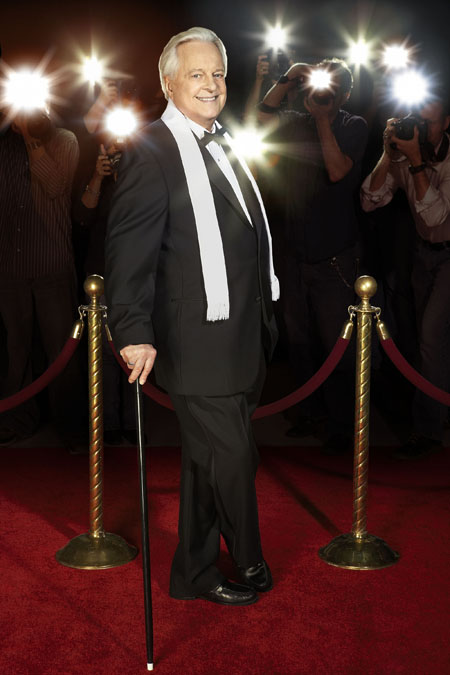
In this rare in-depth interview, the late Robert Conrad is shown discussing his remarkable career on television. Here is the official description from the priceless "Pioneers of Television" project.:
Robert Conrad sits down to discuss his iconic moments in his career and the famous show "The Wild Wild West"
Director: Steven J Boettcher
Star: Robert Conrad
? About Pioneers of Television
Television’s beloved stars bring their stories to life, offering insider tales and surprising revelations you won’t hear anywhere else. The Emmy-nominated producers of Pioneers of Television open the vault to give you exclusive access.
Dan Blocker, who played the gentle giant Hoss Cartwright on "Bonanza", rarely gave personal interviews but he made an exception in 1971, sitting down with entertainment journalist Bobby Wygant. Blocker discusses his travels, his prediction for the show's future and family aspects of life Tragically, he would die the very next year at age 43.
In this excerpt from an interview with Ben Mankiewicz from Turner Classic Movies, Jerry Lewis recalls his reunion with Dean Martin after not having spoken to him in 20 years. Here is the famous reunion moment from Jerry's 1976 Muscular Dystrophy telethon:
In
the aftermath of the surprise runaway success of Arthur Penn’s Bonnie and
Clyde – the Warner Bros. crime-drama garnering a fifty-million dollar
profit on a two million dollar investment by the close of 1967 – rival studio
United Artists wisely chose to give the director free-reign in choosing his
follow-up project. Ultimately, Penn
chose to give folksinger Arlo Guthrie’s already fabled talking-blues, the
“Alice’s Restaurant Massacree,” a big screen treatment. The timing seemed right.
Though
Penn’s new film would be far removed in temperament and style (and certainly
less violent) than his previous effort it was, in many respects, a prudent
choice. Such anti-establishment films as
Easy Rider, Medium Cool and Wild in the Streets had proven
critical and box successes in the years 1968-1969. Such free-spirited films brought in young,
enthusiastic audiences, the movie industry’s most important target demographic. But Penn was also aware that this recent
trend from literary to reality-based story-telling on film signaled an
important shift. He told the Los
Angeles Times that filmmakers were in increasingly “moving more and more
into direct relationship with the populace.”
Guthrie’s
meandering, sardonic epic – one seamlessly weaving an innocent’s view of
government inanities, the overreach of small-town policing, of “American Blind
Justice,” the travails of Selective Service draft board induction and of U.S.
foreign policy in Vietnam – was blistering clear-eyed and acutely withering in
its impossibly gentle, but mocking satire.
In
March of 1968 Guthrie’s manager, Harold Leventhal, was in process of inking the
film deal with Penn and UA. That very
same month Guthrie’s debut album, also titled Alice’s Restaurant, had
climbed to the no. 29 spot on the Billboard Top 100 album chart. Guthrie’s album had, improbably, been
charting steadily upward since it’s entry in the no. 180 position in November
of 1967. This was a particularly impressive
feat for an album whose signature song was eighteen minutes and twenty seconds
long. The song’s maddeningly memorable
and cyclical melody was supported only by the most basic backing
instrumentation: Guthrie’s acoustic guitar, a sparse standup bass and an impish
typewriter-cadence drum beat.
By
all measures, the commercial success of the “Alice’s Restaurant Massacree” was
implausible. Guthrie’s studio recording was understandably ignored on
ever-important AM radio – partly as no broadcast-length version was made
available to them.* But long before Guthrie would formally record his
shaggy-dog studio version of the “Massacree” in a professional setting in June
of 1967, the song was already well-known by those listening to such free-form
underground radio stations as New York City’s WBAI and Philadelphia’s
WMMR. The song had been pirated – in
several differing “live” versions and iterations – from reel-to-reel recordings
sourced from Guthrie’s appearances during late-night on-air radio show
appearances.
Thanks
to the underground circulation of those recordings, the “Massacree” was quickly
adopted as an anthem of the counter-culture, and by writers, artists and
anti-war activists. In time, Guthrie’s
talking-blues filtered up from underground radio to a more mainstream
audience. The song particularly appealed
to open-minded listeners, draft-age youngsters, journalists and
social-political pundits. They
immediately recognized that many of Guthrie’s satirical observations were acute
and perhaps too-closely reflected a society going amiss.
Upon
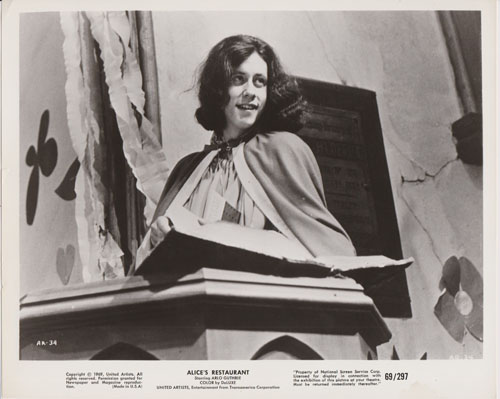
its release in September of 1969, Penn’s cinematic version of Alice’s
Restaurant wasn’t the box-office blockbuster that Bonnie and Clyde
was – but no one expected it to be. It
was a more personal low-budget film, but one that still did great
business. The film would bring in some
6.3 million dollars and sell just shy of 4.5 million paid admissions in the
domestic North American theatrical market alone. The film’s cast of professional actors were
supplemented by the townspeople of Stockbridge, Massachusetts, and by Guthrie’s
own friends working as extras on the edges. Penn estimated that ninety percent of the extras in the film were of the
community.
Penn’s
cinema vérité style dabbles are evident throughout. The film’s primary strength is in its
glimpses of the otherwise private involvements of the community congregating at
Alice and Ray Brock’s Old Trinity Church in Great Barrington. The film, on occasion, has a documentary feel
to it. This was Penn’s choice, his
personal way of doing things. “I work
very fluidly, with almost no preconceptions,” he told a visiting journalist on
set. Penn also shared that he did not
work from storyboards nor even visit locations prior to shooting. “I just sort of set up how life would be if
you were in that situation.” It could be
argued that the biggest issue with this approach was Penn’s viewing the
unfolding drama through a lens of presumption: the film’s reality and fictional
episodes are uneasily juxtaposed throughout.
Though
Arlo Guthrie holds mixed feelings about the resulting film (“I only made one
film,” he’d tell concert audiences over ensuing decades, “…’cause I saw
it.”), his memories of working with the creative team involved remain
warm. He thought Penn’s effort was an
“honest” one, his efforts allowing outsiders a small peek into the “scene”
built around the Old Trinity Church. But
Guthrie was also aware that the scene at Trinity circa 1965 – the time of
Guthrie’s Thanksgiving Day crime of littering - was a fluid one. Penn’s film could only provide a brief
snapshot of a time already passed since, in coming days, Guthrie reckoned,
“there’ll be a whole new scene up there, as everywhere else.”
Guthrie
was only twenty-years old when the film went into production - and had not
acted professionally in any capacity. Many on set in the summer of ’68 found the folksinger private and
distant, “elusive” in answers to both crew members and visiting
journalists. According to a long essay
in Playboy magazine, even old friends at the Trinity suggested that
Guthrie was “thought by some” to have already “left the family.” Certainly, his visits to the Trinity were
less frequent due to his new touring and recording commitments. On the brighter side, manager Leventhal was
impressed by his young client’s professionalism. He told the New York Times, “Here’s a
kid who likes to sleep until 3:30 in the afternoon who had to make a 7:30 A.M.
movie call every day for three months of shooting, and he did.”
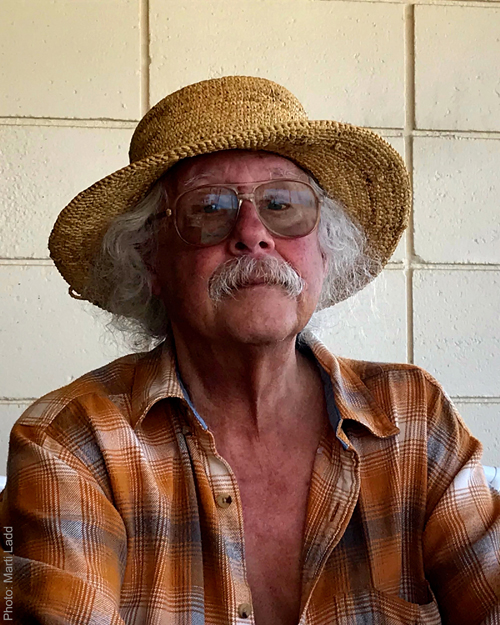
In
November of 2023 the University of Oklahoma Press published a biography of the
folk-rock singer in which he and I collaborated: Rising Son: The Life and
Music of Arlo Guthrie. Cinema
Retro editor Lee Pfeiffer asked if Arlo might be willing to share some
memories of his experience working on the Alice’s Restaurant film with
Arthur Penn. Though it’s been nearly
fifty-six years since production on the film began in June of 1968, Guthrie
graciously offered to share some of his remembrances of that time with
readers:
Q:
My first question to you is a pretty general one. As a kid growing up in the 1950s and early
‘60s, how would describe your interest in cinema? Were you a big fan of the movies? If so, what sort of films were you attracted
to?
Arlo: I wasn’t so much into films as I was more into TV
shows. Obviously, films that came out when I was a little older - the mid to
late 60s - had a bigger impact on me. “Bonnie & Clyde” for example.
Q:
What were you favorite TV programs? I
understand you were a big fan of Star Trek –
and just missed out on being cast on an episode. What was the story behind that?
Arlo: I got a phone call from Leonard Nimoy one time, out
of the blue! I couldn’t believe I was chatting with Spock! But I have no memory
of being asked to participate with Star Trek. **
Q:
I have a news-cutting from Variety reporting from your overseas
promotional tour for the Alice’s Restaurant film. In this case, from Paris in May of 1970. At the press conference you suggested that following the release of the Alice
film in the U.S. you were suddenly “offered ten films about hippies but
would prefer to do a western.”
Arlo:We didn’t do any promotional tours
in the US, as they were un-needed. But when I was asked to do a promotional
tour of Europe I jumped on it. I wanted to go to Europe. I had offers for more
acting roles, but mostly on TV shows that were popular at the time. Hawaii 5-O,
etc. But in those days everyone who had long hair was cast as a drug-addled
thief or a murderer. So I kindly
declined those invitations.
Q:
In any case, you did accept a number of television acting assignments in the
1990s. Our readers might recall your
reoccurring role as the graying-hippie Alan Moon on ABC’s Byrds
of Paradise. My
personal favorite of your television work was your role as a 1960s
folk-singing, Weather Underground-style fugitive on the Lorenzo Lamas series Renegade. How did those opportunities come about?
Arlo: I don’t remember exactly. But my
booking agents, David Helfant and later Paul Smith, made those roles possible.
Those offers came through their offices. I wasn’t looking for acting jobs.
(Photo: Cinema Retro Archive)
Q:Since you are a musician first and foremost,I’d like to ask you a
few questions about the soundtrack accompanying the Alice’s Restaurant film. Prior to his work on Alice’s Restaurant, Gary Shermanwas the arranger and conductor for John
Barry’s soundtrack for Midnight Cowboy. On Alice’s Restaurant, Sherman is billed as “Musical Supervisor,”
credited as composer and arranger of the film’s “Additional music.” What exactly was Sherman’s contribution? Did
you work closely with him on the arrangements?
Arlo: Gary Sherman wasn’t very familiar with the kinds of
instruments I wanted to be used as a sound track. But he was very knowledgeable with regards as
to how music supported a film. We worked very closely together trying to
integrate our different skills.
Q:Fred Hellerman, the producer of your first two albums for Reprise - is
credited on screen as the film’s “Musical
Director.” What exactly was
Hellerman’s role in creating the soundtrack?
Arlo: Fred had some knowledge of the kinds of musical
instrumentation - and songs - I was into at the time. He may have worked with
Gary more than I was aware of, but I think the credit was more of an honorific
title.
Q:In Rising Son: The Life and Music of Arlo Guthrie, you recall your
enthusiasm of having partnered with John Pilla on the soundtrack sessions. Pilla, of course, would soon become the
“Spiritual Advisor,” producer and/or co-producer of all of your albums from Running
Down the Road (1969) through Someday (1986). What was it about this earlier collaboration
that made you so trusting of John as someone musically simpatico?
Arlo: John and I loved the traditional songs and
instruments that became the underlying sound track for the film. For example,
we made extensive use of the autoharp which had not been used before (or since)
in Hollywood movies.
Q:
Any particular fond (or perhaps not-so-fond) memories of working on the Alice’s Restaurant soundtrack sessions with
Pilla and Sherman?
Arlo: Arguing about music became the
hallmark of my collaboration with John Pilla. He was very traditional in his assessment of what was good while I was a
little too experimental. Gary was good at determining what worked. So between
us we arrived at a consensus.
Q:The Old Trinity Church is central to Arthur Penn’s imagining of the Alice’s Restaurant film. What role did Ray and Alice’s deconsecrated
church-home play in your life?
Arlo: I always felt very much at home at the church. Long
before we began working on the film, I had stayed there often. It wasn’t very
long after Thanksgiving 1965 that I was to spend more time traveling around and
less time at the church. Using the church as a central location was fabulous.
In this rare promotional interview posted by the Harry Palmer Movie Site, Oscar Homolka discusses his role as Colonel Stok in the 1967 film "Billion Dollar Brain", starring Michael Caine in the third and last of the Palmer feature films made for theatrical release. Homolka had appeared as the same character in the previous film, "Funeral in Berlin".
To
TV fans of a certain age, the acronym ITC instantly invokes memories of spies,
guns, girls, espionage, memorable theme tunes, lush sideburns, flared trousers,
almost continuous smoking, purple flock wallpaper and grand, globe-trotting
adventures.
Actually,
the wide-ranging TV shows made by Lord Lew Grade’s pioneering company have fans
of all ages, with shows like The Saint, The Champions, The Persuaders! and Randall
& Hopkirk (Deceased) (US. My Partner The Ghost) still appearing in
television schedules to this day, nearly 70 years after Grade scored his first
hit in 1955 with The Adventures of Robin Hood.
And
so it’s everyone from grandparents to grandkids who have been tuning in in
their droves to hear ITC Entertains The World, a podcast that celebrates all
things ITC. Fronted by devotees Jaz Wiseman, Al “Smudge” Samujh and Rodney
Marshall, the podcast casts an eye at the output of this much-loved stable,
from whole-series overviews to individual episodes. They also look at the
movies made under the ITC banner (films like Blake Edwards’s The Tamarind Seed and
Peter Sellers’s career-reviving The Return of The Pink Panther).
I
spoke to Rodney Marshall about the podcast and his love of all things 1960s,
starting with the genesis of the podcast.‘Like a lot of podcasts, ours started
in lockdown. Jaz approached me and suggested that we did one based on the
little-known ITC show Gideon’s Way, which I hadn’t actually seen. I watched
them all and thought it was fantastic. You have all those great 1960s guest actors,
the Anton Rodgerses, Peter Bowleses and Annette Andres. I thought the podcast
would be very niche but it proved surprisingly popular.
‘I’ve
known Jaz for a long time through my late father. Jaz interviewed him for lots
of DVD commentaries when The Avengers came out.’ Rodney’s father just happens
to be Roger Marshall, a very familiar name to fans of vintage espionage
television shows. The creator of popular UK dramas like Travelling Man, Zodiac
and Floodtide, Marshall Sr also co-created the highly regarded and influential
private detective show Public Eye in 1965, starring Alfred Burke as
down-at-heel gumshoe Frank Marker.
He
was also a regular contributor of scripts for the likes of The Avengers,
writing 15 episodes of the iconic 1960s series.
After
the success of the Gideon’s Way podcast, they were encouraged to broaden their
scope and cover the entire range of ITC shows, but to do that they needed a new
recruit. ‘We thought that in terms of voices, three is better than two. Jaz got
in touch with his old friend Smudge, who is very much into the history of
Elstree studios, into Hammer films and of course, ITC shows. I think all three
of us bring something different to the podcast. Jaz is into things like music
and titles, Smudge is very into things like directors and direction, talking
about fish-eye lenses and the like. I’m more into the scripts, probably because
of dad.
‘It
was a learning curve for me because these two guys are ITC-mad. They probably
have huge tardis-sized rooms full of all things ITC. If I said to one of them,
“Do you have a copy of the scripts for The Persuaders! that my dad wrote for?”
and they’d probably have three different copies of it.’
We
bemoaned the fact that following the sad demise of the distribution company
Network, it now seems unlikely that long-running shows like The Saint will
receive the BluRay treatment and be discovered anew in pristine condition. It’s
a huge shame since the likes of The Prisoner and Man in a Suitcase have enjoyed
BluRay remastering and look breathtakingly fresh and vibrant as a result.
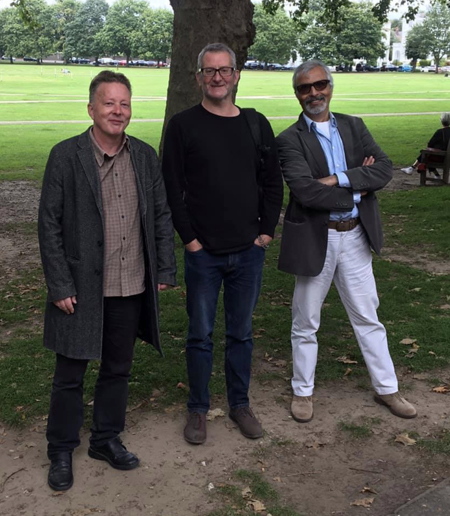
(L to R: Rodney Marshall, Jaz Wiseman and Al Samujh.)
'Man
in a Suitcase is very much a shared love. I discovered it in the early nineties
when BBC started showing it again during the school holidays. In my early
misguided smoking days, I used to copy McGill’s habit of standing my cigarette
up on the table between puffs. Naturally, I wasn’t able to pull it off with the
same je ne sais quoi as Richard Bradford.
Marshall
is very much an admirer of the US actor. ‘Bradford’s performance is
astonishing. When you put him up against someone like Colin Blakely or
Jacqueline Pearce, Bradford is dynamite. He has an incredibly magnetic
presence. A lot is made of the fact that there was a lot of tension between him
and the actors and stuntmen, but the main directors on the show absolutely
loved him. Peter Duffell who was one of the main directors was our next door
neighbour and one of dad’s mates, and he raved about Bradford.
‘He
may have overdone the Marlon Brando thing; he would race around the set four or
five times in order to look breathless before a take, but he really invested
himself in his performances. Like Patrick McGoohan, he was a lead actor who
wouldn’t take bullshit. If an actor came along and just wanted a quick cheque,
they wouldn’t put up with it. Bernard Lee turned up drunk for an episode of Man
in a Suitcase, and Bradford walked up to him and said, ‘I’m not putting up with
this crap.’ Bernard Lee immediately switched onto acting-mode and suddenly
there were no problems.’
Marshall’s
other great ITC love is one of its earlier hits, Danger Man (or Secret Agent in
the States), a popular and innovative pre-Bond spy series that made a global
star out of Patrick McGoohan. ’I think what kept McGoohan engaged with Danger
Man for so long is the fact that he’s undercover in so many different roles.
One week he might be playing a roaring drunk, the next week he’s a timid
school-teacher in glasses, sending someone into a nervous breakdown by stalking
them! That variety made him feel like he was back in his old rep company in Sheffield.’
Danger
Man was one of several ITC shows that, like ABC’s The Avengers, made the shift
from black and white to colour in the mid sixties, when the US networks made it
mandatory. Marshall however, believes that something was lost after the transition.‘I
still think that The Prisoner, Man in a Suitcase and the amazing Strange Report
aside, the best ITC series are from earlier in the decade like Gideon’s Way,
Danger Man and The Saint, which I much prefer in black and white.
‘I
always felt that when a show went from black and white to colour, you lost a
lot of the subtlety. Take an episode of The Saint like ‘Scorpion’ with Dudley
Sutton, who rides around on a motorbike bumping people off and even tries
strangling his girlfriend. Perhaps its something to do with the shadows, but
you can pull off a kind of darkness in a monochrome episode which doesn’t quite
work in colour. Jaz recorded a DVD commentary for the Avengers episode ‘Town of
No Return’ with Brian Clemens and director Roy Ward Baker, and they both said,
‘you know, black and white is more…real.’
The
podcast casts its net wide to cover not just the big, popular hits but some of
the ITC gems that may have faded from the public consciousness. ‘Man of The
World from 1962 is very interesting, with Craig Stevens from Peter Gunn playing
a photo journalist travelling the world getting himself into scrapes. It
actually started in colour then went back to black and white after its budget
was slashed.’
Intriguingly,
The Sentimental Agent starring Carlos Thompson started off as an episode of Man
of The World. The powers that be were so impressed with Thompson that they span
it out into a whole series. Marshall explains, ‘Carlos was like a continental
Roger Moore, very good looking, very charming, very flirty. But suddenly he
fell ill, and they had to make the rest of the series with this humourless guy
who was none of the above.’
The
podcast, like the work it celebrates, is a labour of love and it’s benefitted
from some Lew Grade-style serendipity that brought exactly the right three
people together to extol the many virtues of a series of entertainments that
are still adored by millions.
‘We’re
lucky,’ concludes Marshall,‘because Jaz has access to a library of things like
the music and a lot of interviews and DVD commentaries that he’s done with the
likes of Richard Bradford and Sir Roger Moore, who was hilarious. On the
commentary for The Saint, they debunked the theory that Patrick McGoohan turned
down the role. He was interviewed for it, but producer Bob Baker thought he was
unsuitable for the role as he refused to do any romantic scenes. They said to
Roger, ‘we knew that kissing ladies on screen wouldn’t be a problem for you,’
and he replied in that most Roger Moore way, ‘Indeed not!’
(ITC
Entertains The World is available to listen to across all streaming platforms.)
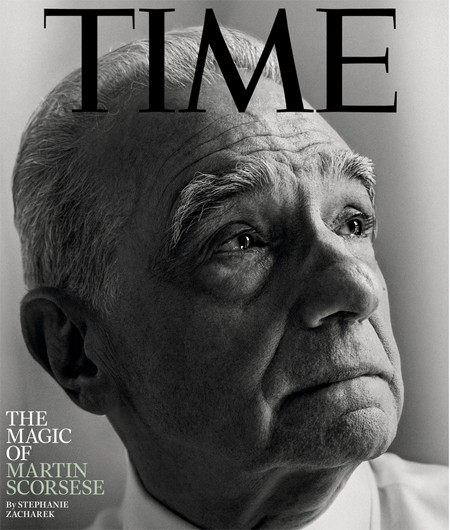
Time magazine writer Stephanie Zacharek visited Martin Scorsese and reports on the 80 year-old Oscar-winning director's mood, plans and inspirations in a revealing article. Scorsese talks about his forthcoming production "Killers of the Flower Moon", which opens in October, as well as the need to preserve film classics. He's also not optimistic about the future of the movie industry. Click here to read.
Here's a bizarre film clip of Paul Newman being interviewed by co-star Barbara Rush on the set of their 1967 Western classic "Hombre". It's humorous and largely uninformative but fun to watch.
In this rare, extended interview with one of our most gifted actors, Al Pacino sat down with Turner Classic Movies host Ben Mankiewicz to discuss his methods and his training at the Actors Studio, and talked about how the New York-based actors community not only shaped his craft but also revolutionized the profession, on both stage and screen.
A quaint relic of the past, "open-end" interviews were widely used in the entertainment industry to deceive radio listeners into believing that a local entertainment personality was actually interviewing a big star. The reporter would be supplied with a vinyl record with "cuts" of pre-recorded interviews with the subject or subjects. They were also provided specific questions that they would record in their own voice. These would be inserted into the "interview" to give the impression that the reporter was actually speaking with the star or stars. Big city personalities didn't have to rely on such deceitful gimmicks, as they generally had access to the big names through press junkets or, if their media employer was impressive enough, a one-on-one exclusive interview. The open-end programs allowed reporters in smaller, often rural markets to pretend they were in the presence of the stars. How many people fell for this, we'll never know. It would seem unlikely that someone from the town of Nowhere would be able to pull off convincing listeners that he was at the top of the Swiss Alps for the filming of "On Her Majesty's Secret Service", but some actually tried, as that film provided open-ended "on location" interview records from that glamorous location. Here we present an open-end disc with rare interviews with George C. Scott and Peter Sellers, two people who were generally adverse to giving interviews. The subject is "Dr. Strangelove" and we suppose they both felt more comfortable with a studio hack asking mundane, impersonal questions. Not much is revealed in Scott's interview, but Sellers is a bit more forthcoming and provides some humorous examples of his expertise in impersonating different accents from diverse areas of England. Strangely, he gives the interview in the same perfect American accent he used in the film.
Jackie Gleason never sat down for many in-depth interviews. This classic segment from a 1984 segment of "60 Minutes" was an exception. Interviewed by Morley Safer, Gleason is larger than life in every way: physically, habitually and in terms of his wit, as he chain smokes in his natural environment: a bar.
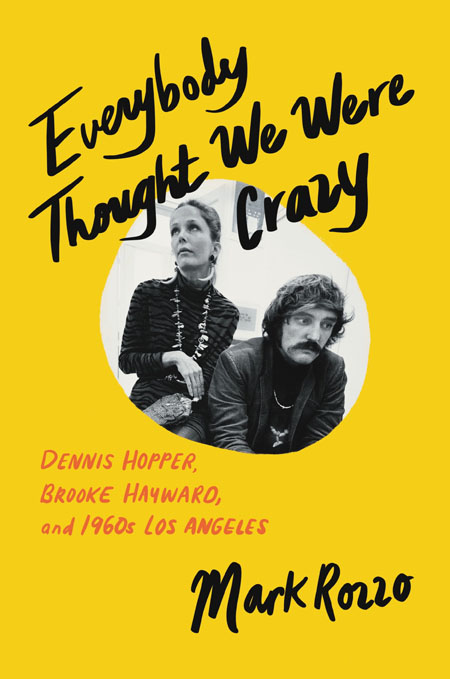
Mark Rozzo’s first book, Everybody Thought We
Were Crazy: Dennis Hopper, Brooke Hayward, and 1960s Los Angeles (Ecco
Press/Harper Collins), is about Hopper and Hayward and the Los Angeles art,
film and music scene in the 1960s. The paperback edition will be published on
April 18. The dean of non-fiction Gay Talese said of the book: “Mark Rozzo, an
electric and virtuoso storyteller, resurrects the relationship between icons
Dennis Hopper and Brooke Hayward to dissect their marriage and its fallout, and
takes many fabulous detours along the way with the artists and stars who
crossed paths with Hopper and Hayward.”
Rozzo
is a contributing editor at Vanity Fair, was also an editor with Town
& Country and teaches non-fiction writing at Columbia University. His
writing credentials are extensive, with bylines in the Los Angeles Times,
the New Yorker, the New York Times, Esquire, Vogue,
the Wall Street Journal and the Oxford American. As if that was
not enough, he has been a musician with several prominent rock groups,
including America and Bambi Kino. Bambi Kino is known for playing Hamburg-era
music that the Beatles performed during their German wood-shedding days. Along
with Mark, who fronts the band, the group consists of members of Nada Surf,
Guided by Voices and Cat Power. His book features an often-overlooked aspect of
how the Los Angeles movie scene of the 1960s intersected with art and music and
reflects how Hopper and Hayward were at its vortex.
The
following is a condensed version of an interview with the author conducted earlier
this year.
Steve
Matteo: You're primarily a New Yorker. What is it about
Los Angeles that so intrigues you?
Mark Rozzo: I knew I
wanted to do a cultural history of LA someday, and I knew that it would be set
in the 1960s. What made Los Angeles during that decade so dynamic and unique was
the concurrent revolutionary ferment in contemporary art, popular music, and
Hollywood: like a revolution in triplicate. I gradually found that Dennis
Hopper and Brooke Hayward, more than anyone else, seemed to connect those three
realms. They knew all the artists, they went to the rock shows, and they were
so immersed in Hollywood.
SM: Did you ever have a chance to meet Dennis
Hopper?
MR: Dennis died in 2010 and I never got a chance to
meet him. But I was the first writer—and I believe still only—given access to
his personal archives, along with his photographic archive, the Hopper Art
Trust. I was also fortunate in that the Jean Stein Papers at the New York
Public Library opened in the fall of 2019, a critical point in my research time
line. Jean had been interviewing Dennis since the early 1970s and hers were the
best interviews I’d ever read with him. Since they were old pals, and on the
same page culturally in so many ways, he opened up to her more than he ever did
to anyone assigned to write about him at, say, a film magazine.
SM: How hard was it getting Brooke
Hayward to cooperate on your initial story? Were you ambivalent about her
participation at any point? Did you feel her cooperation would in any way
possibly make the story less objective. MR: With Brooke, I had to go up and talk to her at
her house in Connecticut. The first time was with her and Dennis’s daughter,
Marin Hopper, and Marin’s husband. They were the wingmen. We were there to
convince Brooke to let me write about her for Vanity Fair. I knew from
talking to Marin, whom I’d befriended several years before, that her parents
were the way in to the story I wanted to tell about LA and that a big piece for
Vanity Fair would be a crucial first step. Brooke was hesitant at first (she’s
very good at playing hard to get) but as we talked and as we asked her
questions—"What about the party you guys threw for Warhol and buying the
first Campbell’s soup-can painting? What about hanging out with Oldenburg? What
about going to see the Byrds on the Sunset Strip? What about Joan Didion? What
about starring in The Twilight Zone?”—she started to understand that
what I was after was a cultural history with her and her husband at the center
of it, not another retelling of marital trauma and woe. I never felt beholden
to her point of view or restricted in any way. She and the family opened every
door and gave me free rein to tell the story.
SM: Motherhood and supporting
Dennis seemed to derail her acting career. Do you think if she hadn't met
Dennis, she would have had a more fulsome film career?
MR: It’s so hard to know.
Brooke had obviously inherited talent from her mother, Margaret Sullivan, and
had been granted admission to the Actors Studio. Her career was taking off in
the early 60s, whereas Dennis’s had tanked. That was probably why Dennis was
jealous of her and freaked out in 1964, asking her to stop, which she did. But
Brooke had always felt ambivalent about Hollywood and knew that someday she’d
get back to doing what she loved as a kid, which was writing. And she did. Her
book Haywire came out in 1977 and was a huge bestseller. It’s probably
the greatest Hollywood memoir of all time.
SM: Your book reflects how the
post-war years, particularly beginning in the late 50s and early 60s, so an
emergence of the co-mingling of high art and pop art. Hopper and Hayward seemed
to be at the center of this explosion.
MR: They really were. And it
became their focus during that time, more than acting. And for this, they stood out in Hollywood. They were different. Their tastes
were unusual. There were only two people working in Hollywood who regularly
showed up for Ferus Gallery openings: Brooke and Dennis. As Irving Blum, the
Ferus impresario, told me, “They were virtually unique. There was nobody else doing it in the way that they were doing it.” And they bought stuff, offering crucial early support to such
artists as Andy Warhol, Ed Ruscha, Frank Stella, Roy Lichtenstein… it goes on
and on. Their house, 1712 North Crescent Heights Boulevard, was as avant garde
as any museum or gallery in the world at that time. And since people like the
Fondas, Ike and Tina Turner, Terry Southern, Joan Didion, Miles Davis, even
Hells Angels were coming through the house, that new art—mostly Pop Art—was
exposed to an ever-larger circle. I should maybe note that their collection
today would be valued in the hundreds of millions of dollars. Not bad for two
semi-employed actors!
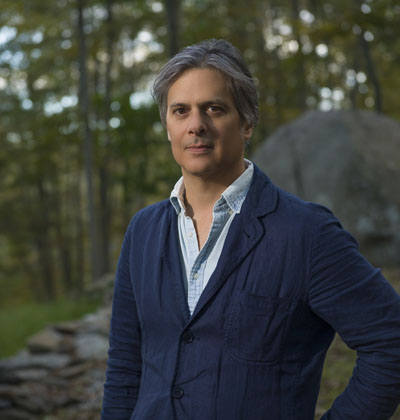
(Photo: Jonathan Becker)
SM: What do you feel is his most significant
contribution to film?
MR: As Dennis would have said, it came down to a
handful of projects over a very long career: Rebel without a Cause, Giant,
Cool Hand Luke, Easy Rider (of course), The Last Movie, Apocalypse
Now, Blue Velvet. Those would be the biggies, more or less. I do think he
was a very special, one-of-a-kind actor who came out of the Shakespearean
tradition, had his mind blown by the Method, and created his own thing. He
never won an acting Oscar yet perhaps he accomplished something more than that.
As the critic Jenny Diski once put it, “As charm is to Cary
Grant, awkwardness to Jerry Lewis, vulnerability to Montgomery Clift, so
malevolence is to Dennis Hopper.” And then too was his stance in
Hollywood—rebel, maverick, artist, survivor. There’s never been anyone quite
like him in the history of American moviemaking.
SM: How significant is Easy Rider to the
evolution of American film and how influential was it on American film in the
70s, which seems like a golden era?
MR: It’s massively significant. It was the movie that propelled what we call the New Hollywood—that era
of ambitious, artful American filmmaking—into the 1970s, the decade of
Scorsese, Coppola, Altman, and Spielberg. It’s a movie that’s been picked
apart, dissected, and subjected to near-exegetical analysis and interpretation.
And yet also, in some quarters, it’s been dismissed as a period artifact. It’s
certainly the film that turned Dennis into an icon, even an icon that
transcended Hollywood—at least for a while. And it proved for the first time
that a movie could be made about the counterculture and still make a ton of
money. It represented a whole new kind of Hollywood math: a movie shot for well
under $500,000 hauls in something like $60 million. Beyond that, it’s forever a
part of our collective memory of the summer of 1969, along with the Apollo moon
landing, the Beatles crossing Abbey Road, the Manson murders, and Woodstock.
It’s an enduring cultural touchstone. And it has an amazing soundtrack!
SM: He and Peter Fonda had an interesting
relationship to The Byrds. It has been said, that for Easy Rider, Fonda
borrowed a little from Roger McGuinn and Hopper borrowed a lot from David
Crosby.
MR: That was certainly corroborated by my research,
including conversations with Roger McGuinn. Roger loved the movie so much that
he said to Peter Fonda something like, “I wish I’d been in it!” Peter replied,
“But you were!” He explained to Roger that he and Dennis had developed their
characters based on him and his irascible bandmate in the Byrds, a band that
represented a lot of the cultural change in LA in the 1960s.
SM:The Last Movie was a film that gestated for years, but
then became one of the key films of the 70s American film renaissance, but also
signaled how the end of the 70s would be a time of excess and the end of that
kind of creative film-making.
MR: Yes, The Last Movie. That project became Dennis’s Waterloo
after the outsize success of Easy Rider. He had initially been trying to
make that film in 1965 and 1966. But, after causing excitement throughout
Hollywood, it came to nothing. Dennis was distraught; if he’d have made The
Last Movie then, it would probably have been considered the first New
Hollywood film, coming before Bonnie and Clyde. But the project fell
apart. Executives didn’t want to pay Dennis Hopper, of all people, to direct a
movie. Brooke said that if Dennis had been able to make that movie then, he
wouldn’t “have fallen into the abyss.” Dennis’s alcoholism really started to
accelerate after that.
SM:What would Dennis make of the world of movies today?
MR: That’s a stumper! I think he’d either have been
totally appalled at the Marvelization of Hollywood… or he’d find it to be the
greatest Pop Art happening ever. Dennis was always so engaged in his time,
whether it was the 1960s or the 1980s or the 2000s. He would have found a way
in. He always did.
(Steve Matteo is the author of the books "Act Naturally: The Beatles on
Film", to be published on May 15, 2023, "Let It Be" and "Dylan". He has contributed to the collection "The Beatles in Context" and has written for
such publications as The New York Times, The Los Angeles Times, New
York, Time Out New York, Rolling Stone, Elle, and Salon. @MatteoMedia)
Here is a rare on-set report from the filming of the 1969 spy comedy "One More Time", the sequel to "Salt & Pepper". Director Jerry Lewis is seen behind the camera and driving about on a motor scooter before (reluctantly) answering questions for TV interviewer. Davis is seen briefly walking about the set clad in his trademark mod clothing and signing autographs for kids.
Classic movie lovers have long been acquainted with the fact that some of the industry's finest performers of stage and screen perfected their unique styles of acting through their association with The Actors Studio, which has locations in New York and Los Angeles. The roster of alumni reads like a "Who's Who" of Hollywood legends. As the Actors Studio celebrates its 75th anniversary, we reached out to Beau Gravitte, Artistic Director of the New York Studio to get some insights into the Studio's history, mission and legacy.
Cinema
Retro: How was the formation of the Actors Studio inspired by the legendary
Russian actor and director Konstantin Stanislavski?
Beau Gravitte: The
roots of The Actors Studio go back to the Group Theatre (1931-1941) whose work
was inspired by the discoveries of the great Russian actor and director
Konstantin Stanislavski and his best student Eugene Vakhtangov as revealed in
the legendary productions that the Moscow Art Theatre toured in America in
1923. Techniques based on a variety of methods were developed here by Lee
Strasberg from the Stanislavsky System and reformations from the Vakhtangov
acting processes. Within the Studio, actors are free to develop privately
without the glare of commercial pressures. Since its founding in New
York City in 1947 by Elia Kazan, Cheryl Crawford, and Bobby Lewis, The Actors
Studio has become renowned worldwide as ‘the home of method acting.’
CR: Kazan's name remains known to most classic movie lovers. Can you give us a bit of background on the co-founders Bobby
Lewis and Cheryl Crawford?
BG: Bobby Lewis
was an accomplished actor, director, teacher and author. He was an
original member of the famous Group Theatre, and then, in 1947, he became a
co-founder of the Actors Studio, along with Elia Kazan and Cheryl Crawford. Bobby directed several plays, including, in 1947, the Broadway
production of “Brigadoon.” He later became the Chair of the Yale School
of Drama, in the 1970’s, where he shaped the careers of many successful actors,
including Meryl Streep.
Cheryl Crawford
was the only co-founder of both the Group Theatre and the Actors Studio.
She was a very influential producer, involved in many iconic productions,
including “Awake and Sing,” “Porgy and Bess,” “Brigadoon,” “The Rose Tattoo,”
“Paint Your Wagon,” “Sweet Bird of Youth,” and many others.
A bit of a cipher,
her incisive mind, and her connection to the Broadway pipeline seems to have
been integral to the Studio’s early successes.
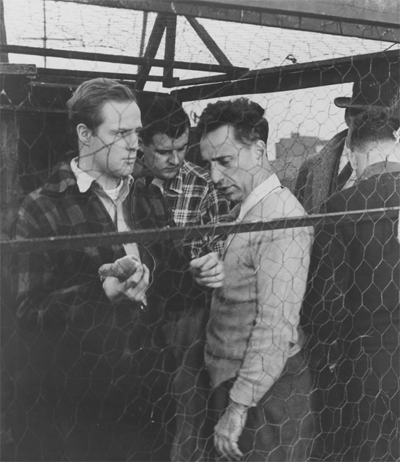
Actors Studio legends Marlon Brando and director Elia Kazan on the set of the 1954 Oscar winner "On the Waterfront".
(Photo: Columbia Pictures.)
CR: "The
Method" was a new style of acting that tremendous influence on a new
generation of actors, many of whom would go on to gain esteemed reputations.
How would you describe the Method and in what ways did it differ from the
traditional styles of acting?
BG: The “Method”
is simply that - a method, a series of techniques to train the imagination to
respond to imaginary circumstances. Before this, acting was much more
formulaic, exterior, and largely unconnected to anything personal. This
new method taught actors to use their own experiences, their memories, their
subconscious in creating a character.
CR: The Actors Studio
was founded in 1947. Was it an immediate success or did its reputation build
slowly?
BG: By the time
the Actors Studio was created, in 1947, this new kind of work was already
catching on. That same year, “A Streetcar Named Desire” opened on
Broadway, and the film in 1951. Word was out - something new was
happening in American acting.
CR: The Actors
Studio is free of any membership charges. Has it always been free for those
artists who are accepted?
BG: Membership at
the Actors Studio is lifetime, and free. And always has been.
CR: Those who studied
at the Studio are said to be given a great deal of latitude in terms of
developing their acting skills. How crucial is the ability to improvise
relevant to a student's ultimate success?
BG: I’m not sure
if “latitude” is the correct word. The Studio is like a gym, for
actors. And like a gym, you have to create your own workout. The
actor shapes whatever exercise they feel they need, so I guess there is
latitude in that. It is a very self-motivated place. And
improvisation is simply another tool at an actor’s disposal.
CR: How and when did
Lee Strasberg become affiliated with the Studio and how can you describe his
influence?
BG: Lee Strasberg
became Artistic Director of the Studio in 1951, at the request of Elia Kazan -
a position he held until his death in 1981. The list of actors that he
trained is simply a “who’s who” of American film and theatre. He was,
undoubtedly, the most influential teacher of acting in American history. And his legacy lives on in the Studio leadership, including presidents Ellen
Burstyn and Al Pacino.
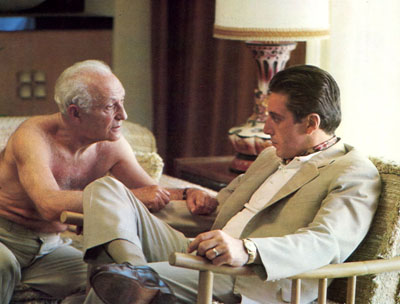
Two more Actors Studio legends, Lee Strasberg and Al Pacino, co-starred in "The Godfather Part II" in 1974. Both actors received Oscar nominations for their performances.
(Photo: Paramount Pictures.)
CR: The Studio
remains relevant today for a new generation of actors who follow in the
footsteps of legends. Can you name some of the more prominent artists who came
to fame after attending the Studio?
BG: This year
marks the 75th year of continuous operation for the Actors Studio. Since
that day in 1947, the members of the Studio have met, twice weekly, to deepen
their understanding and mastery of the craft of acting. That’s pretty
remarkable, for a non-commercial theatrical enterprise, located in the heart of
what is probably the most commercial theatre district in the world. The
Studio continues because of its very high standard of work, and because of the
caliber of artists who make up its membership. Just to name a few:
Bradley Cooper, Melissa Leo, Stephen Lang, Nicholas Braun - all lifetime
members of the Actors Studio.
CR: How would
you describe the continuing mission of the Actors Studio?
BG: The mission of the
Actors Studio is to provide a private, safe place for its members to work, to
stretch, to try things they would not normally be allowed to do - all in the
service of deepening their understanding of the work. As the world
changes, so does the artist, in response. And the Studio is a place
where that focus can evolve - which keeps us relevant in these turbulent times. The Actors Studio is in session, twice a week, every week - hopefully
for the next 75 years, and beyond.
(Special thanks to Brett Oberman.)
(Al Pacino will be appearing at a benefit screening of "Dog Day Afternoon" for the Actors Studio in New York City on October 27. Click here for details.)
Jack Nicholson was only recently emerging as a major leading man when he sat down with celebrity interviewer Bobbie Wygant in 1970. Nicholson had just received his first Best Actor Oscar nomination for "Five Easy Pieces". He discusses his philosophy about the Oscars and expresses admiration for his fellow actors who are competing in the same category and the controversial announcement by fellow nominee George C. Scott that he wouldn't accept the award for "Patton" if he won. Nicholson also discusses "Five Easy Pieces" and extols the virtues of his early career Western "The Shooting", directed by Monte Hellman. Once Nicholson achieved superstar status, he avoided interviews like the plague. Thus, this rarity is of considerable interest even if the sound quality is a bit uneven.
Author
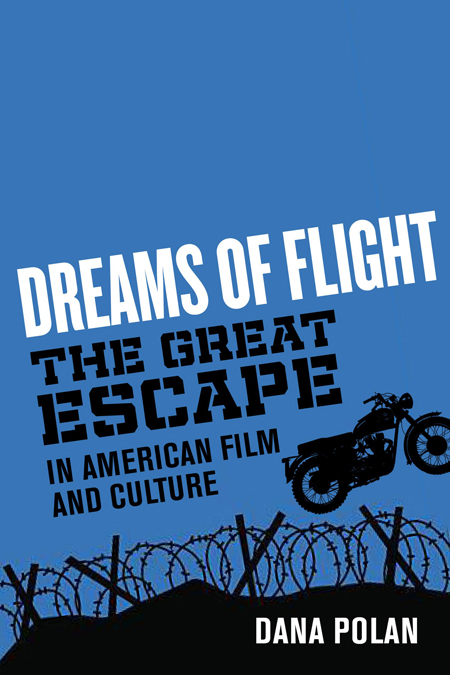
and film historian Dana Polan has
recently written a book titled Dreams of
Flight: ‘The Great Escape’ in American Film and Culture that analyzes
director John Sturges’ WWII classic. Cinema Retro Editor-in-Chief Lee Pfeiffer conducted this interview with
Polan regarding his book.
Q:Tell us about your book overall:
Dana Polan: Combining unique
archival research, close analysis, and first-person accounts by viewers, Dreams
of Flight traces multiple histories around the 1963 POW classic The
Great Escape: production history of the film itself but also the history of
the original event (an actual breakout in 1944 that led to the successful
escape of three men, recapture of seventy-three with fifty of those summarily
executed on Hitler’s orders), as well as the trajectory of POW Paul Brickhill’s
written account as it evolved into the bestselling page-turner book The
Great Escape. I also chronicle my own viewing history of the film, starting
as a Sixties adolescent, along with accounts by other viewers who also saw the
film around then and found that its blend of the buoyant and the downbeat
stayed with them over the years. I had long wanted to revisit the film, ever
since first seeing and being so strongly impacted by it. I feel so lucky to
have been given the chance to engage with the film in a book-length study that
could go into much detail about the film and its reception history.
Q:When and where did you first see the film?
DP: I wish I could be
more precise about the exact date but I started researching and writing the
book during Covid quarantine and that limited a wee bit of my research. I know
I saw it at my town’s one drive-in and it was likely about 1965 since that is
when we moved to the area. If so, I would have been 13 years old or so, and it
would have been a re-release. I’d have loved to track down microfilm copies of
the local newspaper to see the dates the film was playing and also to determine
if it was on a double-bill or not. The Great Escape is a long film but
our drive-in generally showed two films and I imagine would only have had one
presentation per night of the double-bill. Although The Great Escape was
not road-showed in its original release in 1963 — no symphonic overture over a
static opening title, no intermission, and so on — I persist in thinking there
was a break half-way through so viewers could be encouraged to go to the
concession stand. In fact, the film has a logical place for a pause just at the
halfway mark — when the first character we care about gets killed and the hitherto
individualist Hilts (Steve McQueen) declares his commitment to the collective
cause of escape. There’s a consequential fade-out and then fade-in as the POWs
resolutely return to their cause. If indeed the drive-in showed The Great
Escape on a double-bill, that would have made for a long evening, and the
intermission might have been essential for concession-stand sales.
An
amusing anecdotal detail: I was away for the weekend when the film opened at
the drive-in and my mom and stepdad went without me on Saturday evening
to see it. I had desperately been wanting to see it as, as I’ll explain in a
moment, it seemed to promise exactly that sort of action entertainment I loved
as a kid. When I got home by Sunday, I was so distraught that they hadn’t
waited that my stepdad ended up having to take me that evening and sat through
this long epic a second time in two days. He dozed off here or there while I
was enthralled by every moment of the film even as I ultimately found it very
disturbing.
Q:What impressed you most about it?
DP: Like, I imagine,
many young American boys of the time, I went to the film for the gungho promise
of its canonic poster, “The great adventure, the great entertainment, the great
escape.” Instead, I was blown away by a narrative that seemed to me to be a
deflation of adventure — a transformation of rousing entertainment into
something questioning and quite bleak.
The
Great Escape’s
downbeat turn from a fun romp into fatalism left a lasting impression on me. As
I write in Dreams of Flight, this unexpected narrative turn was a theme
I began to notice in other films of that historical moment — one that is
telling of American culture in the 1960s.
I
have always imagined that my experience of movies is not mine alone but is
likely representative of my demographic currents (gungho adolescent boy, in
this case) and may be shared strongly by others in the same demographic. At the
time, as I say, I was a pre-teen American boy who especially liked “manly”
action cinema and expected from the trailers and that iconic poster that The
Great Escape fit that mold. I know from other fan accounts that I tracked down
for the book that I was not alone in feeling something disturbing and
consequential was going on instead — in the film and in the times themselves.
In my research for Dreams of Flight, I reached out to other viewers who
first saw The Great Escape in the 1960s and found many had comparable
reactions.
(Photo: Courtesy of the author.)
Q:Where does it stand in relation to Sturges' other films?
DP: John Sturges made
over 40 films in a career that started with B-movies with a graduation to A-films
in the 1950s, some of which combined strong narrative drive with a degree of
artistic ambition — on the one hand, an entrapment drama like Bad Day at
Black Rock (Sturges’s one nomination for Best Director) where thematic
resonance (the topic of racial prejudice) is overlaid with taut suspense and
moments of explosive action; on the other hand, the pretention of literary adaptation
with, for example, the barebones Hemingwayesque allegory of The Old Man and
the Sea. Even though he was thought of most as a manly man’s director,
Sturges even did so-called women’s films, melodramas of love and emotional
turmoil, such as A Girl Named Tamiko or By Love Possessed. But
his forte was films of masculine fortitude and he found apt embodiment,
literally so, for the trials and travails of men under pressure in a visual
fascination with strong, sometimes stocky guys filmed as upright or coiled up bundles
of vitality just itching to burst out. For example, the first time we see James
Garner in The Great Escape (as Hendley, the forger), he’s filmed,
perhaps curiously, from a distance that not only cuts off his feet but hisneck and head as well so that the emphasis is on his torso, taut and
tough as he confronts the fact of incarceration. Throughout the film, there are
long pauses to paint a pent-up male energy that then passes over into scenes of
vibrant action. I suggest in my book that The Great Escape not merely
divides into three parts — planning of the escape, enactment of the escape, the
outcome (as noted, a generally bleak one with most of the men rounded up and
summarily executed) — but finds an overall distinct visual style for each of
these: from coiled up men constrained by the fences that surround the camp and
by the very confinement of the barracks they are walled up in, to the open
expanses of seeming freedom beyond the camp, and back again to the camp for
those POWs who are rounded up but escape execution (with the last shots showing
even greater confinement for Hilts, who once again merits his moniker, “The
Cooler King”).
For
me, The Great Escape shows Sturges at the pinnacle of his dramatic form,
although some fans prefer the tighter professionalism of The Magnificent
Seven. Later Sturges films have their moments but the pauses get longer
(and more talky as in the very sodden The Satan Bug) and the
professionalism turns into long scenes of planning for action that actually
defer that action (for example, the slowly unfolding Marooned and the
overblown Ice Station Zebra which keeps delaying a violent confrontation
that actually never comes for symphonically scored scenes of the submarine
crashing through the ice and men pushing buttons and yelling orders). I find
perfection to the pacing of The Great Escape: men talk out their plans
at length but the suspense never lets up and, as I argue in the book, Sturges
films dialogue scenes in a variety of forms (classic shot/reverse shot,
wide-screen confrontation between men, long takes with a moving camera, and so
on) that keep everything moving forward in thrilling fashion.
In this excerpt from the American Public Broadcasting System's acclaimed series "Pioneers of Television", Peter Graves discusses his long career from "B" sci-fi movies to his massive success in "Mission: Impossible". He also talks about the equal success of his brother, fellow TV icon James Arness.
Here's a wacky interview with Robert Shaw on the set of "Jaws". He is in an unusually jovial mood, considering he was quite perturbed at the scheduling overruns in filming and the fact that he found the Martha's Vineyard location quite boring. He states that he has it one good notice that there is more incest practiced on the island than anywhere else. Most bizarre is an anecdote he tells in which he convinced Johnny Carson that director Richard Attenborough injected him with germs that cause venereal disease while making "Young Winston"! No wonder we miss him so much.
"His decades-long career, which spanned the silent
era, Hollywood’s golden age and the New Hollywood renaissance of the 1960s and
’70s, was emblematic of a creative spirit that persisted despite changing fashions,
industry upheavals and discriminatory practices. He revolutionized the way
films communicated visually, developing new techniques that could convey
feelings without the need for words or even performers — like the
expressionistic use of wide-angle and fish-eye lenses in John Frankenheimer’s
body-swapping science-fiction drama, Seconds (1966); or one of the earliest
aerial shots in the final moments of Joshua Logan’s Technicolor romantic comedy
Picnic (1955)."
In this 1972 appearance on "The Dick Cavett Show", Michael Caine defends his latest film, "X, Y and Zee" (UK title: "Zee and Company") against some negative reviews. He also discusses his star-making 1964 film "Zulu" and describes the factors that prevented the film from being successful in its American release.
Kim Novak is a screen legend...but one of the least flamboyant. Over the decades, Novak has kept a low profile and rarely makes public appearances or gives interviews. So, kudos to Eddie Muller of Turner Classic Movies for convincing Ms. Novak to participate in this rare audio interview.
Direct from the latest Turner Classic Movies Film Festival, here is Ben Mankiewicz interviewing Steven Spielberg, who was there to celebrate the 40th anniversary screening of "E.T.: The Extraterrestrial". Spielberg discusses the film, his early fascination with John Ford's "The Searchers", the troubles filming "Jaws", working with Joan Crawford in his directorial debut for the TV series "Night Gallery" and much more.
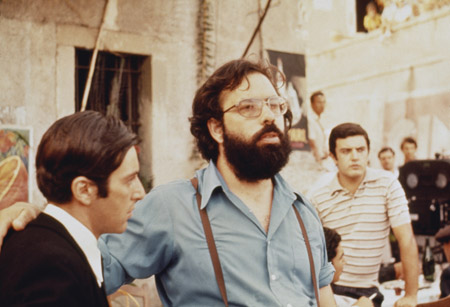
Coppola and Al Pacino on location in Italy for "The Godfather" in 1971.
(Photo: Paramount.)
BY LEE PFEIFFER
You can't browse the web or pick up a magazine lately without encountering an interview with Francis Ford Coppola. With the 50th anniversary of "The Godfather" at hand, he's very much back in the spotlight after keeping a low profile for many years. Coppola, as we all know, we elevated from relative obscurity to international acclaim on the basis of "The Godfather" despite the fact that Paramount had little confidence in the film and didn't care for Coppola's artistic vision, which was most definitely not the boilerplate gangster flick the studio had in mind. The film won the Best Picture Oscar and became the highest grossing movie in history. Two years later, Coppola had a dual triumph with the release of "The Conversation" and "The Godfather Part II", another film he wasn't initially keen on being involved with. It made Hollywood history by being the first sequel to also win the Best Picture Oscar. Despite his new-found clout, Coppola had no takers when it came to his next visionary project, "Apocalypse Now", which was too bizarre in concept and execution for major studios to gamble on. So he financed it himself, hocking everything he had. The ordeal of making the film almost killed him but he triumphed in the end and now owns the rights to the movie. Now, in a fascinating and insightful interview with Zach Baron of GQ, Coppola discusses his plans for the future. The fact that he's 82 years-old hasn't diminished his passion for film making. He's slimmed down because he doesn't see many obese people still alive at his age. He's still determined to bring his next dream project to the big screen, a production titled "Megalopolis", which Coppola estimates will cost $120 million. Because the concept is so complex, Coppola cannot even satisfactorily describe it to Baron, but he's going to finance it himself because he knows no studio will put the funding up. Coppola lost $26 million on his beloved musical flop, "One from the Heart"- and that was in early 1980s dollars. It's inspiring to see that his determination to bring a dream to reality has not diminished. Click here to read the interview.
Paramount has commemorated the 100th anniversary of the landmark Rudolph Valentino film, "The Sheik"", with a newly-restored special edition Blu-ray as part of the Paramount Presents line. In viewing the film today, I was impressed how well it has held up over time. The movie packs a great deal into its modest 66-minute running time. Set in contemporary times, Valentino plays the title character, Ahmed Ben Hassan, a French-educated, highly sophisticated young man who is the benevolent ruler over his nomadic tribe. Through a rather intriguing series of events, he meets Lady Diana Mayo (Agnes Ayres), an adventurous woman who is visiting the Sahara with her brother to see the wondrous sites. When she embarks on an ill-fated multi-day tour, she is captured by Ahmed, who is obsessed with having a European lover as a trophy. Although he allows her to live in the lap of luxury- or as much luxury as a desert setting can provide- she attempts to escape, a decision that leads to even more dramatic consequences. Naturally, as these types of plots tend to run even in today's films, the abrasive relationship between an attractive man and woman will ultimately lead to a love affair. As directed by George Melford, "The Sheik" retains its attributes as a landmark in cinema history, providing ample evidence why Valentino (who died young), would become the greatest male sex symbol in that era of the film industry. Perhaps, most fittingly the newly-restored version of the film also allows Valentino's leading lady, Agnes Ayres, to have her considerable and often forgotten talents placed back in the spotlight. She is every bit the heroine to Valentino's man of action, rather like a female Indiana Jones, which was a novel idea in the days of silent cinema.
Paramount's meticulously restored version of the film impressed this writer enough that I reached out to Andrea Kalas at Paramount, who oversaw the restoration process. Andrea leads
Asset Management at Paramount Pictures. Prior to Paramount she was Head of
Preservation at the British Film Institute, Digital Studio Director for
Discovery Communications, Archivist for Dreamworks SKG and preservationist and
research data expert at UCLA Film and Television Archive. She is a member of
the Academy of Motion Picture Arts and Sciences and currently serves on the
Science and Technology Council where she chairs the committee on Digital
Preservation.
Can you provide some insight
into how you became involved in the unusual profession of film
restoration?
I worked at the UCLA
Film and Television archive when I was a student – my first job was inspecting
nitrate film for deterioration – I guess because I was willing to do that they
gave me a full time job in preservation. I learned on the job from some
of the best in the profession – Bob Gitt, Preservation, Martha Yee, Cataloging,
Eddie Richmond, Curation and Management. I was really lucky.
Prior to "The Sheik",
what other classic movies did you assist with or oversee in the
restoration process?
I’ve had the
privilege of being involved in restoring hundreds of films – Sunset Boulevard,
Wings, Harold and Maude, Saturday Night Fever, Roman Holiday. Just a few of my
favorite Paramount films…
"The Sheik" must have
proven to be a challenge, given the fact that the film is 100 years old.
Can you tell us what the process was like in sourcing the best possible
print. Were multiple prints utilized?
We looked around the
world for best sources and Film Preservation Associates graciously loaned us
a a 35mm black and white print. We also had a finegrain which
turned out to have a better overall picture quality, but the print turned out
to be great for the intertitles.
You had to engage the process of
"stretch printing". Can you describe what that entails?
Actually
we had to kind of reverse-stretch. The original frame-per-second cadence was 22
FPS. The fine grain we used had been “stretched†to 24 – essentially by
adding frames. With the help of the lab, Pictureshop, we went back to 22FPS
The film's scenes alternate
between various color tints. Was this the way the film was originally shown
or was it presented in standard black-and-white?
We had a continuity
script that was a critical guide to the digital tinting and toning we added –
which was the way the audience in 1921 would have seen it.
How long did it take to restore
the film, from inception to completion?
6-8
months
What was the most challenging
aspect of the restoration process?
The
greatest challenge of all restorations is to respect the elements you are
working with as well as the tools you have to make the film look as great to audiences
as possible. The Sheik should look as good as it can, but always look like a
film from 1921.
The film features a fine original
score by French composer Roger Bellon. Can you tell us about his
background and how he became involved in the project? Was there ever an
official score for the film or did individual theaters provide their own?
Roger
Bellon’s score was commissioned in 1990 as part of a celebration of Paramount’s
75th, and it really stands up. Paramount did provide theaters
with music that was written for its films, but Mr. Bellon’s score is one he
composed.
In viewing the film today, how
would you describe its legacy in the cinema history?
First of
all, the power of Valentino’s very modern acting style and connection with the
audience is something that endures in the performances of so many who have come
after him.
Secondly
it’s legacy is how different lenses of history interpret controversial issues
of gender and race. Valentino was considered very dark – so in 1921 a
bias against darkness was on display. Interestingly in 2021 the idea that
an Italian American would play an Arab would be frowned upon. Similarly,
the depiction of sexuality was scandalous in 1921 but scholars in later years
have pointed to the character of Lady Diana in the film as somewhat powerful
before her time….
(Thanks to Deborah Annakin Peters for her help in arranging this interview.)
Way back in issue #21 of Cinema Retro, Malcolm McDowell granted us an exclusive interview in which he candidly discussed making Stanley Kubrick's "A Clockwork Orange". McDowell has been weighing in on the subject again lately due to the fact that it's been fifty years since the film's original release. To read his recollections about the challenges in making the movie, see the interview by Rosie Fletcher on the Den of Geek web site by clicking here.
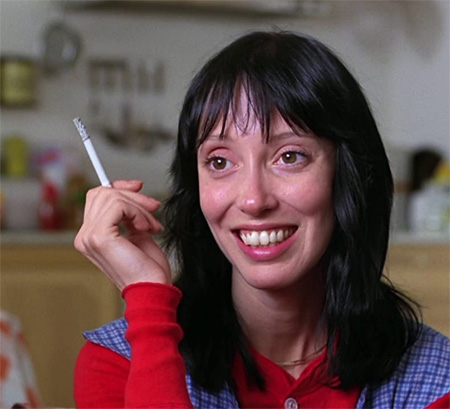
Once upon a time in Hollywood, Shelley Duvall was an acclaimed and sought-after star. She defied the tradition of having to be a sex symbol in order to achieve major stardom. In fact, it was Duvall's "girl next door" looks and persona that ingratiated her to both audiences and critics. She was championed by director Robert Altman and graduated from small parts to major roles in his films. Her star burned brightly but flamed out quickly following starring roles in Altman's ill-fated "Popeye" and Stanley Kubrick's "The Shining", which afforded the role movie lovers most remember her for. Duvall began appearing in undistinguished films and eventually just vanished from sight, facing mental health and financial problems and entering self-imposed retirement from the film industry. In fact, Duvall vanished so thoroughly that few people even knew that she ended up moving to a rural community in Texas where she has been living a modest lifestyle, to put it mildly. In a remarkable piece for the Hollywood Reporter, writer Seth Abramovitch tracked Duvall's current whereabouts and managed to meet her. He found her to be friendly and charming and surprisingly willing to share her memories of her film career and her trials and tribulations in the years that followed.
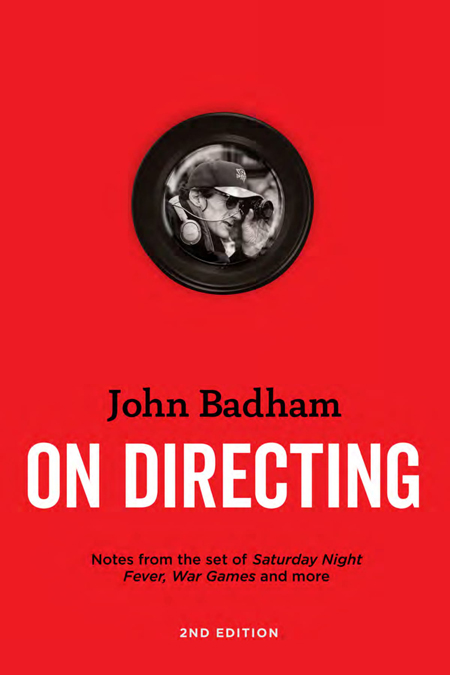
‘Directors
have needed a book like this since D.W. Griffith invented the close-up’, wrote
legendary director John Frankenheimer about John Badham’s first book, ‘I’ll Be
in My Trailer’. ‘We directors have to pass along to other directors our
hard-learned lessons about actors. Maybe then they won’t have to start from
total ignorance like I did, like you did, like we all did.’
Along
with Frankenheimer, there were names like Oliver Stone, Michael Mann, Richard
Donner and Steven Soderbergh weighing in from the directors’s corner. Giving
the actors’s side of events, such luminaries as Mel Gibson, Frank Langella,
Richard Dreyfuss, Jenna Elfman, Dennis Haysbert and Martin Sheen.
Badham
had gathered some of the most celebrated creatives in Hollywood to give us the
benefit of their on-set experiences, and to offer advice about how these two
very different artistic types can work together successfully on a picture. Of
course, there was also plenty of anecdotal evidence that a film-set can be
highly combustable work environment if director and actor are not particularly
simpatico.
He
told me, ‘The first book came about after a talk at the AFI when one student
asked “What do you do when an actor won’t do what you want him or her to do?â€
And the entire room of fifty, sixty people suddenly sat up straight, and I
thought, “There’s a book here!â€â€™
His
second book, ‘On Directing’, presented his own hard-won experiences learned
over a 50 year- long career as a guide for budding young directors who may have
all the technological know-how, but haven’t yet learnt that building a good
relationship with your actors is the most important skill of all.
John
Badham should know. Taking off like a rocket following his second feature, Saturday
Night Fever, his name became synonymous with success after a long run of
big movie hits like Dracula, WarGames, Short Circuit, Blue Thunder and Stakeout.
In amongst those were smaller critically acclaimed films like Who’s Life is it
Anyway? and American Flyers. By the 1990s, he had built up a
formidable reputation as both a hit maker and an ‘actor’s director.’
Despite
his brawny, all-American back catalogue, Badham is actually a Brit by birth,
making his debut in Luton while his father served here in World War II.Moreover, he spent many months as a child
staying with his grandparents in my own neck of the woods, North Wales. I
chatted with this highly respected Hollywood veteran (and honorary Welshman)
about his book, and about his 1991 hit The Hard Way, which has just been
released as a special edition on BluRay by Kino Lorber.
As
well as still directing hit TV shows, Badham is a Tenured Professor at Chapman
University in Orange, California teaching Film Studies. ‘I’m teaching directing
remotely which is fun.I’ve got people
doing scenes on Zoom - I’m getting very good at Zoom.’
You’re
the ideal candidate to have written a book about the relationship between actor
and director because you’ve always had a reputation as an ‘Actor’s Director.’ It’s
often the first thing any article about you says, including this one. What do
you think makes you so good at coaxing great performances out of actors?
JB.Well, my earliest training was at Yale
University as an undergraduate and later a director at the drama school. As you
can imagine, theatre is extremely actor-oriented and working with actors is one
of the key skills that you have to learn as a director. A lot of film directors
never really get that initial training with actors. They’re great with
machinery, cameras, lights, microphones: that all does what you tell it to do
but unfortunately actors have this annoying way of being human beings! And they
have ideas - at least a microphone has no ideas and won’t answer back.
So, this is just something that I learned early on.
Was
it a help being the son of an actress and the brother too?Did that give you something of an inside
track on how actors tick?
JBSomewhat.I think I have some acting genes in me, I just didn’t get the best set,
my sister did. (His sister, Mary Badham was nominated for an Academy Award for
her role as young Scout Finch in To Kill A Mockingbird (1962).)But I still love acting. I love to do it when
I get to an opportunity, and every single time it makes me appreciate how
difficult and how stressful it is for an actor, especially the poor guy with
one line. How can you screw up one line? Well, I’ve seen it more times than you
can say.
Hence
your advice in the book, recommending that you take as much time to chat to and
encourage the guy with one line as much as your main cast.
JBThat’s right, he or she is the most
terrified one out of everybody!The guys
with big parts have probably long since gotten over their fears. They’re
probably less needy than the poor guy who’s come in for one day, who doesn’t
know any of the players, who hasn’t had a job in a while. Acting, you know, if
you’re not doing it regularly you can get rusty pretty fast.
I
think you’re especially good at getting very naturalistic performances out of
actors. I look back on films like Blue Thunder and Saturday Night
Fever, and no one seems to be acting at all. Is that a style that you
favour?
JB.I do. I want to really believe these
people and in those two particular films, I used a kind of quasi-documentary
technique in the acting scenes in particular. I always encourage the actors to
improvise and ad lib, and they know they have the freedom to try anything which
is very liberating. On Saturday Night Fever, the young cast were just
thrilled to be able to improvise. Many of the scenes that have become kind of
famous were just wonderful improvisations going on in the middle of a written
scene. So we weren’t being quite as stickler about the text as we would have
been had we been doing Shakespeare or Ibsen.
It
does show that you have an innate instinct for what makes a great screen
performance, as opposed to a theatrical performance. It reminds me of the story
of Frank Langella giving an all-guns-blazing performance opposite Olivier in Dracula,
until you showed him what it looked like in the rushes and he redid the entire
scene.
JBOh yes, and it took him a while because
he’s so skilled as an actor on stage but he was trying to change a performance
that he had been giving for eight months on Broadway, y’know six or eight times
a week. Trying to change that is really tough. It’s like trying to teach a
golfer a new swing; their muscles only go one way after time.
You
talk a lot in the book about a natural animosity that exists between directors
and actors - something that for the most part you’ve managed to avoid. That
surprised me. I would have thought there was if anything a mutual
inter-depencency. Why do you think this relationship is so fraught?
JBI think that many actors have just had
bad experiences with directors who don’t know how to talk to actors, who speak
in terms of results - ‘Be happier, let’s have more fun with this scene,’ and
the actors privately, or publicly roll their eyes and they think that this
director has nothing to tell me.
Some
actors, like Brando, like to test their director on the first day of shooting,
just to see what they are going to have to work with. Brando would give the
director two variations of a performance, one of which he knew to be
terrifically dreadful, and see what the director did. And if he didn’t pick the
right one, in Brando’s mind he was done for the rest of the film. He told Richard
Donner he wanted to play Jor-El as a giant tomato! Before he’d even visited the
set of Superman, he went to visit Richard Donner and the writer Tom
Mankiewicz and shocked them with this, and it took them a while to find a way
around the idea!
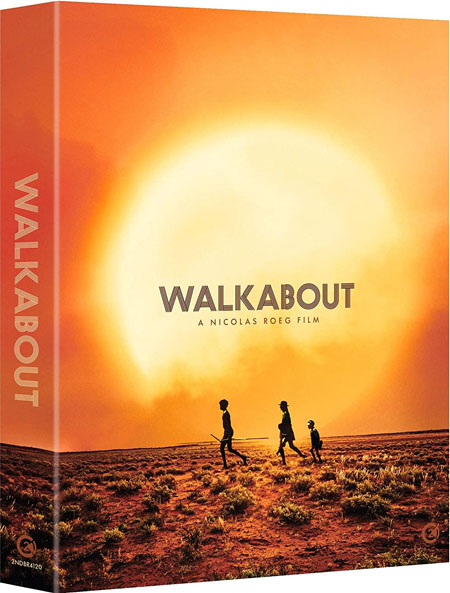
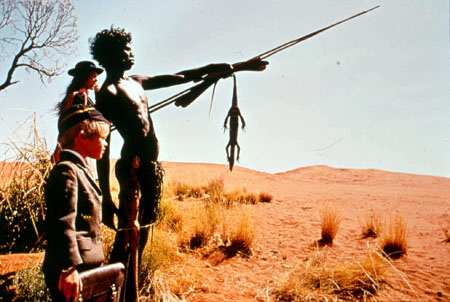
Luc
Roeg is the son of seminal director Nicolas Roeg. He appeared in his father’s
last narrative film as a cinematographer, and first as a solo director, the
much-lauded Walkabout, which received
a newly-restored release through Second Sight recently. Nic Roeg began his
career as a camera operator on such titles as Cubby Broccoli’s pre-Bond production
The Trials of Oscar Wilde and the
infamous Dr. Blood’s Coffin before
becoming cinematographer on films such as Dr. Crippen and Nothing but
the Best. He was one of the many hands behind the camera on the unofficial
1967 Bond entry Casino Royale. (Then
again, who wasn’t?) Roeg senior also worked with such luminaries as François Truffaut (on the Ray Bradbury adaptationFahrenheit 451), Richard Lester (A Funny Thing Happened on the Way to the Forum and Petulia) and John Schlesinger (Far from the Madding Crowd). However, it
was his work on Rogers Corman’s The
Masque of the Red Death that really set the template for his otherworldly
visuals that would later be seen in such masterpieces as Performance (co-directed with Donald Cammell), Don’t Look Now and The Man
Who Fell to Earth. Walkabout was
held up while Performance was
completed (although that film was so unclassifiable that its distributor Warner Bros. let it sit on the shelf
for two years) so that by the time Walkabout
was filmed Roeg was seen as a veteran. It was also a family affair in the sense
that Roeg cast his son Lucien John in the key part of the White Boy, after the
delay had left Luc’s brother Nicolas too old for the part. This is where we
take it up with Luc.
MM:
Walkabout
is seen as one of, if not the, quintessential Australian New Wave films. Yet, when
it went to Cannes, it was as the UK rather than an Australian entry as they had
already chosen theirs. Do you
see it as a British or Australian film, or indeed a crossover of the two?
LR:
I’d have to say both. I know that’s sitting on the fence a bit but the reason I
say that is because Nic was very much a 100% British filmmaker. He lived a good
life here and never emigrated to Hollywood but he made a lot of his films on
location in foreign
countries. That may have made him less of a ‘British’ filmmaker but Walkabout wouldn’t have been Walkabout without Australia itself so,
although that sounds strange, to answer your question, it simply couldn’t be
anything else but British and Australian as it has the landscape,
culture and David [Gulpilil – the Aboriginal co-star of the film] that make it
what it is.
MM:
Yes, I agree and Australia is one of the key stars of the film, to be honest. I
lived in Australia for a short time and travelled to the territories where you
filmed it so it’s fascinating
for me to see this film again on this new transfer. The first time I saw this
film I was 12 years old and it was on a TV which my grandfather built a
magnified screen onto so the image doubled in size! It was magical then but
magical in a different way now as I’ve visited the landscape I fell in love with
on that ‘big’ screen.
LR:
That’s wonderful.
MM:
You probably had the greatest ever ‘take your kids to work day’ when your father
chose you to star in the film. I know the film was held up while your father
finished Performance which, although
it suited Jenny Agutter better in the fact that she was 16 rather than 14, it
meant your older brother Nico was a little too old to play the young boy’s part,
which went to you. Do you ever talk about how different things could have been,
even though I’m sure it was a lot of hard work?
LR:
I agree with you on the ‘bring your kids to work’ day (laughs). Regarding the
role, we don’t really talk about it. Walkabout
was very much a personal experience for all of us, for all the family. My
brother was there with us when we were making the film, as was my eldest
brother, so we were all together. I don’t think anyone felt like they were
missing out. If anything I kind of felt that I had to go to work while they had
a great time hanging out in the Australian
Outback and bunking off any tutorage
they were supposed to be having!
MM:
I can see that. Did the fact that the film was shot chronologically help at
such a young age, so it seemed more like a real journey? More of an adventure
than hard graft?
LR:
It did seem like an adventure at the time, although there was a work element to
it. It was scripted and there were lines to learn on top of the travelling and
moving around. It was all essential. You don’t have any expectations at that
age of how things should be or could be, they just happen. So to be in that
natural environment and to be surrounded by those that matter was important. It
was a small unit and a tiny cast as well obviously, just myself, David and
Jenny [Agutter] so the whole experience was very personal and shared between us,
so yes, I’d say adventure first and the hard work followed.
MM:
I’ve spoken to a lot of actors over the years and they said they found it very
difficult to be taken out of their home environment for months at a time to
make a movie but as you said, you were with your family which would have been a
very different experience than a lot of child actors would have had.
LR:
Yes and having Nic photograph it took another layer away from the camera and me,
and kept it very personal from that point of view. Jenny was a very young woman
and she had to leave home in order to make it, and although she too became part
of the family it would have been hard for her.
MM:
Yes. Over the years Jenny had some criticism
for her pragmatic approach to the role but that’s exactly how a ‘proper English
girl’ would act. Very matter of fact and stoic. I think she’s marvellous in the role, a very steady figure for
your character, and she was the right age, 16 rather than the 14 her character
was in the book. I did laugh when Jenny said she was very excited at the time
because originally Apple Films were set to produce it and she thought that she’d
get to meet The Beatles. Obviously that didn’t happen but did your father ever
say why?
LR:
I never really interrogatedNic about that when I was old enough to
understand that. I’m not sure of the specific reasons behind it and at the time
I just wasn’t aware of it, understandably.
MM:
One of the most memorable scenes was when David covers your back in wild boar’s
blood in order to soothe your sunburn. I understand this wasn’t scripted. Were
there many more situations like that, filmed on the spur of the moment?
LR:
Other than that moment I can’t really think of one. I know that everyone on the
set was very upset about the death of the wart hog which had been struck by one
of our vehicles as everyone, by that time, was very much in tune with the way
David thought and how he respected the wildlife. People got very upset and it
had coincided with this terrible sunburn I’d got but David showed, in his way,
that we could take some of the essence of the beast and use it for good. Bar
that I can’t really think of any scene that just came to pass. Other than that,
Nic had an eye. He could just capture things without making an effort to do so.
Paramount Home Video has released a new Blu-ray special
edition of Cecil B. DeMille’s epic “The Ten Commandmentsâ€. The set includes
both the director’s original silent film version as well as his 1956
blockbuster remake starring Charlton Heston as Moses. To commemorate the
release of the video, Cinema Retro Editor-in-Chief Lee Pfeiffer caught up with filmmaker Fraser C. Heston to
discuss the impact of the movie on his father’s career. (An interesting
footnote: Fraser Heston is seen in the film as baby Moses, thus, both father
and son played the same character.)
Cinema
Retro:Your
father first worked for Cecil B. DeMille on The
Greatest Show on Earth. Would you say he is the singular most important
person responsible for your father’s rise to fame?
Fraser C.
Heston: Absolutely.My
father was on the Paramount lot and he waved at Mr. DeMille. He had been on the
lot for some other audition and he saw Mr. DeMille by the gate and said,
“Hello, Mr. DeMille†before driving off the lot.Mr. DeMille asked his secretary, “Who was that guy?â€She said, “Oh, that’s Charlton Heston. I
think you met him before and you didn’t think much of him.†But DeMille said,
“Well, I think he’s an interesting guy. Why don’t you have him over and I’ll
meet with him?†He ends up offering him the part of the circus manager in The Greatest Show on Earth and it ends
up winning the Academy Award for Best Picture. Then he tells him to come back
for another meeting- he doesn’t even tell him what the part is- and says, “I’m
going to make The Ten Commandments.â€
He shows him models and paintings all afternoon and gets him all excited but he
doesn’t offer him a part. He just says, “I’ll bring you back in a week or two.â€
He ended up asking him, “How would you like to play Moses?â€The rest is history, as they say.
CR: Was
your father intimidated by playing such an historic character?
FH: No,
I think he embraced the challenge. He obviously didn’t have to play him from a
baby, as that was my job! But he did have to play him as a young man right up
through when he had that white beard at the end of the movie, however old Moses
was at that point.He also had the
challenge of going from an Egyptian prince to a slave to the leader of his
people- and to do it in a way that perhaps wasn’t as stylized as some of the
DeMille epics. That film, I think, stands the test of time. The reason for
that, I think, is the fantastic cast. Look at Yul Brynner’s performance, for
example. I can’t imagine anyone else playing Ramses.
CR: I’m
trying to remember if your father and Brynner ever worked together again…
FH: They
did on The Buccaneer, which was
produced by DeMille and directed by his son-in-law, Anthony Quinn. Not as good
a film, obviously, but still a classic. Some interesting trivia- if I live long
enough, since I was the youngest actor on the set of The Ten Commandments, I will be the last actor in Hollywood who
worked with Cecil B. DeMille.
(Photo copyright Fraser C. Heston, 2019.)
CR: I
was recently revisiting your father’s wonderful book “The Actor’s Lifeâ€, which
consists of the daily diary entries he kept when shooting films and discovered
that, unfortunately, he began this habit only after The Ten Commandments has wrapped, though he does discuss
post-production work on the movie. But he does write, “If you can’t make a
career out of two DeMille pictures, you’d better turn in your suit.†He also
writes, “Our son Fraser was born while we were shooting The Ten Commandments. He played the infant Moses at the age of
three months and immediately retired, displaying an acute judgment of the
acting profession.â€
FH: (Laughing) Well, I think I felt a little
pressure from my dad not to follow in his footsteps.
CR: Well,
many offspring of iconic actors have followed in their footsteps with varying
degrees of success. Were you ever tempted to do so?
FH: I
think I was but I was discouraged by my mom and dad. I mean Michael Douglas
pulled it off and a couple of other father-and-son acting teams pulled it off
but I think my parents knew how tough it would be to follow in my dad’s
footsteps. I started out in a different aspects of films. I started out as a
writer and discovered I liked writing screenplays. I got a couple of things
made and from there I started producing and then directing. So I came at filmmaking
more from the storyteller’s point-of-view. I consider myself, even if I’m
directing, to be a storyteller. That’s a director’s job.
CR: When
was the first time you remember seeing The
Ten Commandments?
FH: I
was probably about five and it was pretty terrifying, you know between the
Burning Bush and the destruction of Pharaoh’s army when the Red Sea
collapses…and oh, my God…
CR: …and
let’s not forget the presence of the great Vincent Price…
FH: Yes,
the evil Vincent Price and Yvonne De Carlo and Yul Brynner and everybody. It
was just fantastic.How could you have
seen that as a young person and not been blown away by it all and be terribly
impressed? I think everyone had that experience the first time they saw it.
People in our generation were young when it came out and that was their first
experience with an epic film. I think you have to place the film in a larger
pool of epics associated with my father along with Ben-Hur, El Cid and to a certain degree, Planet of the Apes that culminated in films like Gladiator. You can even go so far as The Avengers series, which are giant
modern epics. I think DeMille started it all. When you think of spectacle, you
think of C.B. DeMille. When you think of C.B. DeMille, you think of The Ten Commandments, right?
CR: I’ve
always said that if you didn’t like the way he directed actors, you had to
admire the way he directed traffic in films that large…
FH: (Laughs) So true!
CR: I
recall you once telling me that in the Heston household, DeMille was a revered
name.
FH: He
was. My dad always called him Mr. DeMille, never C.B. We still have the
telegram he sent my mom and when I was born saying, “Congratulations, he’s got
the part.†I’m looking at a picture on my wall right now. It’s a photo of me at
age four or five being held in my dad’s arms and reaching out and tweaking Mr.
DeMille’s nose.
Writer Jason Hellerman of the No Film School web site presents highlights of an interview with Martin Scorsese conducted by Quentin Tarantino at the Director's Guild of America. Makes for some fascinating reading...Click here for article.
A Cinema Retro Exclusive: director John Stevenson ("Kung Fu Panda", "Sherlock Gnomes") provides an exclusive interview with Midge Costin, director of the acclaimed new film "Making Waves: The Art of Cinematic Sound".
Working on the sound was the most fun part of the two
animated feature films I have directed. One of the nicest gifts you get as a director,
after working on your film for years, is being able to see your film fresh
again once the sound designers and composer have added a whole new dimension to
the story. So I was very excited to see Midge Costin's new documentary "Making
Waves: The Art Of Cinematic Sound" and have a chance to talk to her about this
vital, but often overlooked aspect of movie making. (John Stevenson)
JS: I loved your
film and was surprised at how visual it was for a subject that is primarily
auditory. It must have been a labor of love.
MC: It took 9 years to
make! My editor, David J. Turner was a student of mine and he was so good. He
had already come into film school having made films and he was also a composer.
He was so good at both sound and picture and he was so sensitive. We shot most
of the interviews from 2013 to 2016. In the first year I just sat with him,
which I know people don’t do anymore as directors, and we sat and went through
the dailies and talked and he took it all in. He’s a young guy (now in his mid
30’s) and he was with me the whole time. He was brilliant.
JS: IMDB Lists
“Quiet Cool†from 1986 as your only picture editing credit, but did you edit
picture on any other films?
MC: I did apprentice editing on
something called GYMKATA (1985) and then QUIET COOL and a couple of other
things, then I went to Alaska right after film school. I actually did some
editing on some documentaries up there.What happened was, the last thing I thought I would do coming
out of film school was sound. I would get in a panic doing sound because
I thought it was technical, and I wasn’t relating it to story and character and
all of that. So I edited the picture with a friend of mine who ended up going into
sound and we edited his student film together.So I came out and did apprentice, assistant editing and all that. And I
had my thesis film left which was a short documentary and Dan calls me up and
says “Midge, none of the Union guys will touch this 16mm film, but if you come
I will teach you sound effects and I will cut the dialogueâ€. So, as I tell my
students, I lowered myself and took a sound job because I needed the money to
finish my thesis film. And on that very first film I realized ‘Oh crap, I am
responsible for setting mood and tone and establishing plot points and
character, and how do I do that?â€And so
I started and then it's like one show led to the next because I knew so many
people from film school. Once you do anything in sound everybody is like ’Oh,
can you help me?’ So I just started getting sound jobs, and then here it is,
the 80s and going into the 90s and sound is now in 5.1 and because I cut sound
effects (I was one of the few women that was cutting effects, which made it kind
of fun) and then I found myself on these big action adventure movies. My first Union Show
was DAYS OF THUNDER and I had to do the sound effect for the engine of the car
for the bad guy who was racing against Tom Cruise, and I did all the aerial
shots showing the Nascar racetrack. When I was a little I wanted to be a race car
driver (laughs). One thing just led to another and it was so exciting.
JS: You have 23
sound editing credits (according to IMDB) and those include doing Foley,
dialogue, sound effects, so out of all of those films which ones did you like
the most? MC: My favorite, because it comes down
to story and character was CRIMSON TIDE. I just love Gene Hackman and Denzel
Washington and their relationship and also the story. It is a good story about
the military, and are they pro war or anti-war? And I found that fascinating.
But the other thing is, you are in a submarine, so you are in a tin can and you
are telling a story on a set, and you have to take out the footsteps in the
dialogue track because they are stepping on plywood! But the whole tension of when
they get hit and they are going down, down, down, and they are going to be
crushed, it is your responsibility to bring the emotion and the reality,
because they are all just listening! It is all being told through their ears,
the story is being told aurally.
And also in that movie each different department (radio, sonar, weapons systems,
etc.) have a different coloured lighting, so we do the same thing, every single
space has a different background ambience to it, but I just loved working on that.
Another fun one was ARMAGEDDON. I know Stanley Kubrick is
probably rolling over in his grave because there is no sound in space and I'm
putting in all these incredible sounds. Even a fire happens and I am like "Oh,
really?" But when Bruce Willis and Steve
Buscemi come out of that shuttle for the first time, the meteor was the
antagonist and so what I wanted to do is make it sound like its going to devour
them. So I get earthquake rumbles and low tones that always go to our gut and
bring up fear and cue us that something is going to happen. And then have the rock as if it was almost like munching on somebody like
really chewing, going to eat them, devour them. But we are always thinking too "What’s the low frequency sound, what’s the mid, what’s the high?" And for the high
on that, I used this wind through a wire that really kind of makes the hair on
the back of your neck stand up, so that was fun.
My least favorite thing
is when you don’t have time and they get to sound at the last minute and they
don’t really care about sound. But when you have someone like Tony Scott who
cared about sound you would get it early enough, maybe even at the script stage
so you can be feeding the edit room, then those things are great. Michael Bay,
in some of his earlier films, did not seem as interested in sound. I was working
with George Waters, who was the supervisor, and he was getting him to pay
attention to sound, enlightening him and now Michael Bay really cares about
sound and realizes how important it is.
JS: So out of all of
those 23 films you worked on as a sound editor which director did you enjoy working
with the most and who used sound the most creatively?
MC: Tony Scott really
cared and was a really great collaborator and he looked on sound as one of his
key positions. But I know some big
directors even now who are not paying attention to sound. They do it late, and
they are changing picture to the last second and you just don’t have time to do
a good job. So it is all about respect. I was really sorry not to be able to
get the Cohen brothers for my film, they don’t really do too many interviews,
but they have sound specified in their scripts. So think about that, you can
read a script and possibly make suggestions.
I ended up on these big action adventure movies but the truth is
I realized one day late in the 90’s that I don’t even like those films, to tell
you the truth.I realized, a couple of
years ago, that I go to a movie to hear someone tell me what they think the
meaning of life is, and you don’t get that from those films! The whole
rollercoaster thing, I don’t really understand. I love rollercoasters, so I
would rather go on a real rollercoaster than watch some of these action
adventure movies. They are so overly violent, I found them sexist and racist,
so I started teaching and I thought I can pass on these skills that I have so
that they can make really good movies. One of my students was Ryan Coogler, who
did sound, because he didn’t know it very well. So that is kind of a fun thing.
JS: So a personal
question as a sound editor: which film sound design is the one that has
impressed you the most in the history of movies?
MC: I was just
thinking about that. One of the ones that stood out for me when I saw it and
thought about sound was David Lynch’s ERASERHEAD. Now when I listen to it I
think it is over the top, of course the whole film is, but still that had a big
impact on me. But I would say APOCALYPSE NOW and RAIDERS OF THE LOST ARK, for
those big films. But I also really like smaller films. One of the reasons
ORDINARY PEOPLE is in my film is because silence can be really powerful. And I
also think about that with Hitchcock films. And Orson Welles, his films are so
subtle. And those films are as good as anything being made now. A lot of times
I will get questions from these 18 year-old boys about "What kind of microphone
did you use, or what kind of editing system?" And it is not about the
technology, that’s what I am trying to make sure people know, it is about the
directors. The directors who are pushing. Now it is so much easier digitally
than when we were doing it analog, but we are doing the same thing, and it was
kind of fun to learn when you could not even see anything. We would be staring
off into space. Now you can see the waveforms.
JS: So you have all these wonderful
directors-Steven Spielberg, David Lynch, George Lucas, Ang Lee Christopher
Nolan, and more and more. How easy was it to get all those directors for the
film, and how easy was it to get this plethora of clips from films going back
to the beginning of cinema? It must have been a huge job.
MC: Well, the
directors I got through the sound people mostly and then Spielberg and Lucas
are active at USC, and I have an endowed chair that was given by both of them.
So they're aware and they said yes, but we almost didn’t get Spielberg because
he was doing back to back films, and he had no time. We were literally about
to go to Tribeca and he was able to do the interview at the last minute.So it was always because they have so much respect for their sound people that
we got them. So that wasn't too bad. With Peter Weir, David Lynch and Ang Lee, it’s
like their spirituality is their film making. Ang Lee talked about being in the
Foley room on THE ICESTORM and making the sound of the ice with broken glass. He
was so engaged. He was in the edit room for BILLY LYNNâ€S LONG HALF TIME
WALKand he came and hung out with us
while we were setting up. Whereas some other people just came to do their piece.
I remember Robert Redford came in and said “I only have 20 minutes†(everybody
would say “I only have 20 minutesâ€) and then he gave us at least an hour,
because I think they really respect sound. And going into the second part of
your question, I had listened to their body of work and had very specific
questions because all those clips, we had to set them up. I had to know what
clips we could use so that I could ask them to talk about them. And if they
didn’t say the name of the film, we would ask and get them to say it (almost
like ADR) because I was asking them about specific films, and very specific
scenes because we had to know what we could use. So we learned (myself, my
editors, my producing partners and anyone involved in the film )
‘fair use’ and understand how it was used so we didn’t end up having the lawyers
cut our film for us (laughs).
JS: It must have
taken a long time to clear all those rights?
MC: It did, but we
were constantly giving them cuts in the last two years so that they could say
this is working and this is not. One of the things that we did it is that we
built scenes that we knew we wanted, like for SAVING PRIVATE RYAN and A RIVER
RUNS THROUGH IT, a quieter film, so we would build these scenes and that was
hard, because I didn’t want to go over 90 minutes, I knew it should be a 90
minute film, so I never made like a 5-hour version.
JS: Thank you! Films
are too long!
MC: I totally agree.
So we never even had a two-hour version.
JS: I have seen your film twice now, and if you can, I think it is very
important to see it in a cinema with a good Surround Sound system, because you
demonstrate various surround sound formats both visually and aurally. So what
is going to happen for home video where most people will hear it out of a
single sound bar in the front?
MC: You know, I just
got off the phone with someone who said (and this is the second person who has
said this to me in 24 hours) that it works somehow on a computer. And I’m like,
really? Because if you do something that is mono it splits 50/50 but if you do
left and right, it has a whole different feel, so it must translate somehow. I
have got to listen to it now! I understand most people will see it at home and
not in theaters, but it was important to me to find a distributor who would
give it a theatrical release. Some people bemoan the fact that people aren’t
going to theaters and all that stuff, but sound is even more important as
screens get smaller because that is the emotion, the emotion is coming through
sound. And also headphone technology is getting better with VR.
JS: I used to love CinemaScope films where they would pan the sound as
characters moved across the screen. With 5.1 mixes the dialogue got anchored to
the center of the screen, but now with Dolby Atmos mixes panning sound seems to
be back (I am thinking of the immersive soundtrack for Alfonso Curon’s ROMA if
you saw it in 70mm). Do you like panning sound to increase the spatiality, or
do you find it distracting?
MC: I just did a panel
at the Mill Valley Film Festival with Iaon Allen from Dolby and Ben Burtt. I
worked on a show where they did pan the sound, it was HOCUS POCUS with Bette
Midler and was kind of fun, but here is what the problem is. If the left,
center, right speakers are different when you pan from one to the other then
they will sound different as you move from speaker to speaker, and this is what
Iaon was saying. So they stopped. The other thing is, it takes so long to do
that and then you go to so many theaters and the sound is screwed up. I remember going to see THE LAST EMPEROR and this is what
happened, it is the perspective thing. I am looking at the emperor, and now I
am looking at the audience, and things swap. And it calls attention to itself.
So if you do a P.O.V., it changes, and then it’s like “Why is the sound over
there?†It calls attention to why the sound is coming from that side of the
screen and the audience gets pulled out of the movie. So it is so awkward doing
that, that it got anchored. But I loved ROMA! I thought it was brilliant. I insisted on
including it in the film because even Ben Burtt was saying "There is nothing
that’s happened in the last 30 years or so that’s new", but I was like "No, I
think ROMA is changing it" because I would be telling students, "Don’t put
stuff in the surrounds, you’re going to make the audience look behind them". But
when I am in that car and they are driving to the beach and the kid's voices are
behind me, I am totally in that scene. I loved that. I loved that he got more
aggressive with his sound design. That’s what we need.
JS: We went from
mono, to stereo, to quadraphonic, to 5.1, 7.1 and now Dolby Atmos. Where can we
go next?
MC: Well, possibly
there may be in-seat audio, kind of like a ride. You can almost see them doing
the LFE low frequency, the boom channel, under seats or speakers by your ears.
I don’t think they have figured out how to use VR well yet, but when that comes
in I think that we will have more channels. I don’t know where it’s going
besides that, but maybe it’s almost like a ride to bring people in.
JS: When you got into movies your
original interest was story. After a while working as a sound editor you
realized you could use sound to shape narrative, reveal character, and express
emotion. What advice do you have for aspiring filmmakers about how to use sound
creatively to tell their stories?
MC: What I would say is to break down a script. Think about what can
your character hear. What is the environment? And how are they being affected
by sound? So start there, at the script stage. I always break down each scene but think thematically. What can sound bring? Just like you are thinking about
camera, lighting, costume, production design, or any other area of film making. Ask how sound could help tell this story. And I always think of the background
and the ambience, how does the environment affect your character? What is the
mood in the film you want to create? What are the sound themes thematically? A
lot of times plot points might not have sound, so what can you take from the
environment?
So I have people ask me
how is sound telling the story. One scene I always like to show my beginning
students is from NO COUNTRY FOR OLD MEN. It is a very simple scene where Josh
Brolin first finds the money. So he is in this kind of prairie desert and he’s
looking, looking, and there is a wind and then he looks at his watch. And he is
looking to see if the guy under the tree with the money is really dead. And so
he puts up his watch as if we are going to have to cut time, as if we are going
to have to see the watch again to show that 45 minutes or an hour has passed.
Then we cut to the same perspective almost, but the sound of the wind has
changed and we know time has changed, it is not continuous, and we never had to
look at the watch again. Now he walks up onto the rocks and we see his heavy-duty
boots, which says something about his character. This is our man. We hear flies;
the guy with the money is dead. Then here comes the big plot point, the money,
follow the money. So he opens the case. Was there any music? No.There is no
music cue. There would normally be a big music cue, a brassy Dun-Dun-Duuuun! to
say ‘There is the money!". So I always say "Did anything tell you that was the
money?" No one can remember, so we play it again. There has always been a
slight wind sound effect throughout the scene, but now there is a big wind gust
as the money is revealed. It doesn’t register as a big wind gust but you feel
it in your gut.
And then I will show scenes from CRIMSON TIDE when Gene Hackman
is giving his speech to his crew about the submarine being the most powerful
destructive force in the ocean, and it is raining. And I put big thunderclaps
on top of his speech. If I had told them before I wanted to do that, they would
have said "No, you don’t put thunder over his speech. Put it between his
dialogueâ€, and they would also have said "She is the biggest hack". They watched
it afterwards and laughed, because it seemed so ridiculous. But audiences did
not notice I put all the thunder claps over the biggest statements he is
making.
We don’t get credit for what we do because it is happening
emotionally but not intellectually. But we are all filmmakers and that is why
it was fun to make this film, and yes to make it visual because we are making
movies, which are visual and aural.
JS: Well, I loved
your movie and thank you so much for talking with me.
They are known as quiet, somewhat introverted figures despite their legendary status in the film industry. But Robert De Niro and Al Pacino find themselves, perhaps a bit uncomfortably, back in the spotlight as they participate in a publicity tour for director Martin Scorsese's highly anticipated crime epic "The Irishman", which opens in select theaters November 1 before streaming on Netflix, which financed the $160 million production. The film marks the third occasion in which the two stars appeared on screen together. The first occasion was Michael Mann's superior crime thriller "Heat". All but forgotten was the lambasted buddy cop movie "Righteous Kill". With both stars- and Scorsese- earning some of the best reviews of their careers for "The Irishman", the New York Times had writer Dave Itzkoff sit down with them while in London for a publicity jaunt. What follows was an interesting and often amusing interview.
Deane was crowned Bunny of the Year in 1969 by the screen's new James Bond, George Lazenby.
The terrific retro web site Spy Vibe pays homage to the glorious mod era of London in the 60s and 70s with a special look inside the Playboy Club. Bunny Deana, who worked at the club between 1969-1972, takes a trip down memory lane. To read the interview CLICK HERE
Charlton Heston in the unseen epic "Genghis Khan: The Story of a Lifetime".
Cinema Retro's columnist Adrian Smith examines the fascinating tales behind the late producer Enzo Rispoli's troubled "dream productions" dealing with Genghis Khan and a classic Russian novel, "Quiet Flows the Don". Along the way, Rispoli had wooed such disparate talents as Ken Annakin, Charlton Heston, Ernest Borgnine, Sergei Bondarchuk and Marcello Mastroianni. However, the dissolution of the Soviet Union and an unsteady situation with finances led to severe problems with both productions. "Quiet Flows the Don" was ultimately transformed into a mini-series for Russian television after receiving the approval of President Putin but Rispoli's son Nicholas is attempting to create a version of the film that will be more suitable for international audiences. He also hopes to be able to source financing that will allow him to finish the Khan project as a six-part television production so that the epic film will finally be seen by the public. Adrian Smith interviews Nicholas Rispoli and you can access the article by clicking here.
For intelligent, amusing and interesting interviews, Dick Cavett has always been at the top of the ladder. Here is his 1971 interview with Robert Mitchum, a man who generally hated to be interviewed!
The YouTube page "A Word on Entertainment" features host Rob Word's interview with actress Rosemary Forsyth, who recalls filming the under-rated 1965 film "The War Lord" starring Charlton Heston and Richard Boone.
In the Hollywood Reporter, David Weiner interviews director Philip Kaufman about his brilliant, 1978 re-imagined interpretation of Don Siegel's classic 1956 sci-fi film "Invasion of the Body Snatchers". Kaufman's version was every bit the equal to the original, although the films are substantially different. Kaufman reflects back on the making of the movie and its sad significance in today's society. Click here to read.
(Note: this interview with conducted to coincide with the 40th anniversary of Close Encounters of the Third Kind in 2017.)
By Michael Coate
Ray Morton is the author of “Close Encounters of the Third Kind: The Making of
Steven Spielberg’s Classic Film†(Applause Theatre & Cinema Books, 2007). He
is a screenwriter, script consultant, and senior writer and columnist for
Script magazine. His other books include “King Kong: The History of a Movie
Icon from Fay Wray to Peter Jackson†(Applause Theatre & Cinema Books, 2005),
“Amadeus: Music on Film†(Limelight, 2011), “A Hard Day’s Night: Music on Filmâ€
(Limelight, 2011), “A Quick Guide to Screenwriting†(Limelight, 2013), “A Quick
Guide to Television Writing†(Limelight, 2013), and “A Quick Guide to Film
Directing†(Limelight, 2014).
Cinema Retro:How would you like
“Close Encounters of the Third Kind†to be remembered on its 40th anniversary?
Ray Morton:As a wonderful,
entertaining movie.
As the first true Steven Spielberg movie. “Jaws†is a magnificent film, but in a way an atypical film for
Spielberg in terms of genre and subject matter. “Close Encounters†is the first of Spielberg’s movies to contain
many of the elements that would become closely associated with him in the years
that followed: an uplifting sci-fi/fantasy narrative infused with a tremendous
sense of wonder; a focus on children; an exploration of life in the American
suburbs; broken families; a fascination with World War II; a highly
sophisticated use of visual and special effects; the use of a powerful John
Williams score to create a powerful emotional response; cinematography that
emphasizes backlighting; and Spielberg’s trademarked “push in†close-ups onto
the awed faces of his characters. “Jawsâ€
made Spielberg hot, “CE3K†made
him a brand name.
As one of the two films that transformed science fiction and fantasy
from vaguely disreputable “B†genres into “A†movie material in the eyes of
both the public and the film industry. The other was, of course, “Star Wars.â€
As the masterwork of Douglas Trumbull, Richard Yuricich, and their great
team of visual effects magicians at Future General.
As one of the most intense and honest depictions ever filmed of
obsession and of the rewards and costs of pursuing a dream.
As one of the most authentic, non-idealized, and non-stereotypical
depictions of American suburban life ever shown on screen.
Cinema Retro:Can you recall your reaction to the first time you saw “Close
Encounters�
Morton:I can absolutely
recall the first time I saw “Close
Encountersâ€â€”it was the most significant movie-going experience of my
life. I saw it in December 1977 at the Ridgeway Theater in Stamford,
Connecticut—on a school night with my sisters Kathy and Nancy.I loved the movie as a movie—it was intriguing, thrilling, frightening,
funny, awe-inspiring, thought-provoking, and ultimately extremely moving. But the effect “Close
Encounters†had on me went well beyond the simple enjoyment of a very
good film. By the time“CE3K†opened, I had already been a
film fan for a few years, but “Close
Encountersâ€is the movie
that awakened me to the true power of cinema. Until that night, if you had
asked the very young me what the most important ingredients in a movie were, I
would have said dialogue and performance. Those things are certainly present in“CE3K,†but they are secondary. The storytelling in “Close Encountersâ€â€”especially in its
final thirty minutes—is accomplished primarily through the manipulation of the
core elements of cinema: imagery, sound effects, and music. Watching the film
for the first time, I found myself having a profound emotional response to
Spielberg’s masterful orchestration of light and sound—I was filled with
feelings of awe, wonder, and joy so intense they were almost spiritual. When
the movie ended, I just sat staring at the screen, enraptured and unable to
move as I processed the overwhelming intensity of what I had just experienced.
I sat there so long that my sisters finally lost patience with me. “Wake up!â€
my sister Nancy snapped. “The movie’s over!†That brought me back to the world,
but I still hadn’t come back to Earth.I realized then and there the powerful effect that movies could have on
an audience — that in the right hands they could transcend mere storytelling
and impact viewers on a much deeper and more profound level. Driving home that
night (in a heavy fog that filtered the headlights of oncoming cars in ways
that mimicked much of the imagery in the movie we had just seen), I knew I
wanted to do something more than just watch movies—that I wanted to make a life
in the cinema as well.
Cinema Retro:Is there any
significance to “Close Encounters�
Morton:Well, it’s one of
the best sci-fi movies ever made, both creatively and from a production
stand-point. And, as I mentioned earlier, it’s one of the films that made
sci-fi into a respectable genre.
Beyond those two points, however, it was the first major sci-fi film to
depict first contact as a potentially positive experience—that a meeting
between mankind and beings from another world could be a joyous, peaceful,
uplifting event—something that could be good for us—rather than an occasion of
invasion and horror. In the years following“CE3Kâ€and especially “E.T.†that became a commonplace idea,
but in 1977 it was pretty revolutionary.
Cinema Retro:Which edition of
“Close Encounters†do you like best?
Morton:I prefer the 1977
theatrical cut, in part because it’s the first version of the movie I saw and
the one that made such a strong impression on me. But I also prefer it because
it’s the most subtle version of the film. As an example, in the scene in which
Roy has his initial close encounter at the railroad crossing, as he drives off
in pursuit of the UFO, the 1977 version cuts to a long shot of Roy’s truck
driving across the landscape and in the sky above you see a little point of
light moving along. Is it a UFO? Or is it just an airplane or a satellite? We’re
not 100% sure and that adds some mystery and intrigue to the picture—was what
we just saw happen real or did Roy perhaps imagine it? We’re not sure and
neither is Roy until the three UFOs come flying around the corner in the
Crescendo Summit scene a few minutes later. In the Special Edition and the 1997 Director’s Edition, that shot is replaced by the shadow of an
impossibly large UFO zooming across the landscape—all of the ambiguity is gone
and the point is hit right on the head that what we saw was real and that UFOs
are real before they are revealed to us at Crescendo Summit. It takes a little
bit of the magic out of it for me.
As technically wonderful as it is, I feel the Cotapoxi scene has similar
problems. The jeeps leaping over the sand dunes in 1-2-3 formation and the
helicopters zooming low across the desert feel like they belong in a slightly
broader, slightly less real film than the theatrical cut is. One of the things
I like so much about “CE3K†is
that the fantastic events occur in a very real setting—Roy’s world and
Jillian’s world all feel very authentic and real to me—but when people are
zooming around like they are in an action movie, some of that reality gets lost
for me. And, as cool as seeing the ship in the desert is, the scene is really
just a repeat of the opening sequence in which the airplanes are discovered, so
it’s a bit repetitious. I do like some of the family strife material that was put back in for
the Special Edition and the Director’s Edition and some of the
editing in the second act is tighter and less raggedy. But I still prefer the
1977 version. Following that I would choose the 1997 cut and then the Special
Edition. (I think going inside the Mothership was always a mistake.)
Cinema Retro:Where do you think
“Close Encounters†ranks among Steven Spielberg’s body of work?
Morton:Near the top, along
with “Jaws,†“E.T.,†“Raiders,†“Schindler’s
List,†and “Empire of the Sun.â€
It has always struck me as being one of his most personal movies.
The YouTube channel Stanley & Us is devoted to the works and life of Stanley Kubrick. Here they present an interview that was done years ago with the late, esteemed British film critic and historian Alexander Walker, a friend of Kubrick's, who reflects on the fractious relationship Kubrick had with the volatile but ingenious Peter Sellers. While Walker downplays the extent of the disputes they had on the set of "Dr. Strangelove", he does provide some interesting insights into their work together.
Virgil Films has released the remarkable documentary "The Coolest Guy Movie Ever", a unique look at the 1963 WWII classic "The Great Escape". The film cemented Steve McQueen as a newly-minted superstar of the big screen and featured one of the all-time great casts: James Garner, Richard Attenborough, Charles Bronson, James Coburn, David McCallum, Donald Pleasence, James Donald among them. United Artists originally intended the movie to be shot in Hollywood but director John Sturges argued that it would only be convincing if shot on location in Germany. "The Coolest Guy Movie Ever" visits those locations and presents how they look today. In some cases, the iconic locations have changed considerably while others remain instantly recognizable. The documentary was conceived, directed, photographed and edited by Christophe Espenan, a devoted fan of the film. Espenan and a team of dedicated assistants and enthusiasts of the movie painstakingly tracked down even the most minor locations. The documentary details the challenges this presented in Germany's ever-changing landscape. Most vitally, he also tracked down people whose families interacted with the film crew. Most interesting is the small hotel where key members of the cast, including Steve McQueen, stayed during production. The son of the couple who ran the hotel at the time (and who still operates it today) gives first-hand memories of what it was like to have legendary celebrities staying in the cozy venue and how polite everyone was to the family. The documentary is chock full of such wonderful anecdotes and is enhanced by ample film clips from the movie and very rare production photos.
We spoke to Joe Amodei, the President and CEO of Virgil Films, which has released the film as a region-free DVD. Here, Amodei shares his thoughts about the production.
When
did you first learn of the existence of “The Coolest Guy Movie Everâ€
documentary?
Somewhere around three years ago Steven Jay Rubin
introduced me to Chris Espenan who was directing the doc. I had previously
released Steve’s documentary “East LA Marine†about WWII hero Guy Gabaldon.
Steve knew I was a “Great Escape†fan and told me about the movie. I
immediately said “Tally Ho, I am in.â€
What
attracted you in terms of agreeing to distribute the film through Virgil?
â€The Great Escape†was the film that did it for me as a
kid going to the movies in Northeast Philadelphia. In those days I could walk
to the theatre so I went three or four times a week. I learned the meaning of “coolâ€
while watching the film. Steve McQueen was the definition of that word. We are
always on the lookout for film- related docs and this one really came close to
home. I also knew it was something I might be able to get my friend Michael
Meister involved in. He is a fellow “Great Escape†lover who ended up coming in
with finishing funds that allowed us to screen the film in the market at
Cannes. BTW Michael LOVES Cinema Retro!
Where
did the rare production photos seen in the documentary originate?
A lot of them came from Walter Rimi’s son Christian who
graciously allowed us the use of his father’s photos. Walter was second unit
director of photography. Christian is in the film and gives a very emotional
talk about freedom and how important it s.
What
was WWII historian Steve Rubin’s role in making the documentary a reality?
He is the Producer of the film. Our very own Big X. My
Dad and I had the pleasure of seeing the film at Grauman’s Theatre (I still
call it that) in Hollywood a few years back during the Turner Classic Movies
Film Fest. Was very cool seeing it on the big screen with my father sitting
next to me. It’s not something I will ever forget.
What
are your personal memories of “The Great Escape� When did you first see it?
The summer of 1963. The Merben Movie Theatre.
Philadelphia PA. I remember building a ramp for my bicycle to jump over. I was
lucky if I got the bike a foot or two off the ground. But it felt unbelievably
cool!!!!
What
qualities about the movie do you feel resonate most after so many years?
The POW’s never give up. They try to escape from the
minute they get into the camp. They never give up. It is this heroism that the
real Stalag Luft 3 inhabitants had when they made the real escape in March of
1944. John Surges and crew made sure that courage was on display throughout the
film.
Who
is your favorite character in the film?
Simply put Virgil Hilts. But I do have a love for Charles
Bronson’s portrayal of “Tunnel King†Danny as well.
…your
favorite scene?
Nothing like that motorcycle jump over the fence to get
me going. There is also a scene where McQueen takes down a German soldier about
to shoot his friend, “The Mole†Ives. He
doesn’t get to save him but the gymnastic leap off the ground of McQueen’s body
into the German added to the coolness of the character. No one had done this in
movies before. We had cool actors like William Holden in “Stalag 17†or James
Dean in “Rebel Without a Cause.†But no one was cool like McQueen. No one.
Any
reflections on Elmer Bernstein’s score?
In the top two or three of all time. It is the ringer on
my phone. I got the chance to thank him at a screening of “Sweet Smell of
Success†a while back. He was a nice and gracious man.
Your
thoughts on John Sturges as a director and other films of his that have
impressed you.
Sturges never gets
the credit he deserves because a lot of his films were big time audience
favorites but not necessarily critical favorites. This guy not only made “The
Great Escape†but he also brought us “The Magnificent Seven", “Bad Day at Black
Rock,†“The Old Man and the Sea†and “Gunfight at the OK Corral.†Those are
some heavyweights!!
In the late 1970s and early 80s, there
was a fear that gripped New York City. After 1977, the year of the Son of Sam
murders, the disastrous blackout, and the Bronx literally in flames later, the
cityscape and New York aura had drastically changed. The movie Death
Wish(1974) directed by Michael
Winner,made earlier, had caused quite a
stir reflecting the bleak and often paranoid reactions of citizens, and it
spawned several other films. Vigilante, produced and directed by
exploitation genre virtuoso, William Lustig, and written by Richard Vetere, was
perhaps arguably one of the leanest and no-holds-barred of this type of film.
Lustig and actor Joe Spinell had teamed up to make the lucrative but extremely
graphic and controversial horror/ serial killer film Maniac (1980). Vigilante
was Lustig’s follow up. Yet, Vigilante remains to be more aestheticized
with a raw prose of the street thanks to Vetere's work, and the grim urban
settings serving as a stark landscape, rather than relying on the raw
gratuitous gore of Lustig’s prior film.
I
caught up with Richard Vetere in July 2018, who was a former professor of screenwriting of
mine at Queens College in the late 1990s. I had seen the film on Netflix
recently and thought how underrated it was, and I wanted to contact Vetere to
find out his insight into writing such a gritty, visceral, and memorable film.
Vetere explains that Lustig approached him to write a “Blue Collar Death Wishâ€. One of the points Vetere
makes was how unapologetically politically incorrect the film is. It was on the top 20 highest grossing films of
1983, and it was an example of an innovative indie film, before indie
groundbreakers, Miramax, the Shooting Gallery and Tarantino were making waves
in the 1990s.
Vigilante
can easily be overlooked as an exploitation genre film, but offers the viewer
something more unique with the gritty performances especially by Forster,
dialogue thanks to Vetere, and cinematography that make it a stand out. I saw
the film when I was young and it made an impression. The political view is
obviously in --your -face about policing tactics and politicians not doing
enough for the public. We see this frustrated view in many of the films of the
era. Pre-Giuliani, pre-Disneyfication of New York was grim, but it had almost a
distinct street grit-aesthetic for filmmaking, such as in earlier films like The
French Connection (William Friedkin, 1971).
Vetere says what makes his film stand
out is that it is unapologetic for the action of the heroes in the movie. The
ending in which a judge is blown to bits was very controversial. He emphasizes
his own frustration at the growing apathy in the city by police and the public
alike. He also feels his film is one of the most realistic of the genre in
comparison to other films like Death Wish and Fighting Back. He
felt DeathWish had an ill-fitting sense of humor and the villains
were so over the top that they were not realistic. Vetere maintains that he was
going for “reality†untrammeled by Hollywood restriction or by a need for
self-justification as he felt Fighting Back had.
Richard Vetere's films that he wrote or
co-wrote include The Third Miracle
starring Ed Harris and produced by Francis Ford Coppola and directed by
Agnieszka Holland released by Sony Picture Classics, The Marriage Fool for CBS TV films starring Walter Matthau and
Carol Burnett, How to Go Out on a Date in
Queens starring Jason Alexander and the teleplay Hale the Hero! starring Elisabeth Shue for A&E.
1.
What was happening politically at the time this film was made in the
early 1980s New York?
In
the late 1970s and early ‘80s New York City was a city on a major decline.There was no political will and no ability to
get anything done.Unlike today there wasn’t a single
neighborhood untouched by graffiti, street crime, vandalism and muggings.Prostitutes walked the streets, cars being
broken into -- all met with indifference by a somewhat over-taxed, somewhat
corrupt, somewhat bewildered police force.When you got on a subway you were basically taking your life into your
own hands since gangs roamed the subway with impunity.Just
stepping out of your house could be intimidating to the common citizen.You have to remember back then the police
only responded to a crime the concept
of attacking crime and preventing it was not put into effect. Also
the subway police and the street police were two different departments so if
someone committed a crime, they took refuge underground.So I would like to answer your question this
way – the average citizen was afraid and felt helpless.This made them apathetic to their own plight.As a young man this outraged me to such a
point that I wanted to take action.I
was angry at the indifference of the populace and of the authorities.From this anger and frustration came Vigilante.
Riding high: at the peak of his career, Reynolds and Clint Eastwood were the top boxoffice stars in the world.
At age 82, Burt Reynolds is beaten but not broken. The one-time superstar had many ups-and-downs in his career and he's now walking with a cane, the result of doing many dangerous stunts that went wrong. But he's still in there kicking. Reynolds, who resides in Florida, mentors acting students and is also starring in a new film, appropriately titled "The Last Movie Star", about a forgotten leading man who is to receive an honor late in life at a Nashville film festival. Reynolds was recently in New York to make an appearance at a retrospective of his films and was interviewed by Kathryn Shattuck of the New York Times. He comes across as candid and very much the same kind of wise guy that he popularized on screen. Click here to read.
In an interview with Craig Modderno of The Daily Beast, William Shatner reflects on all matter of subjects ranging from American politics (he claims to be agnostic on the subject) to his long-standing friendship with the late Leonard Nimoy and his disappointment at not having been cast in any of the recent "Star Trek" films. At age 86, Shatner is still one of the busiest stars in Hollywood, writing books, shooting TV series and feature films and hosting charity events. Click here to read.
RETRO-ACTIVE: THE BEST FROM THE CINEMA RETRO ARCHIVE
(Cinema Retro joins other retro movie lovers in mourning the recent passing of Turner Classic Movies host Robert Osborne. This is Lee Pfeiffer's interview with Osborne that originally ran in 2008)
Cinema Retro Editor-in-Chief Lee Pfeiffer chatted with Robert Osborne, the popular host of TCM's movie broadcasts. Osborne, who is also the official Oscar historian, is well known for his informative introductions and epilogues for the films that TCM broadcasts. Director Sidney Lumet once said that even if he doesn't desire to see certain films, he always tries to tune in for Osborne's introductions. Osborne is as affable offscreen as he is on the air. Witty, knowledgable and conversant in all things Hollywood-related, he has many of the attributes he ascribes to the stars he grew up idolizing. In addition to being a columnist for the Hollywood Reporter, Osborne is by all accounts America's premiere film historian.
CR: You seem to have every movie lover's dream job: to get paid to watch and analyze classic movies. How did this come about and what led to your association with the Academy?
RO: When I was first starting out as an actor, I was under contract to Lucille Ball at Desilu Studios, which was owned by Lucy and Desi Arnaz. Lucy knew I had this passion for movie history which at that time was not a normal thing. Most people weren't interested in movie history. She said, "You know, you would have a happier life as a writer than as an actor. You should be writing about movies, because nobody is." She told me that she thought being an actor would never make me happy, but writing would. She knew I was a journalism major at the University of Washington. She told me that if I took up writing as a profession, the first thing I had to do was write a book because people would look at you differently if I did. She told me it didn't even have to be a good book, but that everyone is impressed with anyone who writes a book because most people lack the discipline to do it. I knew she was telling me this for my own good, not some other agenda, so I quit being an actor and became a writer.
The thing I decided to write about was the Academy Awards because you could always find a list of who won Oscars, but you could never find a list of who was nominated. It was even hard to get one from the Academy because that was a very small organization at the time. So I wrote this book and it hit a chord with people because you couldn't get a book about the Oscars anywhere else. The cult success of that book has followed me around ever since. Years later, when they decided they wanted a history done of the Academy, they asked me to write it. (The latest edition of the book is titled 75 Years of the Oscar: The Official History of the Academy Awards-Ed.)
Tony
Garnett is one of the most respected and celebrated British filmmakers of his
generation having worked extensively in British television and through his work
with critically acclaimed filmmakers such as Ken Loach, whom the pair worked
together on the seminal British dramas Kes (1969) and Cathy Come Home (1966),
both of which Garnett produced. Opting to move away from producing, Garnett set
his sights on writing and directing his own feature films. After directing the
critically acclaimed drama Prostitute (1980), Garnett went on to the write and
direct the film Handgun (1983), a powerful cult rape and revenge thriller.
Eschewing the exploitation motifs as explored in the genre titles such as Death
Wish (1974), Abel Ferrara’s Ms. 45 (1981) and I Spit on Your Grave (1978), favouring
an art-house aesthetic and employing a docudrama stylistic approach, Garnett’s
film is a measured exploration of the nature of injustice and retribution while
a searing indictment of American gun culture and rape.
Set
in Dallas, when young high school teacher Kathleen spurns the advances of
arrogant lawyer Larry, he coerces her to his apartment where he rapes her at
gunpoint, raping her a second time for good measure. Violated not only by
Larry, Kathleen is further violated by the authorities who do little to bring
the sexual predator Larry to justice. Enraged, Kathleen eradicates any form of
femininity by cropping her hair and donning army fatigues, while undergoing
firearm training, before taking the law into her own hands by luring Larry out
in the dead of night to administer her own brand of rough justice (it should be
noted that the ending will leave viewers divided, especially those expecting a
more violent denouement to the film). In this feminist vigilant film, Kathleen
is forced into this path when all around her fail her, while Larry is painted
as a bigoted, misogynistic, and racist bully, who believes his wealth and power
entitles him to anything, and this power can be derived through violence. This
is expertly shown prior to the harrowing rape scene when Garnett cuts to a
scene of Larry indulging in the high life with his equally grotesque pals,
before attending a “Foxy Boxing†match, where the all-female fighters fight
bra-less in an arena while the scummy patrons holler from the side lines and
try to grope the fighters as they walk by. It is an important point in the film
because it comes just prior to the rape sequence as Garnett is critiquing male
machismo and a sexist view of women. In a sense, with the bra-less boxers fighting
in the ring, we see that in Larry’s world sexualized violence is acceptable. In
this sequence Garnett attempts to show how this attitude and perception of women
leads him to violate Kathleen. The rape scene that follows is harrowing, yet
not overtly explicit. While the rape is shocking, especially as we see Kathleen
forced to strip at gunpoint, before being sexually violated, the most sickening
part is the attitude of Larry post-rape, where he administers blame on her for
being frigid. He sees nothing wrong in his actions, which makes it even more
satisfying when the pent up fury of Kathleen explodes as she goes hunting her
prey at the gun club where she has honed her sharpshooting skills.
Those
expecting a film seeped in violence will be disappointed. This is a slow,
methodical and intelligent film shot in long, natural takes that make it seem
like a documentary at times, with standout performances by Karen Young as
Kathleen and Clayton Day as Larry. In October 2016, I was fortunate to interview
Garnett about his memories working on the film [note: spoilers alert].
Matthew
Edwards:Your cult thriller Handgun is one of the more intelligent films that
emerged in the 70s/80s in the rape and revenge genre. Where did the inspiration
come from to make the film? Were you trying to bring attention to the
“date-rape†crisis that was afflicting American society and the failure to
prosecute the persecutors of the crimes?
Tony
Garnett: I was in America trying to understand it. Having been brought up
during the war, my idea of America was of GI’s giving me gum, Hollywood action
movies and glossy TV. My reading of its history and troubled present offered me
a different picture. I was particularly interested to see how Americans tended
to settle arguments by shooting each other. Why? I also saw the relationship
between rape and guns—in my view, rape is about violence more than about sex.
It is about power and control. So I went to Dallas—so resonant in all our minds
with violence, I even began the film with shots of Dealey Plaza, the infamous
West End district of Dallas where J.F Kennedy was assassinated. Research over
many months gradually produced a story. I have always researched and allowed
characters to emerge from it and then they, under interrogation, tell me a
story.
How
did you set about writing/researching the film and securing finance for the
film? I understand that EMI stepped on board to get the film into production.
The
budget was small, around $3m, and my agent Harry Ufland set it up at EMI
without difficulty. I had no interference from them, until the rough cut and
then everyone wanted to “improve†the film. The problem was that I had made a
slow, thoughtful, and I hope considered character study, and they were
expecting a commercial hit—an action movie with some sexy rape scenes. I hadn’t
delivered. Some of the distributors were disappointed as they considered the
rape scenes a turn off and not sexy! I had to cut elements from the film that I
now regret. I also regret selling the film to Warner Brothers, instead of
Goldwyn, who were a small art house distributor. They were producing a Clint
Eastwood rape and revenge film. They didn’t want the competition so they bought
mine, sat on it, and opened it in a few theatres before pulling the film. It
was a failure. I was naïve. I wish I had gone with Goldwyn. They would have
been more sympathetic to the film.
Why
did you opt to set the film in Texas? Was it their frontier attitude and
obsession with guns that prompted this?
Texas
has a frontier attitude, there are more guns there than people and the attitude
to women tends to be courtly even as they’re commodified. I had to choose
somewhere and could have set it anywhere, in truth. But Dallas seemed right at
the time.
Stylistically
how did you approach the visual style of the film? For me, the film is a fine
blend of action mixed with a naturalistic documentary sensibility.
The
style of the film was approached in exactly the same way my colleagues and I had
been developing for decades while working in small British films, many at the
BBC. I took Charles Stewart as Director of Photography and Bill Shapter as Editor,
who I’d worked with many times as producer and director. I spent many months
doing improvisations with actors, none of them known. I found Karen in New York
and the actors who play her parents in Boston; the rest of the cast I found in
Dallas. Some, like those at the gun club and in the gun shop, were just there
and non-professional actors. We allowed the actors freedom, no marks, the
camera has to follow them; they don’t exist for the camera and the lighting.
Our aim was to never to allow a line if it felt as though a writer has written
it; I wanted to abolish “acting†acting and “directing†directing as I wanted
the technique to be invisible so that all you see is a character in a
circumstance and the audience is eavesdropping on the action.
The
casting of Karen Young as Kathleen Sullivan was brilliant as she delivers a
highly believable performance of an innocent young girl pushed over the edge
into vengeance. How did you come to cast her in the role and were you pleased
with her performance in the film?
Karen
was excellent. A very talented young woman. She never flinched when going through Karen’s
journey especially as she had many arduous emotional scenes during the shooting
of Handgun.
Even at 90 years of age Jerry Lewis can still grab a headline. When the Hollywood Reporter recently visited his home to conduct a video interview, Lewis looked as though he was facing root canal surgery. He rudely answered questions with one or two word answers, insulted the crew throughout in a not very subtle manner and for seven excruciating minutes that have since gone viral, he dissed the interviewer, who never lost his cool or the respect he showed to the comedy legend. In that regard, he showed more class than Lewis himself. This wasn't an ambush-style interview or one loaded with "gotcha" questions. The pity is that if Lewis had played ball with the interviewer, he could have provided some interesting insights from the standpoint of a man his age who is still actively performing on stage and in film. Instead Lewis acted as though he had not consented to the interview and that somehow the crew had engaged in a home invasion. By doing so, he only diminished himself. If he was that ticked off at the prospect of doing the interview, why didn't he just cancel it instead of degrading himself in this manner?
A
new book release just grabbed our attention that in many ways has both
everything and nothing to do with cinema. The book is titled, The World’s Hardest Music Trivia: Rock n
Roll History, Fun Facts and Behind the Scenes Stories About the Groups and
Songs You Thought You Knew (Nautilus)but at 388 well-researched pages there is
nothing trivial about it. The book is a fun read that not only covers rock 'n roll but also delves a bit into the realm of films, as well as providing interesting facts about eras gone by. Perhaps somewhat ironically its author, John
Grantham, spent over 30 years in Hollywood in and around the movie industry as
an actor, stuntman and voice over artist. Cinema Retro's Lee Pfeiffer caught up with him for a Q&A about his book which has a title longer than some nation's entire constitutions.
CR
– It should be noted that this isn’t just a book listing questions &
answers about music. It’s an homage to the generations that lived and loved the
music.
JG
– Thanks for recognizing that. There are plenty of books that simply ask a
question and then provide you with the answer. I wanted to set a tone for the
music and provide a background for the songs and groups mentioned in the book.
CR
– You started your sections that dealt with musical decades with an overview of
what was happening culturally, politically and financially during that period
of time.
JG
–It was important to me that the reader experiences the questions in the
context that each generation provided. Music, perhaps more than cinema, has
always held a mirror up to society. The 1960s for example provided folk music,
anti-war music, tune in – drop out music amidst the background of a divisive
war in Vietnam that was fracturing America. There was “Black Powerâ€, Women’s
Lib, the Eco movement and lest we forget, the introduction of terrorist
actions. For someone reading the book that wasn’t alive then or was too young
to remember, it’s helpful to set the scene if you will.
CR
– You also included a lot of movie quotes instead of lyrics. Why is that?
JG
– I feel like music provides the soundtrack of our lives. I tried to include
quotes from movies that highlighted the significance of music. Movies like High Fidelity and School of Rock are obvious choices. My favorite scene is from Barry
Levinson’s 1982 classic, Diner where
Daniel Sterns’ character Shrevie argues with his wife Beth, “The first time I met you? Modell’s sister’s high school graduation
party, right? 1955. And ‘Ain’t That A Shame’ was playing when I walked into the
door! It’s importantâ€.
CR
– You were a Hollywood actor and stuntman. Why then a book about music and not,
say, well the obvious, movies?
JG
- (Laughs) Thank you for dignifying my career. I had more than my share of
stinkers. If my career had started a decade earlier much of my finer work would
have gone straight to the drive-in.
CR
– Such as?
JG
– Let’s see… Baja, Deadly Breed, Death
House… Of course therewas also Double Dragon and Master’s of the Universe… If Double
Dragon had done anything at the box office you could have an action figure of
my character, Torpedo, on your shelf!
CR
– What would you say was your favorite role or movie?
JG
– Hmmm. Harvey Keitel shoots me in the final scene of Get Shorty. I played Hari
Krishna #1. I doubled Peter Deluise in the TV show seaQuest DSV. There was a lot of fire and explosions on that, plus a
gnarly stunt where I had to crash through a plate glass window.
CR
– Sounds like fun.
JG
– Some days were better than others. The movie that was the most gratifying to
be associated with was an independent film I doubt many of your readers ever
saw called Miss Firecracker…
CR
- …With Holly Hunter and Tim Robbins…
JG
– That’s right. It also starred Scott Glenn, Alfrie Woodard, Mary Steenburgen
and the late Trey Wilson. I was the stunt coordinator for that. Scott Glenn came
up to me after the fight scene at the fairground and said it was the most
realistic fight he’d ever seen. It wasn’t of course, but it was kind of him to
say.
CR
– Your love of rock and pop is obvious from the book but what movies inspired
your career choice?
JG
– All of them. I’d put moving pictures right next to the printing press in
terms of how it has shaped and moved society. You can’t understate its
influence. The optimistic messages of
Frank Capra’s films and the documentaries of Leni Riefenstahl, are from the same era. The 70s gave us gritty,
street level dramas like The French
Connection and Shaft . The latter
of which featured, perhaps, the best opening theme song in history.
John Grantham: Hollywood stuntman and author.
CR
–Back to the music then…
JG
– Oh right…My formative years were spent in Naples, Florida. My best friend’s
parents owned the only record store in town. That was our “Diner†if you will;
the place we would hang out and talk about girls and sports and movies to the
backdrop of great music. It never occurred to me that all that time spent
pouring over album covers and liner notes would someday form the foundation of
a book.
CR
– With the success of “The World’s
Hardest Music Trivia…†can we expect to see The World’s Hardest Movie Trivia on the shelves soon?
JG
– You’d have to ask my publisher. I’d love to do it. I am a student of
Hollywood. I couldn’t tell you who my Congressman is but I can tell you that Susan
Hart played the ghost in The Ghost in the
Invisible Bikiniâ€, which I saw in 1966 at theYazoo Theater in Yazoo City, Mississippi. I was too young to know what
was causing that tingling sensation in my body as I watched the movie but I
knew I wanted to experience it again; and often.
CR
– Maybe we should leave it at that.
JG
– Probably for the best Lee. Thanks for the shout out. Rock on.
As he prepares to accept honors at the Kennedy Center on December 4 with President Obama and the First Lady in attendance, Al Pacino talks about his long, mostly illustrious career to Karen Heller of the Washington Post. We say "mostly illustrious" because the notoriously private Pacino admits to having built a "museum of mistakes" in relation to the roles he turned down in what turned out to be classic movies. Among them: "Taxi Driver", "Pretty Woman", "Kramer Vs. Kramer" and a little picture called "Star Wars". His first big break, playing Michael Corleone in "The Godfather", resulted in him almost being fired by the studio- and even Pacino admits he thought he was all wrong for the role. Click here to read.
Pacino says that Paramount tried to fire him three times from "The Godfather".
The first two people in my life who
taught me to think deeply about social and political issues and argue cogently
and passionately for what I believed in were my late father David and Norman
Lear.
Lear, the
94-year-old entertainment icon is the subject of a terrific American Masters
documentary: Norman Lear- Just Another Version of You, which premieres nationwide Tuesday,
October 25, 9-10:30 p.m. on PBS.
Speaking from his home in Los Angeles about both the documentary and his
masterful 2014 autobiography, Even This I Get to Experience, he still has an energy level
that would put people a quarter of his age to shame.
“People think when you’re over 90 you’ve
changed. It’s everyone else who’s
changed. Suddenly I’m extremely wise,†Lear says. Charming and reflective, he explains why he
wears the white hat that has become his favorite article of clothing and his
signature garment.
He has never lost
his childlike view of the world. “I’ve
never been in any situation, no matter how tragic, where I didn’t see the humor
in it. Human beings are all foolish-
that knits us all together.â€
When asked what the secret to creating
loving and enduring characters and family on television, he said: “My bumper sticker just outside on my car
reads “just another version of you.†I think the question is best answered by
that deepest of philosophies- I truly believe that as humans sharing our human
commonalities we are versions of one another despite our ethnicities, our skin
colors, or the country we may have been born in.â€
“It seems to me when I look at the LGBT
issue and see how far it has moved, whether socially, legally, or politically, and
then I look at divisions in between races and I haven’t seen the same movement. Maybe that’s the next big movement, that the
race movement leaps forward the way the LGBT movement has.â€
Lear and the late Maya Angelou shared a
concern that America was losing touch with its humanity. A national icon for hope, when asked whether
he was more worried about the American people 40 years ago or now, he said: “I’d
like to be the touchstone for hope that Trump is for lack of hope. He is gathering all of those people who are
suffering as a result of the fact that we have little if not a long way to go,
making for a culture where everyone has equal opportunity, and he is helping
those that do not enjoy equal opportunity that villains are keeping them from getting
and he is the hero.â€
“Donald Trump is the middle finger of the
American right hand- they do not have leadership in any direction. If you look at the auto industry, there is
the airbag problem, in pharmaceuticals, the EpiPens, if you’re looking at
banking it’s Wells Fargo, and if you’re looking at politics, it’s Donald
Trump. It’s a very difficult place to be
if you’re broke and out of a job or you have a good job and two kids in school
and can no longer afford to live where you’re living.â€
Born in
Connecticut, Lear learned to love America through the eyes of his immigrant
Jewish grandfather. “At nine, I was forced to become an adult,†he said when
his father went to jail. “But that kid
remained inside me for the rest of my life.â€
A World War II
hero, he started writing during the early days of television, for Dean Martin
and Jerry Lewis, Tennessee Ernie Ford, and Frank Sinatra.
He
was part of the transitional generation from American Jews to Jewish
Americans. Proud, fiercely loyal and
carrying a sense of purpose and cultural and religious commitment to justice
that permeated their work.
In the 1970s, Lear singlehandedly
changed television with All in the Family, which became a platform for social discussion and reform. Norman Lear revolutionized the sitcom, taking the
American family from the
antiseptic and idealized to the contentious and
dysfunctional. He was the first to hold
up the mirror and share social issues through the sitcom format. Until Lear, mainstream television did
not carry Vietnam protests.
Living in London,
his partner, Bud Yorkin sent him a tape of a show called Till Death do us
Part. “The father was conservative; the
son was progressive. I went with that
relationship and never lived to regret it.â€
That show became
All in the Family, which starred Carroll O’Connor as Archie Bunker, the bigoted
patriarch of a Queens New York working class family, who was constantly at odds
with his college student son-in-law, Mike Stivic (Rob Reiner), whom he referred
to as “Meathead†for his progressive views. The first show began with a disclaimer: “The program you are about to
see is All in the Family. It seeks to throw a humorous spotlight on our
frailties, prejudices and concerns. By
making them a source of laughter, we hope to show- in a mature fashion- just
how absurd they are.â€
The show
became a megahit. It was the top-rated show on American television, and
the winner of four consecutive Emmy Awards as Outstanding Comedy Series. All in the Family was not only one of
the most successful sitcoms in history, it was also one of the most important
and influential series ever to air, ushering in a new era
in American television characterized by programs that did not shy away from
addressing controversial or socially relevant subject matters and created an
intelligent discourse, couched against a comedic and satirical backdrop.
“Mike
Stivic spoke for me,†Lear said. Like
Archie, he didn’t know a lot about what could be done about the country’s
problems, the nitty gritty of the scholarly work that led to his opinions. He had those opinions reflexively. I am the same way. I think of myself as a bleeding heart
conservative. I think the most conservative
thing in America is to be devoted to The First Amendment, to The Bill of
Rights, to the notion that we are all created equal under the law, and we must
find a way to ensure equal justice. I
think that’s an extremely conservative point of view. The bleeding heart part is because I don’t
know enough to know how to correct it and I vote for the people who seem to be
closer to how to correct it and to making good on those promises. The problem
is that the people who do the best job at pretending that they back those
documents are the Right. But it isn’t in
actuality as the culture progresses.â€
“As for the career that followed,†he
said, “while the decision to cast Carroll O’Connor, Jean Stapelton, Rob Reiner
and Sally Struthers was my own, the four-way chemistry that resulted in each
player drawing comic strength from the other characters, at the same time
brilliantly playing against them to deepen the humor in every direction, was a
gift that I can only take credit for nourishing and using well.â€
Archie Bunker and his family was followed by Maude, The Jeffersons, Good
Times, Sanford and Son, One Day at a Time, as well as Fernwood Tonight, a talk show parody
dedicated to battling bigotry and social issues through art, and Mary Hartman,
Mary Hartman, a parody of soap operas. In
the 1970s, most of America was laughing and thinking because of Norman Lear.
The documentary
follows him around through recent and 40-year-old clips, discussing political
and social issues, and his battles with censors and censorship, which at the
time was called “program practices.†It also shows his influence on now famous
individuals, who have kept Lear’s activist flame burning bright.
He reflected on a few of his many
friendships, including Carl Reiner, with whom I was able to agree from own
experience: “Carl Reiner, a friend for some 60 years now is one of a kind. If no matter how good you may have a reason
to feel, if you aren’t feeling a little bit better for being with him, I would
call for a physician right away.â€
“You raised me,†Jon Stewart said to him. “Where I think I learned how to process
complex thoughts, issues that I cared about, through the lens of comedy, was
watching Norman Lear shows.â€
Carl Reiner and Norman Lear at book party for producer David V. Picker, Los Angeles, 2013. (Photo copyright Cinema Retro. All rights reserved).
“What could make me prouder,†Lear replies.
“â€Good Times†was for white people,†Russell
Simmons said. “The Jeffersons†was for
black people. It was aspirational,
angry. George Jefferson taught me how to
walk- with confidence.â€
With appearances ranging from Carl Reiner, Rob Reiner, Mel Brooks,
and Amy Poehler, and directed by Heidi Ewing
and Rachel Grady and Executive Produced by American Masters’
Michael Kantor, the film offers a unique insight into a “Gadol Hador,†a giant of his generation and those to
follow.
Lear retired from television to devote
his life to activism. He created “People
for the American Way.†Fighting for
civil rights resulted in death threats. He also bought an original copy of The Declaration of Independence and
toured it around the country. “All men
are created equal [with the right] to life, liberty and the pursuit of
happiness- The Declaration of Independence. The tour celebrated the founding fathers who pledged “their lives,
fortunes, and sacred honor†to make good on these words… But ironically, and
God Bless America, the last time I witnessed a reference to sacred honor was in
Francis Ford Coppola’s The Godfather.â€
“He had such a
responsibility to make sure kids saw it and knew what that meant,†said George
Clooney. When asked about what advice he
would give to students who are embarking on artistic careers, especially
comedy, Lear said: “Go with your
gut. Deliver on your intention and go
with it- it’s golden.â€
Cinema Retro Contributor Eddy Friedfeld
is the co-author of Caesar’s Hours with Sid Caesar and teaches film and
television classes at Yale and NYU