Kino Lorber was right to bring out Foxes (1980) in Blu-ray under their KL Studio Classics series. The elegant re-issue seems aimed at convincing film snobs that this little gem from the last days of disco finally deserves their attention after a distance of 35 years, during which time it was either dismissed as another insignificant teen comedy of the ‘80s, or as a guilty pleasure. But longtime champions of the film, myself included, need no convincing. We owned the clamshell VHS, we owned the first-generation DVD, and now, if anything, I’d venture to say we feel vindicated that it now carries the stamp as a bonafide classic by a home video label as respected as Kino Lorber. Indeed, a major fist-pump moment comes during director Adrian Lyne’s remark in the audio commentary that Roger Ebert selected it as his favorite film of 1980 and took it with him to the Dallas Film Festival that year.
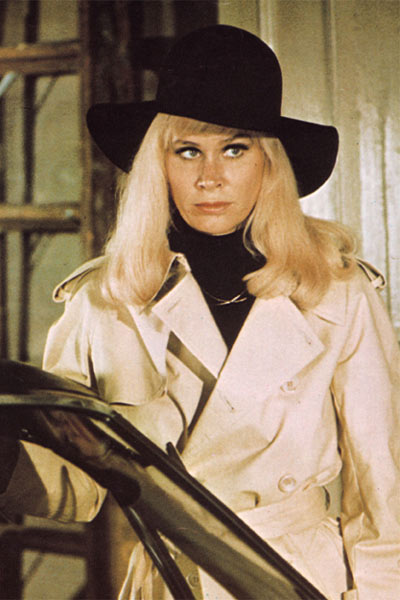
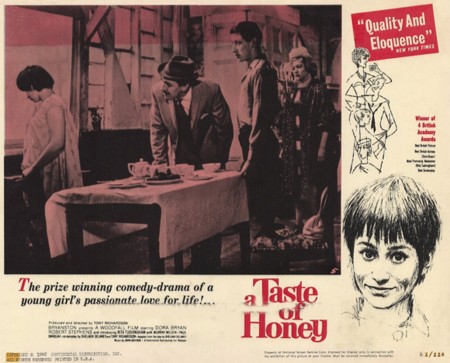
French lobby card.
Speaking of the commentary, British director Lyne’s (“Fatal Attraction,†“Flashdance,†“9 ½ Weeksâ€) fascinating and intimate recollections are worth the price of the disc alone. He made his directorial debut with the movie and is at times almost apologetic over what he sees as the wobbly choices of a first-time director. Viewers will note scenes that contain what came to be known as his signature style in movies like “Jacob’s Ladder†and “Fatal Attractionâ€: single-source lighting, using smoke on set to create light rays, and other stylistic techniques from his background as a commercial director. He is refreshingly candid and modest throughout, revealing misgivings over a scene he feels should have been cut or one that goes on too long, as well as revealing funny anecdotes about the actors. Randy Quaid, for example, donned a carnival mask in an umpteenth take of a scene that Lyne felt he just wasn’t getting right; Kandace Stroh had to be screamed at in her face so she could cry, and other funny reminiscences.
Sally Kellerman’s on-camera interview is another bonus, but she seems hard-pressed to remember much about filming “Foxes,†since at the time of production she was also shooting another feature in Israel. As a result she had to repeatedly jump on transatlantic flights between LA and Tel Aviv to shoot both pictures simultaneously. Kellerman is nonetheless a hoot just to listen to, as her trademark breathy, blousy way of talking just seduces you all over again, a la “Hot Lips O’Houlihan.†At one point she interrupts a story to ask her interviewer, “What is Blu-ray anyway?â€
“Foxes†is a portrait of a group of teen girlfriends in LA’s San Fernando Valley at the cusp of the ‘80s, mothered by bossy and precocious Jeanie, played by Jodie Foster. They are real Valley Girls at varying degrees of promiscuity and jadedness. The baby-face of the group, bespectacled Madge (Marilyn Kagan) wears her virginity as a badge of shame, while druggie Annie (Cherie Currie of The Runaways) is trying to hide out from her abusive cop father, who wants to commit her to a mental hospital. They’re all trying to act older than they are, hosting awkward dress-up dinners in homes not their own, sleeping around and cutting class. Scott Baio plays a skateboarding drifter who’s dropped out of school and now fills fire extinguishers to make money. He seems to be everyone’s kid brother, when he’s not trying to sleep with one or another of the girls. Jeanie (Foster) seems to be hopelessly devoted to saving doomed Annie, to the point of suggesting lesbian longing, especially given Jeanie’s indifference to her part-time boyfriend Scott (Robert Romanus) but it never goes that far. That’s pretty much the whole plot: a loosely woven series of moments in their lives, punctuated by concerts, fights with parents, and cruising Hollywood Boulevard -- until an inevitable tragedy strikes one of them and closes the story, offering an open-ended but decidedly down take on teen life.
In one of the film’s key scenes, Jeanie and her mother, Mary (Sally Kellerman) have it out at home after Mary has picked up her daughter from another police station. Mary, herself a divorced mother who sleeps around, tells her daughter: “I don’t like your friends….You’re all a bunch of short forty year-olds and you’re tough.†But Mary’s honesty gets the better of her when minutes later she breaks down and admits that when she sees them lying around “half out of your clothes….you’re beautiful. I admit it, you’re all beautiful -- and you make me hate my hips. I hate my hips.†Lyne calls out the scene as his favorite and pays tribute to screenwriter Gerald Ayres for its emotional truth.
Visually, “Foxes†is beautiful to watch in this Blu-ray edition, whereas previous home video issues made the cinematography look murky. “Midnight Express†and “Fame†cinematographer Michael Seresin’s artful camerawork gives the picture a soft-focus and pastel coloring, even managing to make the smoggy sunlight of Los Angeles look like an oil painting. Lyne says he shot some of the Hollywood Boulevard scenes himself, and they give the film an authentic sense of time and place, with glimpses of street life that remind the viewer of a pre-gentrified Hollywood, much like New York’s 42nd Street at the same time.
As Lyne explains, the picture was put together by producer David Puttnam and Casablanca Records founder Neil Bogart, who was obviously keen to use the movie as a vehicle for his hottest artists of the time, most prominent being Donna Summer. Her beautiful disco classic “On the Radio†plays over the opening titles, while Cher -- another Casablanca artist -- literally plays on a radio in the opening scene, post-credits. Is it a duel between the two, top disco divas of ‘79-80? Fragments of “On the Radio†repeat throughout the film, taking on a more melancholy tone as the story comes to a close. Euro-disco composer Giorgio Moroder provided the score -- containing echoes of his music for “Midnight Express†(1978) -- and other artists to listen for on the soundtrack include Janice Ian, Foreigner and Brooklyn Dreams. When the girls go to see Angel in concert at the Shrine Auditorium, Lyne confirms in the commentary a suspicion I have had for years: They couldn’t get KISS, who was on tour during filming.
Released between two movies that became classics of the L.A. High School genre, Rock ‘n Roll High School (1979) and Fast Times at Ridgemont High (1982), Foxes dared to silence its teen audience with issues of heavy drug use and overdoses, teen pregnancy, domestic abuse and premature death. In fact, Lyne reveals that writer Gerald Ayres (“The Last Detail,†“Rich and Famousâ€) based Jodie Foster’s character on his own teen daughter, whom he accompanied to high school and on friend outings to gain more authentic insights into her world. Tonally, “Foxes†is more of a true companion piece to “Little Darlings†(1980), starring Tatum O’Neal and Kristy McNichol, or “The Last American Virgin†(1982), both of which satisfy their audiences’ demands in the sexual-initiation and awkward-high-school-moments departments, but manage to slip in moments of true pathos.
Someday, perhaps, Jodie Foster will participate in reminiscing about the making of “Foxes†as an indulgence to the movie’s fans, as she has done on numerous other commentary tracks of her other, “serious†films. Likewise Scott Baio. In the meantime, Kino Lorber’s Blu-Ray is the definitive collector’s edition to date and one to enjoy for years to come.
One of the most idiosyncratic and
inventive voices of genre filmmaking to emerge in the 1970s was Jeff Lieberman
(born 1947), whose three best known films, Squirm (1976) Blue
Sunshine (1978) and Just Before Dawn (1981) have become
classics of horror and sci-fi. Cited as an influence on such directors as Eli
Roth and Quentin Tarantino (the latter lists Squirm as an essential
viewing if he’s to take you seriously), Lieberman’s filmmaking captures the
low-budget resourcefulness of Roger Corman and combines it with a singular
point of view -- one that seems both quirky and at times, deliriously demented.
Here at Cinema Retro, these are
exactly the types of directors we enjoy tipping our hat to. So I’m excited to
announce that I’ve organized a tribute to Lieberman built around these three
films with the generous participation and hosting of Anthology Film Archives in
New York City, where the retrospective will take place, August 17-19th. (www.anthologyfilmarchives.org)
“3 X Jeff Lieberman†will mark the
first time these three films have been screened in 35mm in New York since their
theatrical premieres, a remarkable event considering how much word-of-mouth
cachet each has, like prized baseball trading cards for cult film fans.
“It all comes down to story,†Lieberman
often says in interviews, and watching these three films, it’s clear why. All
three cohere around a tight, well crafted narrative that does not look to the
supernatural as the locus of horror, but at the inherently corrupt nature of
people as a means to bespoil nature and society. It’s a tough-minded, cynical
worldview that runs throughout his work, and the man himself. Perhaps updating
the famous line from Sartre’s No Exit, “hell is other people,â€
Lieberman’s work is shot through with an even simpler maxim: Humanity is
horror.
Lieberman’s first film credit was
co-authoring the screenplay for the police thriller Blade (1973),
directed by his mentor Ernest Pintoff, but his debut as a writer-director came
in 1976 when his AIP-distributed Squirm burst upon drive-in
screens and became a sizeable hit, considering its low budget. The fictional
town of Fly Creek, Georgia is terrorized by a killer worm infestation after a
thunderstorm, which sends power lines crashing to the ground and electrifying
the ground -- and thousands of earthworms -- in the process. As a result, they
go on a killer rampage, invading homes and most shockingly, burrowing into
their victims’ skin. It stars a young Don Scardino (Cruising, He
Knows You’re Alone) as Mick, the interloping city-slicker beau of Geri
Sanders (Patricia Pearcy) the local redhead beauty of Fly Creek. Together with
Geri’s sister Alma (Fran Higgins), they attempt to survive the killer worm
onslaught overnight, without power and without a clue as to what has happened
to nature.
Squirm-- still Lieberman’s most popular film -- feels like a
double-feature twin to 1972’s Frogs (1972, with Sam Elliott), another
swampy, “nature’s revenge†tale of eco-horror put out by AIP. Featuring
early makeup work by eventual seven-time Oscar-winner Rick Baker, and
co-starring thousands of real worms, the film was shot on location in Port
Wentworth, Georgia and aside from Don Scardino, used a cast made up mostly of
locals, who contribute to its earthy and authentic atmosphere, not unlike the
drive-in mainstay The Legend of Boggy Creek (1972), which was shot in
similar circumstances. And speaking of earthy, we should pay special tribute to
the actors, who braved thousands and thousands of real live earthworms on set.
Not a rubber worm among them! The original idea, Lieberman revealed to an
interviewer this year, came from a real event. His brother, in order to get
earthworms out of the ground, electrified the soil inserting a electric model
train transformer into the soil. When they slithered out, they noticed they
burrowed back in when light was shined on them. But are earthworms scary? Not
in real life, but as Lieberman explained: “I had to go to great lengths to make
[the worms] scary, because they’re not scary...until you’re shown otherwise you
can just step on it. So I had to make that scary by it burrowing into the
face...so that was the big assignment and I guess it worked.†An interesting
footnote: When a 25 year-old Lieberman wrote the original title on a legal pad,
(then spelled Skworm) and sketched down a paragraph containing the
story, he showed it to his wife. “She said it was the stupidest idea she’d ever
heard. Two years later we’re buying a house with the money that Squirm built.â€
NYC’s
Film Society of Lincoln Center Screening a Whole Summer’s Worth of Midnight
Movies
Midnight movies have been, in effect, the homeless
orphans of filmdom for the past 20 years.
Since the demise of their theatrical homes -- second or third-run movie houses
and drive-ins -- back in the 1980s, they've been regarded as too niche for corporate cable channels like IFC or TCM.
With no local-channel late shows in
existence to air them, their only home has been the home video market and the
art-house repertory circuit in cities like the New Beverly Cinema and
Cinefamily in Los Angeles, NYC's Anthology Film Archives, and a handful of
other venues around the country. In these politically sensitive times, there
are only so many places that will host a screening of Torso (1973).
This is strange, because midnight movies are not, in fact, unloved orphans.
They are obsessively loved, collected, talked about, fetishized, blogged,
tweeted and traded by a huge swath of filmgoers, basically anyone old enough to
remember attending one in their heyday of the early 60s--late 80s. But their
theatrical outlet remains severely limited due to a number of factors, mostly
due to the shortage of amenable venues, screenable prints (their fan base is
slow to warm to digital projections) and difficulty in marketing to younger
generations. But their influence
continues to be felt in everything from fashion and advertising to more
mainstream feature films, particularly those of Eli Roth and Quentin Tarantino
-- both of whom owe their careers to the recreation of the midnight movie
phenomenon and aesthetic. (It was through Tarantino's enormous generosity that
the New Beverly Cinema was rescued from closure when he quietly bought it from
the owners in 2010 but allowed them to continue running it as they saw fit.)
This is one reason why museums and cultural institutions around the country are
taking notice and
programming midnight movies into their film calendars, in effect, giving these
genre films a second home in the 21st century, and in so doing elevating their
stature through the critical lens of the museum imprimatur.
Another reason is that these same museums and cultural
institutions contain millennial-generation
staff, for who anything from the 1980s is sacred. That is a less a scientific
observation than
an anecdotal one, but I'm standing by it.
I saw a screening of
Zardoz (1974) at the Oklahoma City Museum of Art last March in a Mystery Science 3000-inspired format,
including a hilarious trailer reel as an intro, before an audience of mostly
twenty-somethings. And NYC’s Museum of Art and Design in 2010 devoted an entire
week to Italian zombie films, which they called Zombo Italiano. The trend is picking up heat elsewhere.
Which leads me to my main point: The Film Society of Lincoln Center is
presenting a new series of Midnight Movies every Friday night, all summer long!
Now through August 31st.
Among the rarely screened gems in the series are: Logan's Run (June 15);
Lost Highway (July 6); The Evil Deada nd The Evil Dead II
(July 13 and 20, respectively); and The House by the Cemetery (August
3).
If someone had informed this obsessive fan of Willy
Wonka & the Chocolate Factory, 40 years ago, that I could hold a real
Wonka Golden Ticket in my hands, watch behind-the-scenes footage and read a
book on the making of my favorite film, examine script correspondence, listen
to cast commentaries and dive into all sort of Wonka memorabilia in one big
box, I probably would not have come up for air for weeks. In fact my reaction
would probably have been a lot like Charlie’s when he discovers the last Golden
Ticket.
Fans of Willy Wonka – rejoice! Has Warner
Bros. Home Video got a golden treat in store for you, just in time for the
holidays. The 40th Anniversary Ultimate Collector’s Edition has
just been released in one, big, heavy purple box, the same color as Wonka’s
waistcoat, full of the same goodies mentioned above, and more. The limited
edition gift set indulges and answers every possible question a fan might have
about the making of this extraordinary film forty years ago, even giving them a
real sense of what it was like to be there on the set with the cast and crew.
The Scrumdidlyumptious, 3-disc Blu-ray/DVD combo
contains over an hour of extras, including Mel Stuart’s Wonkavision, a
brand new interview with the director; a new-to-DVD featurette on author
Roald Dahl; a 144-page production book reprint filled with production photos and
notes, and archival letters. Sweet premiums like a retro Wonka Bar-shaped tin
box with scented pencils and eraser will have an infantilizing effect on
“adult†fans such as myself who saw the movie first-run, so you might want to
open it alone. (I made the mistake of opening it at the office, and practically
scared away four co-workers who sit in my area.)
Cinema Retro,
ill-advisedly perhaps, unleashed me on cast members and director Mel Stuart on
October 17th at a press conference at the Jumeirah Essex House Hotel
in Manhattan, overlooking Central Park. With the exception of Michael Bollner
(Augustus Gloop) who wasn’t able to be present, the Wonka “kids†were there
still looking great, now in their early 50s. Peter Ostrum (Charlie Bucket),
Julie Dawn Cole (Veruca Salt), Denise Nickerson (Violet Beauregard), and Paris
Themmen (Mike Tee Vee) joined director Mel Stuart, now 83, and the “leadâ€
Oompa-Loompa, veteran actor Rusty Goffe, for a delightful conversation and
personal memories that have not dimmed with time. If they get tired of telling
the same old stories, you’d never know it.
I started with director, Mel Stuart, and Oompa-Loompa
No. 1, Rusty Goffe, who has quite an impressive resume to his credit,
post-Wonka, including the first Star Wars (1977) and two films in the Harry
Potter franchise. Mel is a gruff but warm-hearted New York native of the
old school. And, I discovered, a great raconteur.
Mel Stuart (pointing to Rusty Goffe): He was the
number one Oompa-Loompa. Tell ‘em why.
Rusty Goffe: Tell them why? I was the youngest, I was
the only agile one, I could speak English --
Mel Stuart: -- He did Shakespeare. If you do
Shakespeare, you’re number one in my book. See, you always have to cast people
for bit parts. You know, four lines, two lines. And I ask “Have you ever done
Shakespeare.†If it’s between him and the other one, I’ll take the one who’s
done Shakespeare. Right now I’m working on a picture, a documentary --
Shakespeare in Watts.
In
Vito, a new documentary examining the
life of Vito Russo, the pioneering AIDS activist and author of the landmark
book The Celluloid Closet (published
in 1981, updated in 1987), director Jeffrey Schwarz pays tribute to a man whom
he credits with being the first to break down the long history of Hollywood’s
defamation against gay people in the movies, and in so doing, advanced the
cause of gay rights on a crucial front. The documentary premiered at the 49th
New York Film Festival on last Friday, October 14th, and is being
distributed by HBO Films. (The cable network will air the doc sometime next
year, an employee confirmed.)
“Movies
caused great damage to gay people’s psyches,†said Jeffrey Schwarz recently in
an interview with Cinema Retro, “and he was able to tie in his burgeoning gay
activism with movies by showing films at the Gay Activist Alliance, which he
founded [in 1970], and that had the effect of creating community through film.
There really was no community before. Getting gay people in a room together to
discuss films had never happened before, and he was the first person to make
these connections.â€
The
documentary is the most personal yet for Schwarz, founder of Automat Pictures,
a production house in Los Angeles which, in between their bread-and-butter work
producing EPKs (Electronic Press Kits), behind-the-scenes shorts and making-of
featurettes for DVDs and Blu-Ray releases, has been cranking out some of the
best documentaries in recent memory on the outsiders of American cinema, like
William Castle, Tab Hunter and drag superstar Divine (more on the last, below).
It’s hard to believe it’s been 30 years since Elvira, Mistress of the Dark, aka Cassandra Peterson, burst into our living rooms, sporting two of her biggest assets, and single-handedly revitalized the once-tame TV genre of the late-night horror host, bringing a combination of sexuality, humor and no shortage of groan-worthy bad puns. Elvira’s Movie Macabre ran from 1981-84 on Los Angeles’ KHJ (now KCAL-TV) and rapidly established her as a star with national syndication.
Feature films followed: Her own starring vehicle Elvira, Mistress of the Dark was released in 1988, followed by Elvira’s Haunted Hills in 2001. Licensing deals, frequent TV appearances, tie-ins galore, video box sets and other TV programs made Elvira America’s favorite sexy and playful horror vamp. (My favorite arcade game in the ‘80s was the Elvira pinball machine, Scared Stiff.)
Although it’s been a tough gig to keep up over the past decade, given the explosion of the niche-market television landscape and hundreds of channels all competing for attention, Elvira re-launched her original show, Elvira’s Movie Macabre in September of 2010 for syndication in several markets nationwide, and it ran for 20 episodes, through May of ’11. Unlike her previous show from the ‘80s, Elvira chose B-horror films in the public domain due to the prohibitive cost of licensing now, but it’s no less fun – she’s educating a whole new generation on the merits of A Bucket of Blood, Manos: Hands of Fate, Night of the Living Dead and I Eat Your Skin.
If you missed any of the episodes, and likely you did because of the relative obscurity of the show’s airtimes, Elvira is releasing a new line of double-feature DVDs from the show’s re-launch. Each DVD, priced at $14.98, includes two fright-fests digitally remastered for optimal shocks. The first one to hit the street is Night of the Living Dead (1968) & I Eat Your Skin (1964).
I spoke with Cassandra recently from her home in Los Angeles, where we discussed high school, her Fellini encounter, self-actualization and Tina Louise.
The generation of subversive filmmakers who emerged out of
the rubble of Manhattan’s Lower East Side in the 1970s, who wrote, cast,
produced and directed their own punk riffs on narrative feature films long
before the digital revolution made it easy, has long gone without a proper
documentary that chronicles their fascinating emergence during this era. Well,
no more. Blank City, directed by French newcomer Celine Danhier, was one
of the most talked about docs at festivals worldwide in 2010, and recently started
its theatrical engagement at the IFC Center in Manhattan and across the USA at
major indie-cinema venues.
Packed with film clips, period footage and insightful
interviews with key players from the scene, such as Debbie Harry, John Waters,
Ann Magnuson, Amos Poe, Eric Mitchell, Patti Astor and Jim Jarmusch, Blank
City is a fascinating and inspiring documentary that unspools like a
long-overdue oral history, both of Manhattan’s Alphabet City and of the “No
Wave†film movement that exploded there in the mid-to-late ‘70s. Its bombed-out
streets of vacant lots and nearly uninhabitable tenements provided the stage
for the first generation of DIY filmmakers -- nearly 30 years before YouTube --
who picked up Super-8 cameras and cast their friends and themselves in hastily
written films with names like Blank Generation, Rome ‘78, Permanent
Vacation and Empty Suitcases. If the titles sound like punk album
titles, they essentially were. The same ethos that informed the short, jagged,
minimalist music of bands like Television, the Voidoids, The Contortions and
Teenage Jesus -- then rocking CBGB’s on the Bowery -- was also the philosophy
behind these no-budget mini-masterpieces.
“It felt like our lives were movies,†says Blondie’s Debbie
Harry, who, like many in the downtown scene, was both in a band and in her
friends’ films, such as Amos Poe’s The Foreigner (1978).
The restored print is being screened at Cannes and will
be distributed for the first time in France this fall.
It must have been something of a homecoming for the
onetime couple. Forty-plus years ago, they were photographed arm-in-arm,
dashing from photographers around Paris.
...and now.
The 64th Festival de Cannes runs through May
22nd.
One of the most anticipated genre film festivals on the North American circuit is Noir City, the annual San Francisco Film Noir Festival, hosted at the glorious Castro Theatre – itself a cinematic landmark and “character†in countless movies filmed in the City by the Bay. This year’s edition, with the theme of “Who’s crazy now?†kicks off January 21st and runs through the 30th, 2011. Over the 10 day span, a tantalizing lineup of twenty-four films will be screened – including three brand new 35mm prints funded by the Film Noir Foundation, High Wall (1947); Loophole (1954) and The Hunted (1948).
“We show films you can’t see anywhere else,†said Noir City co-founder and noted film historian Eddie Muller over the phone from his Bay Area home. “We are the only festival that goes out of its way to preserve rare titles, then uses those proceeds to restore other rare titles.†Festival attendees regularly turn up in period dress, Muller says, as proof of their devotion to the genre. For the Castro Theatre, built in 1922 and seating 1,400 people, it’s one of the biggest draws of the year.
Citing an arrangement his Film Noir Foundation has with a major Hollywood studio, Muller’s organization agrees to fund preservation and restoration prints to be made if the studio will deposit a print with UCLA’s Film & Television Archive – the premiere restoration facility in the world. The studio retains ownership but allows UCLA to grant screening licenses, such as the wildly popular Noir City festival in San Francisco. It’s an agreement, says Muller, that provides ongoing proof that restoration and preservation of rare and endangered films is a worthwhile effort. Still, he allows, it’s always a hard case to make to the studios, which are forever looking into the future for new revenue streams and not into the past. Once in a while, Muller says, a studio will step forward to fund the full restoration of a print, which is what Paramount did recently with Strangers in the Night (1951) when their archive heard that Film Noir Foundation was prepared to shoulder the $27,000 restoration cost on their own.
Other highlights include The Stranger on the Third Floor (1940), considered by critical consensus to be the first American film noir, starring Peter Lorre; Don’t Bother to Knock (1952) with Marilyn Monroe in one of her strongest performances of her young career; and a handful of films not available on DVD, such as 1946’s The Dark Mirror, with Olivia de Havilland (directed by noir master Robert Siodmak), Beware My Lovely with Ida Lupino, and a bizarre puzzler from 1948, Fritz Lang’s Secret Beyond the Door starring Nightmare Alley’s Joan Bennett and Michael Redgrave. According to the program literature, it’s a Noir City tradition to show one incomprehensible film each year – and this year this is it. Apparently Lang’s off-the-rails Freudian blowout is a cross between Rebecca and Bluebeard. Muller calls it “ridiculous but visually stunning.†Funded by The Film Noir Foundation, it was restored by the UCLA Film & Television Archive.
Like a grim-faced police lineup, most of noir’s beloved Usual Suspects are to be found in 2011’s edition, like Barbara Stanwyk, Ida Lupino, and Humphrey Bogart. However, audiences will also appreciate some surprising names – actors, screenwriters and directors – not usually associated with noir, notably French director Jean Renoir’s The Woman on the Beach (1947); Otto Preminger with his Angel Face (1952) and A Double Life (1947), directed by George Cukor and starring an Ronald Colman in a dual role which won him an Oscar. The script was written by screwball comedy veterans Ruth Gordon and Garson Kanin.
For Noir City 9’s complete 2011 festival lineup and more information on how you can join and contribute to The Film Noir Foundation, visit http:/www.noircity.com.
That was the famously economical answer the great Italian
neo-realist screenwriter, Suso Cecchi d’Amico, gave when asked what advice she
had for those aspiring to write films. Pay attention to the way people speak
and act, and write it down, she seemed to be suggesting. It’s not in our
daydreams where we’re going to find that convincing bit of dialogue or key to a
character’s motivation. It’s in daily life, which holds more rich material than
any of us could ever use.
The Bicycle Thief (‘48), Rocco and His Brothers (‘60) The Leopard
(‘63), Senso (‘54), Violent Summer (‘59) and Jesus of Nazareth
(TV, ‘77) are only a handful of the powerful films she wrote or contributed to,
among more than 100 carrying her name.
Most cited for her career-long collaboration with director
and close friend Luchino Visconti, with whom she worked on five films,
including 1963’s The Leopard starring Burt Lancaster, she also held her
own alongside such powerful directorial egos as Antonioni, De Sica, Monicelli
and Zeffirelli.
“Scrivere Il Cinema,†(Writing Film), is a six-day tribute
to Cecchi d’Amico, organized by Richard Peña, director of the Film Society of
Lincoln Center, which kicks off November 26th and runs through December 1st at
The Walter Reade Theater in Lincoln Center.
I spoke recently to Peña about the significance of Suso
Cecchi d’Amico’s contributions to cinema and the relative rarity of a tribute
organized around a screenwriter:
Cinema Retro: A tribute organized around a screenwriter
is fairly rare. Why did you choose this specific screenwriter for a tribute?
Richard Pena: Perhaps, but Suso was an
extraordinarily special screenwriter. Having recently done a lot of work on
Italian cinema, I was startled to see how often her name figured in the credits
of so many masterworks. She was an extraordinary talent, and her passing is a
loss for all who love film.
CR: Do you think her career was overshadowed by her
collaboration with such auteurist names in Italian cinema, such as Visconti,
Monicelli, et al? It seems as though a woman would have a hard time holding her
own against such huge egos?
RP: My sense is that this had as much
to do with the contemporary lionization of film directors as it did plain old
sexism. From what I've heard about her, she held her own with the boys.
CR: Can you identify a common thread or characteristic
style that belongs to Cecchi d’Amico’s dialogue or characterizations?
RP:With over 100
screenplays to her credit, that becomes difficult; moreover, I've seen at best
50% of them. I think she often likes to focus on a character who takes a
decisive action and then study the consequences of that action on those around
him/her.
Exorcist fans are partying like it's 1973, with the recent big screen showings of the extended director's cut of the movie as well as the soon-to-be-released Blu-ray special edition that contains unseen behind-the-scenes footage. Additionally, the next issue of Cinema Retro (#19) will feature a cover story on the film and an exclusive interview with William Peter Blatty. Adding to the hoopla, the Museum of Modern Art in New York just hosted a special event relating to the film.
By David Savage
The Museum of Modern Art’s famed Titus Theater was the
setting for an unforgettable evening last Wednesday, September 29th,
as director William Friedkin, actress Linda Blair, and other crew members reunited
for a screening of The Exorcist: The
Extended Director’s Cut. The event was timed to celebrate the upcoming
release of a landmark new collector’s edition, two-disc Blu-ray™ set, available beginning October 5th
from Warner Home Video.
Projected on the big screen in a spectacular,
remastered print in 1080p from the original camera negative, and with restored
sound that revealed subtleties from the original score and sound reel seemingly
lost under a layer of murk until now, the entire experience was like a layer of
sooty tape had been lifted off the entire film, both heightening its
cinematographic beauty as well as restoring its power to drop jaws as it did 37
years ago. The theater’s Dolby processor/ 5.1 surround system seemed to turn up
the aural and emotional volume on the terror.
While the film is routinely included in the horror
genre, Friedkin stressed that it was never intended to be a horror film, but
rather “a film about the mystery of faith.†Indeed, he confirmed with novelist
and screenwriter William Peter Blatty (onstage after the screening) that they
never mentioned the word horror
during the entire production. Every decision they made, Friedkin said, was
steeped in research, realism and getting at the truthful representation of the
characters’ confrontation with religious belief. Horror-film conventions were
irrelevant, he said, a perspective which influenced everything from the
screenwriting to the cinematography.
Personally, I’ve always maintained (and Friedkin’s
remarks seemed to back me up) that the film is only on the surface about the
demonic possession of a little girl. Its deeper focus lies on a priest’s crisis
of faith. As he tries to come to terms with the role he played in the neglect and
death of his mother, he must also negotiate his own moral crossroads as he
decides whether or not to get involved with a real-life exorcism involving an
innocent 13 year-old girl.
Even at their most shocking and (to people of faith)
sacrilegious, the scenes involving the demonic possession of Regan do not play
as gratuitous, a point further echoing Friedkin’s contention stated above.There is a seriousness of purpose and,
strangely enough, a palpable piety in the treatment of desecration, sacrilege
and heresy. Again, Blatty and Friedkin, together with cinematographer Owen
Roizman (also present), discussed for months before shooting began how they
were going to approach such explosive subject matter in a manner that would not
involve genre-conventions, shock appeal or empty, transgressive gestures toward
organized religion.
After the screening, audience members were given the
treat of a lifetime to see Friedkin joined on the stage, first by novelist and
Oscar-winning screenwriter (for this film) William Peter Blatty, then by
cinematographer Owen Roizman (who also lensed Friedkin’s The French Connection), then by Linda Blair (looking fit and lovely
at 51), and finally by Chris Newman, the sound maestro on the film.
Blatty and Friedkin sparred like the old friends they
are, with Blatty mercilessly teasing Friedkin about a continuity lapse in one
scene, which Friedkin rebutted with “Bill, I view that like cracks in fine
leather.†Their tone underscored the family atmosphere that was established while
working on the film and which continues to this day.
In the spirit of Cinema Retro's quest to help make audiences aware of worthwhile independent films, columnist David Savage reports on the new short Sahaja Springs.
If
precious few directors have exploited the inherent comedy of the ashram -- a
retreat for meditation, yoga and enlightenment -- it may be because, like the
fashion biz and network television, for example -- these realms do an awfully
good job of satirizing themselves.
One
director willing to take a stab at sending up the yoga lifestyle is emerging
indie director Rebecca Conroy, a recent graduate of Columbia
University's graduate film program. Her hilarious short, Sahaja Springs,
recently screened at the IFC Center in Manhattan, and has both tickled and
angered audiences, depending on whom you ask. (Men seem to be amused; women,
not so much, according to Conroy.)
The
film's multi-thread narrative follows a group of ashram residents as they
struggle to find inner peace promised by an Upstate New York ashram run by a
faux-Indian, fraudulent yogi. That the character is played by a real-life
Indian yogi, 92 year-old Kumar Pallana -- the Indian character actor with a
recurring role in many of Wes Anderson's films such as Rushmore, The
Royal Tenenbaums, and The Darjeeling Limited -- is a good example of
the film’s layered comedy.
Meanwhile,
a male ashram resident – a hunky, magnetic loner who speaks in mystical yet
baffling headscratchers – seems to be driving all the females crazy with
frustrated lust and confusion.
It’s
a smart, deadpan jewel from a young director who knows whence she speaks:
Conroy drew upon her own experiences as a yoga follower, ashram-crasher and
daughter of a hippie mother.
I
sat down recently for coffee with Conroy and discussed the idea behind her yoga
satire and “The Great Kumarâ€â€™s surprising theatrical history.
A new documentary examining the tragic and influential life of Warhol
Factory star Candy Darling, entitled Beautiful Darling: The Life and
Times of Candy Darling, Warhol Superstar had its US premiere at the New Directors/New Films Festival, last
Friday, April 2nd, at the Museum of Modern Art in New York. The writer
and director, James Rasin, was present with key members of his crew, most notably Jeremiah Newton,
who executive produced and whose shared life with Darling provided the
main focus
of this revelatory, intelligent documentary.
Framed by a present-day narrative involving close friend Jeremiah
Newton's efforts to give Candy's funeral urn a final resting place (in
tiny Cherry Valley, New York -- the significance of which is never explained), the documentary recounts in vivid detail
the fast-burning life of Warhol's most legendary Superstar. (The only
one of Warhol's Superstars, by the way, paid tribute by two Lou
Reed-penned songs for The Velvet Underground.) The filmmaker and his
crew weave together early video clips, film footage, recordings,
photographs, period music and and original score to create a dense narrative fabric,
making it one the most thorough and authoritative biopics of the Warhol
clan.
It’s
an angry time in America. Tea Partiers, Olbermann, Palin, Wall Street villains,
an endless war in Afghanistan, mercenaries in Congress, flying terrorists, high
unemployment and Twitter-addicted freaks.
So
it’s either a perfect time to bring out a remake of George Romero’s 1973 horror
classic The Crazies, or the timing is
really curious, if this mainstream horror reboot’s aim is to encourage viewers
to “enjoy some surprises and maybe forget their troubles for a couple hours,â€
says one of the producers, Rob Cowan. The movie opens in North America today.
The
dramatic irony floating over the film – in which a small, idyllic Midwestern
town descends into violence and mayhem when a water-born toxin infects half the
population – might be the question whether Americans even need the excuse of a crazy-making virus to descend into anarchy.
Aren’t we on the tipping point already?Â
I’ll
leave that for viewers to discuss. Meanwhile, this remake from Overture Films features
Timothy Olyphant (Live Free or Die Hard),
Radha Mitchell (Silent Hill) and is
directed by Breck Eisner (Sahara).
The writers, Scott Kosar and Ray Wright, have reportedly updated Romero’s
original concept from being told from the point of view of the townsfolk to the
husband and wife team of David and Judy (Olyphant and Mitchell).
Larry David: more macho than action film director Roland Emmerich?
By David Savage
In Roland Emmerich's upcoming multi-billion-dollar
boondoggle 2012 (a date from which Mayan scholars have already distanced
themselves, unfortunately, since the whole plot hinges on a "Mayan
prophecy" that the world will end in that year), the director decided to
film a scene in which the iconic Christ the Redeemer statue in Rio is
destroyed, citing his belief against “organized religion.â€
Interestingly, though, he lost his nerve when it came time to follow through
with filming the destruction of another sacred site of organized religion: the
Kaaba -- that cube-shaped shrine that sits at the heart of Mecca. Explains
Emmerich: “Well, I wanted to do that, I have to admit. But my co-writer Harald
said I will not have a fatwa on my head because of a movie. And he was right.
We have to all in the Western world think about this [sic]. You can actually
let Christian symbols fall apart, but if you would do this with [an] Arab
symbol, you would have a fatwa, and that sounds a little bit like what the
state of this world is. So it's just something which I kind of didn't [think]
was [an] important element, anyway, in the film, so I kind of left it out.â€
The Film Society of Lincoln Center, in association with Cinecittà Luce, and the Fondazione Centro
Sperimentale di Cinematografia-Cineteca Nazionale in Rome, will present the
most complete series on Italian Neorealism ever screened in New York: "Life
Lessons: Italian Neorealism and the Birth of Modern Cinema", a
month-long, 40-film series on the film movement from postwar Italy. The series
screens at the Walter Reade Theater from Friday, October 30 through Wednesday,
November 25.
This promises to be a landmark survey of a crucial period of cinema
history and New York-area film-goers of any persuasion should try to see at
least one in the series. Rossellini’s Open
City is often cited as the first milestone in this movement, so it might be
the go-to mother lode if you have to see just one film. Born from the war-torn landscapes of 1940s Italy, Neorealist films were
both unique stylistically and thematically, according to the festival
programmers. Shot on location, using available light, casting non-professional
actors, these films were revolutionary also for their candid depictions of the
working class. Not only would the movement elevate the art form from simple
entertainment, but it opened a dialogue about the future of Italy as well as
creating films of extraordinary power and humanity.
Emanating in radioactive waves of hilarity from its
home at New World Stages on W. 50th
Street in Manhattan
is The Toxic Avenger, The Musical,
the not-exactly-anticipated musicalization of the 1984 cult movie. The show
opened April 6th. New York-area “Toxie†fans of the 1984 film and its
numerous sequels will not want to miss this well-oiled, high-camp machine of a
show, written by Joe DiPietro (“I Love you, You’re Perfect, Now Changeâ€) with
music and lyrics by Bon Jovi founding member David Bryan.
Expanding upon the plot of the film, the musical
casts it net a bit wider, summoning the operatic, mock-horror of Phantom of the Opera, combined with the
rock-opera structure of Phantom of The
Paradise (1974), all in the spirit of Revenge
of the Nerds.For non-inductees into the Cult of Toxie (of which
I am one), the story concerns a certain Melvin Ferd III, a Tromaville, New
Jersey nerd, who discovers documents in his local library (while he’s there
trying to flirt with his unrequited love, the blind librarian Sarah) linking
the town’s mayor to a company dumping toxic waste in a city landfill. When the
mayor learns of Melvin’s discovery, she sics her two bullying goons on him, causing
him to fall into a barrel of toxic goo. Emerging with superhero strength, one
eyeball sliding down his cheek, his brain half-exposed and his entire body
dripping with toxic green slime, “Toxie†is nonetheless ready to go after the
bad guys and wreak bloody revenge for his horrible disfigurement. He’s also
determined to win the heart of Sarah while he’s at it, since she thought his
former self a bit too weasly.
According to New Jersey-native composer and
lyricist David Bryan, the show is a fulfillment of a lifelong dream ever since
he saw the 1984 movie in a midnight movie theater in Newark. “From that day on,†according to his
notes on the musical’s website, “he dreamed of writing a musical about the
first mutant superhero from his home state.â€The musical was developed at the George Street
Playhouse in New Brunswick, and positively overflows
with New Jersey
references, given the Garden State-roots of both Bryan and the show’s book
author, Joe DiPietro, who hails from Exit 166. (Bryan grew up off Exit 109). In New Jersey,
if you didn’t know – and you’ll know by the end of this show – you don’t
discuss what town you’re from, it’s what EXIT you’re from!
To its detriment, the show never rises to a comedic
level above the cartoonish, comic book genre. Ecological disaster, global
warming, political corruption, small-town hypocrisy, even rape – all subjects
are given the same, frantically silly treatment. This is no doubt by design, in
keeping with the tone of the movie. However, as a result, it never really
elicits any range of emotion – just a broad, tickled smile from the start, to a
more tired smile at finish, as the facial muscles begin failing.
But I still urge Cinema Retro’s readers to go see
it, as the performances alone are worth the price of admission. There isn’t a
weak one in the bunch – all are top-form, scary-talented Broadway pros.
Amy Adams follows her Oscar-nominated performance in Doubt with the starring role in Sunshine Cleaning.
“There
is dignity in all work.†True enough, whoever penned that famous phrase, even
if he never had to meet Perez Hilton. What would make an interesting addendum,
though, is that finding that dignity
is a story worth telling. Example: Whatever happened to the former high school
cheerleading captain who dated the quarterback? You remember Rose? She’s now a
single mom working as a housecleaner and having an affair with a married cop.
So
is the jumping-off point for Sunshine Cleaning,
a new dramatic comedy starring Amy Adams (Doubt,
Junebug) as Rose Lorkowski and Emily
Blunt (The Devil Wears Prada) as her
sister Norah.
Rose
tells herself the maid work is just a transitional phase while she gets her
real estate license. Norah is still living at home with their father, Joe (Alan
Arkin), a salesman with a long history of ill-fated get-rich schemes.
Desperate
to get her troubled son into a better school, Rose persuades Norah to partner
with her in the more lucrative niche market of crime scene clean-up. After
passing the gag-test initiation rite of their first rookie job (a finger shot
off in a domestic dispute case) the sisters find themselves elbow-deep in the
gory aftermath of suicides, murders and other forensic horror-scenes.
Naming
her new business Sunshine Cleaning and tackling it with the same, cheery zeal
as her former cheerleader self, Rose quickly learns the rules and ropes of her
unlikely new market. (For instance, there are products out there specially
formulated for cleaning up a “decomp.â€) Norah dutifully labors alongside her
sister, not exactly grateful for the new job, but not exactly complaining
either.
While
the sisters realize a reparative bond is forming between them, they also
realize that they are approaching this traditionally macho,
are-you-tough-enough job in a radical new way: as women. Screenwriter Megan
Holley (in her first produced screenplay) drives the point home in one touching
scene in which the sisters are called to the home of an elderly woman whose
husband has just committed suicide. Rose, sensing the newly widowed woman’s
shock and confusion, sits with her on her front porch, silently holding her
hand. She won’t allow herself to cry, even as the widow allows herself finally
to break down.
Rose’s
odd new life is building to a personal epiphany, and when it comes, it occurs
in the one place she had hoped to redeem herself on the most superficial of
levels – at a baby shower attended by her former high school classmates. It’s
one of the film’s best scenes, and also shows off the impressive depth of
understanding Amy Adams brings to her roles.
“I
also really could identify with wanting to be more than you are,†said Adams of her role, “in a different place that you were
born into, to sort of elevate your status in the world. That’s something I
think a lot of people identify with.â€
Set
in the arid, chain store landscape of Albuquerque,
(although the screenwriter originally placed the story in Baltimore), director Christine Jeffs makes
the most of the Southwestern city’s locations, aided by cinematographer John
Toon.
Aside
from a few too many nakedly sentimental subplots cued with emotive, acoustic
guitar (a tiresome indie convention) which, if cut, might have kept the story
leaner and more on its true, emotional track, Sunshine Cleaning is a welcome take on a real, “purpose-driven
life.â€
Sunshine Cleaning opens in theaters
on March 27th.
The Killing of Sister George was the first
“serious†film ever to earn an X rating - though many people erroneously believe that distinction was held by by Midnight Cowboy, which
was released the following year.
A
little-seen but oft-cited film in the queer canon, Sister George still packs a subversive punch 40 years after its
release, not least for its still-unbested, two-minute lesbian sex scene. (Paradoxically
I find it one of the least sexy “sex scenes†ever captured on film.)Â
Beryl
Reid (who won a Tony for the role she originated on Broadway) plays an aging,
gin-soaked actress, June Buckridge who, in turn, plays a kindly country nun on
a popular BBC soap opera, Applehurst
– but not for long. The producers of the show have decided to kill off her
character. Meanwhile, June’s live-in, blond bombshell girlfriend “Childieâ€
(Susannah York) is getting restless. Enter Mrs. Mercy Croft (Coral Browne), one
of Applehurst’s producers, who finds
her first female attraction with Childie. The love triangle that ensues is
still jaw-dropping 40 years later.
The
screening on 2/28 will be introduced by former TimeOut New York film critic Melissa Anderson, who had this to say
about Sister George:
“The
Killing of Sister George, which was released in 1968, has always fascinated me
as a depiction of pre-Stonewall lesbian culture. It was the first “seriousâ€
film to receive an X-rating, due to the notorious 119-second love scene between
Coral Browne and Susannah York. Although that scene is completely ludicrous—if
not downright offensive—I find that Robert Aldrich’s portrayal of George
(played by the great Beryl Reid, reprising her role from the stage play) is
quite compassionate. Though she’s certainly prone to atrocious behavior, George
is the only one in the film who has not compromised herself or exploited
others. And Aldrich’s decision to film the club scene at a real lesbian bar—the
Gateways Club on Kings Road in London—using real patrons as extras gives the
movie a certain level of authenticity.â€
And
let’s not leave out Robert Aldrich for praise. This was one versatile director.
Although he’s best known for his endlessly quotable, taut-wire suspense
thrillers such as Whatever Happened to
Baby Jane? (1962) and Hush…Hush,
Sweet Charlotte
(1964), this was the same director who gave us Kiss Me Deadly (1955), The
Dirty Dozen (1967) and the survival drama The Flight of the Phoenix (1965). We love versatility here at CinemaRetro,
and we love under-appreciated cult classics coming in for their long-overdue
due. Due due? Sorry. Don’t miss Sister George!
Special
thanks to Melissa Anderson for her contribution to this article. Read her
complete article on the film in the January/February ’09 issue of Film Comment or link to it here: http://www.filmlinc.com/fcm/jf09/sistergeogre.htm
Unlike
the high school hellcats twenty years before them, tossing globes out of
classroom windows and firing on police officers (see High School Confidential), Foxes
(1980), is a portrait of teenage torpor at the dawn of the Eighties. These jaded teens,
led by Jodie Foster, would rather pop a ‘lude and put on a Boston LP.
Examining
the loosely woven friendship between four high school girls in the San Fernando
Valley, each with typical problems of her age – and therefore seemingly
insurmountable – Foxes looks at how
each personality type copes with life, sex and parents, all of whom are
divorced and too busy trying to find themselves rather than guide their
children through the rockiest period of their lives.
Released
between two movies that became classics of the L.A.High School genre, Rock ‘n RollHigh School
(1979) and Fast Times at Ridgemont High
(1982), Foxes was more of a teen
drama that dared to bum out its audience with issues of teen pregnancy, drug
addiction and death. With murky cinematography, uneven performances and no
happy ending, it was promptly forgotten after its release and sank like a
stone, not even helped by its Giorgio Moroder music and title track sung by
Donna Summer (“On the Radio†plays over the opening credits.) It didn’t help
that the exploding punk scene that immediately followed gained ground quickly
and influenced the look of scores of more high school movies to come, quickly
dating Foxes’ sun-hazed ambience of
the late ‘70s. It was thus forgotten and became a relic of its time, classed more
with Skatetown U.S.A. than other frank, exploratory teenage dramas of the
same year, like Little Darlings (1980) with Kristy McNichol and
Tatum O’Neal, which is more of a true companion piece.
Jodie
Foster never mentions it in interviews, nor is it ever mentioned in career
surveys of her films. (Likewise her co-star, Scott Baio.)
But
when MGM re-issued the film on home video/dvd a few years ago, a younger
generation (born from the late ‘70s to the early ‘80s) discovered it and embraced
it, creating a revival of interest in the film that far exceeded its reception
upon its release. True to the “twenty-year loop†law, hipsters with an
insatiable appetite for the look and sounds of the early ‘80s began referencing
Foxes in a number of ways, from
fashion design to music, graphic design and photography. (Cherie Currie of The
Runaways, who plays ill-fated Annie, came in for special homage. She has a
peroxided, doomed rocker-chick look that was revived by the style icon actress
Chloë Sevigny.) It also started showing up in “best-of†lists by film
columnists and in critical essays in alternative weeklies and film journals
around the world.
Far
from being a great movie, Foxes is an
enjoyable period piece that is notable for its time for not being in hysterics
about being a teenager. It’s still a “message movie†in the same way that High School Confidential was about the
dangers of neglectful parents, except the message here is that the kids will
probably survive in spite of them.
Apart
from the principal cast of four or five young stars (Foster and Baio being the
marquee names), Sally Kellerman is excellent as the archetypal divorcee mother
of the ‘70s, complete with Toni perm and low-cut blouse. In one key scene, she
breaks down in front of her daughter (Foster), railing at how she and her
friends “make me hate my hips.â€
Look
for cameos by Randy Quaid, Lois Smith, Robert Romanus (Fast Times) and a pre-pubescent Laura Dern in coke-bottle
eyeglasses.
As part of the Film
Society of Lincoln Center’s showcase “Mavericks and Outsiders: Positif Celebrates American Cinema,†at
the Walter Reade Theater, Jan. 30 – Feb. 5, I finally had the good fortune to
see a film I had always heard people speak about in mixed tones of confusion,
offense and admiration: Fingers
(1978), written and directed by James Toback and starring Harvey Keitel. An
added bonus was the appearance of Toback after the screening, who was welcomed
onto the stage for a Q&A with noted French film critic Michel Ciment, the
editor of the film journal Positif
and one of the lone champions of the controversial film when it opened in
theaters 31 years ago. (The twin heavyweights of film criticism at the time,
Janet Maslin and Vincent Canby, both “piled on,†as Toback put it, with
negative reviews that killed its box office word-of-mouth.)
Keitel plays Jimmy “Fingers†Angelelli, a virtuoso
pianist who aspires to a life on the concert stage, rather than his day job of
being a kneecap-breaker for his loan shark father (Michael Gazzo). When the
movie begins he’s practicing a Bach toccata for a make-it-or-break-it audition
with the head of Carnegie Hall. If he makes it, it could be his long-awaited
exit out of a life of shaking down pizzeria owners for ten grand. In between
practice sessions he’s driving a flashy red Cadillac convertible around town,
wearing Botany 500 suits and a rakish scarf, and blaring ‘50s pop from his
portable boombox. This is one dude who is a study in contradictions. Keitel interprets
Jimmy so sympathetically -- the most obvious character tic being his fidgety
hands that cannot be governed, hence his nickname – that you can’t help falling
under his charm within the first few minutes of the movie.
Meanwhile, his father has one client that not only
is refusing to pay up, but is mocking him behind his back: Riccamonza, a
handsome, up-and-coming Mafioso. Jimmy’s father needs Riccamonza to be humbled
– perhaps worse – to regain his respect, and he turns to his son as his only
hope.
Adding to his stress load, Jimmy is crazy about an
enigmatic girl (Tisa Farrow) who barely says a word, stares into space a lot
and lives in a loft in Soho. (This was 1978, keep in mind.) It turns out she’s
a prostitute working for a pimp played by Jim Brown – yes, that Jim Brown – the NFL Hall of Famer and ‘70s blaxploitation star.
His role as “Dreems†is only one of a number of flavorful cameos in this
strange, nervous, colorful and frenetic little picture.
The cinematographer, Michael Chapman, who also
lensed Taxi Driver for Scorsese,
gives Fingers a similar look: dark,
gritty, but splashed with rich, violent color.Â
A number of gem-like cameos are studded throughout:
Stage actress Marian Seldes as Jimmy’s asylum-dwelling mother; Danny Aiello as
one half of the two-member bodyguard detail surrounding arch-villain
Riccamonza, the other half being Ed Marinaro; Tanya Roberts, in a bikini which slips
off easily, as Riccamonza’s girlfriend; Lenny Montana (The Godfather) as the pizzeria owner (filmed at John’s Pizzeria on
Bleecker Street), and – are you ready for this? – GOP fundraiser heavy
Georgette Mosbacher as Jimmy’s father’s cheap and tawdry girlfriend, Anita.
(Checking it out, it makes sense, she was then married to the producer, George
Barrie.)
Toback had many a hilarious anecdote to tell host
Ciment about the making of the film, his first directorial effort, and perhaps
most memorable was concerning the shocking scene in which Dreems (Jim Brown)
knocks together the heads of his two call girls, one of whom was Tisa Farrow.
As Toback remembers, he approached Brown after the first, all-too-real take
that left Farrow with real blood dribbling down her knotted forehead. Toback
told Brown that they wouldn’t be doing another take, it was simply too painful
for the actresses. Brown appeared to not be listening. “He was staring off into
space, not even reacting,†said Toback. Finally Brown, in a voice barely above
a whisper and in language that is unprintable, asked Toback why he hadn’t hired
a more “delicate†actor like Sidney Poiter to do the scene so they could fake
the head-butting. Farrow complained (and in today’s litigious environment who
knows what an actress would have done) and later, as penance, Toback smacked
himself on the head repeatedly with the butt of a pistol during the sound
recording in post-production. He, too, had blood pouring down his face, but he
didn’t want to ask his actors to suffer something he himself wasn’t willing to
endure. “So whenever you’re going through the sound catalogue of heads being
butted together,†Toback told the audience, “that is me hitting my head with
the butt of a pistol.â€
Another anecdote involved Francois Truffaut, who,
during the year of its release, named it as one of his favorite from an
American director in years. Shortly afterwards while at The Beverly Hills
Hotel, Toback spotted the famous French auteur
poolside, who was in town during the making of Close Encounters of the Third Kind. Instead of approaching him
directly to thank him and risk putting Truffaut on the spot, opted to page him
on a house telephone, as was the fashion of the day. When he picked up the
phone – Toback watching from inside the hotel – he graciously thanked Truffaut
for his support, only to be met with a long silence. Getting flustered, he
suggested that he would love to meet Truffaut for a drink while he was in town.
“I don’t think that would be a good idea,†replied Truffaut. “Why is that?â€
asked Toback. “I think we should just continue communicating to each other
through our films.â€
If the phrase Barbara, please! means something special to you and you live in New York, most likely you’ve attended at least once the weekly Clearview Classics series at Chelsea’s Clearview Cinemas, hosted by New York’s own, reigning “Queen of Green,†drag performer and comic chanteuse Hedda Lettuce. If not, you have no excuse. Mark your calendars now. Screening twice on Thursday nights and once on Saturdays, and attended by a congregation of fanatical members who can recite every word of Mommie Dearest, Torch Song, Airport ’75, Earthquake, or Xanadu at will, Clearview Classics has been the main home of “Lettuce†for eight years now. Every week she packs in a crowd for her hilarious pre-movie show in which she warms up the crowd (not that they need it) with songs (which she sings herself), key scene re-enactments with audience members, special guests and, if you should be so unfortunate, identification of “virgins†– mousy first-timers who have never seen Valley of the Dolls or its ilk and are dragged mercilessly into the spotlight.Â
Cinema Retro columnist David Savage takes a look at Hollywood's most dubious career achievement.
.
Elizabeth Berkley in Showgirls: the film that inspired Whoopi Goldberg to say she hadn't seen this many poles abused since WWII.
In
the run-up to this year’s Razzie nominations, to be announced Wednesday,
January 21st for 2008’s “honorees†for the worst achievements in
moviemaking, the longlist buzz is already getting press. If it’s any
indication, 2008 must have been a stink-bomb banner year for movies as it’s
rare for the press to report on the worst movies of the year just-passed, before the nominations are even
announced.
Among
the films emerging as leading contenders for 2008’s gold-plated raspberry
statuette -- always bestowed on the eve of the “other†gold-plated statuette
ceremony -- are: The Love Guru, Mike
Myers’ laughless Bollywood debacle; Speed
Racer, Disaster Movie, The Day the Earth Stood Still (the 2009
“reimaginingâ€), High School Musical 3,
The Hottie & The Nottie (starring
Paris Hilton in a brave, human-like performance) Postal (director Uwe Boll’s “best film to dateâ€), The Happening and Meet Dave, starring Eddie Murphy as Eddie Murphy.
My
personal favorite for Worst Movie of 2008 is the unbearably PC remake of The Women (which I wrote about last
March), Diane English’s 12-years-in-the-making update to the 1939 ensemble classic.
Think of it as WE network’s answer to the furs-and-cigarettes 1930s. Yoga mats
replace chaise lounges, chai lattes replace gin-and-tonics, and
self-empowerment bromides replace catty ripostes. Comic actresses with genius
timing like Candice Bergen, Cloris Leachman and Debra Messing all went to waste
in this ill-conceived mess.
But
since the Razzies were created in 1980, the award itself has gained the patina
of respect over the last two decades. Earning a golden raspberry has become its
own singular honor, so delicious is the “badâ€Â
publicity created by being part of a B-movie which, if the participants
are lucky enough, will pass from critics’ wrath to (hopefully) ripen over time
to the esteemed “so bad it’s good†Hall of Shame.  Witness Showgirls,
Mommie Dearest, Battlefield Earth, Howard the
Duck, et al. Elizabeth Berkley of Showgirls
thought she may have committed career suicide after the 1995 movie opened to
incredulous laughter, but now is firmly enthroned as B-movie royalty, in the
tradition of Valley of the Dolls’
Patty Duke.
But
perhaps most importantly, the award winners who show enough self-lampooning humor
to show up at the ceremonies to hold the “fruit of their labors†are usually
rewarded with more affection and respect by the public and press for being so
game.
The
best example was Halle Berry’s hilarious acceptance speech at 2005’s Razzies
for her performance in Catwoman. (“I
want to thank the writers…thank you for thinking this was a good idea…â€)
I
wonder, though: Has any actor or filmmaker ever won a Razzie on Oscar Eve and
then won an Academy Award the next night for the same film? I asked the founder
of The Razzies, John Wilson.
“No
one's ever won both awards in a
single weekend for the exact same
achievement,â€
said Wilson, “but we have had five instances of some overlap:
Â
For 1980,
James Coco
was BOTH an Oscar and a Razzie nominee for his
supporting
performance in Only When I Laugh.
For 1983,
Amy Irving
was BOTH an Oscar and a Razzie nominee for her
supporting
performance (as Barbra Streisand’s “wifeâ€) in Yentl.Â
For
1988, Tom Cruise
starred in both that year’s Worst Picture “winnerâ€
(Cocktail) and that year’s Best Picture
winner (Rain Man).
For 1992,
Alan Mencken
“won†both a WORST Song Razzie (for a song
from
Newsies) and a Best Song Oscar (for a
song from Aladdin)Â in one
weekend.Â
For 1997,
screenwriter Brian
Helgeland “won†both a WORST Screenplay Razzie
(for
Kevin Costner’s Postman) and a BEST
Screenplay Oscar (for L.A.Â
Confidential) in one
weekend.Â
Â
For
all things Razzie, go to www.razzies.com.
Special thanks to John Wilson, head RazzBerry for his contribution to this
article.
An over-capacity crowd packed the Academy Theater in
NewYork last night for AMPAS’s popular
“Monday Nights with Oscar†program, this time featuring a special treat: “Hollywood
Home Movies: Treasures from the Academy Film Archive.†The program, curated by
Academy archivist Lynne Kirstee and accompanied by pianist Donald Sosin,
afforded a rare glimpse into the intimate scenes of family life of Hollywood’s legendary
directors, producers and actors, and were at once fascinating and strangely
familiar.
We saw Alfred Hitchcock playing with his baby daughter
Patricia on their English estate; Bogart and Bacall sailing their beloved Santana out of the Newport Beach marina
(she’s making dreary sandwiches down in the hull while he dashingly masters the
riggings up on deck, an ever-present cigarette dangling from his lips); Cedric
Gibbons and his wife Dolores del Rio entertaining guests poolside at their home
in Santa Monica; and other peeks at the off-hours of Hollywood’s Golden Age
royalty. Interestingly, just when the scenes began to look overly familiar in
that “every family has an over-eating aunt†way, out of left field comes a
sophisticated camera trick (Hitchcock eating a banana backwards, for example)
that reminds one that these people literally had technical magic at their
fingertips.
Or, for example, watching Mickey Rooney and Judy Garland
playing in a charity tennis match in 1939 (part of the Douglas Fairbanks, Jr.
Collection) gives the viewer the sensation of being in a communal living room
and watching home movies of everyone’s relatives. Or something bizarre like
that.
The program also included revealing commentary from the
likes of Gary Cooper’s daughter, Maria Cooper Janis; Steve McQueen’s wife,
Neile Adams; and the last wife of Douglas Fairbanks, Jr., Vera Shelton, among
others. As Shelton recounted in an amusing
anecdote, she met Fairbanks
by chance at a crowded bar when she turned to the man next to her and asked his
help in getting her a drink. For some, brushes with fame remain just that. For
others, they turn into relationships, affairs or marriages that last decades.
McQueen poses at home with super model Peggy Moffitt next to his 1963 Ferrari Berlinetta Lusso GT- a gift from his wife Neile.
One revelation I found fascinating was the availability of
color film to the home movie camera user as early as the mid-1930s. In the
Hitchcock segment, the clip was in a dreamy “lenticular color†which is
registered on a specialized film through thousands of minute “lenses†embedded
into the emulsion, and then usually projected through a tri-color banded filter
(these details courtesy of Wikipedia). Also holding up astonishingly well were
the Kodachrome film clips featuring Esther Williams at home (circa 1949-55) and
the beautiful saturated color footage of Marlon Brando shooting On the Waterfront (c. 1953-54), courtesy
of the Charles Rossi Collection.
The program was also punctuated with early home movies of New YorkHarbor
in 1927, a beauty contest parade in Atlantic City
from 1935, and the neon wonderland of Times Square
in the mid-1950s, providing a national context to the celebrity home movie
clips through the decades.
Bravo to AMPAS for this entertaining and revealing evening!
The Academy Theater is located at 111 East 59th Street in Manhattan. Please note
Monday Nights with Oscar is going on hiatus for the month of September for
administrative needs. For reservations to any event in this monthly film
series, call (888) 778-7575.
Cinema Retro columnist David Savage continues his coverage of the Tribeca Film Festival with a report on a surprise appearance by Dennis Hopper at a screening of one of his earliest films.
The newly restored 35mm print of Night Tide (1961),
USA
Last year saw the passing of Curtis Harrington (1926-2007),
the director of a slew of delicious psycho-thrillers from the '60s and '70s,
including Who Slew Auntie Roo? (1971) and What's the Matter with
Helen? (1971), both with Shelly Winters, as well as the critical favorite
The Killing Kind (1973) with John Savage. So it was a fitting tribute to
the director that Tribeca Film Festival screened two newly restored prints of
Harrington's at Pace University last Sunday, April 29th -- his 1948
experimental short, Picnic, and his rarely seen, first feature film,
Night Tide (1961) with Dennis Hopper. Both prints were fresh out of the
Academy Film Archive labs in Los Angeles. Adding to the insider-thrill of the
occasion was a surprise visit by Hopper himself, who drove in from Queens where
he was on location shooting a new movie. Hopper said he hadn't seen the film --
his first, full-length starring role -- in several years, so it was interesting
to watch the 25-year-old actor on the screen, then steal furtive glances over at
him in his seat watching himself, some 47 years earlier.
Night Tide tells the tale of a young sailor, Johnny
Drake (Hopper) on leave in the then-derelict area of Venice, California, who
becomes smitten with a mysterious, dark-haired girl, Mora (Linda Lawson) who
portrays a mermaid in a carnival sideshow on the pier. They meet in a beatnik
grotto-bar complete with jazz combo and snapping, turtlenecked patrons, and from
there embark on an enigmatic, moody love affair that spells trouble from the
get-go. Her handler and sideshow boss, Captain Murdock (Gavin Muir), warns
Johnny that her previous boyfriends were both found drowned, and hints broadly
that the fishtail she wears in the sideshow may not be a put-on. Other troubling
signs include her serving fish for breakfast, and on one date, she succumbs to
the incantatory rhythms of a beach bongo-duo and draws a crowd as she writhes
expressionistically to their performance. Johnny won't listen to locals who also
try to warn him off the mysterious Mona, until it's nearly too late.
Highly atmospheric and evocative of Los Angeles' beatnik art
scene in the late '50s-early '60s (of which Hopper was a member), Night
Tide is a odd delight, full of eccentric bit players, stilted dialogue and
the lurid backdrop of a seedy amusement pier. It also sets the tone for
Harrington's later pictures, most of which are campy thrillers involving a
mentally fragile woman in a setting of decayed glamour, in the same genre as
Aldrich's What Ever Happened to Baby Jane? (1962).
But digging a bit deeper, it hints at Harrington's
involvement in the occult. Harrington, according to Dennis Hopper, was a friend
of notorious occult filmmaker Kenneth Anger, with whom he went to school and
collaborated on Anger's and his own first experimental films -- many of which
deal in mythical and pagan topics. Their mutual friend was an artist in the L.A.
art scene of the time known simply as 'Cameron,' and who plays the role of The
Water Witch in Night Tide. In the film (credited as
Marjorie Cameron) she appears elusively as a witchy woman in black, usually
accompanied on the soundtrack by ringing bells. Her appearance throughout
Night Tide is never explained, but it casts doubt on the true provenance
of the character of Mona, and whether they are mother and daughter, or something
more sinister. Interestingly, Marjorie Cameron was married to Jack Parsons, a
pioneering genius in rocketry and occult enthusiast, and together they were
friends of L. Ron Hubbard and other science fiction writers. According to a
short bio on the Internet Movie Database, in 1946 she, Parsons and L. Ron
Hubbard undertook the famous "Babylon Working," a complex ritual spell
attempting to create a "magical child." In the early '50s she lived in a house
in Pasadena reputed to be a hive of occult and sexually transgressive behavior.
In 1954 she appeared in Kenneth Anger's Inauguration of the
Pleasure Dome (along with Harrington) and was a friend of Satanist Aleister
Crowley, Dennis Hopper and actor Dean Stockwell. How well Hopper knew Cameron
was unclear by his comments, but it was intriguing information, providing a
glimpse into his early days as an actor in L.A. and the cast of characters that
populated art galleries, living rooms and underground film sets of the time.
Hopper went on to comment that Night Tide was "one of
the first independent films," made for $28,000 and listed on Time
Magazine's 10 Best Films of that year, although it was never released in
theatres, owing to a dispute with labor unions. "Making independent films back
then was nearly impossible," he told the audience from the stage. "It was
virtually unheard of to work outside the studio system." Harrington, Hopper
revealed, was Twentieth Century Fox head Jerry Wald's assistant and got his
start in movies the old fashioned way – by serving as a gofer and working his
way up from there. Still flinty and ornery as hell at 72, Hopper makes a
compelling case for career longevity and still does not suffer fools easily, as
evidenced by his sarcastic answers to many questions posed from audience
members. When he mentioned his authorship of Easy Rider (1969),
vigorously disputed by Terry Southern and others, I was going to raise my hand.
Then I thought, hmm…better not go there. This dark man of indie cinema
just turned a shade more sinister.
CINEMA RETRO COLUMNIST DAVID SAVAGE'S COVERAGE OF THE TRIBECA FILM FESTIVAL CONTINUES WITH HIS REVIEW OF THE NEW AUSTRALIAN FILM, NEWCASTLE
Speaking of surf movies (see my fellow Cinema Retro columnist Tom Lisanti's appreciation of Ride
the Wild Wave by clicking here), I have proof that the genre is not a relic of the
past. Newcastle, from indie American director Dan Castle, is an
exhilirating new film making its debut at Tribeca Film Festival that breathes
new life into one of the most formulaic conventions in the movies. Set in the
Australian blue collar beach town of the film's title, up the coast from Sydney,
Newcastle is as anti-idyllic surf movie as you're ever likely to see.
Instead of picturesque sunsets reminiscent of Endless Summer, coal barges
line the ocean horizon of this seaside town. It may be populated by
golden-skinned surf gods and babes, but they are without illusions. Life is hard
and surfing offers the only wave out of this dead-end town.
After placing third in tryouts for the approaching Junior Pro Surf
Championship, a competition that has the power to make or break young surfers'
dreams, Jesse is down but not yet out. He's determined not to end up like his
brother Victor, a promising former surfer who ended his career in injury and now
works on the dry docks with his father, unloading coal. He struggles to cope.
His hormones are raging. His twin brother, Fergus, is likely gay (pale and with
newly purple hair) and the source of constant embarrassment. When the temptation
arises of a weekend away at Stockton Dunes (a remote beach) with his surf
buddies, Jesse leaps at the opportunity, even if it means Fergus has to go
along. Two local girls join them and the weekend holds the promise of nothing
but blissful abandon on the waves and a possible "first time" with one of the
girls. As they move through the weekend trip, Fergus learns to surf and thus
gains acceptance by his mates, but a tragedy unfolds when Victor shows up to
challenge his younger brother on the waves.
Remarkably, the film never hits a false note, even while working squarely
within two classic genres: the surf movie and the teen, coming-of-age film. In
the former category, Castle gives the film a sense of heightened realism by
hiring an ensemble of strong actors as well as seasoned surfers, all of whom
demonstrate an effortless athleticism as they carve and cut out of the waves,
ride crests and "shoot the curl" in take after incredible take. Castle's team of
ocean cameramen are second to none, shooting with fearless energy and great
skill both above and below the waves, using natural light and mostly a handheld
technique so that the viewer feels thrust right out in the action of the
crashing surf. The land-based photography (Richard Michalak, ACS), by contrast,
is dark and claustrophobic, filmed in French New Wave-style handheld and with
little dolly action, underscoring the cramped and volatile nature of Jesse's
home life.
The adult actors, most prominent among them being the award-winning
Australian actor Barry Otto (Oscar and Lucinda), round out a teen cast
who demonstrate a maturity and dedication to their craft that seems refreshing
when compared with the Ken-doll plasticity of their American counterparts found
on shows like "The O.C.," for example.
I spoke with the director and screenwriter Dan Castle at the festival and he
owned up to weaving a lot of his own life into the script, which took him eight
months to write once he got down to business for real after thinking about the
project for a year. Bizarrely, he hails from another Newcastle: New Castle,
Delaware. But it was a visit in 2001 to the Newcastle Down Under that inspired
the idea for the film, even before he had any characters in mind. "As I drove
through the streets during my first visit to Newcastle in October 2001," Castle
said, " I knew I was in a very special place. The town, the beaches, the seaside
pools, the community of surfers and the nearby Stockton Dunes all resonated with
me."
He too is a surfer ("not a good one," he swears) and he too lost his
virginity in a tent alongside his best friend, who was busy losing his. Even as
he surfed with his buddies as a teen, he realized he was gay. From that aspect
of himself the character of Fergus was born; from other aspects of himself, and
no doubt from other members of his group, other characters were created."They were at the peak of their beauty," he remembers, "and yet at the
time don't realize that it's all pretty much downhill from there." The artful
shots of the surfers swimming nude underwater, almost mythical in feel, or the
close ups on golden-downed skin or ocean-blue eyes convey Castle's appreciation,
even reverence, for that fleeting beauty.
Although Dan didn't go to film school (he did go to NYU, but majored in
Business), he started out as an actor and moved to Los Angeles to pursue his
career (he studied at The Actors Studio and with Shelly Winters, whom he met by
chance in a coffee shop on Fairfax). It proved to be too passive, he explained,
as he tired of waiting for someone to tell him "yes." So he instead took a
friend's advice and began concentrating on his writing, which led to directing.
His last film, a short entitled The Visitor (also with Barry Otto),
garnered an Australian Film Institute (AFI) nomination for Best Short Fiction
Film in 2003, and he says he's working on three new projects, one of which is a
comedy entitled Surf Mom. It sounds like Dan might be a new surf movie
auteur with lots of material yet to explore. (Now…where's that
shark.)- David Savage
Among the more experimental entries representing France at Tribeca this year
is video artist and fashion photographer Delphine Kreuter's confident debut
feature 57,000 Kilometers Between Us (57000 km entre nous), a
disturbing and truthful look at how technology is the great atomizer of society.
The characters in this tale, all connected in random ways made possible only on
the internet, mediate their daily lives through the filter of webcams,
multi-character gaming, online chats, blogs and camcorders. They record, stare
and chat, but never connect.
'Nat,' a 14-year-old girl at the center of the story, is struggling to
connect to someone, anyone, given that her mother is caught up in a deeply
dysfunctional new marriage with a man who records every waking second of his
family's life on his camcorder for his blog on marital bliss, but becomes an
uncommunicative zombie once offline. Her real father is a transsexual, who
watches her via remote from her new home, where she is not welcome. Her only two
"friends" consist of a married man online with a baby fetish (he dons diapers
and sucks a baby bottle via webcam) and a teen boy, Adrien, dying of leukemia in
a hospital intensive care ward. It's with this last friend she is able to find
some form of simpatico, as they portray fantasy characters in an
alternate-reality game, acting out thinly veiled games of heroic battle and
rescue. His mother will not visit him even as he lay dying, preferring instead
to hold brief chats with him via webcam. The characters' lives all intersect in
some way that underscores the paradox of connectivity without connection, until
Nat breaks the cycle and decides to act on her feelings for Adrien the only way
she knows how. It's a moving and heartbreaking ending, if enigmatic.
Filmed in a jarring, hand-held style and alternating between digital video
and film, Kreuter creates the look of a distopic future squarely within the
present, which is perhaps the most disturbing aspect of the entire film and
which gives it a quasi-documentary feel. It's that rarity of an experimental
film that manages to tell a story with clarity yet remain true to its form.
While it's doubtful this feature will get picked up by an American theatrical
distributor, if it shows up on Netflix, by all means grab it -- it's well worth
the 82 minutes of intensity.
Cinema Retro columnist David Savage reports on preliminary screenings of new films leading up to the Tribeca Film Festival. Here, he takes a look at Mister Lonely, which manages to incorporate Marilyn Monroe, James Dean, Michael Jackson, Queen Elizabeth and Abe Lincoln!
What happens when Michael Jackson, Marilyn Monroe, Charlie
Chaplin, the Pope, Madonna, Queen Elizabeth, Little Red Riding Hood, Sammy
Davis, Jr., Abe Lincoln and James Dean all find themselves living together in a
castle commune in the Highlands of Scotland? Unfortunately, not much in the
hands of Harmony Korine, whose new film Mister
Lonely, takes this brilliant premise and squanders it for 113 listless,
melancholy minutes. It’s a crying shame, really, as spontaneous eruptions of brilliant! usually followed when fellow
journalists heard the plot synopsis. Instead, loud, irritable sighs were
erupting around the theater as press attendees realized an hour in that nothing
much was going to pay-off the brilliant set-up.
When a struggling Michael Jackson impersonator, played by
Mexican actor Diego Luna (Y Tu Mama
Tambien), meets a Marilyn Monroe impersonator (Samantha Morton) on the
streets of Paris, he accepts her invitation to join her at a remote castle
compound in the Scottish Highlands where she lives with her husband, “Charlie
Chaplin†and a motley assortment of aforementioned impersonators in communal
isolation, sort of like the Island of Misfit Toys from Rudolph the Red-Nosed Reindeer. There he can find acceptance, she
promises, and join them as they prepare their “greatest show ever†for their
local community.
Meanwhile, in a Catholic mission deep inside the Panamanian
jungle, a group of nuns discover a miracle: One of them has survived a fall
from an airplane flying at several thousand feet and, asking for God’s
protection on her fall back to earth, walks away unscathed. The other nuns
follow suit and become addicted to their new-found, extreme-faith sport. Their
leader is a priest played by Werner Herzog, who appears to be improvising his
lines (The two plot lines never intersect, except for allegorically, but it’s
this latter plot that provides the more interesting of the film’s two stories.)
A goldmine of material, one would think, but Korine gives
his characters little to do and nothing to say. For example, we never hear
anything from the James Dean impersonator, likewise Sammy Davis Jr., nor
Madonna (!) nor the Queen of England. James Fox as The Pope sinks his teeth
into what little script he’s given, and we never learn that he and the Queen
are husband and wife until nearly the end of the film when we see them in bed
together (she lighting a fag and he making small talk). Now there’s a
proposition! But Korine doesn’t explore it, nor does he take much interest in
the fireworks that might result from such a volatile and rich clash of people,
who are themselves imprisoned in personas of their own choosing. I began to
feel sorry for the actors more than the characters, all dressed up and nowhere
to go.
The film is not without its merits. Samantha Morton imbues
her Monroe with
the same sense of tragic fragility as the real-life Marilyn, and Korine manages
to convey the governing idea of “the purity of dreams†in both plot lines. The
mysteries of faith and the willful suspension of disbelief as one “becomesâ€
somebody else might just be two sides of the same coin. – David Savage
Beginning with this column, Cinema Retro's David Savage will be reporting from the Tribeca Film Festival in New York. In his first review, he critiques a new film about the cult of Che Guevara - and the irony of how a revolutionary who represented a brutal, totalitarian regime has somehow become a symbol of freedom and independence.
TRIBECA FILM FESTIVAL 2008
Strike a Pose: Hasta La Chevolution
No one hates a sourpuss at a party more than me, so I regret to file
my inaugural report from the Tribeca Film Festival (technically a pre-festival
screening) on such a cheerless note and with windless sails. Maybe I chose
poorly from the films on offer before the festival gets underway on April 23rd,
but if what I saw last night, Chevolution, is evidence of what it takes
to get a documentary into one of the most high-profile film festivals in the
world, then all I can say is that the bar has been lowered so far that one need
only step over it.
Piquing my interest was the following synopsis: How did the iconic
image of Che Guevara end up on beer bottles and bikinis? This inquiry into the
ethics and aesthetics of appropriation investigates how the enduring symbol of Cuba's
revolution skyrocketed to fame and was ultimately devoured by its own worst
enemy: capitalism. Great! Sounds provocative and timely. I was all ready to
see a well argued thesis against branding and the banalization of
once-meaningful symbols, and even, I hoped, a useful corrective against the
radical-chic cult of the Marxist assassin and Argentine revolutionary Che
Guevara. No such luck.
What starts out to be a fairly absorbing investigation into the
history one of the most reproduced images in the history of photography -- that
being Cuban photographer Alberto Korda's black and white capture of the young
guerilla warrior at a funeral for the victims of the ship explosion in Havana's
harbor in 1960 -- instead turns into a dreadfully shallow homage to the
guerilla warrior himself, leaving countless stones unturned, a parade of
talking heads unchallenged, and a litany of problematic statements floated over
our heads like methane-filled balloons. Co-director Trisha Ziff even sees fit
to interview herself at one point with this helpful amplification: "He's a
superstar, and a superstar with a message," she explains to her own
camera. What message that is, exactly, she never explains, which serves as a
telling bookend to this entire, pointless film.
On the surface, the directors, Ziff and Luis Lopez, invite our indignation
over how an honest portrait of a communist revolutionary ended up becoming a
global brand at the service of capitalism. Fine. Irony noted. But another layer
of irony left unexplored, like much in this documentary, is how the portrait of
Guevara, Castro's collaborator (and expendable pawn) in creating the most
repressive, blood-soaked, totalitarian regime in the Western Hemisphere came to
be the symbol of freedom and revolt against oppression. Whom did he set free,
exactly? Care to take that up with the Cuban expatriates in Miami? (They don't, except for one. See
below.)
Cinema Retro's David Savage
recently spoke to the cast of Sleepwalking, a new independent film starring and
produced by Charlize Theron, also with Nick Stahl, AnnaSophia Robb and Dennis Hopper.
In Sleepwalking (opening March 14th in the US) Charlize Theron
again demonstrates why her Oscar for Monster (2003) was no fluke. She
repeatedly earns it back with every new film, disappearing into characters that
we as a society find unlovable, unredeemable and worthy of every hard knock
they earn, and instead creates genuine empathy for them. She finds what propels
them forward (“hope†she says), what has nearly killed them and then makes them
wholly credible, crude and compelling.
In Sleepwalking, Theron plays Jolene, a working class single
mother who leaves her 11-year-old daughter Tara (played brilliantly by
AnnaSophia Robb) with her brother James (Nick Stahl) a timid, loner 30-year-old
who is himself on the verge of a nervous breakdown. After become his niece’s
guardian and father-by-default, he takes off with his niece in search of a new
life, but all roads lead home, as more than one movie has revealed. In James’
case it’s the family ranch, which his mean, abusive father (played in almost
gleeful menace by Dennis Hopper) still runs. What was supposed to be a healing
homecoming instead turns into a fatal confrontation with the man who is
responsible for his broken soul.
Far from typical Hollywood star-vehicle product, the film is
almost unrelieved in its bleakness, and unfolds against the grim, winter landscapes
of small industrial towns in the northern Plains states -- cheap motels, diners
on the interstate, and farms fallen on hard times. It’s the kind of environment
where hope and self-actualization would seem only like nice theories. As a
consequence, most likely it will not find a large audience to appreciate its
best merits: strong performances from the principals and a storyline that
champions the primacy of family and personal responsibility. As Theron puts it:
“Just because we have the same blood flowing in our veins, we don’t have to
make the same mistakes.†As Jolene, Theron is to be commended for taking on such unglamorous
fare. She served as the film’s main producer, and was responsible for hiring on
the other talent that got it off the ground.
The climax at the end, between James and his father (Stahl
and Hopper, respectively) feels too late in the game to pack the emotional
wallop the filmmakers had hoped for, but nonetheless, for a sophomore effort screenplay (Zac
Stafford, of The Chumscrubber) and a first directorial effort (William Maher),
it’s nice to see an independent film built on ideas and backed up by strong,
hard-hitting performances.
I asked Theron if she might have an affinity for playing
women with tough backgrounds, based on her roles in Monster and North Country,
as well as her own hard background as a child growing up poor in South Africa.
“I think the connection between these women is resilience. They have faced
tough lives and had to make tough decisions and what keeps them going is hope.
It’s the only thing that fuels their lives,†she said, adding that she doesn’t,
on the other hand, want to pigeonhole herself into such roles, lest they dry up
as fast as they have appeared.
As a native South African, how does she create
women who are such specific American types, recognizable to us by accent,
gesture and demeanor, but surely not so easily to a transplant such as herself?
“I am a keen student of human psychology. I study people all the time. Human
behavior fascinates me. In any walk of life, these types of women are pretty
much the same. Jolene is a passionate woman, but she’s also reckless. I wanted
to show this quality in her, the humanity of it, but also the carelessness of
her.â€
Also turning in a remarkable performance in her first
“adult†film is 14-year-old Annasophia Robb, who recalls Jodie Foster at the
same age: precocious, wounded and possessed of an adult’s perspective too soon
in life. In her scenes with a very scary Dennis Hopper, she is able to carry
her own as an actress of stunning depth and in full possession of her
character. It’s the kind of performance that will surely earn her larger roles
very soon, if not award mentions at the end of this year. -David Savage
Cinema Retro columnist David Savages tells us why some twice-told tales should have only been told once.
Like Norman Bates perhaps, in my head there is always an
argument raging. One is the Voice of Reason, of disinterested analysis: It’s always best to reserve judgment until
one sees the finished product.The
other is the Voice of Combat, emotional, and defensive: What the hell? I can see them now, a couple of twentysomething,
backward-cap-wearing Starbucks rats tapping out the ‘remake’ on their laptops. If
they jettison the batty old bird expert in the diner I’m going to track them
down and kill them!
Hm, maybe I care a little bit too much. Even Hitchcock would
probably be shrugging at this point, lighting a cigar. I allow the Voice of
Reason to prevail: This might be
interesting. Naomi Watts is an interesting actress. Let’s see what she can do
with the role of icy, poised Melanie Daniels.
But just when my pulse returns to normal, my eyes fall on
this item: “Forthcoming remake of The
Women…with a script by Diane English, creator of Murphy Brown…starring Meg Ryan…and Eva Mendes. Eva Mendes? Yup, it’s true folks. From what I can gather, the
forthcoming remake of The Women, the
legendary, all-female, cats-in-a-cage comedy originally directed by George
Cukor, has been 12 years in the making and features a veritable tonnage of
award-winning talent, from old vets like Bette Midler, Annette Bening, Carrie
Fisher and Cloris Leachman, to a younger generation of comic actresses like
Debra Messing (Will & Grace),
Jada Pinkett Smith and Eva Mendes. This doesn’t look good. For starters, let’s
compare the original’s tagline with the remake’s:
(1939): The Female of
the Species…when the men aren’t watching!
(2008): The Womenis about friends and mothers and daughters. It’s about breaking up and
finding your way back. It’s about reinventing yourself. It’s about walking
through fire for what you believe in. It’s about Women.
I guess the cats have been declawed, shorn of their furs,
and made to mouth
post-feminist-self-empowerment-pink-ribboned-Vagina-Monologues-era bromides
instead.
Will the remake of The Women suffer from PMS (Positively Moronic Screenplay)? The Anita Loos' script for the classic 1939 film is being improved and updated by a sitcom writer.
Instead of icy martinis, we’re being served steaming mugs of
Celestial Seasoning tea.
Apparently the original Anita Loos screenplay (which was
based on Clare Booth Luce’s stage play) has been thrown out. This version will
positively ooze Contemporary Relevance. No more of the mink-draped Countess De
Lave, that would offend animal rights activists. No more tiaras, that’s
objectifying to women. This will be about Living, Loving, and Learning. Sounds
hilarious doesn’t it?
We’ll see how Diane English’s version fares at the box
office and with the critics. I guess remakes serve a larger purpose in our
culture. They introduce new generations to old stories, told in new ways. They
break in young, ambitious directors. They employ young, rising stars and aging
character actors (who were in the original’s principal roles). They give
critics the chance to bloviate on the originals’ superior merits. They keep the
machinery going. Besides, championing a ‘hands-off’ policy toward classic films
risks entombing them. Given the success rate of most remakes (poor to
middling), it only underscores why the originals are considered classics in the
first place. You see, everyone wins!- David Savage
Cinema Retro's David Savage reports on an exciting evening for
film buffs as Keir Dullea appeared at a New York screening of Otto
Preminger's Bunny Lake is Missing.
An SRO crowd jammed Film Forum last Thursday night, January 10th for
a screening of a gorgeously restored new 35mm print of BUNNY LAKE IS
MISSING (1965), perhaps the most keenly anticipated film in the
cinema's Otto Preminger Festival (January 2-17). The 7:30pm screening
was the one not to miss as the film's male lead, Keir Dullea, was
waiting in the wings to speak afterwards with Preminger scholar and
biographer Foster Hirsch, author of OTTO PREMINGER: THE MAN WHO WOULD
BE KING (Knopf).
The anticipation was palpable in the crowd as it quickly filled up the
theater to standing room only. Film critics jostled for room alongside
Mod-devotees (lured no doubt by the film's Swinging London setting and
cameo performance by The Zombies) while NYU film students squeezed in
next to graphic designers ("the Saul Bass title sequence is to die
for.") Everyone, it seemed, was there was some particular element this
special film held for them.
The luminous new 35mm print showed off the brilliant chiaroscuro of
Denys Coop's cinematography to a startling degree, echoing the overall
duality of the plot: truth vs. lie, existence vs. fantasy, etc. And
heightening the film's atmosphere was Paul Glass's score, which begins
the film with a plaintive flute, suggesting childhood innocence and
melancholy, then building towards the end to tension-inflected, spindly
harpsichord as the famous hide-and-seek game appears to be headed to a
horrible conclusion.
Preminger took 10 years to complete the screenplay, working with John
and Penelope Mortimer, and although he changed a key plot element from
Evelyn Piper's novel for his screen adaptation, his tenacious work
shines through sparkling dialogue full of wit, characters with depth
and ambiguity, and pacing that builds imperceptibly from a simple
head-scratcher to a taut thriller. Were today's laptop screenplays this
intelligent and well-wrought.
But as brilliant a director Preminger was, I think he shows off his
knack for pitch-perfect casting here even more impressively, from the
leads to the supporting players.
Not only does a very young Carol Lynley do an admirable job of
shouldering the bulk of the film on her 23 year-old shoulders (Columbia
urged Preminger to cast Ann Margret, revealed Keir Dullea), she does so
with an inscrutable facial expression that does not give away the
central mystery: whether her daughter is a delusion of her mind or is
in fact real – and missing.
Laurence Olivier's Superintendent Newhouse, the detective of the
Metropolitan Police assigned to the case, is a study in brilliant
under-acting, which Preminger championed. At the time of filming, he
was performing in Othello at the Old Vic and filmed his BUNNY LAKE
scenes at night after the stage performances, which makes it all the
more impressive. His Newhouse is unflappable, seasoned, and elegant in
his manner -- a London cop nearing retirement that seems wholly
credible. But he conveys a key lesson as a detective, one that everyone
should adopt: Never show your hand, lest they know what you're
thinking.
Also leaving this viewer wanting more was the character actress Martita
Hunt as Ada Ford, the batty old founder of the children's school who
spends her days in a garret atop the school working on a book of
children's nightmares. Her scenes crackle with Olivier, and afterwards,
Dullea revealed why: She was Olivier's mentor as a young actor at the
Old Vic, and he later credited much of his most valuable dramatic
expertise to her.
After the screening during a Q&A session with Foster Hirsch, Keir
Dullea spoke bitterly about Preminger's abusive treatment of him and
others in the cast during the filming, and lapsed into a cartoonish
Nazi accent to mimick him. It did nothing to add levity to the
anecdotes. The audience seemed stunned by the venom in Dullea's
accounts.
"As I watched myself in the final ten minutes of the film," Dullea
said, "I see how tense I was, and my performance seems very black and
white, and missing nuance . . . I owe that to Preminger's treatment of
me, which made me extremely nervous and self-conscious." Emotional
deliverance came in the person of director Irvin Kershner, Dullea
revealed, as he happened to be in London during the final weeks of
filming. Kershner had directed him in HOODLUM PRIEST (1961) and
director and actor had become close during the filming. When Dullea
asked Kershner how to deal with the beastly Preminger, Kersh advised:
"You can't leave this project feeling whipped. It will take an
emotional toll on you that could affect your work in the future. You're
never going to out-Preminger Preminger. You've got to find a way to
out-Dullea him, as only you can do." It was just the right advice and
Dullea said it gave him the fortitude to stand up to the director in an
ego-saving face-off near the end of the filming. But Dullea wouldn't go
into details, instead urging the audience to buy Hirsch's book to read
the full account.
Curiously, the film was ill-received by American critics when it was
released in 1965, but had the opposite effect on British critics, who,
besides lauding the actors, appreciated its grotty,
off-the-tourist-track London locations.
The polyphonically, unfairly talented and fiendishly busy actress
Karen Black (who’s also my good
friend and upcoming interviewee in the print edition of Cinema Retro) recently premiered her own one-woman show, “How I
Learned to Stop Worrying and Sing the Song†in Washington, DC, to rave reviews.
She received three standing ovations and by her own admission, “I almost
couldn’t stand there and accept that much acknowledgment!†In the show Karen
recounts her life through musical interludes and anecdotes, beginning as a
struggling actress in New York in the early 60s (where she famously said “no
thanks†to Lee Strasberg after he invited her to join The Actors Studio),
through her move to hippie-era Hollywood and her steady rise to fame as one of
the leading actresses of the 70s. Karen treats the audience to absorbing
first-hand accounts of her work on such legendary films as Easy Rider (1969), her Oscar-nominated performance in Five Easy Pieces (1970), The Day of the Locust (1975), Nashville (1975), Come Back to the Five and Dime Jimmy Dean, Jimmy Dean (1982) and
more.
Karen Black starred in Alfred Hitchcock's last film Final Plot (1976)
If you’re surprised to learn Karen Black is also a singer, don’t be. She
can absolutely floor you with her
voice. If you remember the scene in Nashville, in
which she plays country star Connie White, the song she performs in front of
the Grand Ole Opry she not only composed herself but made it sound like a
viable country hit from that period. Karen grew up in a musical family in
suburban Chicago
and her grandfather was the esteemed classical musician Arthur Ziegler, who was
the first violinist for the Chicago Symphony. Another film in which she sings
is Henry Jaglom’s quirky comedy Can She
Bake A Cherry Pie? (1983) and the more recent Firecracker (2004) in which she plays a carnival chanteuse and really shows off her
range. Henry Jaglom, Karen’s long-time friend from Actors Studio days back in New York, cast Karen in
his runaway indie hit Hollywood Dreams (2006)
as a vainglorious actress of a certain age who is having a secret tryst with an
A-list “gay†actor with a secret: he’s straight. Between rendez-vous with Karen’s character Luna, he toys with the idea of
“coming out†against the advice of his managers.
She also appears in Jaglom’s upcoming Irene
in Time (2007) and this year’s Suffering
Man’s Charity (2007), directed by Alan Cumming. I’m eager for everyone to
read the interview with Karen in the next issue. Her career is a revelation to
those who pigeonhole her as a fixture of70s disaster or horror flicks, even if she did important work in both of
those genres as well.
Cinema Retro columnist David Savage gives us his top two DVD picks for the month: two worthy films that were largely overlooked during their theatrical runs in the 1970s.
The Other (1972) dir. Robert Mulligan. This Late Show creeper from
the early 70s from the same director as Summer
of ’42 (1971) seems like it was made for TV, but research seems to indicate
it did have a theatrical release (does anyone out there remember seeing it at
the theater?) In fact most people remember it from its annual broadcast on
television during that decade, after which it seemed to disappear altogether
and become something of a bad dream remembered by a handful of night owls. A
few years ago it was released on DVD and it's well worth a revisit. Based on
Thomas Tryon's taut, psychological novel, the story examines the lives of a
pair of twins -- one boldly evil, the other sweet but a follower – who are part
of a large farm family in Depression-eraConnecticut. They run rampant
around the farm with assorted cousins and neighbor kids, inventing games and
pulling mean pranks. Their loving grandmother, Ada (played by Uta Hagen, here in Method
overdrive) teaches them something called 'the game' as a way to escape the
mental pain caused by their bedridden mother's condition. Horrible accidents
start to befall neighbors and family members (look for a very young John
Ritter), all of which seem to result from the twins' actions, prompting Ada to intervene in a
final mortal decision. Even if it weren't for a few dreadful scenes involving
live rats, pitchforks in the haystack and drowned babies, the film would still
be disturbing in that it suggests something far more troubling: can a child be
born evil? The sunny, horror-in-broad-daylight cinematography of Robert Surtees
(Ben Hur, Mutiny on the Bounty, The Graduate) adds to the
atmosphere. Identical twins Chris and Martin Udvarnoky, here in their only
film, play the roles of the twins Niles
and Holland Perry.
Cinema Retro columnist David Savage brings us up to date on the movie event scene in New York City.
It's nearly Thanksgiving and as the holiday season breaks into full gallop,
the film calendar is already bursting here in New York. Is it possible not to overcommit oneself? A major
Pasolini festival gets underway November 28th at the Film Society of
Lincoln Center (see below), followed by the 16th edition of Spanish
Cinema Now, also at FSLC, beginning December 7th. Newly restored
35mm prints of Pietro Germi's classic Divorce Italian Style (1961) and
Albert Lamorisse's The Red Balloon (1956) are playing at Film Forum (filmforum.org) through November
22nd, not to mention the roster of foreign and indie features
rolling out weekly for the press, and the seductive eye candy of newly
remastered and special edition DVD box sets from Warner Bros., Universal,
Criterion, etc. winking on the shelves – how is a film reporter supposed to
keep on top of this all and keep a steady job at the same time?
Thanksgiving doesn't bring to mind many great movies, but rather a few
memorable movie moments. One I’d like to offer up is the scene in Annie Hall
(1977) when Woody Allen's character Alvy Singer is invited by Annie (Diane
Keaton) to Thanksgiving dinner at her parents' house. Allen correctly
identifies Thanksgiving as the WASP-iest of all holidays, given its Pilgrim
roots, and turns it into one of the funniest Jewish-Among-WASPs moments in
movie history. In the sequence Allen recreates Norman Rockwell's famous
painting of a New England family at
Thanksgiving dinner and inserts himself into the tableau vivant. As the
struggling comic Alvy tries out joke after joke on Annie's family, presided
over by a frosty Colleen Dewhurst as Annie's mother, all of them fall with a
thud in confused silence. Eventually we see him transform into a rabbi at the
table. It's one of those scenes that showcased Allen's loose brilliance as a
director during the period, and also reminds me how few young directors today are
willing to mine the WASP/Jewish culture clash for comedy. There was the original
The Heartbreak Kid (1972) with
Charles Grodin and Cybill Shepherd, written by Elaine May, and Jerry Stiller
and Anne Meara have perhaps made the most of their comic culture clash of a
marriage of all entertainers. But since then? A few recent exceptions are Meet the Fockers (2004) and Meet the Parents (2000), both written by
Jim Herzfeld, and this year’s Knocked Up
(2007) from Judd Apatow. While the story doesn’t address the topic explicitly,
Apatow makes the most of the contrast between the Jewish central character, Ben
Stone and the tall blonde shiksa
Alison Scott, whom he unwittingly knocks up after a fateful meeting in a
nightclub. The screenplays that treat this subject usually come from a Jewish
writer, suggesting that the satirical perspective (following conventional
wisdom) comes from the cultural outsider, as was the norm for the last half
century. But now that WASPS are rapidly dying off as a demographic in the U.S., and more
importantly as a cultural force, it will be interesting to see if a comedy
comes along from a WASP’s perspective. It might be controversial, if said
writer is so fortunate. If I’m missing any obvious examples other than the
above-mentioned, do let me know.
Director David Cronenberg built a loyal fan base in the 1970s and 1980s with popular, off-beat cult films such as Scanners and Videodrome. Since then, he has gone mainstream - but has he lost the creative touches that originally endeared him to his fans? Cinema Retro's David Savage takes a look at Cronenberg's latest effort.
In Eastern Promises, David
Cronenberg's new crime thriller set in London's East End, Nikolai Luzhin (Viggo
Mortensen) stubs out a cigarette on his tongue just before "operating" on a
recent mob victim to prep him for disposal into the Thames – snipping off the
ends of his fingers with surgical clippers, bloodless and frozen solid after
spending a few days in a meat freezer. It seems to set the requisite
Cronenbergian tone: fixing a cold, unblinking gaze on bodily mutilation and
violence. There are a few more signature Cronenberg moments that punctuate
Eastern Promises, a thoughtfully paced, gloomy tale of honor and betrayal
in a Russian organized crime family, just enough to make the viewer aware that
this otherwise conventional tale is in the hands of Canada's most provocative
director. But the fun stops there. Working from another director's script (Steve
Knight, Academy Award-nomination for Dirty Pretty Things), Cronenberg is merely lending his own
signature treatment to a familiar-feeling genre piece with a Hollywood-style
happy ending, ill-suited to a story set in criminality, betrayal and violence.
I'll be the last person to force a director to be a one-trick pony, but this
film, while well done, engaging and credibly acted, could have been directed by
any of a dozen directors of Cronenberg's stature. It just doesn't seem worthy of
his perverse and brilliant talent.
Eastern Promises examines what happens when an interloper on a moral
crusade steps into a wholly amoral world with its own perverse codes of honor.
Anna Khitrova (Naomi Watts), a midwife at a North London hospital, oversees the
birth of a baby whose mother, a 15-year old heroin addict and Russian immigrant,
dies in labor. The teenager has left a diary, and within its pages Anna
discovers the slavery and forced prostitution to which the young mother had been
subjected at the hands of one of London's most notorious organized crime
families, the Vory V Zakone, headed by Semyon (a dead-eyed and threatening Armin
Mueller-Stahl). His surface charm and grandfatherly warmth as the proprietor of
a private Russian dining club masks a brutal and vindictive core as the
patriarch of his crime family. His new driver, Nikolai (Mortensen) and violent
son (Vincent Cassel) will go to any lengths to protect the family's honor and
privacy. When the diary leads Anna to the restaurant to seek information as to
the girl's family and the baby's rightful inheritors, she unwittingly entangles
herself in a mortal struggle involving several lives, including her own.
Unlike Cronenberg's own films which he wrote
and directed (The Brood, Videodrome, Dead Ringers,
Crash , eXistenZ to name a few), Eastern Promises, like A History ofViolence (2005) and Spider (2002) before it,
is disappointingly bereft of the familiar themes of transgression and "body
horror" on a visceral level his fans have come to expect. Mortensen may be the
director's new muse, as both seem on a mutually fruitful collaboration as they
explore psyche, physicality and identity here and in A History of
Violence. And as in many of Cronenberg's previous films, director of
photography Peter Suschitzky suffuses the film with a highly atmospheric,
elegant gloom, full of wine reds and deep shadows. But is it a worthwhile
Cronenberg outing if it doesn't provoke an argument over dinner, or no one flees
the theater in disgust? I dare say no.
With the exception of Naomi Watts, whose
character evokes the sort of role Jenny Agutter might have played thirty years
ago (and actually made me pine for), the cast is first rate. Mortensen creates a
thoroughly credible Russian thug, due to intensive research before filming,
involving traveling alone to Russia and immersing himself in locales frequented
by the thugs of Russia's crime families; Vincent Cassel, likewise, is wholly
believable as the volatile and conflicted son of Semyon. As Mortensen said in a
press interview and I agree with him, Cassel is able to begin the film as an
appalling thug and end the film by making the viewer care about his abused soul.
In May of 1999, I flew to Los Angeles, armed with a tape
recorder and a stack of blank cassettes to do a string of interviews with a
motley assortment of characters that could be pigeonholed in any one of these
unflattering categories: Hollywood's Unjustly Forgotten; The Overlooked Career
Of…; or Aging Horribly and No One Cares. Some worked out and others didn't.
Among them was Forrest J. Ackerman, founder of Famous Monsters Magazine and
godfather to a generation of horror film directors. He welcomed me into his
Hollywood Hills mansion, cackling cinematically through a loudspeaker when I
rang the bell, then later insisted on answering all my questions in Esperanto;
Mr. Blackwell, the acid-tongued fashion critic and one of the original Dead End
Kids in Hollywood in the 1930s; and Pat Ast.
I may have been the last journalist to interview actress Pat
Ast, Warhol Superstar and best known for her role in Paul Morrissey's Heat (1972),
before she died in October of 2001. I had just spoken to her a few months
before she died. I was back home in New York watching TV when to my amazement,
I spotted her jazzing it up in the background of Donna Summer's 1980 video
"Bad Girls," of all things, as one of three backup singers. There was
Pat – all 200-plus pounds of her in a floral mumu with flower behind the ear,
flanked by two black vocalists, punctuating the song with the crucial refrain Ahhh….toot-toot
– yeah -- beep-beep! Without knowing why exactly, I called her up and told
her what I was watching. She sounded like she wasn't sure who it was, but
gamely played along.
German poster for Warhol's "Heat" showed Sylvia Miles and Joe Dallesandro
When I visited her in '99, she was living with her
Australian shepherd Winnie in a small cottage overgrown with bougainvillea and
wisteria vines in deepest Hollywood.
It was one of those bungalows in a garden court hidden from the street,
evocative of the days of blacklisted screenwriters like Dalton Trumbo, or
Nathaniel West smoking and writing Day of the Locust.
Looking for a chill during the dog days of summer? Check out
the Film Society of Lincoln Center’s delicious quartet of Roman Polanski
thrillers: Summer Chills: Four by Roman Polanski. Screening Monday, July
30, and Wednesday, Aug. 1, at the Walter Reade Theater at LincolnCenter in New York. The series features the acclaimed
director’s cult favorite The Fearless Vampire Killers (1967) and all
three classics in what some commentators have labeled the Apartment Trilogy:
Repulsion (1965), Rosemary’s Baby (1968), and The Tenant (1976).
Given the horrors contained in the Apartment Trilogy, what
would our favorite Polish director have made of today’s rental market? A
first-time viewer of Rosemary’s Baby might take away this central
message: You’ll need no less a connection than SATAN to land a three-bedroom
apartment in the Dakota when you’re a newly married, out-of-work actor and have
no visible means of income.
Roman Polanski stars in and directs "The Tenant"
The Tenant, a harrowing tale of urban
isolation and paranoia, is instead a single renter’s nightmare: Not only have
you (Roman Polanski) just moved into the apartment of a suicide victim, your
landlord (Melvyn Douglas) hates you. The more you attempt to keep out of
everyone’s way, the more things keep going terribly wrong. Like finding the
former tenant’s tooth in the wall. Or the nightmarish visions none of your
fellow tenants believe—even the one of the mummy-woman in the bathroom window
across the courtyard who stares at you as you attempt to pee. The message:
Living alone, while initially liberating and bohemian, usually ends in your
becoming That Weird Guy Down the Hall Who Does Creepy Drag. The only solution
is to throw yourself out the window.
If you fail the first time, repeat.
If you can buy the premise of Catherine Deneuve as a repressed, sexually frustrated virgin, you'll love Polanski's classic chiller "Repulsion".
Repulsion, conversely, is more of a
cautionary tale about what your anti-social roommate does when you go on
vacation. So desperate is she for company, hands will reach out of the walls.
Figures will appear in mirrors. She will pull your food out of the fridge, then
not eat it. Psycho-sexual frustration will lead to her crawling around on all
fours and delusions of rape. The message: Roommates, like pets, are high
maintenance, especially when left alone. Either take them with you on vacation,
or while you’re away, call your answering machine and make soothing sounds into
the phone.
Mia Farrow isn't reacting to another rent increase at the Dakota, she's defending her unborn child from Satanic influences in Rosemary's Baby
Back to Rosemary’s Baby, I can’t resist. Oft-cited as
one of the “scariest films of all time,†I think of itas more of a
touchstone of inspired casting – maybe the most inspired works of casting ever.
Stuffed to the rafters with everyone from 1930’s contract players (Patsy Kelly,
Ralph Bellamy); robust, British thespians (Maurice Evans, in a role that fits
him like an old houseshoe); vaudevillians (Phil Leeds, Elisha Cook), Broadway
actors (Ruth Gordon, Sidney Blackmer) and a winking cameo by William Castle,
the film’s co-producer (Robert Evans would not let him direct as part of the
deal at Paramount) – it’s hard to imagine a better ensemble. But according to
IMDB.COM and other sources, the leads and supporting roles were the result of
weeks of negotiations, turn-downs and second choices. Polanski wanted Tuesday Weld for the
lead, and Castle wanted Mia Farrow. Jane Fonda was made an offer for the lead,
but turned it down so she could make Barbarella (1968). Both director
and producer wanted Robert Redford for the role of Guy Woodhouse, Rosemary's
husband, but negotiations broke down when Paramount's lawyers served the actor
a subpoena over a contractual dispute involving Silvio Narizzano’s film Blue
(1968). Other actors considered for the role of Guy were contemporary leading
men: Richard Chamberlain, Robert Wagner and James Fox. Legend has it that even
Laurence Harvey campaigned for it, and Polanski tried to convince Warren Beatty
to do it before offering it to John Cassavetes, who in 1968 was more known as a
TV actor. Perhaps most intriguing to imagine, for the roles of witch coven
leaders Minnie and Roman Castevet, Polanski suggested Alfred Lunt and Lynn
Fontanne (!) the renowned husband and wife Broadway acting duo. Might they have
given their roles more of a Noel Coward drawing room feel, consistent with
their theatrical careers? I guess we’ll never know. Hard to imagine Minnie
Castevet as anyone other than Ruth Gordon, in her Oscar-winning performance.
Two other
well-cast bit parts are by Emmaline Henry, who played Dr. Bellow’s wife on I
Dream of Jeannie (Rosemary and Guy’s party scene) and Victoria Vetri,
1968’s Playmate of the Year, who plays the ill-fated, adopted runaway Terry
Gionoffrio. When Rosemary meets her in the laundry room and asks “Aren’t you
Victoria Vetri?†she replies no, “but everyone says I look like her.†It is,of course,
Victoria Vetri, all 36-21-35†of her! – David Savage
READER COMMENT:
Wende Wagner also appeared in "Rosemary's Baby," a film that used the Dakota
but wasn't supposed to be set there...Robert Redford in "Blue"? It's bad enough with Terence Stamp, but Redford?
The mind boggles!- Rory Monteith
Cinema Retro writer David Savage revisits a key film from Britain's golden age of movie-making.
Leading The Charge: Woodfall Film Productions and the
Revolution in ‘60’s British Cinema, July 13-26, 2007. Walter Reade Theater,
Lincoln Center, New York
Celebrating one of the most influential studios in the
development of cinema and bringing back to the big screen an era’s most
important films, the Film Society of Lincoln Center in New York is presenting a two-week
showcase of the key films of Woodfall Film Productions, formed in 1956 by Tony
Richardson, John Osborne (Look Back in Anger) and American producer
Harry Saltzman.
Taking audiences out of the studio and into the streets,
where the real stories were, Richardson
and his partners favored realism above all: young, fresh actors, location
shooting, and narratives featuring controversial subjects such as interracial
dating and sex, homosexuality and class. Clumsily over-reaching in some parts,
deeply moving in others, but true to their founding spirit, the lasting
legacies of Woodfall were the exciting new generation of British actors it
introduced to Sixties audiences: Lynn Redgrave, Albert Finney, Tom Courtenay
and Rita Tushingham; as well as the example set for succeeding generations of
British filmmakers to examine these subjects with an uncompromising honesty.
A Taste of Honey (1961), directed by Tony Richardson,
is a key example in this cinema of the Angry Young Men, as it was alternately
called. Although time may have blunted the impact of its taboo-busting issues,
46 years on, it’s no less flavorful for its powerful performances, most notably
Rita Tushingham in her breakout role as Jo, through whose wide, expressive eyes
we see a grim world of mean expectations.
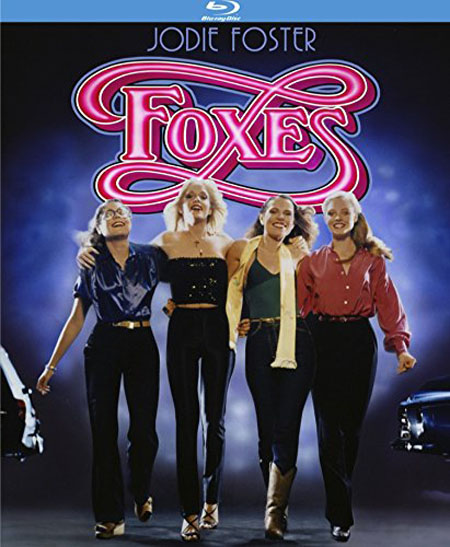
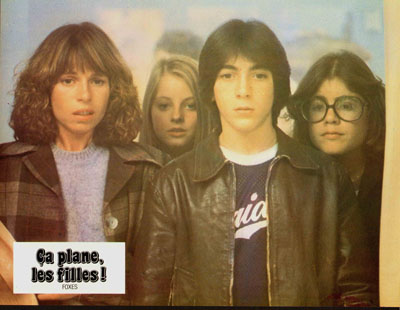
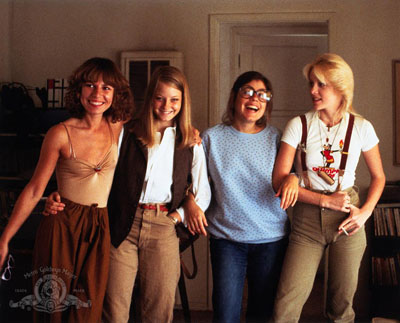
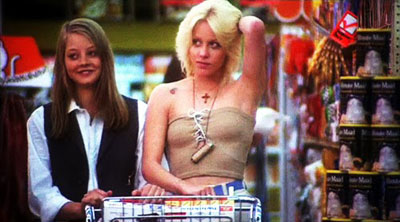
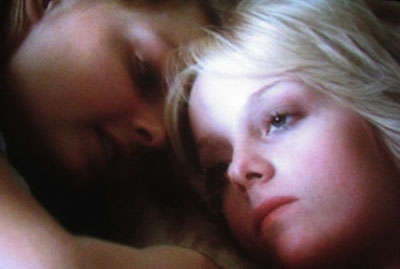

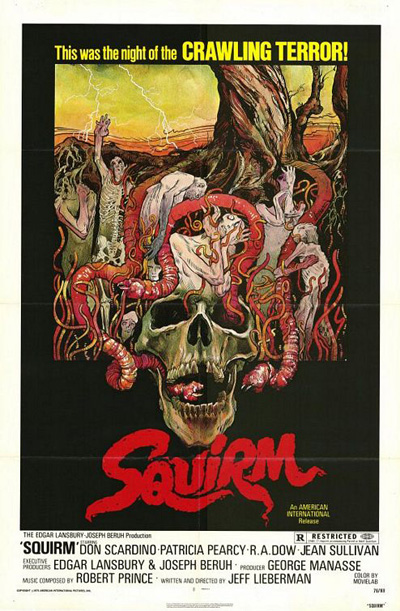
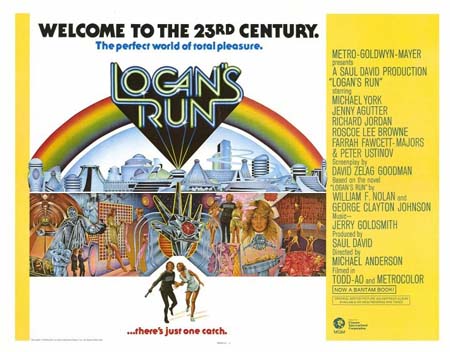


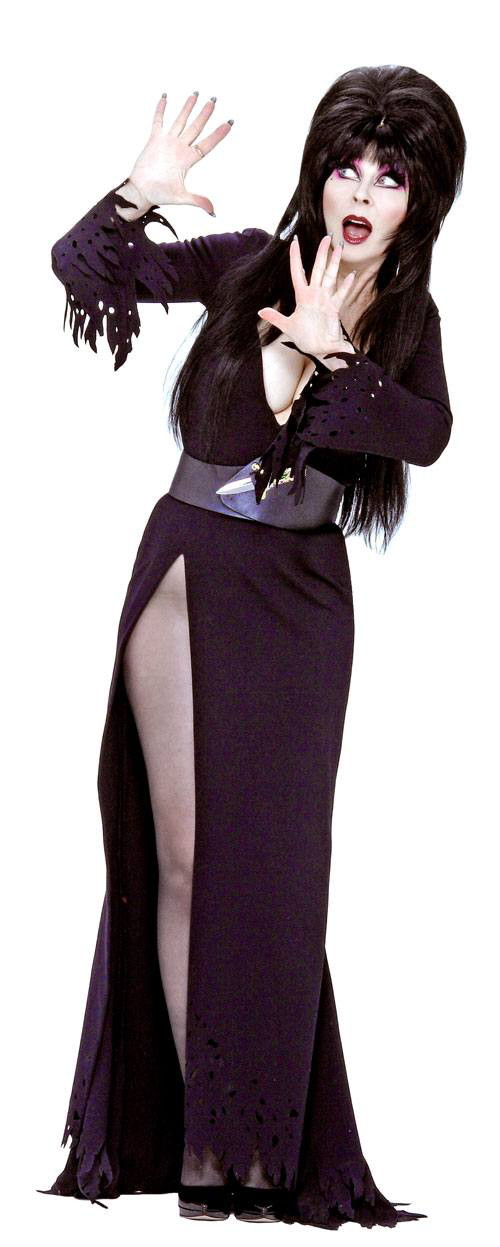
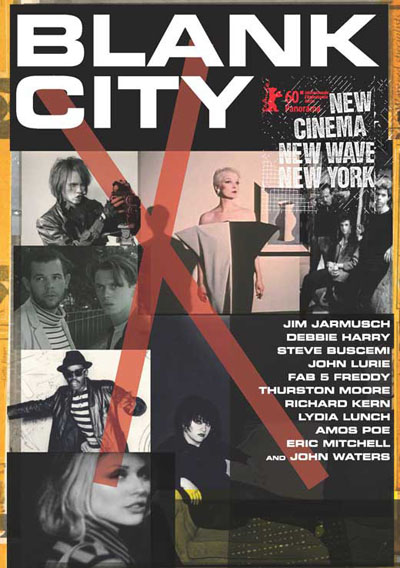

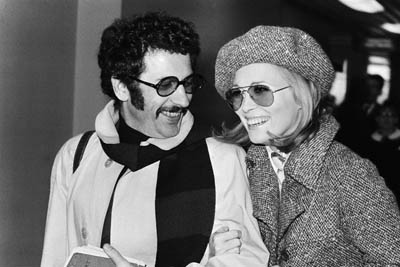
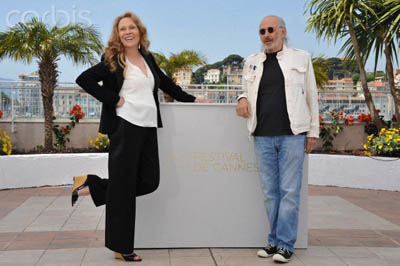
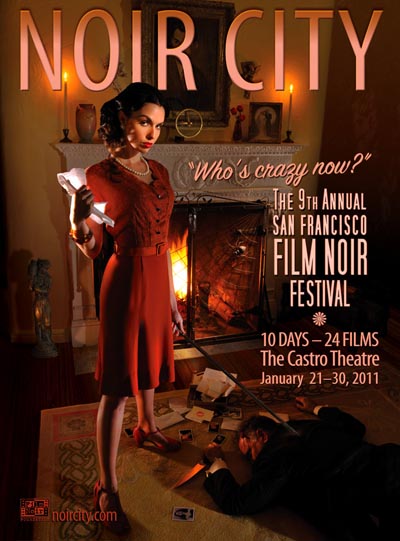

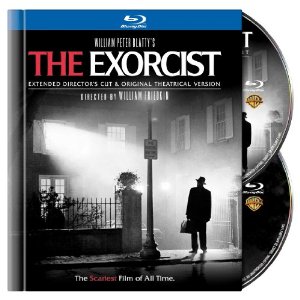
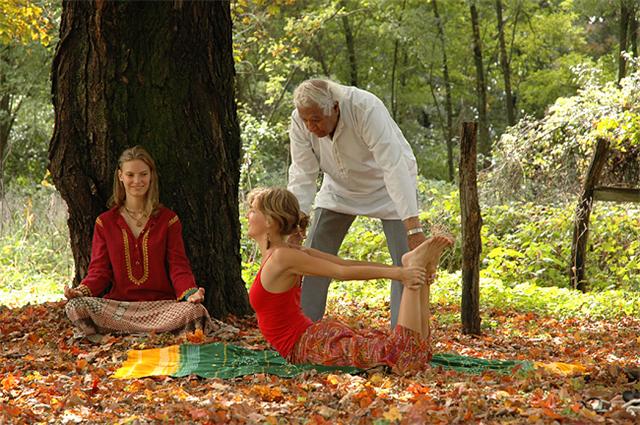
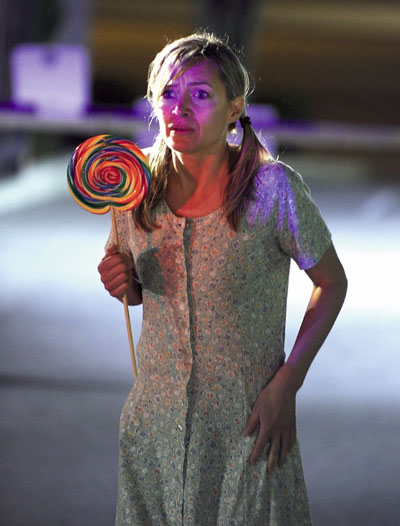
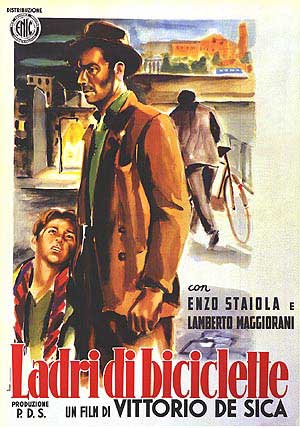
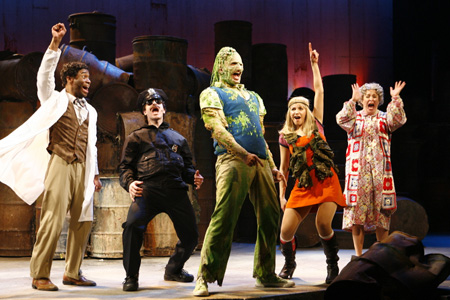
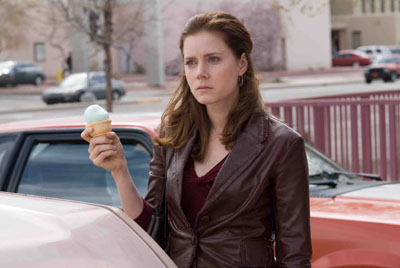
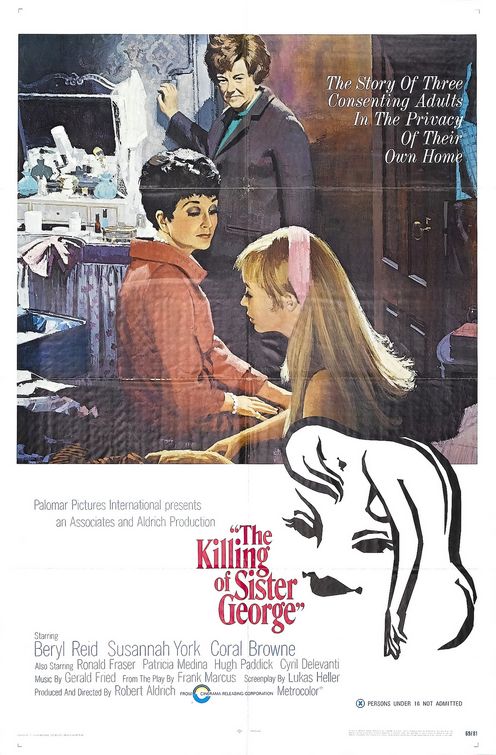
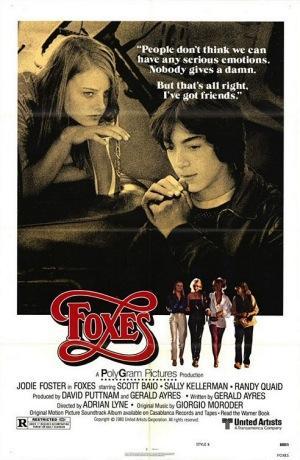
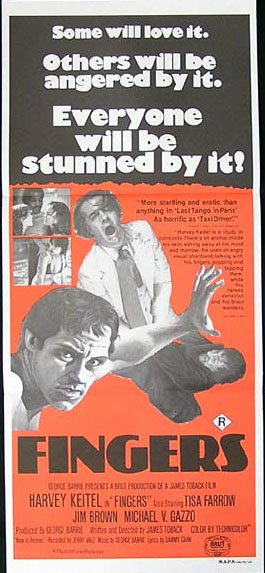
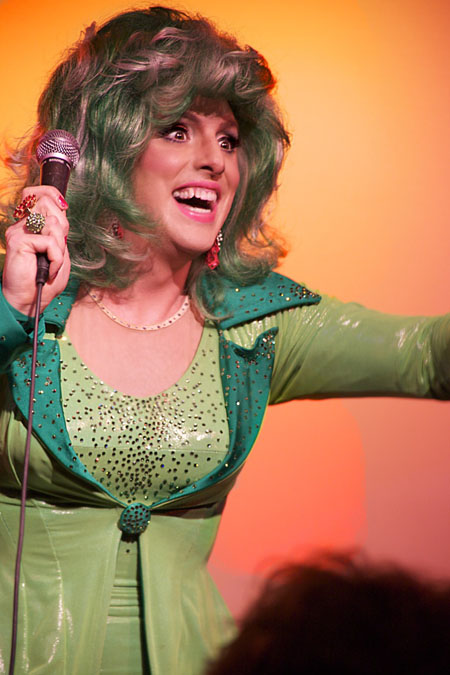
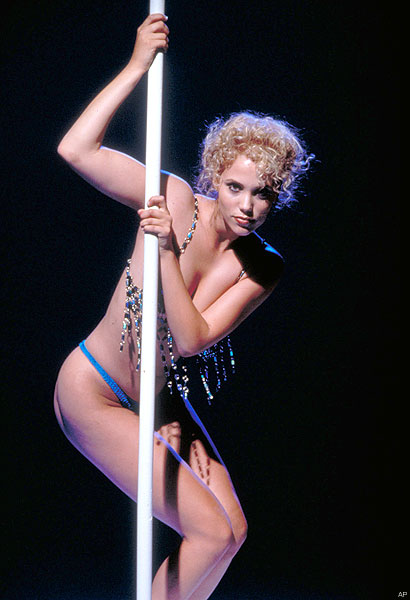
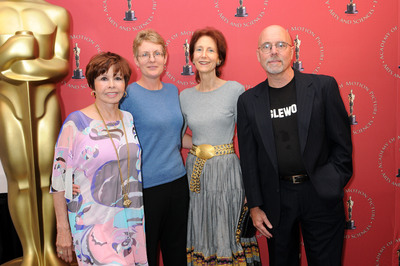
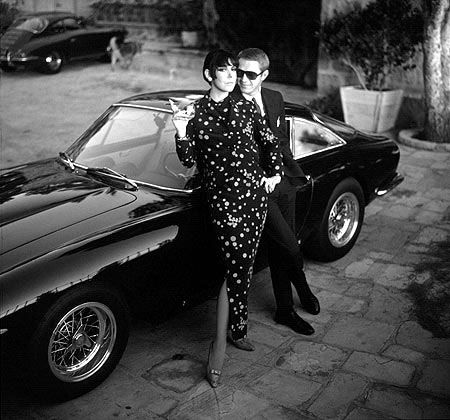
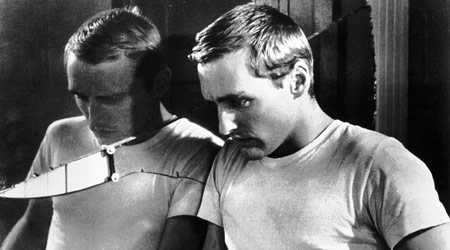

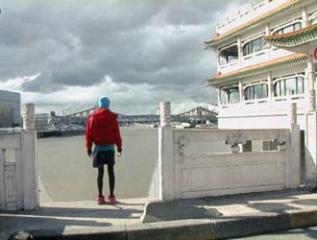
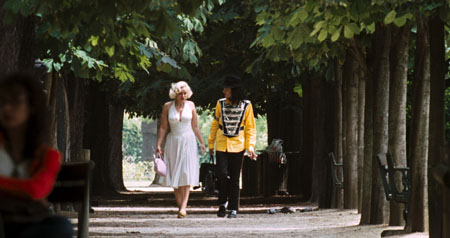
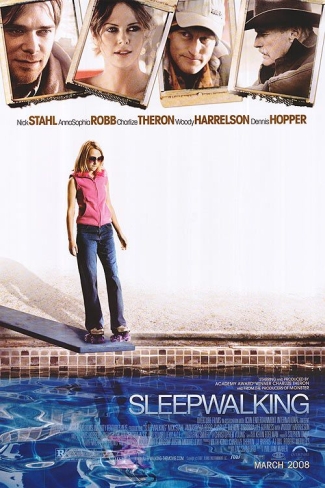
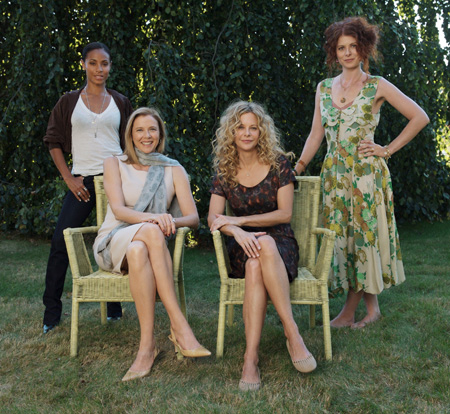
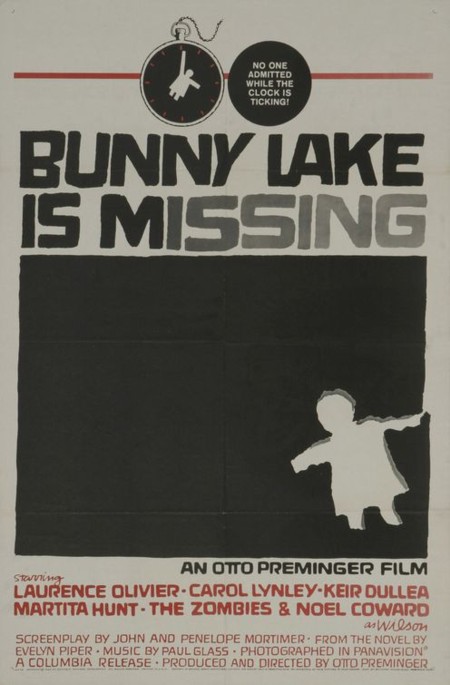
 The polyphonically, unfairly talented and fiendishly busy actress
Karen Black (who’s also my good
friend and upcoming interviewee in the print edition of Cinema Retro) recently premiered her own one-woman show, “How I
Learned to Stop Worrying and Sing the Song†in Washington, DC, to rave reviews.
She received three standing ovations and by her own admission, “I almost
couldn’t stand there and accept that much acknowledgment!†In the show Karen
recounts her life through musical interludes and anecdotes, beginning as a
struggling actress in New York in the early 60s (where she famously said “no
thanks†to Lee Strasberg after he invited her to join The Actors Studio),
through her move to hippie-era Hollywood and her steady rise to fame as one of
the leading actresses of the 70s. Karen treats the audience to absorbing
first-hand accounts of her work on such legendary films as Easy Rider (1969), her Oscar-nominated performance in Five Easy Pieces (1970), The Day of the Locust (1975), Nashville (1975), Come Back to the Five and Dime Jimmy Dean, Jimmy Dean (1982) and
more.
The polyphonically, unfairly talented and fiendishly busy actress
Karen Black (who’s also my good
friend and upcoming interviewee in the print edition of Cinema Retro) recently premiered her own one-woman show, “How I
Learned to Stop Worrying and Sing the Song†in Washington, DC, to rave reviews.
She received three standing ovations and by her own admission, “I almost
couldn’t stand there and accept that much acknowledgment!†In the show Karen
recounts her life through musical interludes and anecdotes, beginning as a
struggling actress in New York in the early 60s (where she famously said “no
thanks†to Lee Strasberg after he invited her to join The Actors Studio),
through her move to hippie-era Hollywood and her steady rise to fame as one of
the leading actresses of the 70s. Karen treats the audience to absorbing
first-hand accounts of her work on such legendary films as Easy Rider (1969), her Oscar-nominated performance in Five Easy Pieces (1970), The Day of the Locust (1975), Nashville (1975), Come Back to the Five and Dime Jimmy Dean, Jimmy Dean (1982) and
more.