A
few years ago, actress-turned-playwright Carol Hollenbeck had a Zoom meeting
with a theatre group and mentioned this fabulous red-carpet premiere in her
hometown for a movie she made in the sixties. About a month later, the group
met again on Zoom and one of the group members said to Carol, “By the way, I
found your movie.’ She quickly asked, “What movie?’ “Eden Cried,” he replied.
Carol was flabbergasted. That film had been lost for almost fifty years and from
her perspective it should have remained lost.
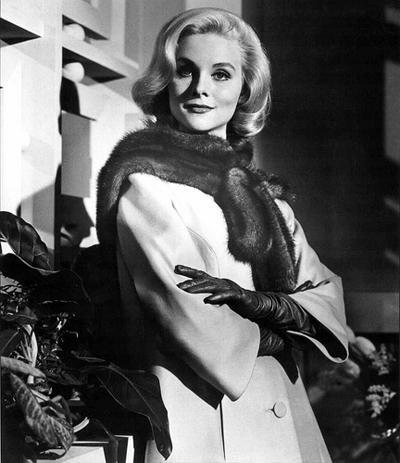
Carol
Hollenbeck was a starstruck teenager who had been fascinated with Hollywood
from a young age. She candidly admitted, “I didn’t want to become an actress. I
wanted to be a movie star.”
Arriving
in Hollywood in the early 1960s, she unfortunately suffered the pitfalls many
naïve young women fell victim to. However, using the stage name of Carole
Holland, she did have some small successes greatly aided by the fact that she
was a beautiful, shapely, baby doll blonde.
Carol’s
looks and poise no doubt helped her land a job as a showgirl in a stage
production of Irma La Douce, starring Juliet Prowse at the Riviera Hotel
in Las Vegas. Carol recalls, “Juliet was engaged to Frank Sinatra at the time.
She was very outspoken and yelled a lot.” She donned bikinis for a few of the
non-AIP beach movies such as The Girls on the Beach. And her adoration
of Jean Harlow gave her an indirect connection to Joseph E. Levine’s Harlow
starring Carroll Baker and a direct connection to Bill Sargent’s rival Harlow
starring Carol Lynley. She actually met with Sargent to discuss her
possibly playing the thirties sex bomb. Alas, it did not come to be. [Carol
discusses her Harlow experiences in my upcoming book Dueling Harlows: The Race
to Bring the Actress’s Life to the Silver Screen from McFarland and Co.]
What
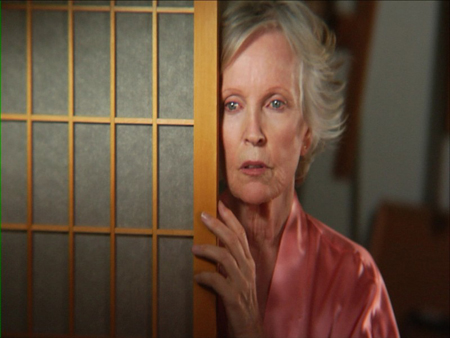
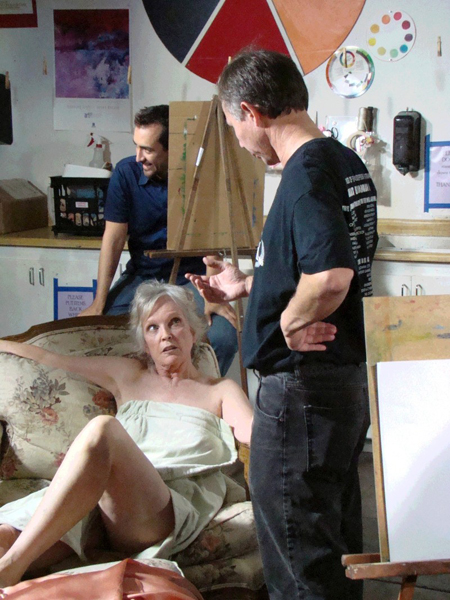
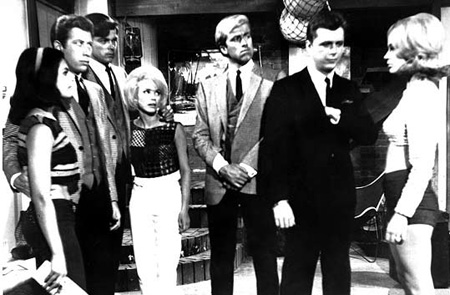
did materialize was the female lead in the low-budget oddity, Eden Cried,
which was also known as In the Fall of ’55 …Eden Cried. It was shot
in 1965 but not shown until 1967—two years after Frankie and Annette had hung
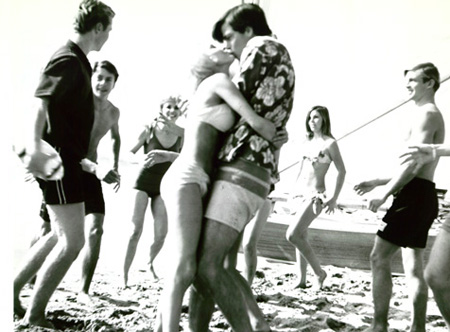
up their surfboards. It was a sort of adult, soap opera-ish Beach Party,
set in Malibu supposedly during the mid-1950s (but everything from the costumes
to the beach scenes to dance moves scream 1960s), that showed what life was
like for teenage beach denizens off the sand. There is a fair amount of surfing
footage and scenes of young people partying on the shore.
To
alleviate all the histrionics, there is narration (that was not in the movie
when it premiered) provided by a Jack Nicholson sound-alike who makes a lot of amusing,
sardonic remarks about the characters and put-downs about Southern California
living in general. It is done in a way that evokes those dead serious 1950s
documentaries where they warned viewers about juvenile delinquency or impending
bomb threats or predatory homosexuals. It also connects scenes due to missing or
excised footage.
Carol
has some good dramatic moments as rich girl Lorraine Parker (a sexy blonde with
a big bouffant and a bad reputation) new to her high school. She falls for
rebellious senior Skip Galloway (Tom P. Pace), a surfer and grease monkey with
a bitchin’ hot rod. Pace, who was in his thirties at the time but looked
forty-five, is so miscast that it is off-putting seeing him romance the more age-appropriate
Carole or confiding to Larry Reimer as his best friend Rich or just hanging on
the sand with the teenage beach and surfing crowd. Lorraine and Skip have a
tumultuous, up-and down-relationship fueled by a drag race that ends in tragedy;
her disapproving father (Victor Izay); infidelity (tired of taking it slow,
Lorraine has sex with Rich); a suicide attempt (Lorraine downs some dolls after
Skip leaves her) that leads to a quickie marriage, and an unwanted pregnancy
that breaks the couple up. This is where the film abruptly ends without the
requisite happy ending. It also promises a sequel that never came to be—thankfully.
After
its 1967 premiere in Newburgh, Eden Cried was not released theatrically.
Unbeknownst to Carol, it surfaced in January of 1972 (it is speculated the
narration was added at this point) and was screened in a few theaters in Los
Angeles. Then in April, it popped up in Atlanta before falling back into
obscurity. In both cities, the nostalgia appeal for the fifties/early sixties
was highlighted in its print ads to draw audiences. This was just ahead of the Broadway
stage musical Grease and George Lucas’ film American Graffiti—both
of which became box office hits.
As
far as Carol knows, after being shown in Atlanta, Eden Cried was never
televised and remained a lost film until a few years ago when it surfaced on
DVD (from Video Screams). It has now become a cult curio especially for fans of
1960s drive-in movies. Carol recently appeared at a screening of the movie and
is planning on attending more of them.
Cinema
Retro: How were you
cast in Eden Cried?
Carol
Hollenbeck: I blocked
it out regarding how I was cast. I really do not know. However, if I was to
venture a guess, it was because of all the publicity I was getting at the time.
My press agent was grooming me to be the next Marilyn Monroe. The media dubbed
me “Hollywood’s Mystery Girl” because I was being photographed at discotheques
and movie premieres. My face turned up in many newspapers.
CR: Do you know what the title means?
CH: It comes from the lyrics to the
movie’s theme song [written by John Bambridge, Jr. and sung by Walter Rowen]. I
felt that the title meant young love gone wrong...
CR:
What did you think of
the ridiculous casting of Tom P. Pace as your seventeen-year-old boyfriend?
CH:
Tom was almost
thirty-five. But it is Hollywood’s mentality. I will tell you why. Everybody
knew he was too old. Somebody—probably one of the producers—said, ‘I want him.
I don’t care how old he looks, I want him.’ And that was it. He was not
physically right for the part, but they wanted him anyway. With me I was a few
years older than seventeen but I did have an appropriate California blonde
beach look. The public is fixated on that American blonde image. It has always
fascinated me about the blonde myth, the blonde fantasy—the Marilyn
Monroe-type.
CR: What do you recall about the film’s
director and screenwriter, Fred Johnson?
CH: Fred was very young. We were all
young—well except for Tom Pace. I think Fred did the best he could and was a
good writer.
CR: How did it come about that Eden
Cried had its premiere in your hometown of Newburgh, New York?
CH:
I believe someone
from Walter Reade Distributors thought of it.Eden Cried had its
premiere on June 10, 1967.They flew me
from Hollywood to New York. I was treated like a star. In Newburgh, they named
a street after me called “Carole Holland Way,” but it was only for two weeks. I
was so nervous that I didn’t go into the theater to watch it. My family and
friends knew it was not very good but did not come right out and say so. They
were nice about it.
CR: Do you know why it did not get a
national theatrical release at that time?
CH: It got caught up in some kind of
squabble between Walter Reade and the producers, so it ended up being shelved.
CR: What were your feelings like after
hearing that the film was never going to be seen?
CH: Even though the film was not great, I
thought I did a fairly decent job and it could have helped me get other roles.
But I did not stay in Hollywood long enough to promote myself and get the film
footage out, so people could see it. I just chose to dislike it and put it out
of my mind. So, when it got lost and nobody saw it, I didn’t care because I
didn’t believe it was going to take me anywhere. I walked around for many years
with shame for making this film. It didn’t seem to bring me any happiness.
CR: What did you do after leaving
Hollywood?
CJ: I moved to New York and continued
acting for a bit. I did commercials and had day parts on soap operas such as Love
Is a Many Splendored Thing and As the World Turns. I appeared in a
number of Off-Broadway plays and a few movies, most notably Tootsie
where I played an autograph hound in a scene with Jessica Lange. In the
nineties, I began writing for local newspapers and then the National
Enquirer. I then joined a women’s ensemble group and began playwrighting.
Two of my plays, Funky Fifties and The Lifters, were nominated
for the Samuel French Best One Act Plays Award.
CR: Did you ever try to find Eden
Cried?
CH: In 2017, we did a reading of my
play Hometown Premiere at the Ritz Theatre in Newburgh, where
the film premiered. The staff of the theatre searched for Eden Cried because
they wanted to use a clip of it in the staged reading, since the play was
loosely based on the film’s premiere. It could not be found. I thought
then, ‘Perhaps I should accept that I did the movie, but I won’t ever find it,’
CR: When Eden Cried finally
surfaced on DVD what was your reaction?
CH: It was being sold on DVD by
Sinister Cinema.com and I
purchased a copy. What they did to salvage the film, is they added a narration
that pokes fun of the sixties’ era. I really liked that. The film is so corny
that it’s funny. The narration gives the film a Mystery Science Theater touch.
CR: After watching fifty years later,
what surprised you the most?
CH: That I had so many costume changes.
CR: What are your feelings today toward
the movie today?
CH: I have done a 180-degree turnaround. It
is like a cult film. Now everything in my apartment is Eden Cried. The
framed movie poster is on my wall. There are twenty-four products with the Eden
Cried poster on it—t-shirts, tote bags, coffee mugs, hoodies, pillows, etc. When
I couldn’t find it, I was glad I couldn’t. But when I found it, I was glad I
did. I have embraced it and absolutely love it.
Cinema Retro columnist Tom Lisanti co-authored (with Louis Paul) the book "Femme Fatales: Women in Espionage Films and Television, 1962-1973" for McFarland publishers. The book has just been issued in a softcover edition, revised and updated. Here is Tom Lisanti's story behind the creation of the book.
It was a long time coming, fifteen years in fact, but McFarland
and Company finally released a soft cover edition of the very popular and
well-received Film Fatales: Women in
Espionage Film & Television, 1962-1973 by Louis Paul and myself. The
book profiles 107 dazzling women (Ursula Andress, Raquel Welch, Dahlia Lavi,
Carol Lynley, Elke Sommer, and Sharon Tate, among them) who worked in the
swinging sixties spy genre on the big and small screens. Some include interviews
with these sexy spy gals. This new edition contains some profile revisions and
updates and a few new photos.
The idea for this book was all Louis Paul’s. We worked together
at the New York Public Library for the Performing Arts and became friends.
Louis is an expert on European spy movies, giallos, thrillers, etc. from the
sixties and seventies. He had a side video business and produced a fanzine
called Blood Times. I had been interviewing sixties actresses for
magazine articles and culled them for a book that was called Fantasy
Femmes of Sixties Cinema. While I was finishing it up, Louis suggested we
do a book on sixties spy girls. There were books on just the Bond Girls but we
thought we'd go beyond that to also include actresses from the Matt Helm, Derek
Flint, and Euro spy movies. And we also decided to include actresses who worked
in TV spy shows like The Man fromU.N.C.L.E., I
Spy, The Avengers, It Takes a Thief , etc. At
the last minute I pulled quotes from some of my interviewees on their spy
films/TV shows destined for my first book and saved for Film Fatales.
Robert Vaughn and Donna Michelle in the Man From U.N.C.L.E. feature film "One Spy Too Many" (1966).
We felt that the book would reach a nice size audience because spy films have remained so popular due to James Bond. It is 2017 and they still are making Bond movies. It seems never ending and moviegoers just love the escapism. The affection for the 1960s Bond movies extends to the copycat films (Matt Helm, Derek Flint, Harry Palmer, Diabolik, etc.) and TV shows of the day. They all employed handsome debonair leading men, adventure, romance, diabolical villains, picturesque scenery, and some of the most beautiful actresses from Hollywood and Europe. The spy girls in particular remained popular because this genre gave them different type characters to play. A number of the actresses are exceptional and in some cases their characters are more memorable than the hero. In the book the roles are broken down into four distinct types: the helpful spy/secret agent/operative; the innocent caught up in the chicanery; the bad girl-turned-good; and the unrepentant villainess/femme fatale/assassin. This is why fans love their spy girls because of the varied facets found in this genre.
My new book Pamela Tiffin: Hollywood to Rome, 1961-1974 (McFarland) was recently released
and I keep getting asked the same question. Why a book on Pamela Tiffin? I
expected this from non-Sixties cinema fans but have been getting asked by more
fans and experts on the time period as well. So to answer why a book on Pamela
Tiffin? She is one of that decade’s most beautiful and talented actresses who
left an indelible impression on movie fans. For me, she is prettier than Raquel
Welch; funnier than Jane Fonda; and more appealing than Ann-Margret. Yet, they
all became superstars and Pamela did not. My book tries to explain why I think Pamela
Tiffin, gifted with expert comedic ability, did not achieve mega stardom though
she remains a cult Sixties pop icon to this day.
I began researching Pamela Tiffin’s
career in my local Long Island library to discover that she practically
disappeared from the silver screen after 1966 with a few Italian movies popping
up thereafter. My determination to uncover all about Pamela Tiffin culminated
when I interviewed her at her New York City home for a series of short magazine
articles and a chapter in my first book in 1998. She was elegant and charming
with that same whispery voice. We stayed in contact for a brief period, but
then I stopped hearing from her, though my devotion to her never ceased.
Gail Gerber passed away on
March 2, 2014 due to complications from lung cancer. Gerber was born on October
4, 1937 in Edmonton, Alberta, Canada and began studying ballet at age seven. Extremely
talented, at fifteen she became the youngest member of Les Grandes Ballets
Canadiennes in Montreal. Quitting the ballet troupe in the late 1950s and
abandoning a husband who was a jazz musician, she moved to Toronto to work as
an actress. She appeared on stage and in many live CBC television dramas. As
part of the act of legendary vaudeville entertainers Smith and Dale (who were
the basis for The Sunshine Boys), she
appeared on The Wayne and Schuster Show
and The Ed Sullivan Show. Moving to
Hollywood in 1963, the talented blonde with a flair for comedy quickly snagged
the lead role in the play Under the Yum
Yum Tree and appeared on such popular TV series as My Three Sons, Perry Mason,
and Wagon Train. She made her film
debut in The Girls on the Beach
(1965) co-starring The Beach Boys before her agent suggested she change her
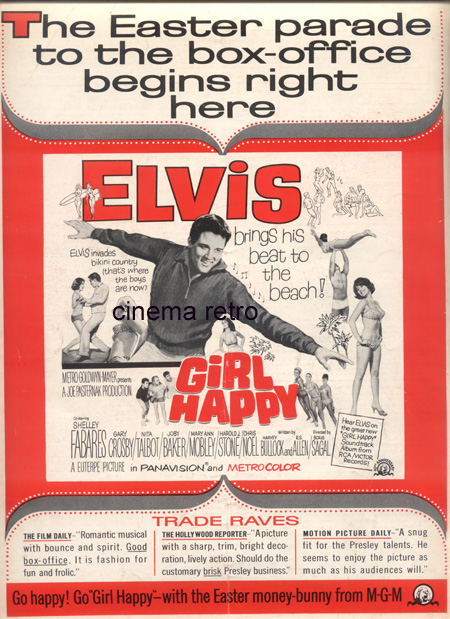
name and, as Gail Gilmore, she went on to appear opposite Elvis Presley in Girl Happy (1965) and Harum Scarum (1965). She then returned
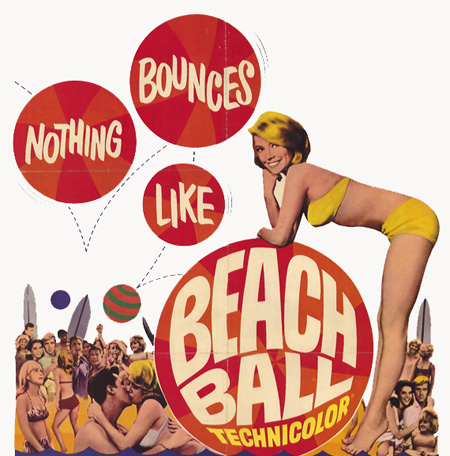
to the sands of Malibu to co-star with Edd “Kookie†Byrnes in Beach Ball (1965) before growing to
gigantic proportions along with five other delinquent teenagers, including Beau
Bridges and Tisha Sterling, who terrorize a town in Village of the Giants (1965). Gerber had a minor role as a cosmetician
in The Loved One, directed by Academy
Award winner Tony Richardson, and that is where she met its screenwriter Terry
Southern who was riding high due to the success of his satirical
novels Candy and The Magic Christian and the movie Dr. Strangelove for which he co-wrote the script. The two hit it
off immediately and, despite their marriages to others, became inseparable. Gail
even abandoned her acting career in 1966 to live with him in New York then
Connecticut where she remained his longtime companion until his death thirty
years later. During that time she taught
ballet for over twenty five years.
Gail Gerber and Cinema Retro columnist Tom Lisanti at the Independent Publishers Book Award ceremonies in 2011.
After Southern’s death in
1995, Gail spent most of her time living in New York City. During the last
twenty years of her life, she was the secretary of the Terry Southern Trust and
returned to acting playing a dotty old woman in the independent film Lucky Days (2008) directed, written, and
starring her friend Angelica Page Torn; and played a Wake Guest in avant-garde
filmmaker Matthew Barney’s just completed film River of Fundament (2014). She also, with myself, wrote her memoir,
Trippin’ with Terry Southern: What I
Think I Remember (from publisher McFarland and Company, Inc.) where she
detailed what life was like with “the hippest guy on the planet,†as they
traveled from LA to New York to Europe and back again. Gerber revealed
what went on behind the scenes of her movies and Southern’s including The Cincinnati Kid, End of the Road,
and, most infamously, Easy Rider. And
she relived the “highs†hanging out with The Rolling Stones, Peter Sellers,
Lenny Bruce, Roger Vadim and Jane Fonda, William Burroughs, Rip Torn and
Geraldine Page, George Segal, Ringo Starr to the lows barely scraping by on a
Berkshires farm during the 1970s & 1980s. The book received a Independent
Publishers Book Award Silver Medal for Best Autobiography/Memoir of 2011.
On his web blog Sixties Cinema, Cinema Retro columnist Tom Lisanti pays tribute to schlock producer Bert Gordon's 1965 teenbopper exploitation flick Village of the Giants, featuring such cult stars as Tisha Sterling, Joy Harmon, Vicki London and Tony Basil. Click here for the story behind the film as well as original TV ads.
I admit it. I am a Troy Donahue fan.
There I said it. Not surprising since I love and have been writing about
Sixties starlets for over ten years. If there ever was a male version of a
starlet, it was Troy. I purchased the DVD box set Warner Bros. Romance Classics
Collection featuring four of his early Sixties movies and recently viewed My Blood Runs Cold (1964) from Warner
Bros Archive as a DVD-on-Demand. The pairing of Troy Donahue as a loon and Joey
Heatherton as the blonde he desires in this suspense film didn’t burn up the
silver screens across the country and left most critics cold, but the coupling
of America’s favorite bland blonde boy with the Ann-Margret wannabe made for
bad cinema you just got to love.
By 1964 Troy Donahue had reached super
stardom and was one of the most popular young actors at the time, but he was
extremely unhappy with the roles being offered him. He could be lackluster at
times and was by no means a great actor, but with his looks Troy didn’t have to
be, as his boy-next-door charisma made teenage girls (and some men) swoon. His
film career began in 1957 with small roles in a number of films including Man of a Thousand Faces (1957), Summer Love (19580, Live Fast, Die Young (1958), and Monster on the Campus (1958) before he was cast opposite Sandra Dee
as tortured naïve young lovers in A
Summer Place (1959) for Warner Bros. The film, beautifully filmed off the
coast of Carmel, California doubling for Maine and featuring a lush score by
Max Steiner, was a huge hit especially with the teenage set. The studio wisely
then signed Donahue (who shared the Golden Globe for Most Promising Newcomer –
Male for his performance) to a contract. He then co-starred on the lightweight
TV detective series Surfside 6
(1960-62) in between essaying the romantic leading man in a series of glossy
romances (most directed by Delmer Daves) opposite some of the prettiest
starlets of the day.
In Parrish (1961) he is a tobacco farmer and was described as being “more than a boy. He was not yet a man—dangerously in-between…and between three girls!†They were Connie Stevens as an easy farm gal, Diane McBain as a bitchy gold digger, and Sharon Hugueny as a sweet rich girl. In Susan Slade (1961) he is a struggling writer in love with Connie Stevens who harbors a dreadful secret (her little brother is actually her illegitimate son!) and doesn’t think she deserves happiness. Donahue won the Photoplay Gold Medal Award for Most Popular Male Actor of 1961 and continued his streak of glossy romantic dramas with the lush travelogue Rome Adventure (1962) as a grad student who falls for librarian Suzanne Pleshette (whom he was married to for a short time) though he is involved with worldly older woman Angie Dickinson. He played yet another college student in Palm Springs Weekend (1963) who on Spring Break has a fling with local gal Stefanie Powers. Then there was a change of pace role as a cavalry officer in the Raoul Walsh directed westernA Distant Trumpet (1964), but to keep his teenage girls fans happy he is torn between widow Suzanne Pleshette and snooty Easterner Diane McBain.
Steve McQueen: The Actor and His
Films by Andrew
Antonaides and Mike Siegel from Dalton Watson Fine Books is one of the finest,
most lavish movie books about a single actor that I have ever read. All of
iconic superstar Steve McQueen’s films are equally discussed from his classics
(The Blob, The Magnificent Seven, The
Great Escape, The Cincinnati Kid, The Sand Pebbles, Bullitt, The Thomas Crown
Affair, Papillon), to his lesser known earlier movies (Never Love a Stranger, The Great St. Louis Bank Robbery)An Enemy of the People, The Hunter),
to his misfires (The Honeymoon Machine,
Soldier in the Rain, Baby the Rain Must Fall), to his TV series (Wanted: Dead or Alive). Most coffee table-type movie books
that I have encountered are extravagantly- made, featuring glorious photographs,
but containing very little substance. However, Steve McQueen: The Actor and His Films
is not only handsomely produced, featuring over 1,000 rare B&W and color
photographs, but also contains an in-depth analysis of all of McQueen’s movies
listed chronologically. This does not mean McQueen’s life story is ignored. The
writers expertly weave in the actor’s journey into each chapter. Reading
about his childhood clarifies his actions and behavior as an adult, such
as his legendary insecurities and his determination not to bested by anyone
particularly a co-star. Each film is allocated one chapter
featuring a plot summary; a behind-the-scenes look at the making of the movie
(often with comments from cast or crew); the reaction of
critics and the audience to the final product; and an analysis of the movie
itself and McQueen’s performance. All of this is accompanied by rare photos and a plethora
of international color posters/lobby cards. Considering how much effort and
expense went into the making of this book, you might expect it to be nothing but a paean
to the actor no matter what the merits of a specific movie. Not here. I commend
the writers for taking an honest and balanced approach in commenting on
McQueen’s choices and his performances.
As a film historian myself, my
favorite part of the book is the backstory for each of the movies. The King of
Cool on screen was not so beloved by many of his co-stars or directors off-screen.
It is interesting to read about the tricks McQueen employed to upstage agitated
movie star Yul Brynner on the set of The Magnificent
Seven. Similarly, on Soldier in the Rain McQueen, somewhat immaturely, took out his frustrations on Jackie Gleason
and director Ralph Nelson when his choice to direct the movie, Blake Edwards, walked
just before filming began. The authors are correct to take him to task for his
behavior here and on other movie sets. They rightly point out he was miscast as
Soldier in the Rain’s loser G.I.,
delivering a performance that was “another oddity and one of the worst misfires
of his career.†Indeed, it's McQueen’s awkward
performance that drags co-star Jackie Gleason down. Sans McQueen on screen, Gleason is
wonderful as evidenced in his scenes with the sparkling Tuesday Weld as his
dumb blond blind date, who has some surprising insights to the world.
Each chapter of this book is
wonderful in its own way. The standout chapters for me are those pertaining to The Sand Pebbles and Papillon, one of my favorite movies of
all-time. The authors fairly give equal credit to the success of these films
both to McQueen and their directors/writers.
Thus, I was surprised that in their
analysis of The Cincinnati Kid, the authors give director Norman Jewison most
of the credit for its success and didn’t even mention screenwriter Terry
Southern who took Ring Lardner, Jr.’s original script and rewrote it even as
the movie was being shot. Some of the most iconic images from the film come
from the mind of that genius satirist.
The authors offer such knowledgeable
insight into McQueen’s less-successful films that I now have an urge to view. For instance, Nevada Smith,
the prequel to 1964’s hit The
Carpetbaggers. Critics dismissed this Henry Hathaway-directed western in
1966 and I believed the criticism of it being below-par. And since leading lady
Suzanne Pleshette is one of my least favorites from the Sixties, I really had
no desire to sit through it despite my admiration for McQueen. However, the
authors create a convincing case for giving it a try, from the beautiful vistas
that fill the wide-screen, to the expert way Hathaway juggles character
development and action, to Pleshette’s character being not the typical love
interest. Not to mention the fact that McQueen is shirtless throughout a lot of
the movie, though they concede that it is a stretch to believe the actor, who
was in his mid-thirties at the time, as a teenage half-Indian vowing
revenge on the varmints that tortured and killed his parents. However, they
conclude that McQueen triumphs over this and his performance “engages the
viewer emotionally.â€
I highly recommend Steve
McQueen: The Actor and His Films by Andrew Antonaides and Mike Siegel
to fans of the superstar and to Sixties/Seventies film enthusiasts. The authors
do a superlative job from their perceptive prose to the magnificent visuals
selected to accompany each chapter. A bit pricey you may say at $69 (cheaper on
Amazon.com), but this spectacularly produced book is more than worth it.
Cinema Retro columnist Tom Lisanti's new book Dueling Harlows: Race to the Silver Screen has just been released. Here is the press release:
Dueling Harlows: Race to the Silver Screen is the fascinating backstory of the competition to get two rival film biographies both titled Harlow into theaters first that quickly turned into one of the nastiest, dirtiest feuds that Hollywood ever witnessed
In 1965, in a rare occurrence not seen before or since, two motion
pictures with the same title about the same subject opened within weeks
of each other.
Carol Lynley was Jean Harlow in Bill Sargent’s Harlow a quickie B&W independent production filmed in Electronovision. Carroll Baker was Jean Harlow in Joseph E. Levine’s Harlow
a big budget color extravaganza from Paramount Pictures. Both
endeavored to tell the story of the legendary thirties blonde
bombshell’s passionate love life and her meteoric rise from bit player
to super star before her death at the young age of twenty-six.
Dueling Harlows recounts the struggle it took to get these
rival movie biographies into theaters first considering the almost daily
war-of-words between the movies’ showman producers, which almost
escalated into fisticuffs at the 1965 Academy Awards ceremony; the
casting problems each faced; the poor screenplays, which hampered the
productions; the hurried pace to complete filming causing on-set
frustration; and the law suits that followed in the aftermath. Both
movies were failures at the time but have camp appeal today.
Dueling Harlows (with 18 photos) contains new interviews
from people who worked on the movies including actors Carol Lynley,
Michael Dante, and Aron Kincaid; assistant directors Richard C. Bennett
and Tim Zinnemann; casting director Marvin Paige; plus film historian
Robert Osborne and producer David Permut. Also included are vintage
comments from Joseph Levine, Bill Sargent, Carroll Baker, Ginger Rogers,
Efrem Zimbalist, Jr., Michael Connors, and many more.
Tom Lisanti an award-winning author of seven books about Sixties Hollywood. Visit his web site www.sixtiessinema.com.
RETRO-ACTIVE: THE BEST FROM THE CINEMA RETRO ARCHIVES
Frankie
Avalon (Todd Armstrong/ Jane), Dwayne Hickman (Craig Gamble/ Nora), Deborah
Walley (Linda Hughes), Yvonne Craig (Barbara Norris), Robert Q. Lewis (Donald
Pevney), Bobbi Shaw (Nita), Aron Kincaid (Freddie Carter), The Hondells
(Themselves) Steve Rogers (Gene), Patti Chandler (Janet), Mike Nader (Bobby),
Salli Sachse (Indian), John Boyer (Ski Boy), Mikki Jamison (Vicki), Mickey Dora
(Mickey), Bill Sampson (Arthur), Mary Hughes, Luree Holmes (Ski Girls), Sigi
Engl (Ski Instructor). Uncredited: Christopher Riordan, Ronnie Dayton, Jo
Collins, Paul Gleason, and Annette Funicello (Prof. Roberts). Guest
Stars: James Brown and the Famous Flames, and Lesley Gore.
I
thought I'd end my Top 5 Sixties Beach Party movies with a cold treat for these
hot summer days. A few films (i.e. Get Yourself a College Girl, Winter a-Go-Go,
Wild Wild Winter) switched the locale from the warm California seashore to the chilly
mountaintop ski slopes. The best of the crop for me was Ski Party (1965).
Frankie
Avalon and Dwayne Hickman play two average college guys, who are losers when it
comes to the ladies, so they masquerade as English lasses on a ski trip to
discover why their chicks Deborah Walley and Yvonne Craig dig suave ladies man
Aron Kincaid and what they really want in a guy. Complications ensue when
the pompous Kincaid falls in love with Hickman's female incarnation. Meanwhile,
when not romping around in drag, Avalon tries to make Walley jealous by
flirting with Swedish bombshell Bobbi Shaw. The first half of the picture
unfolds quite briskly with excellent musical numbers performed by Avalon, James
Brown, and Lesley Gore though the second half bogs down a bit with a ludicrous
ski jump contest and an overlong chase sequence, standard for these AIP musical
comedies.
Ski
Party stands out from the rest of the AIP beach-party movies not only because
of the change in locale but because of the superior production values.
Credit must go to producer Gene Corman and his crew. The film is
exquisitely filmed on location with some awesome ski shots. Alan Rafkin
also does a first-rate job of directing and keeps the action moving. He
brings some originality to the musical numbers as well. Having Frankie
Avalon, Deborah Walley, Dwayne Hickman, and Yvonne Craig sing "Painting
the Town" while on a sunlit sleigh ride helps elevate the song with the
beautiful shots of the foursome traveling through the snow-covered back
roads. “Lots Lots More" would just have been a standard song warbled
by Frankie Avalon with twistin’ beach babes dancing beside him if it were not
for Rafkin’s unusual camera angles capturing the curvy features of Walley,
Patti Chandler, Mikki Jamison, and Jo Collins.
The
musical performances by the guest stars are the standouts of any AIP beach
movie. Here it is no exception. Lesley Gore sings the catchy
"Sunshine, Lollipops, and Rainbows" on the bus ride to Sun Valley. Following the release of Ski Party, the
song became a hit and peaked at No. 13 on the Billboard charts. The
Hondells turn up on the beach and rock on "The Gasser" and the title
song. Finally, the appearance of James Brown and the Flames who come in
out of the snow to perform their Top 10 record "I Got You (I Feel
Good)" is truly one of the greatest musical moments in beach movie
history.
Frankie
Avalon and Dwayne Hickman are well paired as the wisecracking losers-in-love
Todd and Craig and are very believable and amusing as the peppery English
lasses, Jane and Nora. As the objects of their devotion, Deborah Walley
and Yvonne Craig are only okay but they look stunning in Technicolor making it
perfetly plausible to the audience why the boys would go to so much trouble to
win them over. Bobbi Shaw is engaging as a sexy Swede who decides she
prefers love, American style. It is nice to see AIP contract players
Patti Chandler and Salli Sachse given more to do here than in the Beach Party
movies. They along with Luree Holmes, Mikki Jamison, and Playboy Playmate
Jo Collins look very good in their bathing suits or tight-fitting ski
clothes. For beefcake watchers, there’s lean boyish-looking Mike Nader
and handsome, chiseled Steve Rogers. But it is the smarmy charm of Aron
Kincaid (pictured above surrounded by a bevy of beauties) as the pompous
Freddie who flips for a guy in drag who steals the movie. Usually clad in
dark sweaters and turtlenecks (which were a perfect contrast to his blonde hair
and fair features), Kincaid is striking looking and awes every girl on screen
and every girl in the audience (not to mention a boy or two).
Ski
Party is available on DVD and I heartily recommend it!
Cinema Retro columnist Tom Lisanti pays tribute to his friend, actor Aron Kincaid, who starred in such cult movies as The Girls on the Beach, Beach Ball, Ski Party and The Ghost in the Invisible Bikini. Kincaid died earlier this week. Click here to link to Tom's tribute at his Sixties Cinema web site.
Haworth as Sally Bowles in the Broadway production of Cabaret
By Tom Lisanti
Over the past year, a number of 60s personalities have died, but the one that has most saddened me is Jill Haworth who died in her sleep earlier this week. She was one of my most favorite interviews, as she graciously invited me into her home in 1999. She was just so saucy and honest, holding nothing back. What makes it even sadder for me is that I am reading the new entertaining Sal Mineo bio by Michael Gregg Machaud and Jill is quoted extensively throughout as she had a long romance with the actor.
Petite blonde Jill Haworth made three movies while under personal contract to Otto Preminger--Exodus (where she received a Golden Globe nomination for Best Female Newcomer), The Cardinal, In Harm's Way--before going freelance. After starring in the British horror movie It! she landed the role of Sally Bowles on Broadway in Cabaret. The musical was a huge hit and Jill remained in the role for 2 1/2 years.
Surprisingly, when she returned to Hollywood in 1969 all she could get were TV guest spots and horror films, theatrical and made-for-TV, including one that gave me the creeps as a kid, Home for the Holidays. Though Jill never stepped on a Broadway stage again, she did do regional theater during the late 70s and 80s and then concentrated solely on voice over work. She did one last movie Mergers & Acquisitions in 2000 playing a loopy ex-hippie mother of two competing sons. She stole the movie.
Below are some of Jill's sassiest comments to me:
When asked what she thought of John Wayne from In Harm's Way.
"He was the meanest, nastiest man with the worst attitude I ever worked with."
Asked why she stayed in Cabaret so long, she jokingly replied:
"Just to spite Walter Kerr." (Who in his NY Times review said "the musical's one wrong note is Jill Haworth whose worth no more to the show than her weight in mascara.")
When asked if she ever had a chance to play Sally in the film version of Cabaret, she said:
"No, they always wanted Liza Minelli for the movie. She's still doing the movie!"
When Cabaret was revived on Broadway in 2000 with Natasha Richardson and Alan Cummings, Jill was miffed that she was not invited to the opening. When I said "maybe they couldn't find you", she snapped, "I have only been living in the same apartment since 1966!"
Jill never let her stardom go to her head. She was in awe of her Sutton Place neighbor Greta Garbo who walked her dog almost the same time Jill would walk hers. But Jill was too shy to ever say anything. After Cabaret opened, she passed the reclusive star who said, "Good morning Miss Haworth" to which Jill replied, "Good morning Miss Garbo." Jill told me that was worth more to her than anything.
Finally, I received one of the nicest compliments from her after my book Fantasy Femmes of Sixties Cinema (now available in soft cover at www.sixtiescinema.com) was released. She called to thank me for including her and told me that of all the interviews she had given, the piece I wrote really sounded like her and she appreciated that. Farewell dear Jill.
I interviewed former 60s starlet Salli Sachse about 12 years ago for my first book Fantasy Femmes of Sixties Cinema.Â
Her name may not be familiar, but to fans of American International
Pictures’ series of beach movies her face is easily recognizable. With
her waist-long honey brown hair and adorable smile, Salli, literally
plucked off the beach in San Diego, appeared in almost every beach
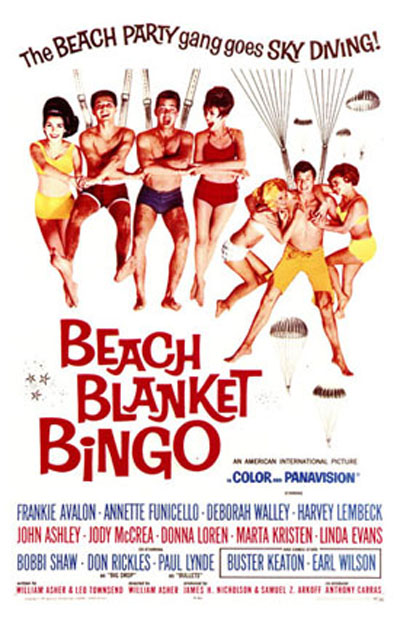
party film beginning with Muscle Beach Party (1964) through The Ghost in the Invisible Bikini (1966) and everything else in between including Bikini Beach (1964), Beach Blanket Bingo (1965) and Dr. Goldfoot and the Bikini Machine (1965).Â
Recalling her time with Frankie Avalon and Annette Funicello, Salli
remarked, "Frankie and Annette were very easy going and a pleasure to
work with but they weren’t real beach people. Frankie was raised in
Philadelphia so I don’t think he ever saw a surfboard in his life! And
Annette refused to wear a bikini. She would only wear a one-piece but
I think that had something to do with her contract with Walt Disney.Â
Annette was such a straight girl—a good Italian Catholic. Because we
grew up on the beach, a lot of us thought we were so cool compared to
Frankie and Annette. I remember that on one movie we were filming some
beach scenes late in the afternoon. It was really chilly and we were
fighting the light. Wrapped in terry cloth robes, a group of us
huddled together to keep warm. Carl the prop man handed us a bottle of
brandy. We were surprised when Annette took a couple of swigs. She
got a bit tipsy and was clowning around. It was the only time I ever
saw her let herself go wild.â€
When the beach films became passe during the turbulent late sixties, Salli graduated to playing a drag strip groupie in Fireball 500 (1966) to a biker chick in Devil’s Angels (1967) to her most famous role as the LSD freak-out girl opposite Peter Fonda in The Trip (1967) to playing a hippie paramour of rock star Christopher Jones in Wild in the Streets
(1968). Unfortunately, along the way there was heartbreak when her
husband Peter Sachse tragically died in a plane crash in 1966 while
Salli was in Hong Kong filming The Million Eyes of Su-Muru.
Salli chucked her movie career in 1969 to concentrate on modeling
then photography then studying art in Europe during the seventies.Â
Returning to the U.S., she earned a Masters in Psychology and became a
counselor for "at risk" teens.
In August 2006 Salli was reunited with beach party regulars the
late Mary Hughes, Patti Chandler, and Linda Opie for a photo shoot
celebrating surf culture in the 1950s and 1960s for Vanity Fair. Below is a photo taken by Salli's friend while visiting the shoot. Pictured are Mary, Salli, Patti and Linda.Â
Today Salli Sachse has a new web sitewhere fans can peruse pictures of Salli from her Hollywood and
modeling days or purchase her beautiful art work. And she is currently
working on her memoir, which should prove to be a very interesting
read.
Click here to order Fantasy Femmes of 60s Cinema from Amazon
Twenty-eight years ago actress Natalie Wood drowned off the coast
of Catalina when purportedly slipping off her yacht Splendour while
trying to get into or trying to secure a dinghy after a fight with her
husband Robert Wagner. After what the public presumed was a thorough
investigation, the police have long closed the case after the LA
coroner ruled it an accidental drowning. However, in the new book Goodbye Natalie, Goodbye Splendour,
co-written by the ship's skipper, new allegations are brought to life
including shoddy police work leaving many unanswered questions.
Â
Natalie's sister Lana Wood (best known to movie fans as "Plenty O'Toole" in the James Bond adventure Diamond Are Forever)
has joined the authors in demanding that the case be reopened. Click here for more.
If you came of age during the Sixties,
you may well remember the name Lada Edmund, Jr. who was one of the
original gyrating, mini-skirted go-go girls who danced in a cage on NBC-TV’s
music program, Hullabaloo 1965-66. Similar to ABC’s Shindig,
Hullabaloo featured a different celebrity host each week to introduce
some of the most popular musical performers of the day. However, the show
received most of its press not for the rock groups or vocalists that guest
starred but for Lada and fellow dancers who bumped, grinded and twisted their
way into the homes of teenagers every week. So popular was she that she
landed on the cover of TV Guide magazine.
Before she found TV fame, Lada began
her career dancing on Broadway. She was one of the original dancers in the 1960
Tony Award winning musical Bye Bye Birdie with Dick Van Dyke, Chita
Rivera and Paul Lynde. When rock star Conrad Birdie is drafted, his manager
randomly selects high schooler Kim MacAfee from Sweet Apple, Ohio for Conrad to
give his final goodbye kiss to on The Ed Sullivan Show before he goes
off to the military. Lada played Penelope Ann, one of Kim’s friends and one of
the many hysterical fans of the singing idol. With the first Broadway
revival of Bye Bye Birdie starring John Stamos and Gina Gershon
scheduled to open in October, Lada has been invited to return to Sweet Apple,
Ohio as a special guest and will be visiting backstage soon.
Besides dancing on stage (including
productions of West Side Story and Promises, Promises) and TV,
Lada shimmied across the big screen in the beach flick For Those Who Think
Young (1964) starring James Darren, Pamela Tiffin and Nancy Sinatra. She
then went dramatic in the moonshine movie The Devil’s 8 (1968) and the
coming-of-age drama Out of It (1969) starring Jon Voight in his first starring role, though it was released after he found fame in Midnight Cowboy. During the
Seventies, she became a stuntwoman in
Hollywood and performed death defying feats in
films including Smokey and the Bandit (1977) starring Burt Reynolds
and Sally Field, and classic TV shows such as Charlie's Angels and
Starsky and Hutch.Â
With Jon Voight in Out of It
Out of the spotlight for years working as a personal trainer
in New Jersey (I tried to locate her for my Glamour Girls of Sixties
Hollywood book without any luck), Lada (now known as Lada St. Edmund) has
re-surfaced and has launched a comeback. She is available for interviews
through her publicist Walter Newkirk @ newkirkpr@aol.com.Â
Tom
Lisanti has co-written with former 60s actress Gail Gerber her memoir Trippin’
with Terry Southern: What I Think I Remember. Visit his website www.sixtiescinema.com
for more information.
With the success of the Twilight books and movies and the hit HBO series True Blood,
vampires are all the rage these days. Former '60s actress, the still
beautiful Celeste Yarnall, will find time from promoting her new book Holistic Cat Care to be a special guest star at this year's Vampire's Confrom August 14-16th in Hollywood where they will screen her cult horror movie The Velvet Vampire
(1971). According to Celeste, the only known master print is part of
Quentin Tarantino's private collection and he is graciously lending it
for the occasion. Below Celeste remembers the making of the movie.
Â
In 1971's The Velvet Vampire (whose great tag line
proclaimed, "She’s waiting to love you--to death!") Celeste
plays the mysterious beauty Diana who after meeting married couple
Susan and Lee Ritter (Sherry Miles and Michael Blodgett) at an art
gallery lures them into staying the weekend at her Mojave Desert home.Â
Soon both husband and wife find themselves sexually drawn to their
mysterious host who suffers from a rare blood disease. Unlike vampires
of lore, Diana was able to journey out into the sunlight as long as she
is covered up. In the course of twenty-four hours, Diana feasts on a
mechanic, his girlfriend, and a servant. After making love with Diana,
Lee wants to depart but Susan is fascinated with the charming Diana and
wants to stay. Their delay in leaving costs Lee his life while Diana
meets her gruesome end at the hands of a cult hippie gang. "I dyed my
hair black for this role," says Celeste. "Though the part was a bit
corny, I got into playing a vampire. The film had an interesting
script by Charles S. Swartz, which explained Diana’s condition very
well. This was one of the first films released by Roger Corman’s new
production company [New World] and was more original than some of
Roger’s other films, which were rip-offs of other movies. I became
good friends with Roger and have a lot of respect for his talent."
Â
Celeste accepted the role of Diana despite the nude scenes ("I had
my daughter Cami to support.") after turning down previous parts that
required nudity including a role in Winning with Paul
Newman. "Though I was only semi-nude, it still bothered me, Charles
Swartz also produced the film and his wife Stephanie Rothman directed
it. They both were very nice and one of the ways that they persuaded
me into doing the nude scene with Michael Blodgett was by making it an
absolutely closed set. After it was lit, everyone left except the
cinematographer, Stephanie, and her husband. The cinematographer’s
name was Daniel Lacambre and he was brilliant. He lit and shot the
film beautifully."
Amongst the hoopla surrounding the recent passing of Michael
Jackson, Farrah Fawcett, Ed McMahon, Karl Malden,and a few others, one
death sadly slipped under the radar. Actor Don Edmonds died on May 29,
2009 from cancer. I interviewed him for my book, Hollywood Surf and Beach Movies: The First Wave, 1959-1969.Â
He was a great guy and we stayed in email contact for awhile. I had
the pleasure to finally meet him in person at a Chiller Convention in
New Jersey. Don was very humble regarding his acting and directing
careers and enjoyed talking with fans. Below is my tribute to him from
the book:
Â
Actor Don Edmonds was born in Kansas City, Missouri. His father
relocated the family to Long Beach, California in the thirties and got
work as a timekeeper at the shipyards. Soon the elder Edmond’s
entrepreneurial son began offering to shine shoes for military men at
the Pike an amusement park in Long Beach earning more money than his
father. The cute-looking youngster also had a talent for singing and
appeared in local USO shows singing "Mammy" in black face.Â
Â
As a teenager Edmonds spent his time hanging out on the beach.Â
"The first surfboard I ever saw was in 1950 when my friend Terry
McGelrand who was this wild guy brought one back from Hawaii. This
board must have been fifty feet long and it had no fin on it. We
loaded it up on his Woodie and took it down to the beach. We had
always been belly floppers before that. He took it out into the water
and stood up on it. We gasped, ‘Whoa, check that out!’"
Â
“We all began surfing after that," continues Don. "A couple of
legends came from our group. Hobie Alter had this shack out there
where he was experimenting with different kinds of weights and woods.Â
He began designing surfboards. Later he was famous for the Hobie Cat.Â
The other guy who I really grew up with was about three or four years
younger than us and he'd plead, ‘Can I hang around with you guys?’Â
We'd say, ‘No, go away! We're going to look for girls.’ He was always
the kid we'd chase away. His name was Bruce Brown who went on to make The Endless Summer."
Â
After graduating high school, Don Edmonds joined the service and
became a paratrooper with the 82nd Airborne. While stationed at Fort
Bragg in North Carolina he joined the Spielhaus Players and appeared in
works by such renowned playwrights as Tennessee Williams and William
Inge. Returning to Long Beach, the lanky sandy-blonde hair surfer boy
was cast in several local theatrical productions before joining the
Estelle Harmon Actor’s Workshop where his classmates included BarBara
Luna, Bill Bixby, Millie Perkins and Ty Hardin. From there Edmonds was
able to finagle an agent to represent him and began landing work on
television most notably in five episodes of Playhouse 90.
Â
While working on Playhouse 90, Edmonds became fascinated
with directing. "I'd sit and just watch the director. I just knew I
wanted to direct. I never just hung out in my dressing room. Instead
I would come out on the set and observe gentlemen like Ralph Nelson and
John Frankenheimer work. They were young guys back then making their
bones too. This was the only schooling that I had. I was just so
interested in the directing process."
Jody McCrea, the son of Joel McCrea, passed away earlier this month. He was primarily known for his roles in cult films. In this excerpt from his book, Cinema Retro columnist pays tribute to McCrea's career.Â
.
Tall, strapping, square-jawed Jody McCrea who became a favorite of teenage audiences during the Sixties for his amusing performances as “Deadhead†in the series of Beach Party (1963) movies starring Frankie Avalon and Annette Funicello passed away on April 4 of this year. As the dumb surfer in the bunch, Deadhead could be counted on to say something idiotic in his slow drawl. Though McCrea was always assured a laugh based on how the role was written, it is to his credit that Deadhead came off as sweetly naïve rather than a complete moron. Jody McCrea was born on September 6, 1934 in Los Angeles. His father was western star Joel McCrea and his mother was the underrated actress Frances Dee. As a child, Jody along with his brother David worked the 2300 acres of ranch that his father bought in the San Fernando Valley. The boys toiled in the bean fields, and per his interview with TV Guide, it was Jody’s early ambition to become “the greatest bean-hoer in the State of California.â€Â While attending the New Mexico Military Institute, Jody visited his dad on the set of the movie Lone Hand. Though surrounded by show business his whole young life, it was on this set that the acting bug finally bit him. McCrea studied drama at UCLA and began taking acting lessons on the side. He made an uncredited appearance in Lucy Gallant (1955) but his official debut was playing Lt. Baker in the western The First Texan (1956) starring his father, Joel McCrea, as Sam Houston. Jody would go on to work with his dad in other westerns including Trooper Hook (1957) and Gunsight Ridge (1957). McCrea’s first significant part was playing Tim Hitchcock in the William Wellman-directed bio flick, Lafayette Escadrille (1958) starring Tab Hunter as the famous French flying legion of WWI. Television fans discovered Jody McCrea when he teamed up with his dad to star in the western series Wichita Town during the 1959-60 season. Joel McCrea played the town marshal and his son was cast as his deputy. The series unfortunately was saddled with a bad time slot following the weepy This Is Your Life so when the show’s sponsor pulled out the series was cancelled. He returned to the big screen playing supporting roles in low budget comedies and westerns including Young Guns of Texas (1963) featuring second generation actors (such as James Mitchum and Alana Ladd) in leading roles. The WWII adventure Operation Bikini (1963) was Jody McCrea’s first pairing with Frankie Avalon and movie for American International Pictures. He was cast next as Deadhead in Beach Party the same year. When that movie broke box office records for the independent company, McCrea was coaxed back to reprise the role of the dumb surfer supporting Frankie and Annette in Muscle Beach Party (1964) and Bikini Beach (1964). Due to his popularity with the teenage audience McCrea progressed to second lead in Pajama Party (1964) playing Annette Funicello’s boyfriend who prefers volleyball to romance. McCrea was finally able to shine and received good reviews for his performance. Beach Blanket Bingo (1965) also gave McCrea a chance to do some real emoting as his character now renamed Bonehead falls in love with a mermaid played by Marta Kristen of Lost in Space fame. He received positive reviews such as in the Los Angeles Times whose critic remarked, “Jody McCrea…handles the comedy as a kooky beach bum on whom the sun really shines.â€Â Regarding his popularity playing a doltish surfer, McCrea told Newsday, “It took me four pictures to figure it out—the kids liked Deadhead because they felt superior to me, to him.â€Â However, McCrea was getting disillusioned with the beach movies due to the fact he was afraid that he would be typecast. After How to Stuff a Wild Bikini (1965) wrapped, affable Jody McCrea was determined to shake his Bonehead persona. The western Stagecoach to Nowhere based on Oedipus Rex was supposed to be McCrea’s next movie but it was never produced. Instead, the tall, broad-shouldered actor was perfectly cast as a rambunctious racecar driver in The Girls from Thunder Strip (1966) and a hardened biker in The Glory Stompers (1967) co-starring Dennis Hopper and Chris Noel. The latter was co-produced by McCrea.
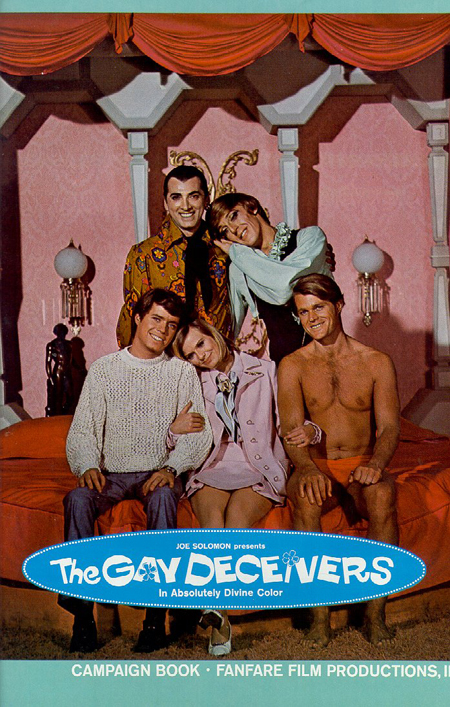
To get in a warm weather mood with summer not approaching fast enough, here is a look at Hollywood surf movies from a different and albeit biased perspective. Gay men are always looking for gay subtext in movies and TV, and I am no exception. Am I reading more into these films? Probably—but it was sure a lot of fun doing the research.
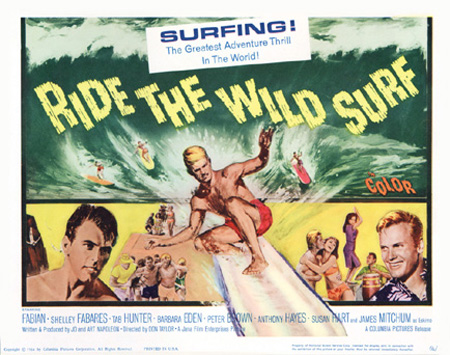
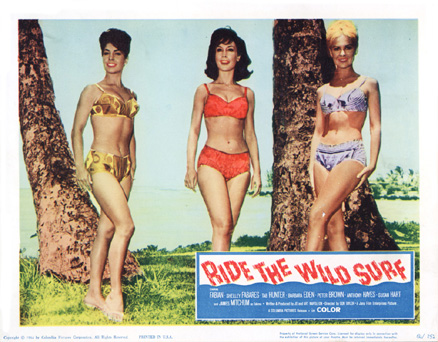
The Sixties beach movie craze began with Gidget (1959) starring Sandra Dee and James Darren, a fictionalized look at teenager Kathy Kohner’s surfing escapades in Malibu during the mid-Fifties. It was groundbreaking as the movie contributed to the mass dissention of surfers on the beaches of Malibu and started a series of surf-theme films such as Gidget Goes Hawaiian and Ride the Wild Surf. The surf movie soon morphed into the beach-party film, whose heyday was from 1963 through 1965, where surfing was only used as a backdrop to fanciful teenage beach adventures. Beach Party from AIP starring Frankie Avalon and Annette Funicello launched Muscle Beach Party, Bikini Beach, Pajama Party, Beach Blanket Bingo, How to Stuff a Wild Bikini, and The Ghost in the Invisible Bikini. Soon other studios were releasing their own Beach Party rivals such as Surf Party, The Girls on the Beach, and Beach Ball. Some of these films varied from the formula by shifting the locale to a lake (A Swingin’ Summer) or the ski slopes (Ski Party, Winter a-Go-Go, Wild Wild Winter). These movies for the most part followed a successful simple formula—start with attractive swimsuit clad teenagers twisting on the sand, add a dash of surfing (or ski) footage, mix in romantic misunderstandings, stir in popular musical performers, add aging comedians for comic relief, and whisk in villainous bikers or predatory adults.Â
Out of the surf and back in the closet: Tab Hunter was one of many male sex symbols who had to hide their sexuality during the beach movie era.
Gay subtext crept into a few of the beach-party movies giving these films camp appeal today. Discounting the obvious fact that these sand-and-surf epics were titillation for homosexual men of the time, as good looking shirtless movie hunks such as Jody McCrea, Fabian, Aron Kincaid, James Stacy, and Peter Brown frolic on the sand bare-chested in swim trunks and on the slopes in tight ski pants. Or that gay actors such as Tab Hunter, Tommy Kirk, and Paul Lynde appeared in these movies, there were other factors that probably were not obvious back in the Sixties. Either a director or screenwriter may have tried to slip in with a wink and a nudge to the homosexual community in an unassuming way that made it past the oblivious producers and censors.Â
The most obvious example is Muscle Beach Party (1964) featuring a clean-cut group of surfers versus a cult of bodybuilders headed by Don Rickles' Jack Fanny. During the Fifties and Sixties, the public automatically associated bodybuilding with homosexuality because muscle men of the time appeared as objects of desire wearing posing briefs or sometimes nothing at all in physique magazines whose readers were mostly gay men. Writing on the subject, film historian Joan Ormond commented, “Homosexuality in this era was regarded as potentially more damaging to society as the wild antics of surfers.â€Â Hence, the bodybuilders of Muscle Beach Party whom seem to enjoy the company of each other rather than any of the bikini girls on the shore are seen as the bad guys along the lines of Eric Von Zipper’s motorcycle gang of Beach Party as they are out to corrupt the youth of America.
Cinema Retro columnist Tom Lisanti has paired with actress Gail Gerber to write her fascinating autobiography that details her experiences in Hollywood as a young starlet in the 1960s as well as her career as a writer and Terry Southern's longtime companion. The book, Trippin' With Terry Southern, is due out in June. Here is an excerpt:
Hollywood,
summer of 1964. I had been living in California
for almost a year now and still felt like a fish out of water. Growing up in Canada where I studied ballet
from the time I was a small child, Los Angeles was mystifying to me with its
palm trees, bright sunlight forever contrasting with the deep shade, and its
superficial inhabitants. But I readily
admit I was sort of a snob myself and didn’t know much about the actors or
directors I came in contact with. Petite blondes like Sandra Dee were the
reigning young actresses of the time but I couldn’t tell a Sandra Dee from a
Tuesday Weld from a Connie Stevens. They
were all one big yellow-haired blur to me.Â
And forget about pop music—the minute The Beach Boys or Connie Francis
would come on the radio I’d reach for the dial in a mad rush so as not to hear
their insipid songs. The dance and jazz
worlds were where my interests and background lay.Â
Arriving
in town with my unwarranted bias and without knowing a soul, I had done pretty
well for myself, or so I thought, in a short period of time. I had a leading role in a play, two featured
movie roles albeit in teenage B-movies, and had done a few guest TV shots. I knew it wasn’t solely my acting talent that
was landing me roles. I was a pretty
blonde with a shapely figure that looked good in a bikini and wasn’t afraid to
show it off, which helped me tremendously.Â
It didn’t bother me in the bit, unlike actresses who I regularly came in
contact with, that wanted to be known for their talent rather than their looks.
In
August 1964 I found myself back on the MGM lot, after working there previously
in the Elvis Presley musical Girl Happy,
auditioning for a cameo role as an airport information girl in a big major
production. I was very excited. The movie was The Loved One based on the novel by Evelyn Waugh and directed by
Tony Richardson who was the hot
director at this time. Part of that
British “New Wave†of directors in the late Fifties, Richardson directed such
well-received movies as Look Back in
Anger (1958), A Taste of Honey
(1961), The Loneliness of the Long
Distance Runner (1962) and the hit bawdy comedy Tom Jones (1963). The Loved One was his second U.S.
production.
I
interviewed with associate producer Neil Hartley, the boyfriend of Richardson
who was bi-sexual though married to actress Vanessa Redgrave since 1962. Folks in Hollywood used to joke that Tony
only wed Vanessa because he could fit into her clothes. It seemed that every aspiring young actress
auditioned for the part but they gave it to platinum blonde bombshell Jayne
Mansfield whose career was on the down slope.Â
This didn’t help as her scene was left on the cutting room floor and
didn’t make it into the final print. As
a sort of consolation for not getting that role, I was hired to appear as one
of the decorative background cosmeticians working at the funeral parlor with
the film’s leading lady, Anjanette Comer. Little did I know that this would forever
change my life.
The Loved One
starred Robert Morse, who looked adorable with his shaggy Beatles haircut, as
the young British poet named Dennis Barlow newly arrived in Hollywood to visit his
upper crust uncle (John Gielgud) who shortly thereafter commits suicide when he
is unceremoniously fired from the movie studio he has worked at for over thirty
years. Barlow then is given the
responsibility of the burial arrangements and is led by his uncle’s pompous
friend (Robert Morley) to the ornate Whispering Glades funeral parlor foundered
by the Blessed Reverned Glenworthy (Jonanthan Winters). He falls in love with one of the cosmeticians
named Aimee Thanatogenos (Comer) a strange girl who fantasizes about death and
lives in a condemned house on stilts in the Hollywood Hills. But their blossoming romance is complicated
by head embalmer Mr. Joyboy (Rod Steiger), a rival for the charms of Miss
Thanatogenous and Barlow’s humiliating job at a pet cemetery, which he tries to
keep a secret. When all the men in Aimee’s life let her down—Barlow’s
occupation is revealed, Joyboy deserts her, Glenworthy proves to be a lecherous
phony, and the Guru Brahmin (Lionel Stander), whom she writes to for advice
turns out to be a drunkard—she commits suicide by embalming herself.
A
number of actors make cameo appearances including James Coburn as a customs
inspector, Tab Hunter as a tour guide, Roddy McDowall as a movie studio
executive, Liberace as a coffin salesman, and most hilariously Milton Berle and
Margaret Leighton as a battling Beverly Hills couple whose dog has died.
My
scenes were set at Whispering Glades Funeral Parlor, which took weeks to shoot,
and were filmed on location in the extensive gardens and interiors of a lavish
estate called Greystone located on Sunset Boulevard. It was the former residence of
multimillionaire Edward Laurence Doheny II.Â
I worked mainly with Anjanette Comer, Rod Steiger, and Pamela
Curran. Anjanette never spoke to me or
any of the other girls playing small roles.Â
Since she had the leading role, I think she thought we were beneath her
and not worth her time. She was also busy learning her lines.
I
remember hanging around doing nothing my first day on the set. On the second day it seemed it was going to
be a repeat of the day before. I was
sitting around earning more money than I ever did as a ballet dancer so I
really couldn’t complain. There was a
whole bunch of us getting paid just to show up.Â
I was all decked out in the same costume as Anjanette, a tight
form-fitting white dress with a matching veil, but with absolutely nothing to
do but to just sit there and wait in the hot August sun. I spotted a nice shady chair in a quiet spot
and made a beeline for it, thinking I could pass the time over there.  A crew guy saw my lightning move and said,
“That one’s a dancer.â€Â Terry Southern overheard
and saw me. He came over and introduced
himself as the film’s screenwriter. He
was very slim at this time and was wearing his trademark dark sunglasses with a
cup of coffee in one hand and his script in the other. I thought, “Oh, great. Another old guy is
hitting on me.â€Â
Regarding David Savage's report earlier today on our web site about tomorrow's New York City screening of The Poseidon Adventure hosted by drag queen Hedda Lettuce, comes Retro columnist Tom Lisanti's perspective:
Drag legend Hedda Lettuce hosts a tribute screening to the granddaddy of all disaster movies ThePoseidon Adventure (1972) this Saturday night, January 24, 10 P.M. at Clearview Chelsea Theatres on 23rd Street and 8th Avenue in New York. Forget the atrocious remakes, this is the one to see!
Â
As everyone knows by now it is New Year's Eve on the SS Poseidon when just after the stroke of midnight a huge tidal wave causes the ship to go topsy turvy and a small band of survivors must climb, crawl, swim their way to the bottom now the top of the ship. Hip preacher Gene Hackman leads to safety a ragtag band of stereotypes including tough talking cop Ernest Borgnine and his foul-mouthed ex-prostitute panties-wearing only wife Stella Stevens; an old Jewish couple Shelley Winters and Jack Albertson; helpless hippie singer Carol Lynley; lonely bachelor Red Buttons; injured steward Roddy McDowall; and two kids Pamela Sue Martin and Eric Shea. The fun of course is that most don't make it.
. I saw this movie at the Westbury Drive-in on Long Island for my 12th birthday on May 11, 1973. The movie was such a hit that it was still playing theatres 5 months after it opened in December 1972. I was totally mesmerized by this movie. What stayed with me for days that turned to weeks that turned to years was the scene of the ship turning upside down and the lovely Carol Lynley bedecked in hot pants and go-go boots as Nonnie. For some reason I identified with her most because of all the survivors she couldn't swim (I am a weak swimmer myself) and showed the most fear as I imagined I would in such a situation.Â
.
I interviewed Carol Lynley about the movie and it seems her on screen fear was not all acting:Â
“The only way to describe working on The Poseidon Adventure is hellish. I spent close to four months dripping wet wearing the same dirty clothes. To make matters even worse, I have a tremendous fear of heights. I had it all my life. I usually get very dizzy and throw up. Not attractive. I even went to Sugarloaf Mountain in Rio to try to conquer it. Usually a stunt double is used but in The Poseidon Adventure I had to do all my stunts myself. We would shoot the scenes high up on the catwalks or ladders and when the director would yell ‘cut’ all the other actors would climb down except me. Gene Hackman’s brother was working on the film as a stunt coordinator and he would have to climb up and help me down!â€Â
“Hi, I’m Plenty,†said Lana Wood to
Sean Connery’s James Bond at the gaming tables of Las Vegas in Diamonds Are Forever (1971). “Plenty O’Toole.â€Â Glancing at her cleavage, Bond wittily
deadpanned, “But of course you are.â€Â
With this small exchange audiences were introduced to one of the most
popular Bond girls to ever hit the screen.Â
As Plenty, Lana Wood was finally able to step out of the shadow of her
sister Natalie Wood. On screen for only
a few scenes, she almost steals the movie with her amusing performance and
remains forever remembered for this role.Â
“Isn’t that bizarre,†exclaims Wood with a laugh. “I’m only in the movie for three
minutes!Â
Lana Wood was born Svetlana Zacharenko
Gurdin in Santa Monica, California. She
followed her older sister into the acting profession and made her film debut at
eight years old in John Ford’s classic western The Searchers (1956). Wood
received good notices and went on to appear in a few television dramas with
Jack Lemmon and Charlton Heston, among others.Â
But unlike Natalie, Lana didn’t want to act as a child and she waited
until she was eighteen before re-starting her career with an episode of Dr. Kildare. More alluring and voluptuous than Natalie, Lana
found herself typed cast in sexpot roles.Â
After playing a coed in The Girls
on the Beach (1965), Wood was signed to play sexy Eula Harker in the
short-lived soap opera The Long, Hot
Summer (1965-66). When the series
was cancelled midway through its first season, 20th Century-Fox immediately
moved Lana Wood into their hit soap opera Peyton
Place. As Sandy Webber, a slinky
temptress from the wrong side of the tracks, Wood was an immediate hit with the
viewers and played the role for close to two years.
After playing a swinging
bachelorette in For Singles Only
(1968) and a mini-skirted biker babe in Free
Grass (1969), Wood posed semi-nude for Playboy
magazine. Her pictorial appeared in the
April 1971 issue along accompanied by some of her poetry. These photos indirectly helped Wood land her
most famous role of Plenty O’Toole.  “I
didn’t have to audition per se for this role,†recalls Lana. “My dear friend [writer] Tom Mankiewicz told
me that Cubby Broccoli was looking for an actress to play this character named
Plenty O’Toole. Tom thought I would be
perfect for it. He asked me if I would
meet with Cubby. I said, ‘Absolutely!’ I was en route to do a movie called A Place Called Today in New York. Before leaving for that, I went in to chat
with Cubby who was adorable! I tried to
look as tall as humanly possible because Tom had told me that they were
thinking of Plenty O’Toole as this giant of a woman in every way. For me that wasn’t easy—I’m only five feet,
four inches—but those were the days of hot pants and really high heels. I
didn’t hear anything until I started filming the other picture. I was thrilled to get the part!â€
In Diamonds Are Forever (1971), secret agent James Bond (Sean Connery)
is assigned to pose as a diamond smuggler, leading him and jewel thief Tiffany
Case (Jill St. John), from Amsterdam to Las Vegas, in pursuit of fifty thousand
carats of diamonds. Bond meets bar girl
Plenty O’Toole and her cleavage at a crap tables in a Vegas casino. After introducing herself to Bond who has been
winning he takes her up to his room.Â
Their tryst is interrupted as thugs try to kill Bond and toss Plenty out
the fifteen-story window. (“We filmed
this at night. I was topless. The crowd got a nice view of me in nothing
but a pair of pale blue panties.â€)Â
Fortunately, Plenty lands in the hotel’s pool. Unfortunately, a short time later she is
discovered murdered and floating face down in Tiffany’s pool.
Lana strikes a cheesecake pose in the 1970s.
Remembering working with Sean
Connery, Lana remarks, “He is very charming and attentive. He was very relaxed and
was very easy to work with. As long as
we did things in a rapid pace so he could get out to golf then he was
fine. But I had no problems working with
Sean at all. Later on we heard that he
was battling with the producers during the shoot. If that was true it wasn’t in front of the
cast or crew.â€Â Lana also admits to
having a brief “interlude†with her sexy leading man.
With the special edition DVD
release, fans got to see a number of Wood’s scenes that were excised from the
final print due to “running time.â€Â One
shows the sexual attraction growing between Bond and Plenty as they dine before
going up to his hotel room and another featured Plenty sneaking back into
Bond’s room only to find him in bed with Tiffany. “I was flabbergasted that they cut all this
out,†exclaims Lana. “I didn’t even
realize it until I had come back from a world tour to promote the film. I went to the Grauman’s Chinese Theatre in
Hollywood to watch it with a friend because I was so busy I never had time to
see it. I literally bent over to get
some popcorn as the thugs threw me out the window and by the time I had
straightened up my character was dead. I
thought, ‘Wow, all of a sudden I have this little part.’ I actually asked why they cut most of my scenes
and I was told that they didn’t have much relevance to the plot.â€Â Not so.Â
These missing scenes finally explain how and why Plenty O’Toole is found
murdered in Tiffany Case’s swimming pool wearing her wig. The assassins mistook her for Tiffany and killed
her.Â
It was foolish to cut these scenes
and considering how much better Wood was in the movie than Jill St. John who clad
in an ill-fitting bikini throughout most of the movie gives a shrill
performance (though the overrated redhead incredulously keeps making the Top 10
Bond Girls of all-time polls), the producers probably kicked themselves for
shortening Wood’s screen time.
- Read more about Bond girls and
other spy chicks in Tom Lisanti’s Film
Fatales: Women in Espionage Films and Television, 1962-1973 (co-authored by Louis Paul) available at www.sixtiescinema.com. .
Cinema Retro columnist Tom Lisanti with actress Gail Gerber, who returns to the screen after a long absence in Lucky Days
The independent feature Lucky Days had its New York premiere recently at the Coney Island Film Festival, where it was awarded the coveted Best Feature prize. The auditorium was packed and amongst the audience was many of the film’s stars including Angelica Page Torn, Rip Torn, Luke Zarzecki, Federico Castelluccio, Marilyn Sokol, Tom Wolfe, and Gail Gerber who all came on stage to field questions from the audience afterwards.
The legendary Coney Island boardwalk, setting of the film.
Lucky Days is an entertaining comedy-drama slice of life beautifully filmed on location in Coney Island capturing the essence of the area as we know it now before real estate developers move in soon to change the landscape. Angelica Page Torn, who wrote the screenplay and co-directed with her brother Tony Torn, gives a tour-de-force performance as Virginia a sad thirtysomething woman trapped living with her needy mother (the hysterical Sokol) and drug-addled stripper sister (Tina Benko) with four daughters while hoping to finally receive an engagement ring after 18 years from her Italian boyfriend Vincent (Castelluccio who is excellent as the bullying goomba). But a fortuitous encounter with her childhood sweetheart (the charming Zarzecki), who wants to see his brother (Will Patton) a patient in the psyche ward where Virginia works, opens her eyes to discover the secreted truths about her pathetic family and the abusive two-timing Vincent during the last summer weekend in Coney Island. Also in the cast are Anne Jackson miscast as Vincent’s disapproving mother, Tom Wolfe as one of the many Coney Island denizens who help hide Vincent’s cheating ways from Virginia, Gail Gerber delightful as a crazy patient infatuated with Patton, and Rip Torn in a cameo as Vincent’s put-upon father.
After the successful screening, some of the cast with friends strolled along the misty boardwalk heading to Tatiana Restaurant in Brighton Beach for a Russian dinner and to celebrate the excellent reaction the film received from the audience. (All photos courtesy of Ernie DeLia)
Former Sixties starlet and writer Terry Southern’s longtime
companion Gail Gerber a.k.a. Gail Gilmore, whose films include Girl Happy, Beach Ball, Village of the Giants, and Harum Scarum, returns to the silver
screen on Saturday 27, 2008 in Lucky Days
co-directed, written and starring Angelica Page Torn (daughter of Geraldine
Page and Rip Torn) screening at the Coney Island Film Festival in Brooklyn, NY.Click hereÂ
for more information.Â
Â
Gail Gerber in End of hte Road (1970)
Last seen on the big screen playing a pot-smoking high
school student in End of the Road
(1970), Gail has a small role as a dotty old lady who encounters Torn's lonely
woman during the last summer days of Coney Island's
famed amusement park. The impressive cast also includes Frederico Castelluccio,
Luke Zarzecki (pictured with Torn), Will Patton, Anne Jackson, Marilyn Sokol, and
Rip Torn.
Â
Lucky Days
Look for Gail’s memoir Terry
Southern and Me: Uneasy Riders in Hollywood co-written by yours truly next
year. Gail dishes about the her life
with the free spirited writer, what went on behind the scenes of her own movies
and Terry’s including The Loved One, The Cincinnati
Kid, Easy Rider, Casino Royale, The Magic Christian, and Candy,
and what life was like during Terry’s “exile†from Hollywood during the
Seventies and Eighties. For more
information on Gail, visit The Gail Gerber Fan Gallery
Carol
Lynley fans rejoice! Warner Bros. is finally
releasing to DVD the long overdue The
Shuttered Room (1967) starring Carol, Gig Young, and Oliver Reed. In this H.P. Lovecraft inspired spine tingler,
Lynley is convincingly scared throughout as the terrorized heroine who returns
to her place of birth with her older citified hubby (Young) to claim an old
millhouse complete with a hideous thing in the attic and a lascivious punk
cousin (Reed) with an eye for blondes who wants to keep it in the family so to
speak. Creepy music, excellent
cinematography including POV shots from the mysterious house guest, and Carol
never lovelier or vulnerable make for a suspenseful time.
Â
The Shuttered Room will have an anamorphic widescreen
transfer and as an added bonus it is being paired as a double feature on DVD
with It! (1966) starring Jill Haworth
as an innocent young girl lusted after by disturbed museum curator Roddy
McDowall who (a la Norman Bates) keeps his mummified mommy around the
house. If that’s not bad enough, he
brings to life a Hebrew statue called the Golem and uses it to do away with his
enemies. Â
Carol Lynley and Gig Young in The Shuttered Room
When
asked about It! for my book Fantasy Femmes of Sixties Cinema, saucy Jill
quipped, “I only did this film because I needed the money. I hated everything
about this movie—particularly what they did to my hair. They gave me an atrocious hairstyle for
it. But I did like Roddy McDowall. He
was very nice to work with. And with
Roddy, what you see is what you got. He even brought me the poster for It! on the opening night of Cabaret [the original Broadway musical
where Jill played Sally Bowles]. I
couldn’t believe they were going to release it.Â
He signed it and put an S-h before the It! This film really was a
piece of shit.â€
The double
feature DVD will retail for $19.98 and will be available at Best Buy only.
During the 1960’s,
beautiful Chinese actress Irene Tsu played a variety of “native†girls in a
number of popular drive-in films including Sword
of Ali Baba, How to Stuff a Wild
Bikini, and Paradise, Hawaiian Style
with Elvis. Tsu had poise and talent,
which was noticed by producer/writer Arthur C. Pierce who cast her as a space
traveler in Women of the Prehistoric
Planet. It was her first starring
role. She then played a South Vietnamese
spy in The Green Berets, John Wayne’s
homage to our boys in Vietnam
before becoming part of the spy boom.Â
She portrayed a geisha girl in The
Man from U.N.C.L.E. feature The Karate
Killers and a fashion model in the secret agent spoof Caprice starring Doris Day.Â
Irene Tsu today
Â
But the one role that got
away from her was the part of Maily in The
Sand Pebbles starring Steve McQueen.Â
The heartache of losing the part almost made her quit the business. She was director Robert Wise’s first choice
for Maily in his epic film but studio machinations kept her from getting the
role. Commenting in my book Fantasy Femmes of Sixties Cinema, Irene
Tsu recalled, “I interviewed with Robert Wise a few times and he set up an
expensive screen test for me on a massive set with other actors. I thought I did very well but then weeks went
by with no word. I went to see Wise and
he told me he wanted me for the part but the producers overruled him. They gave the part to Marayat Andriane who was
rumored to be Fox head Darryl Zanuck’s current mistress. When I found out I burst into tears and hoped
never to have to go through something like that again.â€Â
Though Irene was
devastated, she wound up with a contract with 20th Century-Fox because “I had
to sign with them before they allowed the screen test. For a short time I was treated like a star of
the Golden Age. They gave me my own
dressing room that was as big as a house.Â
I even had my own parking space.Â
Unfortunately, after only one film the studio went bankrupt. My contract was dropped along with all other
such commitments Fox had.†Undeterred, Irene kept working vigorously. The 1970’s saw Irene mature into a more than
fine actress as she progressed from exotic parts to playing doctors, lawyers,
and scientists in both film and television.Â
And she is still active today.
Cinema Retro continues to shine the spotlight on worthwhile independent films. Tom Lisanti interviews David Youse, one of the stars of the new movie The Neighbor starring Matthew Modine.
David Youse is hugely entertaining as the fumbling
groom-to-be in The Neighbor.An accomplished actor of stage, film, and TV,
Youse has appeared in a variety of genres.A familiar face to viewers of the defunct UPN network, he turned up on
practically all their sitcoms including Living
Single, Unhappily Ever After, and
Sister, Sister plus appearances on Murphy Brown and Ellen, among others. Star Trek fans remember him as one of
the religious zealots who take over the star ship in “Chosen Realm†on Enterprise;
soap watchers know him for his recurring role as Father Kelly on Days of Our Lives; and gay romantic
comedy fans remember him as one of Matt McGrath’s blind dates from hell in The Broken Hearts Club.
What drew you to the
role of the ex-best friend in The
Neighbor?
When I first read the script, I fell for the comedy.
Comedy is a very tricky thing. You have to have the timing down and
it has to be honest. And to rehearse that comedy, to get it right, that is what drew me to The Neighbor. Knowing that I could
have the chance to rehearse, work and eventually shoot comedy, with such fine
actors like Matthew Modine, Michele Laroque (french comic genius) and Meredith
Scott Lynn, I jumped at that chance.
What do you think you
did in your reading that made you stand out?
I remember it was a rainy Friday about 5 PM and I was not in a very good mood.Director Eddie O'Flaherty and Producer Michel
Rampal were holding the auditions. The process was going extremely slow.
A few name actors were there and I thought I didn't have a chance.
So I just went in, without nerves, took my time and just nailed it.
I remember Eddie looking at me for a moment and he didn't say a word.
I asked, "Like that?"He
said something like, "Um, yeah, great. Let’s do the next
scene." I did it. He busted up laughing and said, "Great,
thank you." I remember asking then, "Do you need to see it
another way?" and he said, “No.†I left and just thought he'll hire
some one else with name recognition.But
I knew I nailed it.
How was it working
with Matthew Modine?
Wow. To get the chance to work with an actor that has
consistently put out some amazing work and that is so respected among his peers
was a blast. Matthew, to me, is child-like, fun, silly, playful, yet
intelligent, wise and so grounded in who he is, that it makes working with him
an absolute delight. I spent a few hours with him and Eddie the weekend
before we were to start shooting. We rehearsed at the house where Matthew
was living at the time and we got to know each other as best as we could in the
4 or 5 hours that we spent. We play best friends in the film and Eddie
really wanted to see that relationship come through in the film. So after
the initial hellos and coffee and tea that Matthew made for us, we started
rehearsing what we call the Dentist scene. Running around, physical
comedy and we arranged his furniture to look like the office. We had a
great time, trying new things, laughing a lot and Matthew sharing some personal
stories about his life—a great guy.
Was it a pleasant set
to work on?
Oh, absolutely. What a pleasure to get up in the
morning and be happy to go to work. To spend the day with Michele
Laroque, laughing, and Matthew playing jokes, I mean, come on. The entire
crew was so helpful and nice.Everyone
just worked hard and had a great time. We shot the film in 25 days.
What do you think
makes The Neighbor stand apart from
other romantic comedies of this ilk?
Well, I have to say that it's nice to see the woman in a
position of financial power and guy trying to understand what's going on with
himself, emotionally. That I think is the key. Here is a character,
whose life is falling apart, his business is going down the tubes, his best
friend is marrying his ex-wife and his neighbor is trying to evict him.
And that's the guy! She holds the strings. He doesn't and
that's nice to watch it play out in reverse.
Do you prefer playing
these fumbling type comic characters or more serious roles?
Well, comedy is always
fun to do, but at the same time, it could be very frustrating. You really
have to get it just right. But when you do and you know it clicks, that's
the best. The serious roles are great to do in a whole different way.
To feel that emotion in a tough scene, take after take, is very grueling.
But at the same time, when you've been worn down and you feel like you
have nothing else to give, that's usually the best take.
Have to ask about Enterprise.
Do you have any anecdotes from working on that series with Scott Bakula?
Star Trek: Enterprise—I tell ya.
Four hours of make-up and hair sitting in a chair without moving.
Fun.
What’s next for David
Youse?
I've been offered a play here in Los Angeles that starts rehearsing in early
September, with an opening the following month. I haven't said yes yet,
but that's looking pretty good right now—at least today.
The Neighbor is
playing a limited engagement in Los Angeles
at Laemmle’s Sunset 5 until August 22.
IF IT'S NOT TUESDAY, IT MUST BE YVETTE, CAROL OR DIANE
BY TOM LISANTI
From 1959 to 1964 blonde nymphets, in the tradition of the
thumb-sucking Carroll Baker in Baby Doll,
ruled the silver screen.Two of the most
popular with teenage audiences were Sandra Dee and Connie Stevens but the four
with the most potential to become important actresses and who always seemed on
the verge of major stardom were Yvette Mimieux, Carol Lynley, Tuesday Weld, and
Diane McBain. These scintillating starlets molded in the image of the flaxen-haired,
pony-tailed Barbie Doll released during this time were interchangeable as a
litter of kittens.Glancing at movie
magazines of the time, you barely could tell one from the other.But these baby doll blondes had to grow up
and when they did surprisingly none of them became super stars as poor choices,
typecasting, and just sheer bad luck hurt their careers.
Yvette in The Time Machine
Once described as a “princess come to life†Yvette Mimieux excelled
playing the fragile beauty who seemed to be always on the verge of a breakdown
(a vacationing coed who goes all the way in Where
the Boys Are, 1960; a mentally disturbed beauty in A Light in the Piazza, 1962; a rich girl in love with an Hawaiian
beach boy in Diamond Head, 1963; and
the wife of a struggling law student in Joy
in the Morning, 1965) or fantasy figure come to life (one of the Enui in The Time Machine, 1960; a princess in The Wonderful World of the Brothers Grimm,
1962). By the late Sixties/early Seventies she graduated to playing “the girlâ€
in a number of popular adventure movies including The Caper of the Golden Bulls (1967), Dark of the Sun (1968), Skyjacked
(1972), The Neptune Factor (1973)
while working steadily on TV.Perhaps
tired of being typecast, she wrote and starred as The Hit Lady for TV and then played a rape victim who seeks revenge
in the violent and popular drive-in hit, Jackson
County Jail (1975), which sustained her leading lady status into the
Eighties.
Carol in The Poseidon Adventure
Carol Lynley, who was once described as having “beauty that
is awe inspiring,†began playing the good girl (a pregnant unwed teen in Blue Denim, 1959; aspiring author Allison
MacKenzie in Return to Peyton Place,
1961) before going the sex kitten route (a coed living platonically with her
boyfriend in Under the Yum Yum Tree,
1963; one of three girls looking for romance in The Pleasure Seekers, 1964).She progressed to more adult roles as a harried young mother searching
for her misplaced daughter who may or may not exist in the cult classic Bunny Lake Is Missing (1965) and a young
woman who inherits an old mill complete with a hideous thing in the attic in The Shuttered Room (1967).Her excellent performances typed her as the
damsel-in-distress though she essayed the role of a psychopathic heiress in Once You Kiss a Stranger (1969). Lynley unwisely
turned down Five Easy Pieces in 1970
(“They were only paying scaleâ€) and despite a banner 1972—she began it playing
reporter Darren McGavin’s girlfriend in the highest rated TV-movie up to that
point in The Night Stalker and ended
the year as the terrified pop singer in the box office champ, The Poseidon Adventure—the remainder of
the decade found her unjustly mired in low-budget independent films, TV-movies,
and stranded on Fantasy Island.
Tuesday goes the cheesecake route
Tuesday Weld had more of an edge to her than Mimieux and
Lynley, and in keeping with her real life wild child persona see-sawed back and
forth between the mischievous hormonal teenager (Rally 'Round the Flag, Boys, 1959; Bachelor Flat, 1962; Soldier
in the Rain, 1963; I’ll Take Sweden,
1965); the tramp (Wild in the Country,
1961); and the self-absorbed sex kitten (Lord
Love a Duck, 1966). Weld undoubtedly could have become a superstar but she
famously turned down Lolita (“I don’t
have to play Lolita—I am Lolita!â€) and backed out of Bonnie and Clyde due to pregnancy.After playing a murderous psychopath to great effect in the little-seen Pretty Poison (1968), she turned down in
quick succession True Grit, Cactus Flower, and Bob & Carol & Ted & Alice once again assuring that she
would never be known to the masses.In
the Seventies she kept working steadily in studio productions (Play It As It Lays won her kudos in
1972) and even received an Academy Award nomination for her supporting turn as
Diane Keaton’s sister in Looking for Mr.
Goodbar (1977) but never appeared in a box office smash though by the
Eighties she was still copping leads opposite major stars in big movies—Thief (1981) with James Caan; Author! Author! (1982) with Al Pacino;
and Once Upon a Time in America(1984)
with Robert De Niro.
Diane: the epitome of elegance and style
While Yvette, Carol and Tuesday all essayed the good girl
roles, Diane McBain seem to be always cast as the sophisticate or spoiled rich
girl who never got her man (Parrish,
1961; Mary, Mary, 1963; A Distant Trumpet, 1964; Spinout, 1966.) As Southern tramp Claudelle Inglish (1961), she not only
lost her true love but wound up with a stomach pumped full of buckshot by an
irate father. Though McBain brought a
vulnerability to these characters and made the audience empathize with them, they
typed her almost forever as the bitch.As
she matured her roles got even badder—a dope dealing high school teacher in Maryjane and a tough-talking biker chick
in The Mini-Skirt Mob—and her films
cheaper.By the end of the decade,
McBain was still being outshined by her three contemporaries even playing
second fiddle to Mimieux in The Delta
Factor (1970).Never able to arise from
low-budget exploitation movies, the Seventies found her talent wasted in
Grade-Z productions (Wicked, Wicked,
1973; The Deathhead Virgin, 1974),
the occasional TV-movie, and lots of television guest roles.
BACK IN THE SPOTLIGHT: MARILYN MASON RETURNS TO THE SCREEN WITH MODEL RULES
Interview by Tom Lisanti
Actress Marlyn Mason, best remembered as Elvis’ leading lady
in The Trouble with Girls (1969) and James Franciscus’ trusty
assistant/companion on TV’s Longstreet (1971-72), has come out of a
self-imposed 10-year retirement to star in Model Rules (2008) a short
film directed by Ray Robison that she also produced and wrote on location in
Medford, Oregon where she has been residing these past few years. In it
she plays an aging artist's model who envisages being with one of the men
sketching her.
The movie came from an idea Marlyn had after researching
what it took to become a real life artist’s model back in 2004. She
shelved the proposal but when a friend suggested she enter a Fiction Writing
contest, a former writing partner, comedian Vince Valenzuela, reminded her
about becoming an artist’s model and thought that would make a better story.
Warmly received, Model Rules was accepted into The
Rhode Island Int'l Film Festival (Aug. 5 - 10) and the Los Angeles Int'l Short
Festival (Aug. 15 - 21). If you live in any of those cities go see it! Click
here to access the web site
chock full of production stills.
With her big blue-green eyes and button nose, Marlyn Mason
(no connection to rock star Marilyn Manson, thank you) was an unconventional
beauty who had the talent to play comedy and drama to good effect. Being
an extremely versatile performer, she was a much sought after TV actress
playing a variety of roles on all the top series from the Sixties through the
Eighties but made the most impression on spy fans with her guest stints on I
Spy, The Man from U.N.C.L.E., Mission: Impossible, and Matt
Helm. Mason also proved to be a more than competent singer and dancer
on two TV musical specials with Robert Goulet (Brigadoon and Carousel)
and on Broadway in How Now Dow Jones. Her singing and dancing
prowess was finally put to good use on the big screen when she won her lead
role opposite Elvis. Two years later, a daring Marlyn bared more than her
talent as the older woman who seduces one of her husband’s students (Kristoffer
Tabori) in the youth-oriented comedy, Making It (1971) and then
played the neighbor who falls for Hal Holbrook unaware that he is gay in the
groundbreaking TV movie That Certain Summer (1972). Her last
credit prior to Model Rules was the TV movie Fifteen and Pregnant
(1998).
How long did it take you to write Model Rules?
When I finished our conversation [with Vince Valenzuela], I
turned on the computer, stared at it and forty-five minutes later had written a
488 word piece that I titled Model Rules. Had it not been for
Vince's reminding me of my idea it would not exist today and I would not
be enjoying a surge in my otherwise slumbering career. Not bad at 68!
So how did it go from short story to short film?
My neighbor Janet Jamieson loved it, which encouraged me to
send it to a local film maker, Ray Robison. He called and said "I
want to do this". "Me, too", I replied. And so began
the life of Model Rules. Ray brought together twenty-one
volunteers to act as artists and crew.
So you never actually worked as an artist’s model while
in Oregon?
No, so I found artist Robert M. Paulmenn who suggested
I do a posing session before filming. Afterwards he said,
"I can't teach you anything. You're a
natural"! That was an enormous ego feed for this old
broad! Needing several real artists for visual purposes Robert was delighted to
be cast along with artist Greeley Welles and sculptor Michael Isaacson.
How long did it take to shoot?
It took us two days and one evening to film. The Rogue
Gallery in Medford, Oregon gave us the space and art equipment
to use, which saved us a good amount. Half of the movie is shot in my own
little hut, also in Medford.
Marlyn on the set with Ray Robison
Did the movie turn out as you envisioned?
When I put Model Rules into the hands of Ray Robison
I told him it was his to do with as he wished. I would not
interfere. He welcomed suggestions and mine were less than few. I
became the actress, doing as I was asked, never looking at the monitor.
Weeks later when Ray showed me the rough cut I was stunned. With Director
of Photography, Kenn Christenson, Ray put together exactly what I had pictured
when I created the story. Ray also found exquisite pieces by
composers Kevin MacLeod and Justin R. Durban. It was just good luck that
Ray and I were on the same wave length visually and that Kenn was able to
translate what we wanted, a French art film, of sorts. And wouldn’t
you know, my “natural†talents are now put to good use; on occasion I’m asked
to pose for nude workshops!
Read more about Marlyn Mason’s movie and TV career in my
book Drive-in Dream Girls: A Galaxy of B-Movie Starlets of the Sixties.
Gays are always fashionably late, and I am no exception, as
I pay tribute to that cult classic The
Gay Deceivers long after Gay Pride month as come and gone. Released in
1969, this daring-for-its time comedy starred boyish Kevin Coughlin as Danny a
preppy 22 year-old with a steady girlfriend (Brooke Bundy) and handsome Larry
Casey as Elliot a ladies man and lifeguard who get drafted. To avoid being sent
to Vietnam,
the friends pretend to be lovers who desperately want to serve their
country.Their ruse works and they are
denied entry but knowing the army officer (Jack Starrett) at the draft board
will be watching, the duo shack up in a one bedroom apartment in a swinging gay
complex and try to convince their landlord Malcolm (Michael Greer), his partner
(Sebastian Brook), and the resident stud (Christopher Riordan) that they are homosexuals
while keeping Danny’s family and Elliot’s paramours in the dark.But things get thorny especially when Elliot,
at the landlord’s costume party, takes a woman to bed not realizing it’s a guy
in drag.A frustrated drunken Elliot then
starts a fight in a gay bar, which is witnessed by Danny and his unsuspecting
girlfriend leading to further complications and a surprise ending.
Viewing the film nowadays, The Gay Deceivers (produced by Joe Solomon and directed by Bruce
Kessler) is a bit dated with stereotypical gay characters and plays like an
elongated episode of Love, American Style.But in its time this was very daring and trail
blazing.Director Bruce Kessler takes a
sincere approach and knows his audience even giving them glimpses of blonde
Larry Casey’s fine naked behind.With
the hubbub today about gay marriage, it is quite surprising that for a movie
made in the late Sixties Greer and Brook‘s relationship is treated respectfully
and not poked fun at.They come off as
the typical wacky married next-door-neighbors found on any TV sitcom at the
time.Even the gay bar scene is toned
down and not played over-the-top.The
actors all do a surprisingly good job but Greer’s flamboyant queen act becomes
tiresome after about five minutes.
Actor Christopher Riordan who plays Duane was a busy dancing
actor throughout the Sixties. A single father, he took job after job to earn a
living to support his son.Extremely
handsome with an All-American look and persona, Riordan appeared in practically
every beach and Elvis movie from 1964 through 1967 while juggling bit roles in
big budget studio productions and TV shows.The widely varied films he worked on during this period include Viva Las Vegas, My Fair Lady, Get Yourself a
College Girl, A Swingin’ Summer, The Girls on the Beach, Von Ryan’s Express,
Ski Party, The Loved One, Tickle Me, The Glory Guys, How to Stuff a Wild
Bikini, Village of the Giants, Made in Paris, The Glass Bottom Boat, Hot Rods
to Hell, Thoroughly Modern Millie, Clambake, and Camelot.His dancing prowess
got him noticed especially when Fred Astaire hand picked him to dance with
Barrie Chase on TV’s The Hollywood Palace.This led Christopher to being also being hired as assistant
choreographer on a number of movies.However, as was the way back then, he rarely received screen credit
though he finally got on-screen recognition for Fireball 500.
By the late Sixties, Riordan had outlasted a number of the dancing
beach boys and directors began casting him in bigger roles due to his talent
and professionalism.The Gay Deceivers in 1969 was the first
followed by Beyond the Valley of the
Dolls and The Curious Female. Christopher
is still working today.Most recently,
he made guest appearances on the TV comedies House of Carters and Ugly
Betty and performs his cabaret act at AIDS benefits in the Los Angeles area.
CINEMA RETRO COLUMNIST TOM LISANTI RELIVES THE MIXED PLEASURES OF ELVIS PRESLEY'S 1965 HIT GIRL HAPPY
Elvis Presley (Rusty
Wells), Shelley Fabares (Valerie),
Harold J. Stone (Big Frank), Gary
Crosby (Andy), Joby Baker (Wilbur), Nita Talbot (Sunny Daze), Mary Ann Mobley (Deena), Fabrizio Mioni (Romano), Jimmy Hawkins (Doc), Jackie Coogan (Sergeant Benson), Peter Brooks (Brentwood Von Durgenfeld), John Fielder
(Mr. Penchill), Chris Noel (Betsy), Lyn Edgington (Laurie), Gail Gilmore (Nancy), Pamela Curran (Bobbie), Rusty Allen (Linda), George Cisar (Bartender at the Kit Kat Club), Nancy
Czar (Blonde on the Beach), Jim
Dawson (Muscle Boy), Mike De Anda (Burt), Darren Dublin (Driver), Tommy Farrell (Louie), Ted Fish (Garbage Man), Milton Frome (Police
Captain), Norman Grabowski (‘Wolf
Call’ O’Brien), Dan Haggerty (Charlie),
Alan Hanley (Waiter #1), Ralph Lee (Officer Jones), Richard Reeves (Officer Wilkins), Olan Soule (Waiter #2).Not credited: Lori Williams, Beverly Adams,
Theresa Cooper, Stasa Damascus, Hank Jones, Kent McCord, Julie Payne (College Boys and Girls).
Rare trade magazine ad
Continuing with my Sixties Hollywood surf movie survey, it
seems everyone tried to cash in on AIP’s Beach
Party during 1964-1966 even Elvis Presley who starred in the Spring Break
musical, Girl Happy.
Produced by Joe Pasternak for MGM, Girl Happy was a combination of the studio’s Where the Boys Are and Beach
Party.Elvis along with his band
members Joby Baker, Gary Crosby, and Jimmy Hawkins are sent on spring break in Fort Lauderdale to
secretly chaperone coed Shelley Fabares, the daughter of tough club owner
Harold J. Stone, and other two nubile friends, Chris Noel and Lyn Edgington.Elvis thinks he hooks Fabares up with safe
bookworm Peter Brooks and can enjoy his time in the sun.But every time Elvis gets cozy with sultry
Mary Ann Mobley in a park or his hotel room, Fabares winds up in some sort of
predicament like getting drunk with amorous Italian playboy Fabrizio
Mioni.Elvis and his troupe have to abandon
their girls and rush to her rescue.Trying
not to make the trip a total disaster, Elvis volunteers to “court†Fabares to keep
her away from Mioni.Naturally, he falls
for Shelley but when she learns about his deal with her father, she gets plastered
again and does a striptease at a club, which leads to her arrest and a stint in
the big doll house.Elvis, of course,
comes to Shelley’s rescue and they both confess their love to each other.You didn’t expect it to end any other way now
did you?
Compared to the Frankie & Annette films of this genre, Girl Happy is severely landlocked.Despite the ad campaign, there aren’t many
scenes on the beach.In fact, Elvis is
seen on the seashore only briefly in a montage sequence and a nighttime
production number where he sings “Do the Clam†on a makeshift sand dune.On its own however Girl Happy is pleasant fare and one Elvis’ better post-Viva Las
Vegas movies despite its wafer-thin plot.Though filmed mainly on the back lot, the
colorful production is first rate, the action never lets up, and the film has
that glossy vibrant MGM sheen to it.Director Boris Sagal keeps the story moving briskly and surrounds Elvis
with a perky, talented supporting cast including standouts Jimmy Hawkins as
naïve Doc and Mary Ann Mobley as a frustrated vixen.Presley seems comfortable with his role and
plays it breezily.He and Shelley
Fabares make a charming couple and have a few tender scenes together.
The bikini girls are (left to right) Pamela Curran, Rusty Wells, and Gail Gilmore aka Gail Gerber.
Though this is a supposed beach movie where the flesh should
be on display, Elvis, sporting a fit and trim physique, is never seen in shorts
or a bathing suit!The film features a
number of handsome actors all who remain covered up.Not so for the gals though as GirlHappy
lives up to its title.There is an array
of bikini-clad cuties on display from the leads Shelley Fabares and Mary Ann
Mobley to the featured performers Chris Noel and Lyn Edgington to bit players
Nancy Czar, a knockout in a leopard print bikini, and Gail Gilmore a.k.a Gail
Gerber.
The popular soundtrack is one of the King’s most varied and
best from this time period.From the
touching “Puppet on a String†to the swinging “Do the Clam†to the romantic “Do
Not Disturb†the songs help buoy the movie and make it fun for Elvis’ core
audience.But despite the enjoyable
soundtrack, Elvis at his mid-sixties peak, and a bevy of gorgeous bikini girls,
hardcore beach party fans may still want to skip this one. For everybody else, Girl Happy is available on DVD and can be ordered by clicking here.
Fabian (Jody Wallis), Shelley Fabares (Brie Matthews), Tab Hunter (Steamer Lane), Barbara Eden (Augie Poole), Peter Brown (Chase Colton), Anthony Hayes (Frank Decker), Susan Hart (Lily), James Mitchum (Eskimo), Catherine McLeod (Mrs. Kilua), Murray Rose (Swag), Roger Davis (Charlie), Robert Kenneally (Russ), Paul Tremaine (Vic), Alan LeBuse (Phil), John Kennell (TV Commentator), David Cadiente (Ally), Yanqui Chang (Mr. Chin).
Ride the Wild Surf stands head and shoulders above all the sixties beach-party movies. This was an earnest and ambitious attempt by Hollywood to capture the surf culture and what attracted young men to the sport. There are no singing surfers or goofy motorcycle gang members in this film as it opens with a narrator explaining why young men from all over the world come to Hawaii to surf. Then the wave action takes over never letting up making Ride the Wild Surf the best Hollywood surf movie of the sixties. Kudos to a excellent cast, stunning photography by Joseph Biroc, and one of the all-time best pop surf songs “Ride the Wild Surf†sung by Jan and Dean over the closing credits.
Where the boys are: the film's many sequences of hunky guys engaging in male bonding have made the movie a cult favorite in the gay community.
Fabian, Tab Hunter, and Peter Brown play surfers who travel to Hawaii to conquer the big waves at Waimea Bay and in the process take a step to becoming more mature adults. They also find romance with, respectively, Shelley Fabares, Susan Hart, and Barbara Eden. The film makes an honorable effort to portray surfers and the sport of surfing sincerely and to showcase the big waves of the North Shore of Hawaii. Though the story line to drape the incredible surfing action around is thin, the screenplay is peppered with some sharp and hip dialog while all the actors play their roles believably. Peter Brown and Barbara Eden are the most interesting couple as Eden’s perky lovelorn auburn-haired tomboy tries to melt the veneer off of Brown’s uptight college boy. Susan Hart, a local beauty with an overly protective mother, and wannabe pro surfer Tab Hunter make the most handsome duo though a blonde Shelley Fabares as a vacationing coed and the usually shirtless Fabian as a college dropout turned surf bum give them a run for the money. Jim Mitchum, who is the splitting image of his dad Robert Mitchum, makes a quietly menacing heavy. The movie is a smorgasbord of flesh as the boys are all tanned and muscled and the girls are curvaceous and bikini-clad.
Though handsome Fabian, Tab Hunter, and Peter Brown pursue beach babes when not in the water there is also a surprisingly strong “homo-erotic undercurrent†throughout. The scenes of these barechested surfers bonding or comforting each other while tackling the huge waves of Waimea Bay and the gals are nowhere in sight have become gay porn staples.
Ride the Wild Surf really excels showing what it takes to be a top-notch surfer and to challenge the big waves of Hawaii. Joseph Biroc expertly filmed real surfers including Mickey Dora, Greg Noll, and and Butch Van Artsdalen challenging the big waves at Banzai Pipeline, Sunset Beach, and Haleiwa. This footage is spread generously throughout the film climaxing with big wave thrills at the “King of the Mountain†contest at Waimea Bay. It is by far the most exciting and best surfing sequences in any Hollywood surf movie of the sixties. However, some of the scenes of the actors on their boards were filmed in a studio tank where one minute the water is like a sheet of glass and then all of a sudden it cuts to huge swells that come out of nowhere.
The shots around the island of Oahu are stunningly picturesque especially the scenes at Waimea Falls. The movie captures the beauty of the islands spectacularly. Trying to distance itself from the beach-party films there are no musical guest acts only Jan and Dean singing the hit title song over the end credits. Broadcast infrequently, Ride the Wild Surf thankfully is available on DVD.
For my second beach movie
review, I picked what I think is the best of the Frankie and Annette
beach-party musicals, Beach Blanket Bingo:
BEACH BLANKET BINGO (1965)
Frankie Avalon (Frankie),
Annette Funicello (Dee Dee), Deborah
Walley (Bonnie Graham), Harvey
Lembeck (Eric Von Zipper), John
Ashley (Steve Gordon), Jody McCrea (Bonehead), Donna Loren (Donna), Marta Kristen (Lorelei), Linda Evans (Sugar Kane), Timothy Carey (South Dakota Slim), Don Rickles (Big Drop), Paul Lynde (Bullets), Buster Keaton (Himself), Earl Wilson (Himself), Bobbi Shaw (Bobbi), Donna Michelle (Animal), Mike Nader (Butch), Patti Chandler (Patti), Andy Romano, Alan Fife, Jerry
Brutsche, John Macchia, Bob Harvey, Alberta Nelson, Myrna Ross (Rat Pack), Ed Garner, Guy Hemric, Duane
Ament, Ray Atkinson, Brian Wilson, Mickey Dora, Ned Wynn, Frank Alesia, Phil
Henderson, Johnny Fain, Ronnie Dayton (Beach
Boys), Linda Benson, Mary Hughes, Salli Sachse, Linda Merrill, Luree
Holmes, Laura Nicholson, Linda Bent, Chris Cranston, Mary Sturdevant, Judy
Lescher, Pat Bryton, Pam Colbert, Dessica Giles, Stephanie Nader, Jo Ann Zerfas
(Beach Girls).Guest stars: The Hondells.
In the immortal words of Eric
Von Zipper, Beach Blanket Bingo is
“nifty.â€It is the best, the zaniest,
the quirkiest, and most fondly remembered of the Frankie and Annette
fun-in-the-sun teenage epics.Admittedly, the story centering on Dee Dee proving to Frankie that girls
can sky dive as well as boys while vying for him with a redheaded tease,
Bonehead falling in love with a mermaid, and a beautiful singer kidnapped by
Von Zipper’s biker gang is far-fetched.But it contains some very funny lines mostly delivered by Don Rickles as
Big Drop and Paul Lynde as an acid-tongued press agent whose verbal sparring
with Avalon is one of the movie’s highlights.Lots of colorful beach scenes are intermingled with stock sky diving
shots.All your AIP favorite stars are
here, the songs are bouncy and light, an array of guest comics provides some of
the series’ funniest moments, and a bevy of beautiful blondes enhance the
action.
Frankie delivers one of his most
amusing performances but poor Annette who proved she could act in Muscle Beach Party really has nothing
much to do, as her character seems resigned to the fact that her boyfriend has
a roving eye.Deborah Walley, usually
cast as the good girl, surprises as a vixen who uses Frankie to make her
boyfriend John Ashley jealous.Jody
McCrea finally gets to stretch his acting muscle as Bonehead and his scenes
with Marta Kristen (Judy Robinson on Lost
in Space) as a mermaid are touching and bittersweet.Linda Evans is darling as the naïve Sugar
Kane and stands out whenever she dons a bikini.It is these two sexy blondes along with Playboy Playmate Donna Michelle
as man-hungry Animal and the rest of the bikini-clad beach girls that make Beach Blanket Bingo a winner with girl
watchers.For boy watchers it is the
same old crew but at least shirtless surfer boys Mike Nader and Johnny Fain get
lots more screen time and even raise an eyebrow or two when Nader inserts a
frankfurter into the eager waiting mouth of Fain while Donna Loren sings about
an unrequited love.Scenes like that
make me want to go hmmmmmmmm.
Another big plus for Beach Blanket Bingo is the music
score.The songs are some of the best
from the series beginning with the title song—the grandest opening number of
all the beach-party movies.The up tempo
tune is sung in such a light and bouncy manner by Frankie and Annette that you
can’t but help want to jump to your feet and dance along.They also do well with their second duet, the
popular “I Think, You Think.â€Pretty
Donna Loren expertly belts out the heart wrenching “It Only Hurts When I Cry†and
The Hondells rock out on“The Cycle
Set.â€Every beach-party movie has one clunker
and in Beach Blanket Bingo it is
“These Are the Good Times†crooned by Avalon as if it were 1950 rather than
1965.
On the down side, as with
most of the beach-party movies, Beach
Blanket Bingo does not do surfers any justice and doesn’t even bother to
insert any stock surfing footage.The
other wrong note in the film is John Ashley.After playing Frankie’s buddy Johnny in Beach Party, Muscle Beach
Party, and BikiniBeach,
his being cast as Avalon’s jealous rival Steve throws off the continuity of the
series.But despite its minor flaws, Beach Blanket Bingo is the apex of the
beach movie genre.However, little did
anyone know at the time that this would be the last beach pairing of Frankie
and Annette (Frankie only makes a cameo appearance in the next film, How to Stuff a Wild Bikini).Thankfully, Beach Blanket Bingo (as well as all the AIP beach movies) is
available on DVD and turn up frequently on Turner Classic Movies.
Since I hate winter and am looking so forward to the start
of spring I thought I would do a bi-weekly feature on my favorite '60s beach
movies to help get us in the mood for the balmy weather ahead.First up:
BEACH BALL (1965)
Edd Byrnes (Dick Martin), Chris Noel (Susan), Robert Logan
(Bango), Aron Kincaid (Jack), Mikki Jamison (Augusta), Don Edmonds (Bob),
Brenda Benet (Samantha), Gail Gilmore (Deborah), James Wellman (Bernard Wolf),
Anna Lavelle (Polly), Dick Miller (Police Officer #1), Lee Krieger, Jack
Bernardi (Mr. Wilk), Bill Sampson (Announcer), John Hyden (Police Officer #2),
Rita D’Amico (Wendy).Also: Lee
Krieger.Guest Stars: The Supremes, The
Four Seasons, The Righteous Brothers, The Hondells, and The Walker
Brothers.Not credited: Bart Patton, Sid
Haig, Ron Russell, and Brian Cutler.
Beach Ball (one of
two beach films financed by Roger Corman) was the last surf movie to be
released in 1965 and it was one of the best.The producing-directing team of Bart Patton and Lennie Weinrib adapted
the AIP formula to good effect.Four
college dropouts living at the beach (Edd Byrnes, Aron Kincaid, Robert Logan,
and Don Edmonds) secure a student loan for tribal music studies when in fact
they need the money to pay for their rock group’s instruments about to be
repossessed.When the brainy girls at
the college union (Chris Noel, Gail Gilmore, Brenda Benet, and Mikki Jamison) realize
that they have been bamboozled, they rip up the check, remove their eyeglasses,
tease their hair and head for the beach to try to entice the guys to return to
school.
Brenda Benet, Don Edmonds, Robert Logan, Gail Gilmore, Aron Kincaid, Edd Byrnes, and Chris Noel in Beach Ball (Paramount, 1965).
Despite the drubbing from the critics and some beach movie
fans it received when released, Beach
Ball is arguably the breeziest and most enjoyable of the Beach Party clones.It is also the most blatant rip off throwing
in everything from surfing, skydiving, and hot rodding to a battle-of-the-bands
contest and the guys in drag to match the zaniness of the AIP beach
movies.The film works well because it
is fast-paced, nicely photographed in color, has some funny moments, lots of
beach scenes, a healthy-looking cast, and an excellent roster of musical
performers most notably the Supremes, the Righteous Brothers, and The Four
Seasons who are interspersed throughout the movie.
As for the cast, unlike Annette Funicello in the Beach Party movies or Noreen Corcoran in
The Girls on the Beach, perky Chris
Noel and the other girls are not afraid to show off their shapely figures in
very revealing bikinis.Pretty blonde
Anna Lavelle in particular dons the skimpiest swim suits and has some funny
moments as the guy’s addled-brained beach groupie Polly.The movie boasts perhaps the most curvaceous
set of lead actresses in any surf movie from the decade.For boy watchers, the guys’ sport nice
physiques particularly handsome Robert Logan and blonde Aron Kincaid who gives
a droll performance as ladies man, Jack.Edd Byrnes is definitely too long in the tooth to make a believable
college guy but he does look swell in his swim trunks.
Surfing is limited to the opening stock footage of surfers
riding huge swells and as with most beach-party movies when the actors emerge
from the ocean it is calm without a big wave in sight.There are however plenty of scenes of the
gang frolicking on the beach.A scene
with the kids playing “Keep Away†with a football on the shore is nicely
photographed and scored.The film’s
major asset is the music from the catchy instrumental entitled “Cycle Chaseâ€
heard throughout to the songs lip-synched by Kincaid and the others as the
Wigglers to all of the numbers performed by the rock acts.The standout is definitely seeing the
Supremes singing “Come to the Beach Ball with Me†and “Surfer Boy.â€Though the Motown songwriters did not come
close to capturing the authentic surf sound (hell they were from Detroit and what did they
know about surfing anyway?), the girls sing the catchy tunes well.Florence Ballard and Mary Wilson look great
but Diana Ross is a fright with her chipped tooth and big beehive wig.Her close-ups are truly scarier than anything
found in The Horror of Party Beach—another
reason why Beach Ball is a must to
see.Though unfortunately it is not
available on DVD and is rarely shown on TV anymore but may pop up once in a
blue moon on American Movie Classics. Catch it if you can.- Tom Listanti
For more about Tom Lisanti and the film books he has
written, visit his web site www.sixtiescinema.com.
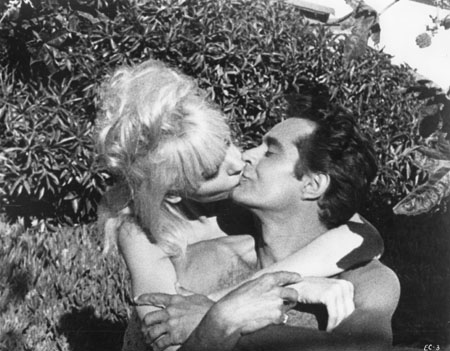
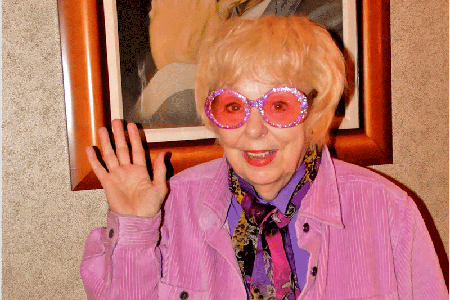
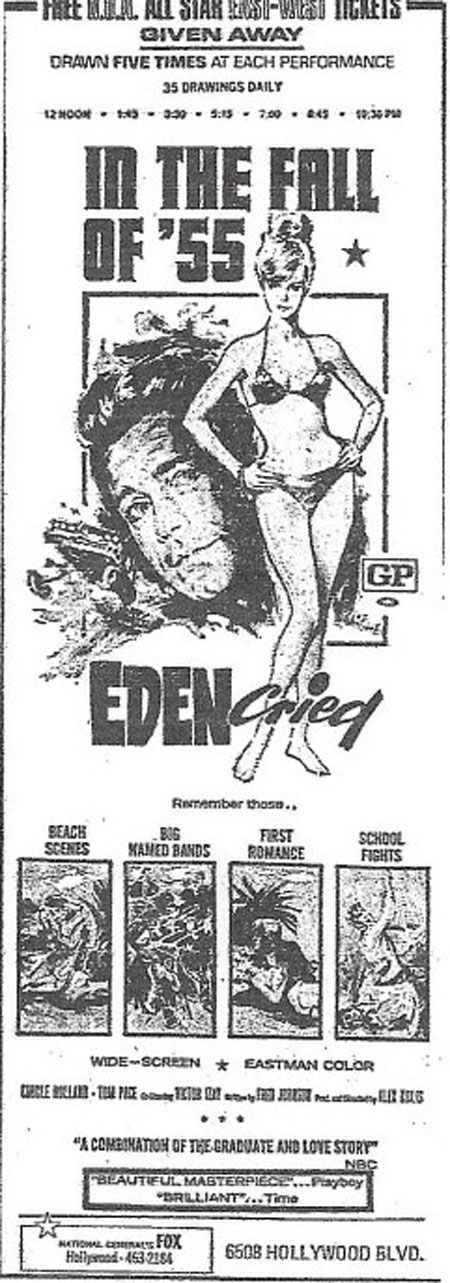
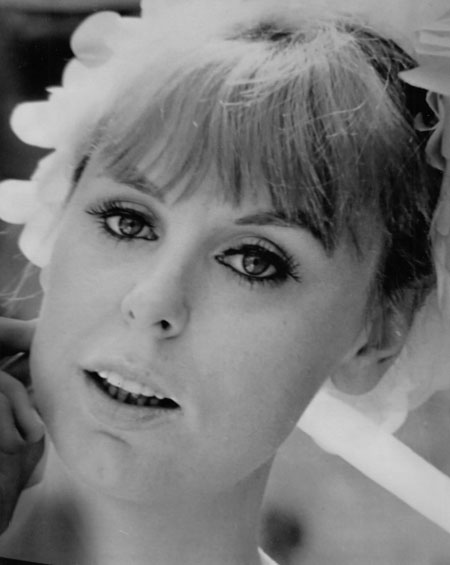
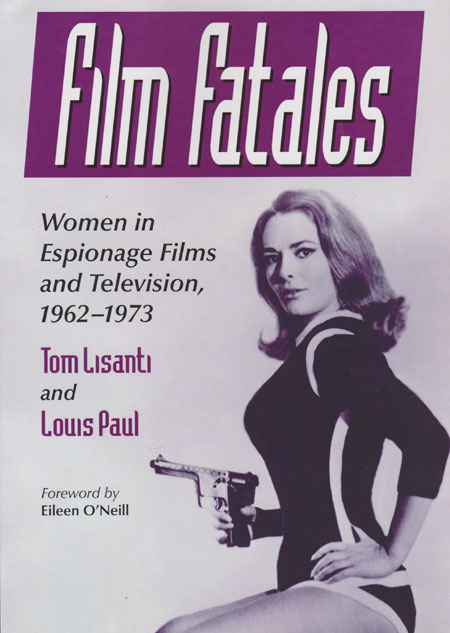
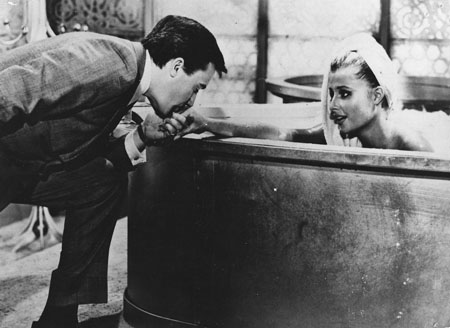
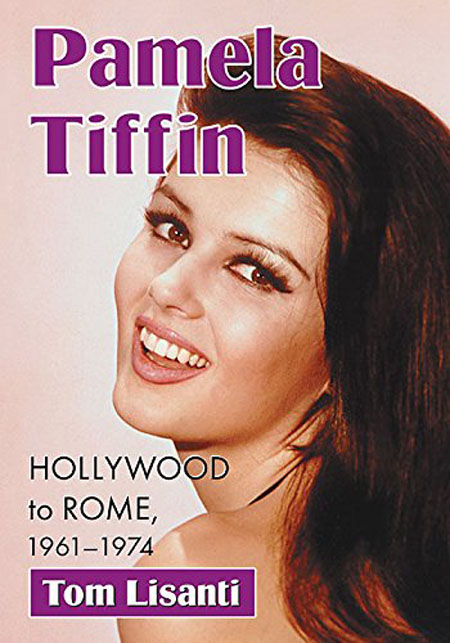
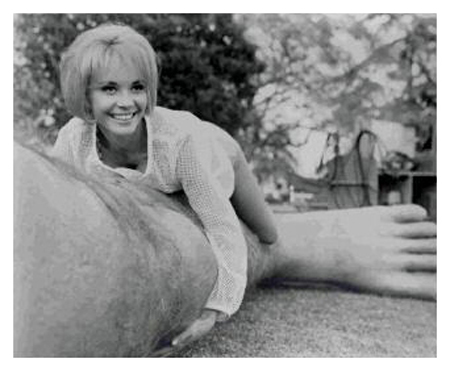
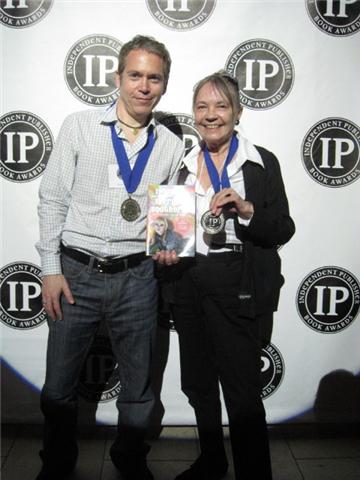
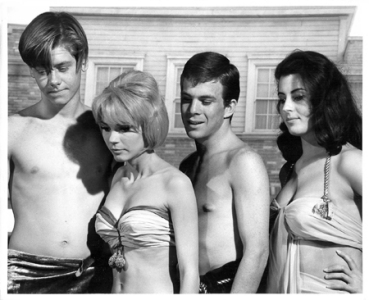
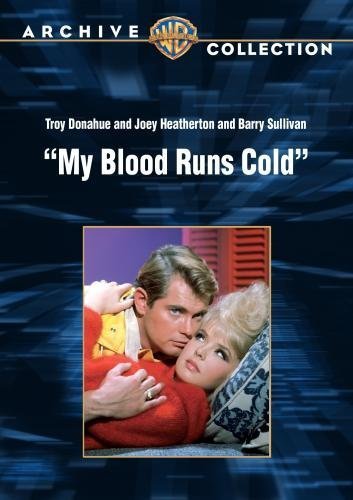
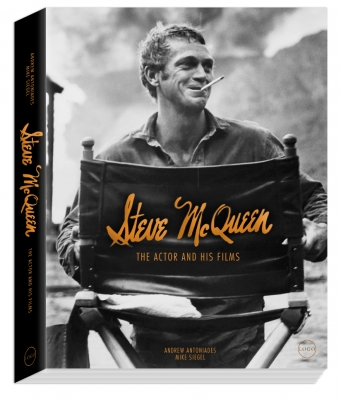
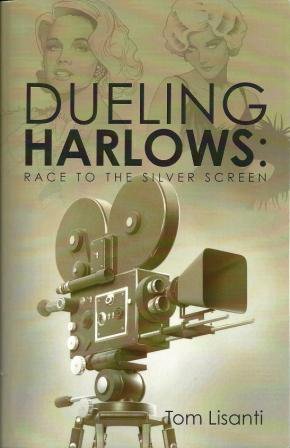
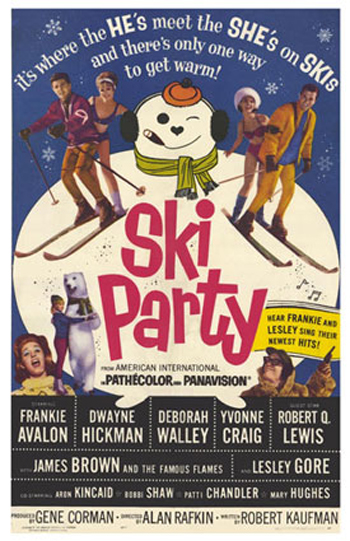
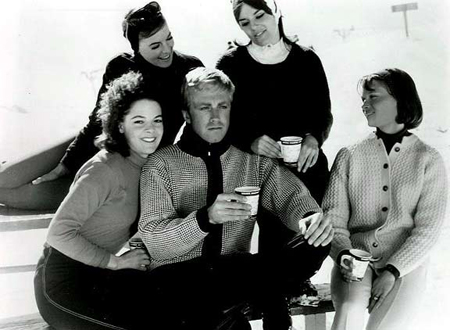
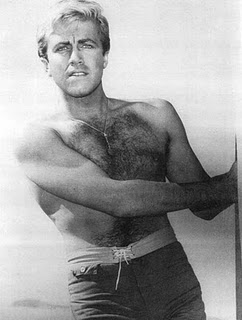
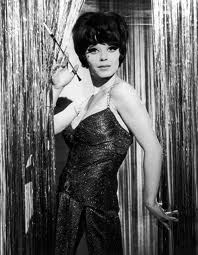
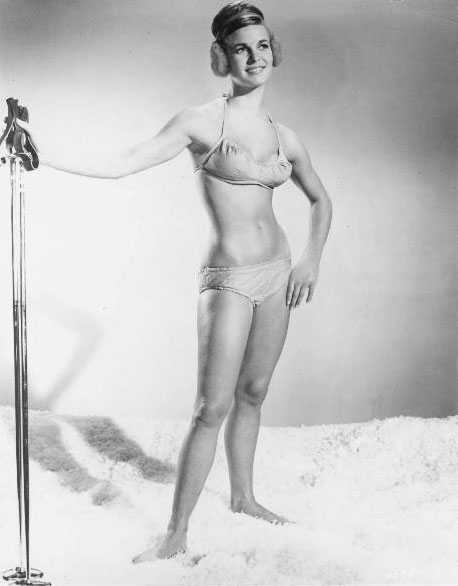
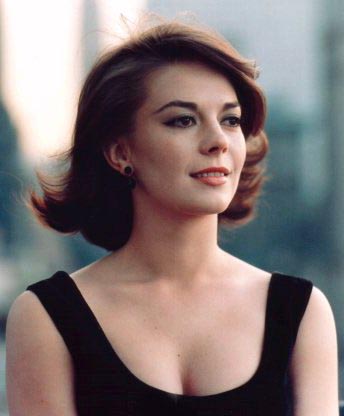
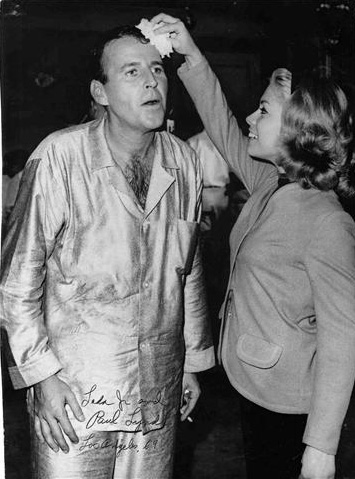
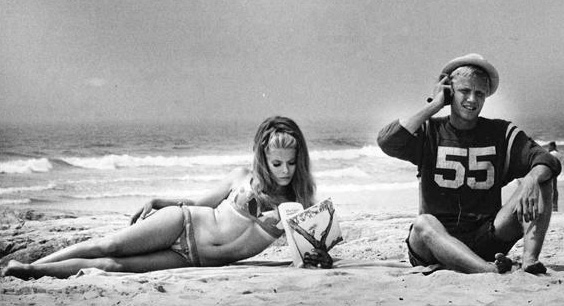
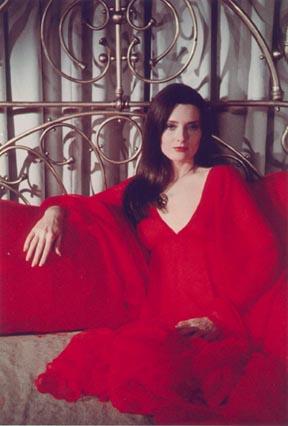
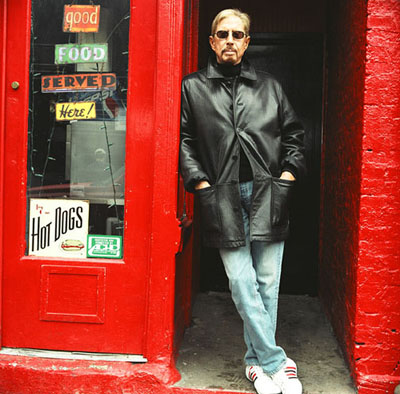
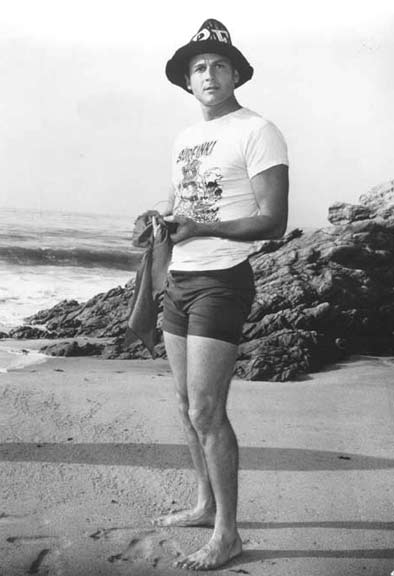
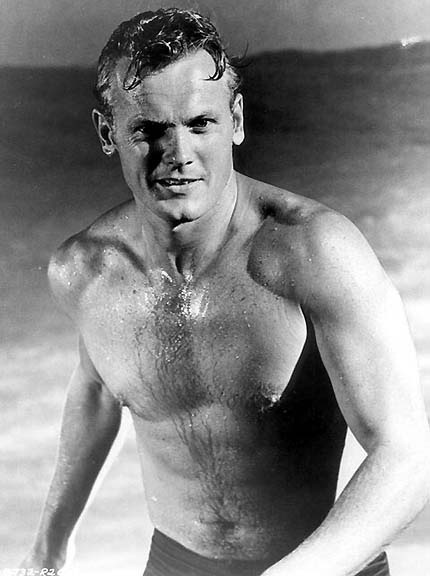
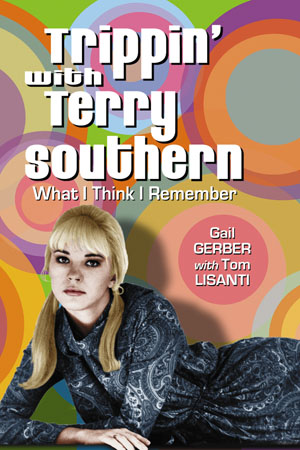
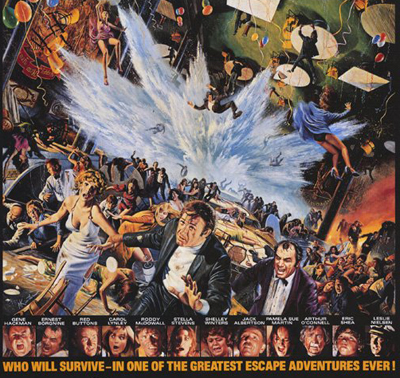 Â
 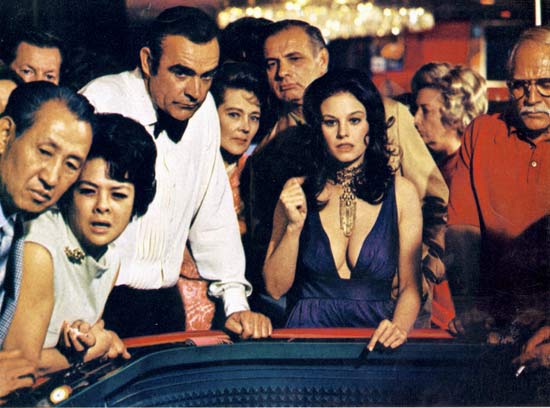
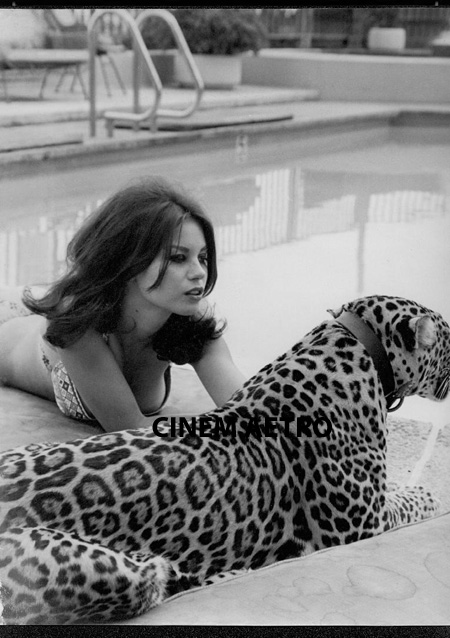
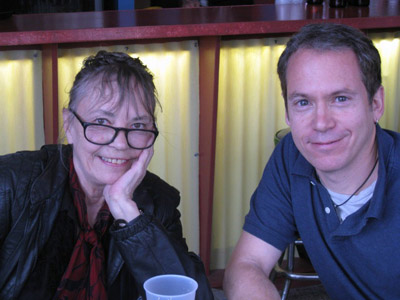
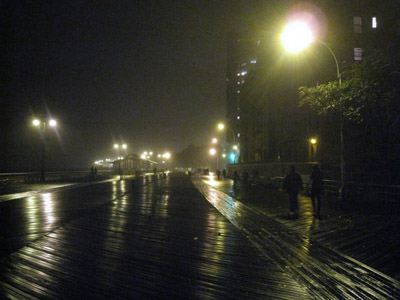
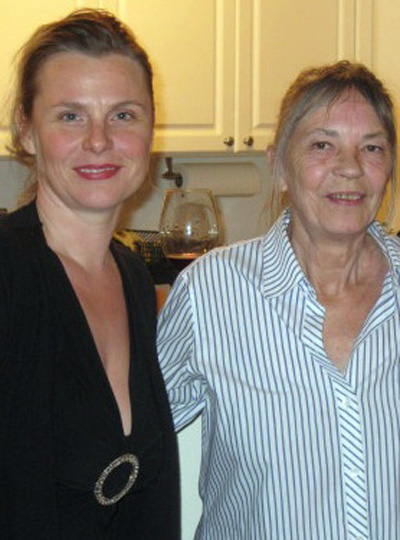
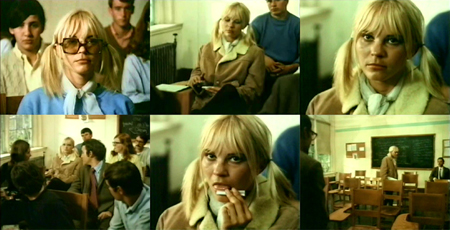
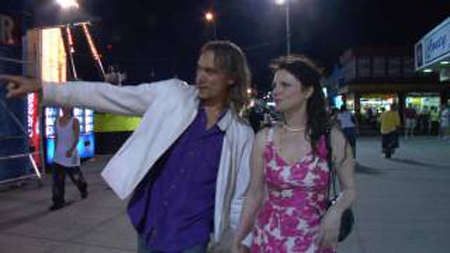
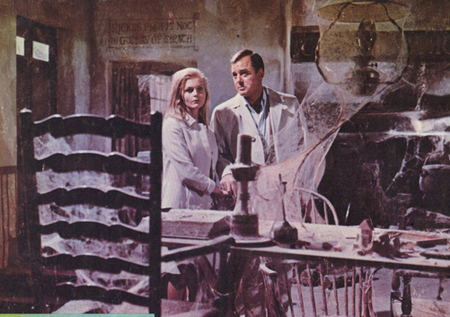


 Busy character actor David Youse is co-starring with Matthew
Modine, one of the most charming underrated actors who came onto the
Busy character actor David Youse is co-starring with Matthew
Modine, one of the most charming underrated actors who came onto the