Retro movie historian Mike Malloy presents some vintage interviews in which Henry Silva and Fred Willilamson share their memories of working with Lee Van Cleef.
In this classic clip from the 1967 WWII film "The Dirty Dozen", the late, great Jim Brown shows he could command the big screen with the same assurance that he commanded the football field with as a legendary athlete.
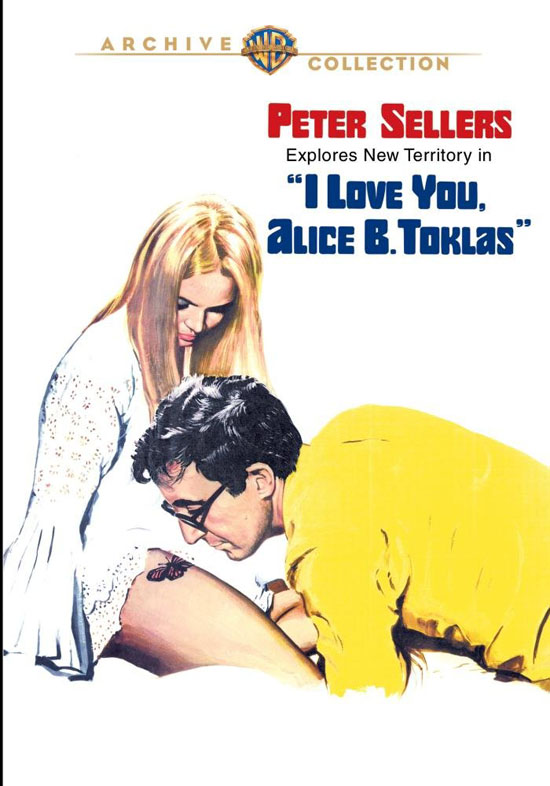
"I Love You, Alice B. Toklas" might leaving contemporary viewers asking "Who is Alice B. Toklas?" The answer: she was a companion of writer Gertrude Stein. Toklas was a fellow writer who became idolized by pop culture addicts for daring to have written a cookbook that included a recipe for pot brownies. The 1968 big screen farce was anything but fun to make. Paul Mazursky and Larry Tucker were to have made their directorial debuts with this film. However, once Peter Sellers was signed to star, the mercurial and unpredictable actor had them bounced from the directors chair(s), though their screenplay was retained. Shortly after production began, Sellers brought Mazursky back on board to offer advice about salvaging a production that Sellers was growing increasingly leery about. The truce was short-lived because Mazursky criticized the way Sellers played a love scene with Leigh Taylor-Young, who made her big screen debut in the film. Mazursky was fired again as the film hobbled through production under the direction of Hy Averback. Sellers was apparently also feuding with his wife, Britt Ekland, who was simultaneously filming "The Night They Raided Minsky's" against Sellers' wishes.
The story presents Sellers as Harold Fine, an L.A. lawyer and self-described "square". He is courting his law firm's secretary, Joyce (Joyce Van Patten), an amiable bubble-head who constantly pressures Harold into proposing to her. He finally relents and a wedding date is set, much to the delight of Harold's parents (amusingly played by Jo Van Fleet and Salem Ludwig). In the meantime, Harold finds himself unexpectedly immersed in the local hippie culture when his car is damaged and he finds the only accessible vehicle is a flower-powered decorated loaner he gets from the repair shop. At the same time, his hippie brother Herbie (David Arkin) introduces him to the gorgeous Nancy (Leigh Taylor-Young), a free-spirited young woman who indulges in drugs and free love. Harold finds himself smitten by her and when she leaves him some pot-laced brownies, it results in the film's funniest scene in which Harold ends up serving them to his parents and Joyce, resulting in the kind of over-reaction one might attribute to a tab of LSD. Nevertheless, it is quite an amusing segment. Ultimately, Harold leaves Joyce at the synagogue seconds before taking the vow of marriage. He dashes home and vows to start a new life with Nancy. Before long, he is sporting long hair, mod eyeglasses and is living in his car. It seems perfect until the screenplay predictably delves into one of those scenarios in which the motto is "Be careful what you wish for- you just may get it!".
Sellers is the glue that holds the fragile premise together, even if his American accent slips every now and then. Taylor-Young makes for a lovely leading lady and Joyce Van Patten is stuck in the role of constantly jilted lover who craves Harold no matter how many times he humiliates her. Unfortunately, the premise wears thin pretty quickly and the movie is never as funny as it should be or you expect it to be. In fact, it bears a certain resemblance to Blake Edwards' "The Party", which was released the same year. Both films were based on an initially funny scenario that ultimately ran out of steam as the movie wore on. At the time, Roger Ebert reviewed the film favorably but pointed out that it was another example of a Hollywood studio punting when it came to presenting the hippie culture and depicting the rebellious young people as sanitized caricatures. Perhaps the biggest laugh to be had was by Paul Mazursky, who would direct the smash hit "Bob & Carol & Ted & Alice" the following year, thus establishing himself as a major name in the film industry.
The region-free Warner Archive boasts a fine transfer. The only bonus feature is the trailer.
Here is a wonderful documentary about Roger Moore with comments from his friends and colleagues including Gregory Peck, Maud Adams, Michael Caine, Lewis Gilbert, Tony Curtis and others. The film covers Sir Roger's career as well as his extensive work on behalf of UNICEF.
In this rare promotional interview posted by the Harry Palmer Movie Site, Oscar Homolka discusses his role as Colonel Stok in the 1967 film "Billion Dollar Brain", starring Michael Caine in the third and last of the Palmer feature films made for theatrical release. Homolka had appeared as the same character in the previous film, "Funeral in Berlin".
This episode of the marvelous web series "Behind the Stunts" looks at producer Euan Lloyd's classic 1978 British adventure film "The Wild Geese" starring Richard Burton, Roger Moore, Richard Harris, Hardy Kruger and Stewart Granger, who was lured out of retirement for the movie. The film is one of the best macho flicks of its era and boasts incredible stunts, which are recounted here by some of the people who performed them.
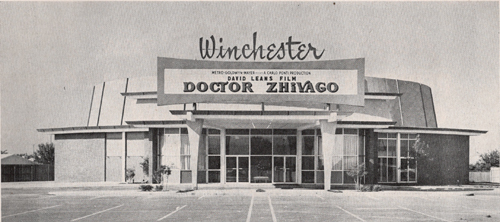
Here's a blast from the past: In August, 1966, Boxoffice magazine reported on the opening of a new, state-of-the-art 900+ seat movie theater: the Winchester in Lubbock, Texas. The description reads:
"It was constructed at a cost of about $250,000...Exterior finish of the the theatre is of face brick, Egyptian stucco and glass. From the 400-vehicle paved parking area, lighted and supervised, at the front of the Winchester, patrons enter the theatre under the canopy protection of a drive-through portico. (There is) an elaborate box office, with inside and outside service windows for convenience and a refreshment center highlights the foyer. Year around air-conditioning comfort-controls the entire structure. The projection room, with an all-transistor Century sound system, is equipped for all processes, including Cinerama. Projectors are Century with Strong Futura lamps...The 1,820- square-foot screen measures 28 x 65 feet. There is no stage. Invitational previews of the theatre and showings of the premiere attraction, "Doctor Zhivago", were held on August 16 and 17 and formal opening for the general public-a sellout- was held on August 18. A full house of dignitaries and opinion-makers, industry representatives, and Lubbock press, radio and television people were guests for the Tuesday affair."
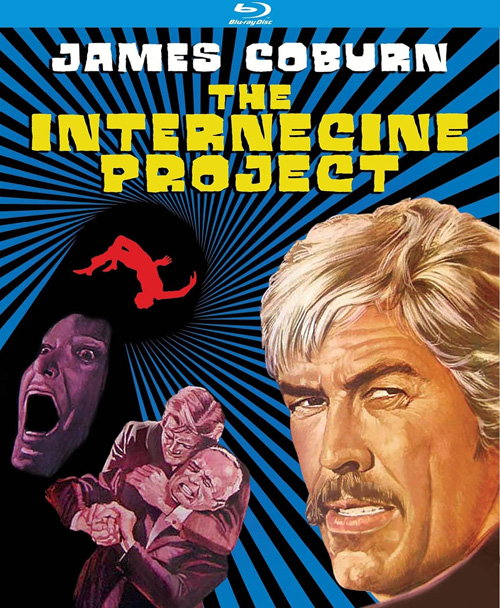
Kino Lorber has released a Blu-ray edition of The Internecine Project, a 1974 London-based thriller directed by Ken Hughes and starring James Coburn in a bravura performance as a charismatic villain. Coburn plays an internationally respected economics expert who finds himself being tapped to be an adviser to the President of the United States. However, he must first ensure that his sordid sideline of running a small London crime ring is swept under the rug. To do so, he devises a complex scheme to convince each member of his team to murder another. The film, written by Barry Levinson and Jonathan Lynn, bristles with tension and leads to a wonderful and satisfying conclusion. Aside from Coburn's outstanding performance, you can relish yeoman work from Lee Grant, Kennan Wynn, Harry Andrews and Ian Hendry- all set to Roy Budd's atmospheric score.
The Blu-ray is a welcome upgrade from the previous Scorpion DVD edition. It ports over the interview with Jonathan Lynn, who would go on to be best known for writing famous British comedy TV series. On most special editions produced by major studios, the interviews are chopped into brief soundbites. Refreshingly, this one allows Lynn to talk for almost 30 minutes- and he goes beyond discussing The Internecine Project to detailing working on Clue, which he wrote and directed.Unfortunately, this edition does not include the interview with Coburn's daughter that was featured on the DVD release. The Blu-ray does contain the original trailer along with trailers of other crime thrillers available from KL. Highly recommended.
Here's one of many memorable scenes in director Robert Rossen's 1961 classic "The Hustler" with Paul Newman as "Fast Eddie" and Jackie Gleason (a real life billiards pro) as Minnesota Fats. The film is a downbeat look at a gritty world most people never see and the sub-culture of those who inhabit it. The performances are brilliant, including those by Piper Laurie and George C. Scott.
In this interview, Steven Spielberg recalls meeting John Ford when he was a young, aspiring filmmaker and the advice Ford gave him that resonated throughout his career. He also extols Ford's "The Man Who Shot Liberty Valance" for being the classic that it is, even if it was underappreciated back in the day. The fact that the film was shot mostly in a studio led some viewers to express disappointment that it lacked Ford's signature grandeur and magnificent vistas. But the story still resonates today, making poignant observations about courage, cruelty, love and cowardice society, as well as the value of a free press. Indeed, the lessons of "Liberty Valance" are as timely today as they ever were.
In this fascinating short, songwriter Carol Connors recalls the strange way that "Gonna Fly Now" became the signature song for the "Rocky" film series.
Here's some interesting insight into the filming of a scene from The Beatles' 1965 movie "Help!" in which they appeared with legendary British comedic actor Frankie Howerd. Actress Wendy Richard, who was also in the scene, explains how the experience went from being a joy to heartbreaking.
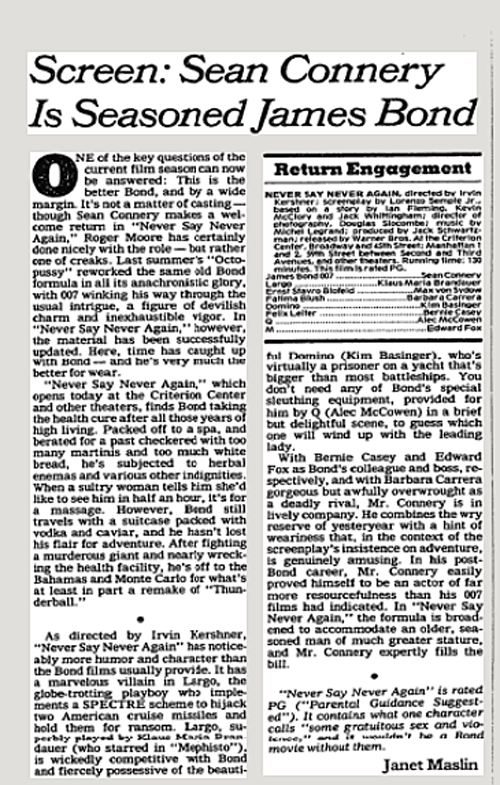
Joe Dante's "Trailers from Hell" site presents the U.S. trailer for the 1967 007 film "You Only Live Twice" with insightful and amusing commentary by writer/comedian Dana Gould, who admits that while he doesn't believe this is the best Bond movie, it is his personal favorite.
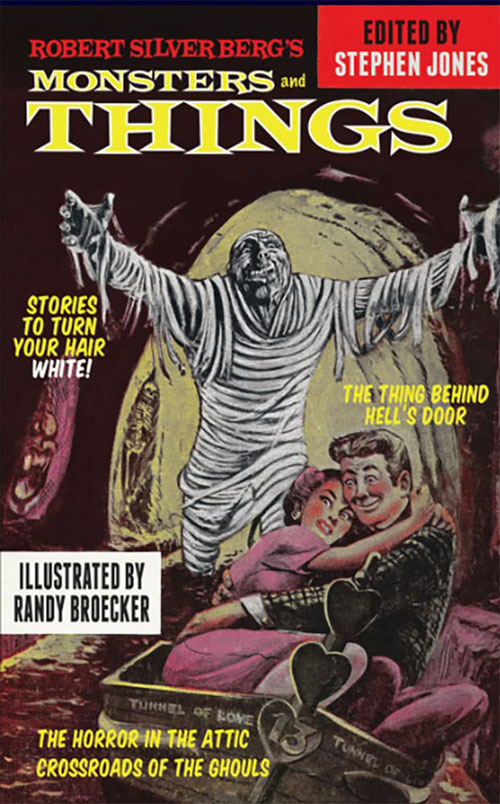
Published by Drugstore Indian Press (imprint
of PS Publishing)
May 2023
512 pages
Paperback
ISBN: 9781786368997
RRP: £15.99
Review by Adrian Smith
If, like me, you love old movies, the chances are high
that a love for the thrilling pulp magazines of the 1950s can’t be far behind.
Robert Silverberg, now an award-winning science fiction author, was one of the
most prolific writers (allegedly averaging around 1 million words a year) for
dozens of magazines throughout that decade including Super-Science Fiction,
Monster Parade, Fantastic and Monsters and Things, amongst
many more. Capable of seemingly churning out stories in any genre he turned his
hand to (including pornography when required), these short tales were designed
to be read once and then forgotten once the next issue came along. Of course,
what was once disposable is now highly sought-after and original copies of many
of these short-lived magazines are out of reach to us mere mortals. Thankfully
the almost equally prolific writer and editor Stephen Jones has compiled a representative
sample of Silverberg’s horror and sci-fi stories published between 1957 and
1959 for this excellent new collection published by Drugstore Indian Press,
accompanied by suitably retro illustrations from American artist Randy Broeker.
Most of the stories are just a few pages long, so no time
is wasted before the thrills and chills set in. From premature burials, mad
doctors, demons, werewolves, vampires and ghouls to aliens, global conspiracies,
sinister cults and outer space adventures, the stories pack a pulp punch and
are all very enjoyable, especially the ones with twist endings that would not
be out of place in an episode of The Twilight Zone. With titles
including ‘Secrets of the Torture Cult,’ ‘Beasts of Nightmare Horror’ and ‘Vampires
from Outer Space’ (a precursor to Colin Wilson’s The Space Vampires
perhaps?), Silverberg's imagination was extraordinary, producing a continual
stream of stories, often published under pseudonyms so that it didn’t look like
he’d written the entire magazine. In his introduction to this collection (he’s
still with us, at the ripe old age of 89!), he discusses his early career and
his need to keep the [were]wolf from the door by writing anything he could get
paid for, and it was clearly good preparation for the highly-respected novels
which would earn him fame later on.
Given the sheer number of short stories Silverberg
produced, one can only hope that another collection from Drugstore Indian Press
is on its way. These are really fun, pulpy stories that remind us of all of another
era; when guys called Skip drove hot rods, when Big Jack hosted late-night talk
shows about the occult on stations like WYXD, and when teenage librarians like
Marty could accidentally raise the old gods using a stolen copy of the
Necronomicon. Robert Silverberg’s Monsters and Things belongs on the
shelf of any discerning 1950s nostalgia junkie.
The conventional wisdom is that physical media (DVDs, Blu-rays) is in a death spiral in the age of streaming. In article for the BBC's web site, writer Claire Thorp makes the case for treasuring physical media. Let's face it: streaming is great, but as the article points out, your "ownership" of your favorite videos is tentative, subject to them vanishing without warning due to licensing expiration situations and other factors. Additionally, streaming can't provide those great bonus extras collectors treasure. The article advises that the only way to permanently possess these treasured films is to own them outright. Click here to read.
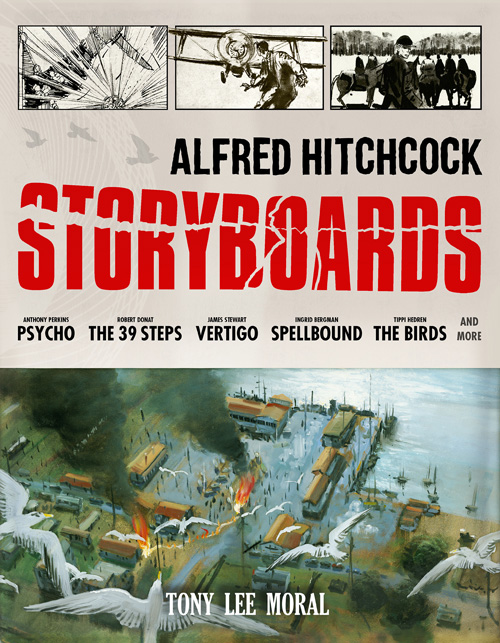
Alfred Hitchcock has been a huge influence on my life, ever
since I saw my first Hitchcock film,I Confess, at the age of 10 years
old. I was immediately struck by the moral ambiguity of the film and the
conflicted viewpoint of the central character, a priest, played by Montgomery
Clift. Although I wasn’t aware of camera angles, film theory and mise-en-scene
at the time, I could sense a gripping plot, characterisations and camera
movement.
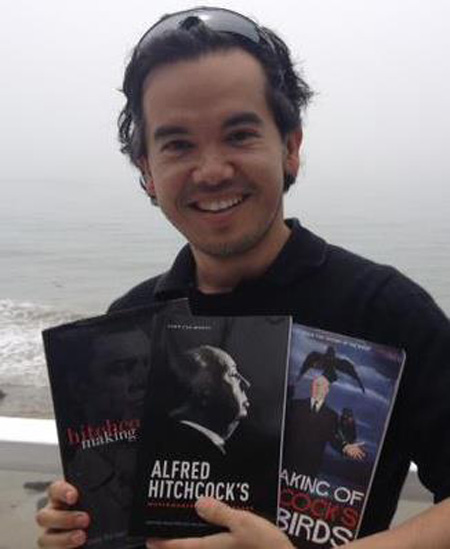
Since then, I’ve written four books on Hitchcock, the Master of
Suspense. Two books are on the making of specific films,The
BirdsandMarnie,
which were made in the early 1960s and have a close production history because
they had shared screenwriters and production crew; and a more general book
calledAlfred Hitchcock’s Movie Making Masterclass,
which is about all of his films, for aspiring screenwriters and film makers. My
latest book Alfred Hitchcock Storyboards, is as the name suggests, a
celebration of Hitchcock’s visual art and storyboarding in collaboration with
key production illustrators, storyboard artists and set designers.
When I was writing my first
Hitchcock book, “Hitchcock and the making of Marnie”, 25 years ago now, I was
excited to see the extensive storyboards for the racetrack and hunt sequence at
Margaret Herrick Library, part of the Academy of Motion Pictures Arts and
Sciences in Los Angeles. I was immediately impressed about the level of detail.
I was lucky enough to interview the production designer Robert Boyle and
storyboard artist Harold Michelson who had a wealth of knowledge and memories
about working onThe BirdsandMarnieand I knew that was just the start. Because
this is my fourth book on Hitchcock, the Estate gave me permission to reproduce
them which is very exciting to share with readers today.
As Hitchcock directed 52 films in his career, I couldn’t include
every film or storyboard, so I decided to focus on a selection of films which
are representative of Hitchcock’s 60 year career. So I chose The 39 Steps, Shadow of a
Doubt, Spellbound, Vertigo, North by
Northwest, Psycho, The Birds, Marnie and Torn
Curtain. These films span Hitchcock’s early British period to one of his
last films he made at Universal Studios in Hollywood. Teaming up with Titan
Books who specialise in art and film books, I’m pleased to say that the coffee-table
book includes never-before-published images, especially from The 39 Steps,
Marnie and Torn Curtain. I was also able to feature some of the
art directors, production designers and illustrators who worked on these films,
including the more celebrated ones like Salvador Dali who Hitchcock hired for
designing the Spellbound dream sequence.
(Photo: Tony Lee Moral)
Through
storyboarding each scene, Hitchcock, likened the beats in a film to the notes
on a sheet of music being conducted by an orchestra. Hitchcock was a very
technical director and was keen to manipulate the audience’s emotions, the
highs and lows, and storyboards were central to his practice. Think about the
shower scene in Psycho, the crop duster attack in North by
Northwest and the crows gathering silently on the jungle gym in The
Birds, they are all examples of carefully orchestrated storyboards.
Studying
the storyboards definitely opened my eyes to films which I hadn’t focused on
before such as Shadow of a Doubt and Spellbound,
and what was apparent was the level of detail from both Hitchcock’s early films
and his move to Hollywood. In Shadow of a Doubt, storyboarding and
set design are very important to show a typical American family and the chaos
that erupts when a sinister force, in this case Uncle Charlie, comes to visit. Spellbound is
another film where the dream sequence was storyboarded and Hitchcock was very
interested in dream theory and analysis. There’s also a great behind the scenes
story I discovered about some lost and found Salvador Dali art for Spellbound.
But you’ll have to read the book for that story.
They couldn't sing or dance- which is why it was so amusing to see Burt Lancaster and Kirk Douglas engage in both activities on the 1958 Oscars broadcast!
Cinema Retro has received the following press release:
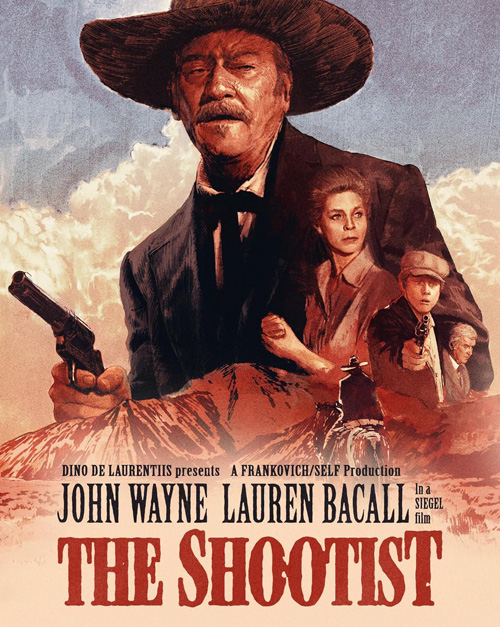
Legendary director Don Siegel (Dirty
Harry) directs the iconic John Wayne as an ageing gunfighter dying of cancer in
his final screen appearance, a superb adaptation of Glendon Swarthout's classic
western novel, The Shootist.
John Bernard Books is the stuff of
legend, a renowned 'shootist' whose reputation looms large. But it's 1901, and
like the old west, John is dying and a reputation like his draws trouble like
an outhouse draws flies. As word spreads that the famous gunfighter is on his
last legs, the vultures begin to gather; old enemies, the marshal, newspaper
men, an undertaker, all eager to see him dead. Other men might die quietly in
bed or take their own lives, but J. B. Books will choose his executioner and
face down death with a pistol in each hand.
With an outstanding cast that
features not only Wayne, but James Stewart, Lauren Bacall, Ron Howard, Scatman
Crothers and John Carradine, The Shootist is an elegiac ode to a monumental
screen presence and to the Western genre itself.
Bonus Materials
·New 2K remaster by Arrow
Films from the original 35mm camera negative
·High Definition Blu-ray
(1080p) presentation
·Original lossless mono
audio
·Optional English
Subtitles for the deaf and hard of hearing
·Brand new audio
commentary by filmmaker and critic Howard S. Berger
·The Last Day, a new
visual essay by film critic David Cairns
·A Man-Making Moment, a
new interview with Western author C. Courtney Joyner
·Laments of the West, a
new appreciation of Elmer Bernstein’s score by film historian and composer Neil
Brand
·Contemplating John
Wayne: The Death of a Cowboy, a new visual essay by filmmaker and critic Scout
Tafoya
·The Shootist: The Legend
Lives On, archival featurette
·Theatrical trailer
·Image gallery
·Reversible sleeve
featuring original and newly commissioned artwork by Juan Esteban Rodríguez
·Double-sided fold-out
poster featuring original and newly commissioned artwork by Juan Esteban
Rodríguez
·Six postcard-sized lobby
card reproductions
·Illustrated collector’s
booklet featuring new writing by film critic Philip Kemp
This Blu-ray will be released on March 12. Click here to order from Amazon.
One of the UK’s most beloved film franchises
has been somewhat neglected of late. Despite decades of television reruns,
since the DVD boxset release over a decade ago there has been no sign of any
sort of upgrade of the ‘Carry On ‘films, which, if there were any justice,
would have been raised to Criterion levels by now. Remarkably this is still the
case in the UK, so thankfully Australian company Via Vision Entertainment have
taken a firm grip of the baton and begun releasing the ‘Carry On’ films in
series order, four at a time. The first eight films in the series were mostly shot
in black and white and based around everyday life, such as military service,
the healthcare system, schools, the police, cruise holidays, and the beginnings
of second-wave feminism (Carry On Cabby (1963), if you’re wondering). But
then Peter Rogers, the producer and brains behind the series, had the fabulous
idea to begin making period dramas and spoofs of current hits. Carry On Jack
(1964), about pirates, was the first of these, and with that move, in my
opinion, the ‘Carry On’ films really hit their creative and comedic peak.
This means that ‘Carry On... Collection 3’
contains arguably the four best films in the entire franchise (although I know some
fans would beg to differ): Carry On Spying (1964), Carry On Cleo
(1964), Carry On Cowboy (1965) and Carry
On Screaming (1966).
Carry On Spying
(1964), the last one shot in black-and-white and the first to directly spoof
genre conventions, has perhaps been forgotten in favour of the more smutty ‘Carry
On’ films that followed later. Starring regulars Bernard Cribbins, Kenneth
Williams, Charles Hawtrey, and introducing newcomer Barbara Windsor as Daphne
Honeybutt, a name even Ian Fleming would have been proud of. Far from being the
giggling saucepot she would later be known for, Windsor’s character here is
brave, intelligent and forthright, more than once saving the mission and her
hopeless compatriots. Hot on the heels of From Russia with Love (1963), the
film is a hilarious and almost spot-on spoof of the budding James Bond
franchise (Cubby Broccoli objected to one character being called Agent 009½ so they
were reluctantly renamed 000), coming before the flood of Eurospy films that
would take all sorts of liberties with Bond a couple of years later. Shot at
Pinewood Studios, already the home of Bond, it is unsurprising that the sets here
are very close to Ken Adam’s designs, especially the secret underground
headquarters of STENCH, led by the evil Doctor Crow, and were probably built
and lit by many of the same technicians. The cast, with Kenneth Wiliams taking
a rare lead role, are a joy. Williams, who would often be cast as pompous,
arrogant authority types in later films, plays here his idiotic character made
famous in Hancock’s Half Hour, complete with his catchphrase “Stop
messing about!” The comedy is hilarious,
and as a Bond spoof it works very well as a standalone film for those who may
be unfamiliar with the charms of the ‘Carry On’ franchise. Naturally, given
that it is now sixty years old, some of the humour is a little painful,
reflecting some of the post-colonial attitudes of the time. But the odds are
that if you are Cinema Retro regular, you can probably handle it.
Carry On Cleo is
probably the franchise’s most lavish and high budget production, thanks to the
genius decision of Peter Rogers to move in on the abandoned Cleopatra sets
left behind at Pinewood when the disastrous Elizabeth Taylor production was
shipped off to Cinecittà in Rome to start again. With full access to sets,
props and costumes, Carry On Cleo looks a million dollars, and is also a
million times more entertaining than Joseph L. Mankiewicz’s Cleopatra. The
cast are fabulous, with Kenneth Williams in full arrogant mode as Caesar, Sid
James as the lecherous Mark Anthony, Jim Dale as an escaped English slave, but
most importantly with Amanda Barrie, who had an important role in Carry On
Cabby, as the beautiful and mesmerising Cleopatra. Whether in costumes
originally created for Liz Taylor, or bathing naked in ass's milk, she's simply
stunning. It has always been my favourite ‘Carry On’ film, packed with sight
gags, brilliant nods to the original film (20th Century Fox were
particularly furious at the original Carry On Cleo poster design which
mercilessly spoofed theirs) and wonderful sets and matte paintings. This was
the heyday of Pinewood Studios, and the skill and expertise on show here sets
it apart from the later, cheaper ‘Carry On ‘films shot mainly in muddy fields.
Carry On Cowboy
arrived just as the Spaghetti Westerns were getting started in Italy but owes
more to the prevalence of American western films and TV shows (Bonanza, Gunsmoke,
etc.), and is another clear spoof in the Carry On Spying mode. Genre
conventions are milked for all their comic potential, and the cast are
uniformly excellent, from Jim Dale’s accidental sheriff, Sid James as the
villainous Rumpo Kid, Charles Hawtrey as the whisky-addled Big Chief Heap, Joan
Sims as a prostitute with a heart of gold, Kenneth Williams as a cowardly mayor
and, in a reference to actual history, Angela Douglas as the first-rate shot
Annie Oakley. This is great fun, and not far removed from what Mel Brooks would
do less than ten years later, but without the fourth wall breaking.
The last film in the set is possibly the most
well known outside of the UK – Carry On Screaming. This time they had
Hammer Films firmly in their sights, with references to Frankenstein, Jekyll
and Hyde, spooky mansions and the sexiest of sexy vamps, all mixed together
with plenty of gags and a plot which borrows heavily from House of Wax
(1953), meaning Vincent Price gets a bit of a nod as well. In the lead role as Police
Sargeant Bung is Harry H. Corbett, making his only ‘Carry On’ appearance, but
he was an extremely popular comedy actor in the UK at the time thanks to his
starring role in the sitcom Steptoe and Son. Kenneth Williams plays the
undead Dr Watt (his name allowing for some “Who’s on first?”-type comedy confusion),
alongside Jim Dale, Angela Douglas, Joan Sims, Charles Hawtrey and the stunning
Fenella Fielding, who vamps for all she’s worth in a red dress so tight fitting
that she was unable to sit down between takes.
Across the films are appearances from other
‘Carry On’ favourites including Bernard Bresslaw, Kenneth Connor, Peter
Butterworth and a pre-Doctor Who Jon Pertwee, who in the early 1960s was
probably best known for doing funny voices on radio comedy shows like The
Navy Lark.
It’s wonderful to see these films restored
and available in HD at last. They look fantastic and remind us of what great
craftsmanship there was in British cinema in the 1960s, even at the cheaper end
of the production scale. This boxset also comes with a lovely booklet which
reproduces in full colour the original pressbooks for the first twelve ‘Carry
On’ films. They’re fascinating to look at, although you might need a magnifying
glass if you want to read some of them! Bonus features-wise, the sets are a bit
light, simply including original trailers for each film and the commentary
tracks which were recorded for the original DVD releases more than a decade
ago. Whilst it’s great to have these, and they are very entertaining (Fenella
Fielding has the kind of voice you could listen to all day), it would be great
to see some of the archival documentaries and interviews that have been shown
on TV over the years included too, or even commission the official ‘Carry On’
historian Robert Ross, whose new co-authored book Carry On Girls is also
excellent, to produce some new documentary material.
However, we physical media collectors are
spoiled these days and often expect too much! For the price, this boxset
delivers what we really want, which is excellent restorations of much-loved
British comedy gems. These really are the best of the series, and if you don’t
agree, in the immortal words of Sid James: “Knickers!”
You can order ‘Carry On Collection 3’ direct
from Via Vision here:
Director
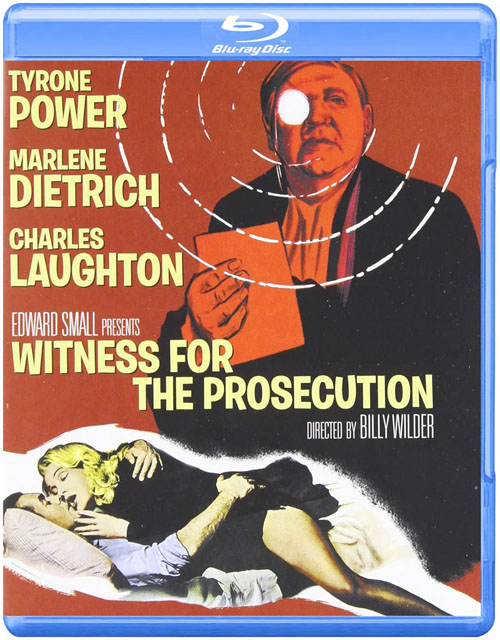
Billy Wilder was on an incredible streak during the decade of the 1950s. Some
of his most notable works were made between 1950-1959, and his 1957 courtroom
drama, Witness for the Prosecution, is one of the high points.
Based
on the 1953 stage play by Agatha Christie (which, in turn, was based on one of
her short stories), Wilder’s film version actually improves a bit on the
already engaging theatrical work. (By the way, the stage play is currently
enjoying a long and successful run in London at County Hall’s old courthouse
and actual courtroom, and this reviewer can attest that it is a magnificent
production, definitely worth seeing in those authentic environs.)
Tyrone
Power received top billing as Leonard Vole, the accused (Power, an American,
plays the role as one as well). The fabulous Marlene Dietrich is Christine, the
“witness for the prosecution.” But make no mistake—this movie belongs to
Charles Laughton, who received third billing. Laughton plays barrister Sir
Wilfrid Robarts, who is the senior counsel for Vole. As his private nurse, Miss
Plimsoll (Elsa Lanchester) declares during the trial when Wilfrid makes a
slam-dunk move, “Wilfrid the Fox! That’s what they call him, and that’s what he
is!”
The
nurse character is something that screenwriters Wilder and Harry Kurnitz
(adapted for the screen by Larry Marcus) added to the story, as well as turning
Sir Wilfrid’s character to be more of a protagonist. Seeing that Laughton and
Lanchester were married in real life, their chemistry and constant bantering
together is priceless, providing the film with comedic elements that the play
never had.
Vole
is accused of murdering a wealthy widow that he befriended. She had become
besotted with him and made him a beneficiary of her will. Vole is married to
German immigrant Christine, who at first provides an alibi for Vole. Sir
Wilfrid, despite recovering from a heart attack and is not in the best shape
for a highly publicized trial, takes the case of defending Vole. It’s a shock
to Wilfrid when the prosecution calls Christine to testify against her husband—because
she is actually married to someone else back in East Germany, dodging the law
that a wife can’t testify against a spouse. To reveal any more of the twists
and turns—and especially the surprise ending—would spoil the fun. (In fact, a
voiceover announces at the end of the movie that the “management of this
theater” suggests that the secret of the ending not be revealed to friends!)
All
three of the leads are particularly outstanding, and they are strongly
supported by not only Lanchester, but also John Williams, Henry Daniell, Torin
Thatcher, Una O’Connor, and Ian Wolfe. Wilder’s direction is a lesson in
pacing, the rise and fall of tempo and suspense, and his guidance of the
actors. Dietrich, in fact, would not agree to do the picture unless Wilder was
hired as director.
The
film was popular in 1957. It received Academy Award nominations for Best
Picture, Best Director, Best Actor (Laughton), Best Supporting Actress
(Lanchester), Best Editing, and Best Sound. Curiously, the screenplay wasn’t
nominated. Lanchester did receive the Golden Globe award for her stellar
performance.
Kino
Lorber Studio Classics has issued a Special Edition Blu-ray that replaces their
earlier 2014 release. The contents are exactly the same except an audio
commentary by film historian Joseph McBride (author of Billy Wilder: Dancing
on the Edge) has been added. Previous supplements included are a short
piece of Wilder discussing the film with director Volker Schlöndorff,
and the theatrical trailer. The restoration itself looks marvelous in glorious
black and white.
Witness
for the Prosecution is
a must-have for fans of Billy Wilder, Charles Laughton, Marlene Dietrich,
Agatha Christie, and courtroom thrillers. Great fun all around.
(A
previous edition of this film was released in 2017 by Classic Flix and was
reviewed on Cinema Retro in 2020. The film has been re-issued as a
“Special Edition” from Kino Lorber Studio Classics in 2024. Much of the
following review is repeated, but updated, from the earlier piece.)
A
sub-genre of film noir is that of the so-called “docu-noir,” a
crime drama usually based on a true story and told as a Dragnet-style
procedural. Most likely there is an omniscient voiceover narrator, a focus on
the lawmen who are investigating the case, and all the other stylistic and
thematic elements associated with film noir in general: starkly
contrasting black and white photography, urban locations, shadows, gritty
realism, angst and cynicism, and sometimes brutal violence.
Eagle-Lion
Films was a British/American production company that existed for only a few
years in the late 40s, disbanding in the early 50s. There was some talent
involved, and they produced a variety of genres and pictures of varying quality
(Powell and Pressburger’s The Red Shoes was a rare Best Picture
nominee). Many of the studio’s pictures were films noir that were shot
as B-movies with low budgets and barebones casts and crews. Anthony Mann
directed a couple of their classic crime movies—T-Men and Raw Deal,
both of which fall into the “docu-noir” category. Unfortunately, due to bad
management or negligence, many of Eagle-Lion’s titles fell out of copyright and
currently reside in the public domain. Hence, one can often find bargain bin,
cheap knock-off DVDs and Blu-rays of these films.
He
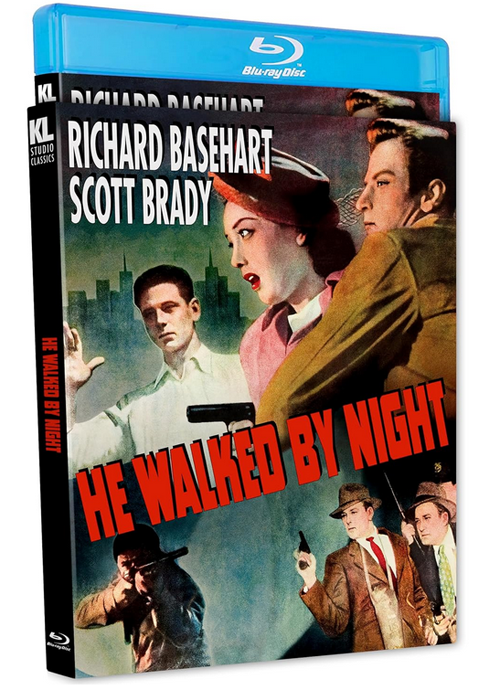
Walked by Night
is a prime example of a quality presentation of an equally impressive little
movie. Made in 1948, Walked is a true story loosely based on the crime
spree by Erwin “Machine Gun” Walker, who shot cops and committed burglaries and
armed robberies in Los Angeles in the mid-40s. In real life, Walker was
arrested and sentenced to prison, but he was paroled in the 70s. This is not the
ending to the story that is depicted in the film.
A
young Richard Basehart portrays disturbed war veteran Roy Morgan, a habitual
burglar and armed robber. An off-duty cop on the street suspects Roy of being a
burglar. Roy shoots and kills him. The POV switches to the police, especially
Lt. Marty Brennan (Scott Brady), who is based on the investigator of the true
case. He is assisted by Captain Breen (Roy Roberts), and forensics man Lee
Whitey (Jack Webb, in an early screen appearance). The story follows the police
investigation juxtaposed with Morgan’s eccentric and lonely existence, and the
criminal’s increasingly violent crimes. The big break comes when a stolen item
is recovered by an electronics pawn dealer (Whit Bissell), who has been
unwittingly fencing for Morgan.
It’s
all engaging stuff, and Basehart delivers an outstanding, creepy performance as
Morgan. The police procedural sequences are done well, such as when a composite
drawing of the suspect is created by all the witnesses to the crimes. The
climactic set piece of a chase in LA’s sewer system is exciting, atmospheric,
and pure noir. Oddly, it is similar to the ending of The Third Man,
which was released a year later.
Even
though Alfred Werker is credited as director, audio commentary speculates that
Anthony Mann stepped in to helm some of the movie. Is it one of those Christian
Nyby/Howard Hawks (The Thing) or Tobe Hooper/Steven Spielberg (Poltergeist)
controversies? No one seems to know. He Walked by Night, however, does
contain several sequences—including the final sewer chase—that are stylistic
stamps of Mann. That said, much of the credit for the picture’s success goes to
celebrated noir cinematographer John Alton.
Another
sidebar related to the picture is Jack Webb’s meeting and further networking
with the picture’s technical adviser Detective Sergeant Marty Wynn. This led to
the ultimate creation of Dragnet as a radio and television show.
Kino
Lorber’s new Special Edition Blu-ray presents a 16-bit 4K scan of the 35mm fine
grain, and it looks quite wonderful, a remarkable step-up from other public
domain transfers that are out there. It comes with English subtitles for the
hearing impaired, as well as an audio commentary by biographer and producer
Alan K. Rode and writer/film historian Julie Kirgo. New to this Special Edition
is a second audio commentary by film historian Imogen Sara Smith.
Unfortunately, the Kino Lorber edition does not contain other supplements that
the previous Classic Flix edition did, nor the 24-page booklet that accompanied
that packaging.
For
fans of film noir, police procedurals, and gritty crime dramas, He
Walked by Night is a good time at the movies.
Mel Brooks has been awarded an honorary Oscar, but you'd never know it if you watch this year's Academy Awards unless they make a brief mention of it. Gone are the days where viewers were treated to such wonderful moments, as the Academy long ago decided that honoring film industry legends was a superfluous part of the TV broadcast. Better to make more time for the awful "spontaneous" banter between presenters and lame comedy routines. At least the Academy made the presentation available on its web site, so here it is. (Lee Pfeiffer)
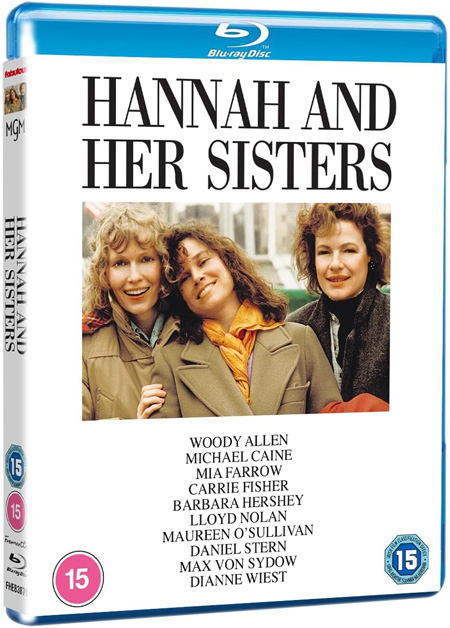
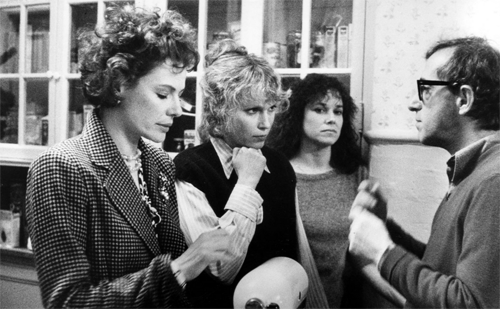
Woody Allen’s Chekhovian-titled Hannah and Her Sisters
(1986) is reportedly only twenty percent of what he actually wrote for the film
on his Olympia SM-3 typewriter, which he has owned for decades and written all
of his films on. Given how extraordinary this outing is, one can only wonder what
the remaining projected film would have looked like. Conceived of as his answer
to Ingmar Bergman’s Fanny and Alexander (1982) which ran three hours
theatrically and nearly five-and-a-half hours on Swedish television as a
mini-series, Hannah is considered by many to be Mr. Allen’s finest hour,
although I am in the minority as I view Another Woman (1988) as his best
film, with Hannah coming in at a very close second.
Hannah is a sumptuous film, the first Woody Allen outing to be
photographed by the late great cinematographer Carlo
Di Palma who would go on to work on eleven more films with Mr. Allen. He
captures the visual splendor of New York and all its beauty and ugliness over a
two-year period between Thanksgiving holidays. It is also a family affair. Hannah
is a housewife/actress and is played wonderfully by Mia Farrow. Her parents are
her real-life mother, Maureen O’Sullivan, and actor Lloyd Nolan, who used to be
actors as well. Hannah is married to businessman Elliot (Michael Caine) and
they have a good number of children who are all played by Ms. Farrow’s and Mr.
Allen’s real-life adopted offspring. Hannah’s sisters consist of the
emotionally adrift Lee (Barbara Hershey), who is in a relationship of sorts
with the hermetic painter Frederick (Max von Sydow) and the actress-wanna-be Holly
(Dianne Weist) who always appears to be on the verge of a breakdown between
bouts of ingesting nicotine and alcohol following auditions. As with previous
Allen outings, especially his 1979 film Manhattan, Hannah revolves
around myriad romantic entanglements, but it is not all fun and games. Elliot
is intensely attracted to Lee who is a lost soul and is pulled to him thanks to
Frederick’s older age and insouciance. Holly and her actress friend April
(Carrie Fisher), with whom she runs a catering company to make ends meet, battle
it out for the affections of David (Sam Waterston), an erudite architect who
uses opera and fine wine as his tools of choice to woo them both.
As if this were not enough, Mickey (Woody Allen) is a television
producer/hypochondriac and is Hannah’s ex. He has a near-death experience when
he becomes convinced that he has a brain tumor and ponders the meaning of life,
questioning his parents and his co-worker played by Julie Kavner while also
looking to religion for answers, but stopping short after speaking with a Hare
Krishna, confirming the absurdity of shaving his head, wearing long robes, and
dancing around at airports. Though most of the action is that of a serious
theme (Crimes and Misdemeanors would take this to even further horrific
heights in 1989), the film also balances it with outright hilarity. The ending
is perhaps one of the most hopeful and positive in all the Woody Allen
filmography.
Hannah boasts two celebrated cinematic moments. The first occurs in a
restaurant among the sisters as Lee tries desperately to hide her affair from
Hannah who simultaneously attempts to talk Holly off the ledge when she announces
her decision to take off a year to try and find herself. The camera circles the
triumvirate in a 360-degree maneuver that illustrates Lee’s increasing
discomfort with the situation at hand as the tension mounts.
The second comes near the film’s end when Mickey notices Holly
perusing titles in Tower Records and engages in a humorous and heartfelt exchange
with her. The scene is done in one take and is a highlight.
Among Woody Allen fans the question has usually been which do they
prefer: Annie Hall (1977) or Manhattan (1979). They can add Hannah
to the mix. This was Ms. Farrow’s fifth outing with Mr. Allen and she does a
wonderful balancing act of being the confused wife of an adulterer and the
sister of a neurotic.
After being lensed in the fall of 1984, Hannah opened
nationwide on Friday, February 7, 1986 to near universal acclaim, leaving Mr.
Allen wondering how had he failed, the idea being that if you make something
that just about everyone loves, you must be making something that fails to be interesting
or challenging!
Hannah won Oscars for Best Original Screenplay for Woody Allen, Best
Supporting Actor for Michael Caine (who will never live down his unavailability
to accept the Oscar in person as he was away filming Jaws IV), and Best
Supporting Actress for Dianne Weist. It is one of his best-scored films,
boasting a soundtrack of both upbeat and melancholic tunes.
The film is available in a Region B Blu-ray from Fabulous Films, the
fine company that released Manhattan. The
source material is terrific and the film’s warmth shines through.
Click here to purchase this from Amazon’s UK site.
(A
previous 50th Anniversary edition of this film was released in 2018
by Kino Lorber and was reviewed on Cinema Retro in 2020. The film has
been re-issued on Blu-ray as a “Special Edition” in 2024. Much of the following
review is repeated, but updated, from the earlier piece.)
The
late director Norman Jewison, who passed away on January 20, 2024, was on a
roll in the late 1960s. After a handful of well-received small romantic
comedies, he directed The Cincinnati Kid (1965) featuring Steve McQueen as
a Depression-era poker player, followed by the Oscar Best Picture-nominated The
Russians are Coming, the Russians are Coming (1966), and then the brilliant
In the Heat of the Night (1967), which did win the Best Picture
Oscar and landed Jewison a Director nomination.
His
next project became a heist picture/romance, the story of which was pitched to
him by Alan R. Trustman, a lawyer with no screenwriting experience. Jewison was
intrigued, so, according to the excellent interview with the director that
appears as a supplement on Kino Lorber’s new Blu-ray edition of The Thomas
Crown Affair, he gave Trustman a crash course in how to write a movie
script. When it was completed, Jewison got the film green-lit.
When
Jewison’s agent—who also represented Steve McQueen—read the screenplay, he
suggested McQueen for the part. Even though the actor and director had gotten
along on Cincinnati Kid, Jewison admits that he didn’t think McQueen was
right for the role because the actor never wore suits. McQueen then met with
the director—wearing a suit—and convinced him that he could be Thomas Crown.
The
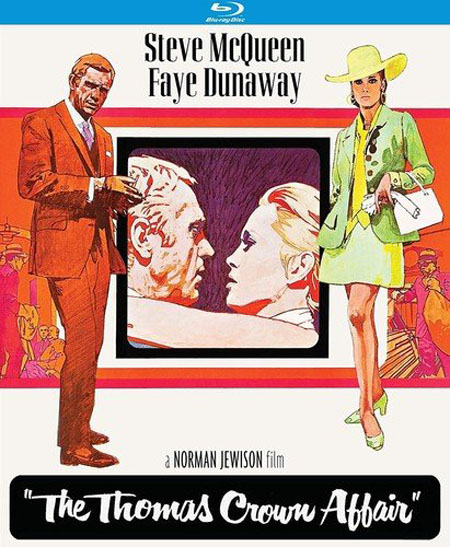
Thomas Crown Affair is
a stylish, twisty-turny, clever piece of 1968 pizazz. It emphasizes the
ultra-cool cosmopolitan and fancy lifestyle of the rich during the Mad Men era
when it was actually happening. The flashy camerawork and then-innovative
split-screen/multi-screen display of simultaneous action scenes was snappy and
unique. The brilliant main title designer, the late Pablo Ferro, is credited
for much of this work, and it is this visual technique that gives the movie its
pulse.
Crown
is a former banker in Boston, a happily wealthy playboy-sportsman who decides
to pull off a complicated bank heist simply because he can. He puts together a
team of individuals (including getaway driver Jack Weston) who don’t know each
other or him, and the gang meets only at the time of the robbery inside the
bank. Crown himself isn’t there. The heist is successful, and the mastermind
gets away with $2.6 million. Detective Malone (Paul Burke) is determined to
catch whoever was responsible, but the crime was too well thought out. No evidence
or clues were left behind. An insurance investigator, Vicki Anderson (Faye
Dunaway, in her first role post-Bonnie and Clyde), is brought in and she
immediately takes control of the operation, much to Malone’s chagrin. It
doesn’t take long for Crown to come under Vicki’s suspicions—so she sets out to
entrap him by, well, having an affair with him.
That’s
the plot in a nutshell. While much of it is seemingly improbable, the story is
told with conviction and such technical prowess that it’s hard not to go along
for the ride. Jewison’s handling of the heist itself and the romantic sequences
between the dual eye candy, McQueen and Dunaway, is masterful. Both actors are
fine in their roles; McQueen especially continues to exude the 60s cool that
was his trademark.
Kino
Lorber’s brand new 4K restoration looks quite good, and it comes with two audio
commentaries—one by Jewison himself, and the other by film historians Lem Dobbs
and the late Nick Redman. Supplements
include the previously mentioned interview with an aging Jewison, who was still
sharp and talkative, an interview with title designer and split-screen maestro
Ferro, and a vintage on-the-set featurette from 1967 with the cast and crew.
The original theatrical trailer, along with other Kino Lorber releases,
complete the disk.
The
Thomas Crown Affair was
remade by John McTiernan in 1999 with Pierce Brosnan and Rene Russo. Was it
better than the original? Maybe yes, maybe no. Only you can decide; but
consider this—the 1968 version has Steve McQueen, a young Faye Dunaway, a
variety of really hot and nifty sports cars, and an Oscar-winning title song,
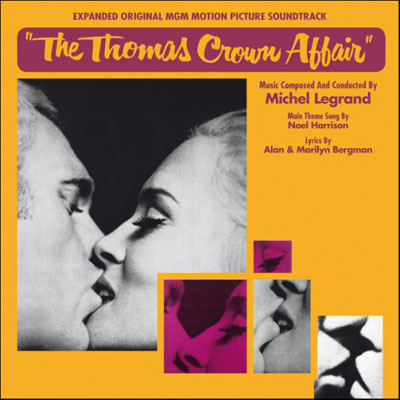
“The Windmills of Your Mind” (remember that?)! Recommended.
I
have never understood religious cults, and I still don’t. How someone can
permit themselves to be brainwashed into following a self-appointed “religious
leader” and hang on their every word represents, to me, a soul searching for acceptance
or love that they believe has been denied them. My initiation into the existence
of cults was in the December 4, 1978 issues of both Time Magazine and Newsweek
Magazine. Their reports about the Jonestown murders in Guyana, which completely
shocked my sensibilities with images of dead adults and children lying face
down in filth, were the stuff of nightmares. This horrific event has spawned
books, documentaries, and jokes about “drinking the Kool Aid” when referencing one’s
blind commitment to a ridiculous situation. An article two months later in my
local newspaper about “witches,” pagan practices, bowls of blood and animal
ribcages in the woods less than ten miles from where I lived did little to assuage
my fears about them. David Koresh, the leader of the religious sect
referred to as the Branch Davidians, led his followers into the Mount Carmel
Center, a compound in Waco, Texas, which culminated in a standoff with law
enforcement in April 1993 with most of them dying in a storm of bullets and
fire. NXIVM, the organization founded by Keith Raniere five years later
masquerading as a self-help and personal development program group, came under
fire for being a cult following reports of sex trafficking of branded women.
Hollywood is no stranger to films about such
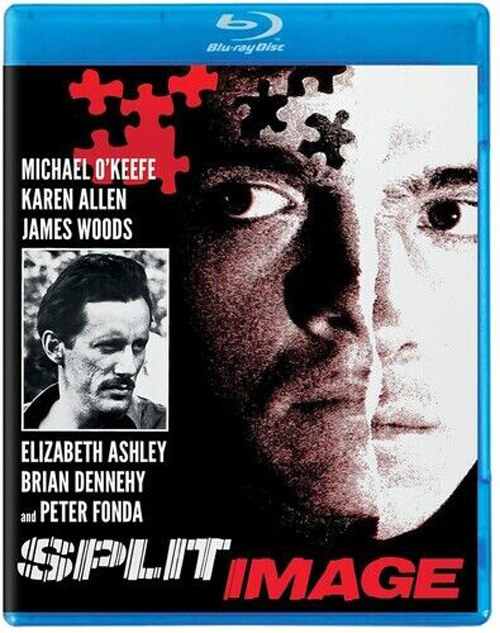
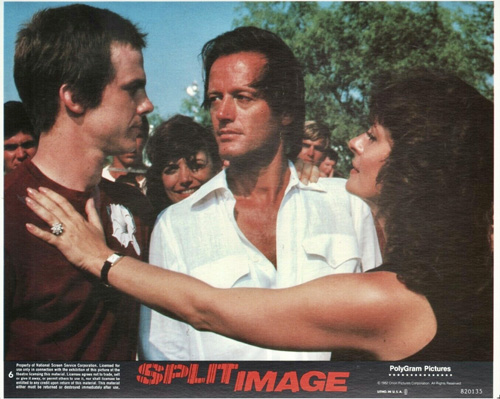
subjects. Most of them are cut from the cloth of genre and horror films. Split
Image (1982) is a bit of a different take on this terrifying subject as
seen through the eyes of suburbanites and therefore is far more relatable. Directed
by Ted Kotcheff between April and June in 1981 just before he unleashed John
Rambo on the world with his phenomenal First Blood, also released in
1982. Split Image was originally reported on under the title of Captured
when it was featured in the wonderful but short-lived bi-monthly movie magazine
published in 1982 called “Coming Attractions.” I saw the film on CED Videodisc nearly
40 years ago and was amazed at how little I recalled of it.
Danny Stetson (Michael O’Keefe of Lewis John
Carlino’s 1978 film The Great Santini) is a parallel bars athlete eyeing
college. He lives with his parents Kevin and Diane (Brian Dennehy and Elisabeth
Ashley) and younger brother Sean (Ronnie Scribner of Tobe Hooper’s 1979 TV-Movie
Salem’s Lot) in a sprawling house like the killer’s in Dario Argento’s Tenebrae
(1982), complete with large see-through windows and a built-in pool. By chance
he meets a beautiful young woman named Rebecca (Karen Allen of Steven
Spielberg’s Raiders of the Lost Ark in 1981) who engages in small talk about
big subjects. Accompanying her to a weekend outing, he is introduced to scores
of people at a retreat called Homeland who welcome him with open arms –
literally – and who all chant and engage in reciting positive affirmations while
discussing Jungian archetypes such as the duality of man. The happy and joyous
atmosphere completely rubs him the wrong way when he meets the group’s leader,
Neil Kirklander (played wonderfully by Peter Fonda), but he stays and sleeps on
the premises and one night makes a break for freedom. Bill Conti’s score here
is recognizable as the precursor to his wonderful score to Robert Mandell’s
thriller F/X (1986). Confronted by Kirklander, he eventually falls under
his spell and informs his mother that he will not be coming home. He undergoes
a ritual whereby he renounces his identity as Danny and is reborn as “Joshua,”
prompting a visit from his parents that results in a near donnybrook
precipitated by his temperamental father.
Split Image, which opened in New York on Friday, November 5,
1982, does a decent job of exploring the practice of capturing and “deprogramming”
an individual who has fallen under the spell of a cult and this is done by
Charles Pratt (played by the incomparable James Woods) who, somehow, makes his
living “deprogramming” people. After kidnapping “Joshua” with his parents’
permission, he forces him to undergo “treatment” to bring “Danny” back to life.
Many of these scenes look as though they came out of a horror film, and it
makes one wonder how much of this was imagined by the writers and how much is
based on factual circumstances such as this. The film looks at the ethics of “interventions”
and how it can alter a person’s free will and their ability to make their own
choices. Like Irwin Winkler’s At First Sight (1992), it waivers between
being compelling and occasionally feels a little “TV Movie of the Week”-ish by
today’s standards.
The film is now available from Kino Lorber on
standard Blu-ray. Some of the shots within the house appear to be a little
darker than they should be, but it is probably just how the film was shot. Mr.
Kotcheff does an expert job of framing the film for 2.35:1 anamorphic
photography, which is a huge step up from the pan-and-scan transfer of the
early 1980’s.
This is a sparse disc in the way of extras, however
the major one is the feature length audio commentary by film historian and filmmaker Daniel Kremer who
mentions his own movie, Raise Your Kids on Seltzer (2015), which is
about retired “deprogrammers”. When I was in middle school, Ralph L. Thomas’s
1981 film Ticket to Heaven appeared in my Weekly Reader issue and
I had a much different idea of what that film was about. It turns out that
deprogramming is the theme, and Mr. Kremer also mentions Blinded by the
Light, which was released in 1980, and starred both Kristy and Jimmy
McNichol, directed by cinematographer John A. Alonzo. This is a very
entertaining and informative commentary which also touches on Mr. Kotcheff’s
other films and placing him into the auteur category.
The
Blu-ray also comes with the following trailers: Split Image, Gorky
Park, 52 Pick-Up, The Bedroom Window, The Wanderers,
and The Hard Way.
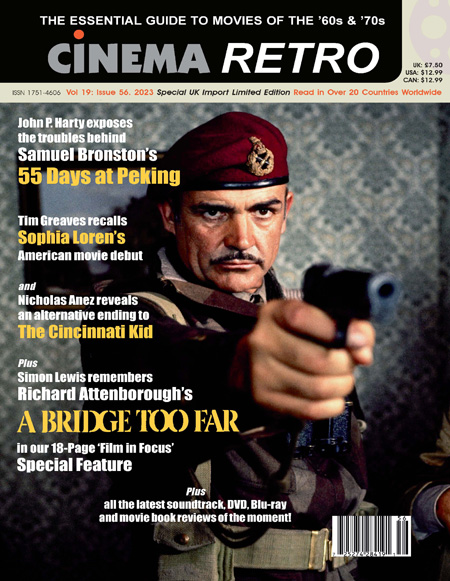
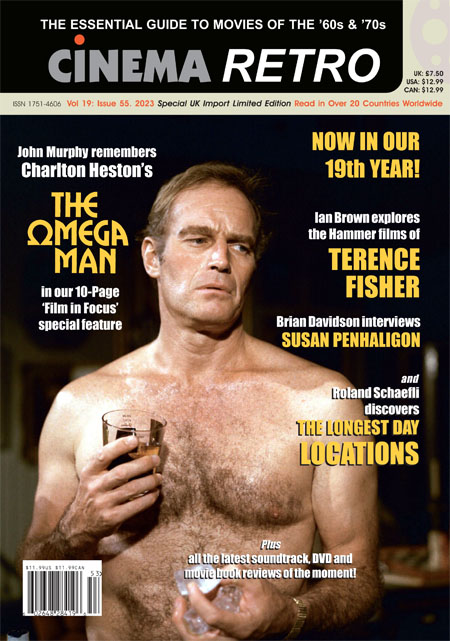
Please note that issue #55 of Cinema Retro has sold out. Therefore, we can no longer accept subscriptions for Season 19, as we cannot provide all three issues. Any pending orders for Season 19 will receive issues #'s 56 and 57 and a pro-rata refund for issue #55.
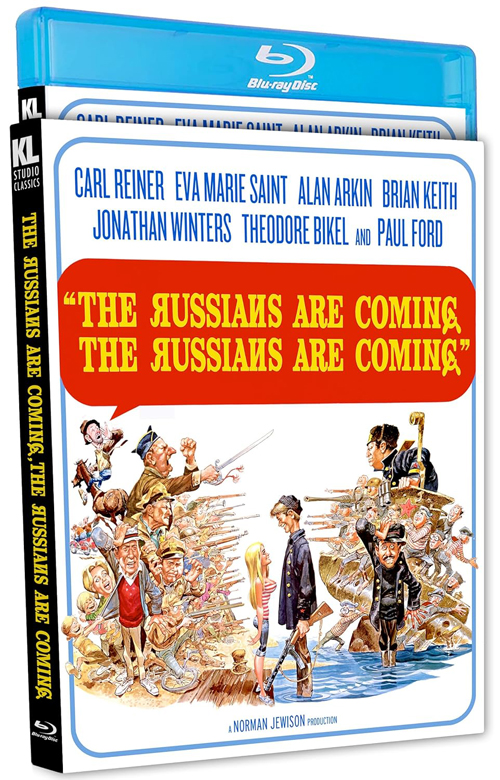
(A previous edition of this Blu-ray title from Kino Lorber was reviewed at Cinema Retro in 2020. This review covers a new edition released in 2024, repeating much of the previous writeup but with new material.)
The late Carl Reiner received top billing in this magnificent comedy that was released in the middle of the 1960s, when relations between the United States and the Soviet Union were tentative at best. Détente was at play, but there wasn’t much trust between the two countries. Two years after Kubrick’s Cold War black comedy, Dr. Strangelove, Norman Jewison tried his hand at a picture with a similar theme, only it was one that was much lighter in tone.
Reiner shares the movie with another acting master who recently left us. Alan Arkin made his feature film debut with his portrayal of a Russian submarine political officer. He and Reiner are joined by a marvelous supporting cast of character actors who all have comedic turns. Penned by Oscar-nominated William Rose (who had written or co-written The Ladykillers and It’s a Mad, Mad, Mad, Mad World, and would win the Oscar the following year for Guess Who’s Coming to Dinner), The Russians are Coming, the Russians are Coming focuses on the conflict between a group of misplaced Soviet submariners and the panicky townsfolk of a New England island off the coast of Massachusetts after the summer tourists have left. What it’s really about, though, is communication, or rather, the lack of it, and how a series of incidents that are lost in translation might lead to misunderstandings. Director Jewison delivers that message to the audience wrapped neatly in a barrel of laughs.
Reiner is Walt Whittaker, a playwright who has spent the summer on the island with his wife (Eva Marie Saint) and two children, and the family is ready to depart. His rented house on the coast happens to be near where the Russians’ submarine accidentally runs aground. The captain (Theodore Bikel) sends Lt. Rozanov (Arkin), officer Alexei Kolchin (John Phillip Law), and seven other men to go find a boat, commandeer it, and bring it back so they can tow the sub away from the island. Things begin promisingly, and then all hell breaks loose as one mishap after another foils the Russians’ scheme. Police Chief Mattocks (Brian Keith), his deputy Norman Jonas (Jonathan Winters), and, ultimately, war veteran and head of the citizens militia, Hawkins (Paul Ford), receive conflicting reports of the “invasion” and set about investigating it in their own misguided ways (although Mattocks is indeed the sensible one). Throw in a sudden romantic attraction between Alexei and the Whittaker’s babysitter, Alison (Andrea Dromm), the antics of phone operator Alice (the splendid Tessie O’Shea), and Luther, a drunk “Paul Revere” who spends the entire film trying to catch his horse (Ben Blue), and you’ve got a recipe for a comedy classic. The climax, however, is surprisingly suspenseful when the Russians and Americans finally reach a standoff at the harbor—until an unrelated crisis occurs that shakes everyone out of the mob mentality.
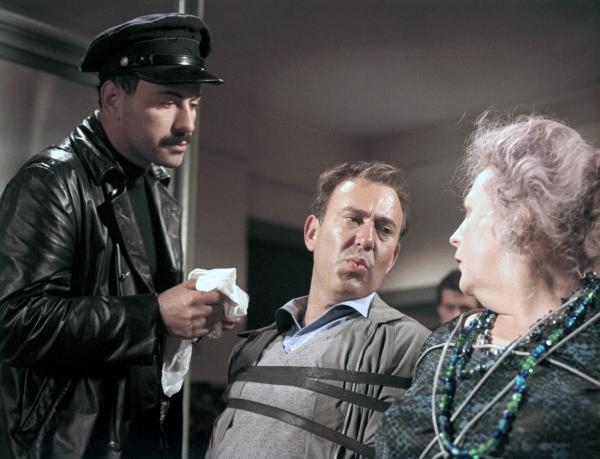
The straight man role was something Carl Reiner could do well; he always brought a heightened intensity to his parts that was simultaneously boisterous and believable, and yet amusing, too. Arkin, whose dialogue is 85% authentic Russian throughout the picture, immediately proved to the world what an amazing actor he is (he received an Oscar nomination for his performance and won a Golden Globe). Winters and Ford both provide much of the insane humor. O’Shea is hilarious, especially in the scene in which she and Reiner are gagged and tied together and attempt to escape. Law, a newcomer at the time, is a striking and likeable presence, and he masters the Russian language and the accented English with aplomb.
It’s all great stuff, punctuated by Johnny Mandel’s score of American patriotic music mixed with Russian folk songs. Along with Arkin’s nomination, The Russians are Coming… was also nominated for Best Picture, Best Adapted Screenplay (Rose), and Best Editing (Hal Ashby was co-editor).
Kino Lorber’s high definition restoration looks good enough, despite some washing out of color in some places, as well as blemishes and artifacts that can be seen in many of the images. This new 2024 edition has added an audio commentary by film historians Michael Schlesinger and Mark Evanier, who complement the onscreen action with informed background. The earlier supplements of an informative and entertaining “making of” featurette with an interview with Jewison and the theatrical trailer remain on the disk.
In short, The Russians are Coming, The Russians are Coming is grand fun, and it’s a fitting showcase for the late, great Carl Reiner and Alan Arkin.
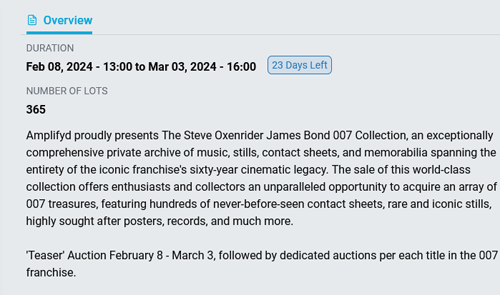
This remarkable collection has been personally curated by Amplifyd founder and CEO Daniel Willis, who is also an expert in the area of James Bond collectibles. Steve Oxenrider's 007 collection is noted among Bond fans as arguably being the most impressive to be found anywhere.
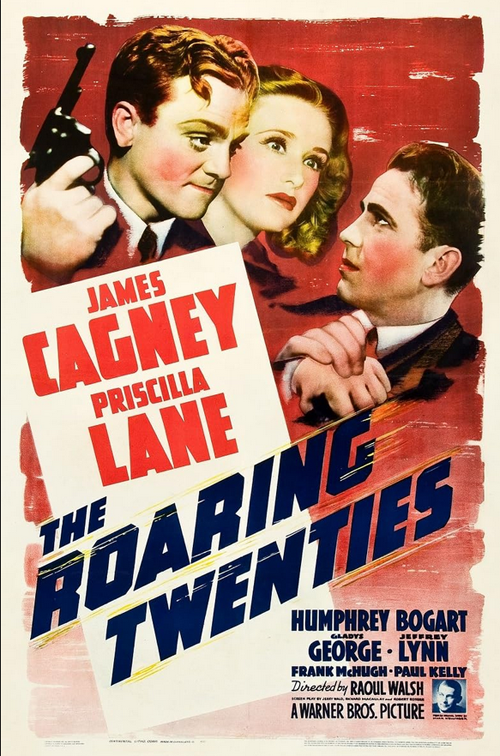
One
of the more popular and enduring genres to come out of Hollywood in the late
silent era and the first fifteen years of talkies was the gangster picture. They
sprung into the public consciousness as a result of Prohibition (late 1919 to
1933), which is when real life gangsters were making a splash in America. Early
Pre-Code gangster movies were shockingly violent and gritty—titles like Little
Caesar (1931), The Public Enemy (1931), and Scarface (1932). After
the Production Code kicked in during the summer of 1934, the genre was still
popular and being churned out (especially by Warner Brothers) but they had been
toned down somewhat with more “likable” gangsters.
James
Cagney became a star as a result of playing a gangster in The Public Enemy,
and a pretty mean one at that. Coming from vaudeville, though, he had other
talents. His real heart was in singing and dancing (he won his only acting
Oscar for doing just that in Yankee Doodle Dandy, 1942). In the late
thirties, he continued to make gangster films but he made a big deal out of
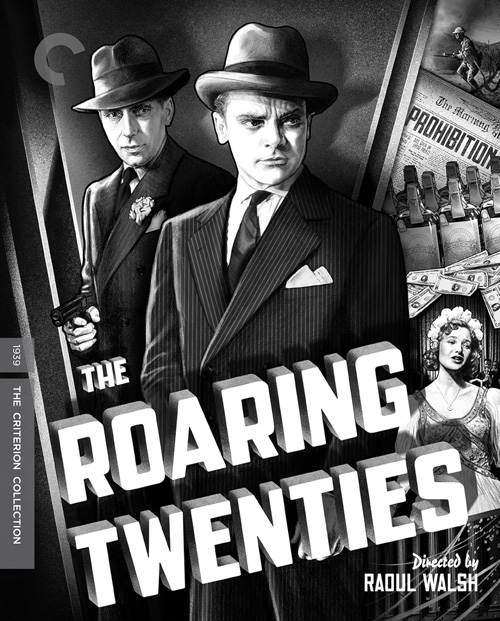
resisting them. When The Roaring Twenties was made in 1939, Cagney
proclaimed that this was his swan song playing such a character. At least it
was for ten years, when he made his one and only gangster comeback in White
Heat (1949).
Panama
Smith (Gladys George) says in The Roaring Twenties, “He used to be a big
shot.” There is no “used to” with James Cagney. He was always a big shot in
Hollywood and on the silver screen, a larger than life actor who commanded
whatever picture he was in. He had charisma in spades, the kind of energy that
could ignite a movie projector’s lighting rods, a voice that would forever be
fodder for impressionists, and a superior talent that many actors today could
only dream about.
It's
no surprise that The Roaring Twenties totally belongs to James Cagney,
even when someone like Humphrey Bogart is co-starring. (At the time Bogart had
yet to star in his own feature film; throughout the thirties he did a lot of
playing second banana.) In fact, The Roaring Twenties was the third and
last picture that Cagney and Bogart made together (the other two being Angels
with Dirty Faces and The Oklahoma Kid, 1938 and 1939, respectively).
The
movie came from a short story, “The World Moves On,” by Mark Hellinger, a
well-known journalist of the time. An info-scroll at the beginning of the movie
tells us that Hellinger based the story on “real people” that he knew, implying
that The Roaring Twenties is a true story, or at least inspired by one.
The story was turned into a screenplay by Jerry Wald, Richard Macauley, and
Robert Rossen. Anatole Litvak was initially hired to direct the movie, but it
was ultimately helmed by Raoul Walsh, who had already made some gangster
pictures and would do more in the future.
Eddie
Bartlett (Cagney), George Hally (Bogart), and Lloyd Hart (Jeffrey Lynn) meet in
a foxhole during World War I and become friends. Upon returning home to New
York City, times are tough for GIs. Eddie and Lloyd start a taxi company and
George goes into crime. Eddie reaches out to the young woman who had written to
him during the war, Jean Sherman (Priscilla Lane), but discovers she’s a bit
too young for him. A couple of years later, though, she’s the right age. By
then, Prohibition has kicked in. Eddie and his good friend Danny (Frank McHugh)
get into the bootlegging business with Panama Smith at a speakeasy. Eddie wants
to marry Jean, but Jean actually has eyes for Lloyd, so there’s a little
triangle thing going on to which Eddie is blind. Eddie eventually partners up
with George, and throughout the “roaring twenties” they make names for
themselves as powerful racketeers. But then things go south, as they always do
in gangster pictures.
The
Roaring Twenties was
one of the more popular movies of 1939. It was a big hit, and in fact it out
grossed The Wizard of Oz at the box office. This is not a surprise, for The
Roaring Twenties is an excellent piece of Hollywood entertainment. It’s
slick, it’s well acted and well directed, and its “epic” in structure, covering
a period of fifteen years, is compelling. It’s also a bit of a musical, too,
with Priscilla Lane adeptly performing a few 1920s-era numbers at the
speakeasy. Today the movie is considered one the best of the 1930s gangster
titles, and for good reason—and that reason is James Cagney. Why the film was
not nominated for a single Academy Award is a mystery.
The
Criterion Collection’s new 4K digital restoration with an uncompressed monaural
soundtrack is presented in a twofer package that contains a 4K UHD disk of the film in Dolby Vision HDR, and a
Blu-ray disk with the film and special features. An audio commentary, ported
over from the old Warner Home Video disk, is by film historian Lincoln Hurst. English
subtitles are available for the hearing impaired. The restoration is truly
magnificent, a beauty to behold. The images, shot by DP Ernest Haller, are so
pristine and clean that the movie might have been shot yesterday.
Disappointingly,
the special features are minimal. There is a new interview with critic Gary
Giddins that is interesting enough, and a short vintage 1973 interview with
director Walsh, the theatrical trailer, and that’s it. It’s a shame, really,
that the original Warner DVD’s supplements of the “Warner Night at the Movies”
features—shorts and a cartoon—and hosted by Leonard Maltin, are not included
here. An essay by film critic Mark Asch adorns the booklet.
So,
get on your Fedora and pin-striped suit, or your flapper outfit, and take a
trip back to The Roaring Twenties. Highly recommended for fans of James
Cagney, Humphrey Bogart, gangster pictures, and classic Hollywood studio movies.
Here's a fine documentary examining the life and career of Robert Mitchum from The Hollywood Collection.
"For nearly a century, Hollywood has captivated and influenced generation after generation of moviegoers. Its magic has left an indelible imprint on every culture with a movie projector. Originally broadcast on PBS, HBO/Cinemax, TNT, A&E, Lifetime, and Bravo, this is one of the most comprehensive collections of biographies and cinema retrospectives ever compiled, a spectacular treasury of 32 revealing biographies of Hollywood’s most beloved stars. These biographies, some narrated by the stars themselves, include interviews with friends, family members and colleagues, as well as clips from their most memorable films, and in some cases, rare home movies.
“Over 350 actors, writers, directors, producers, make-up people, publicists, agents, and family members all gave of themselves to help make these shows possible. This was the way it was in Hollywood in its classic era and these were the stars that captured us.” – Gene Feldman, producer/director of The Hollywood Collection."
(To watch in full screen mode, click on "Watch on YouTube".)
Here are some uncredited home movies from the set of director Martin Ritt's "The Molly Maguires", filmed in eastern Pennsylvania in 1969. Whoever shot the silent footage did a good job of capturing some interesting visuals from behind the scenes, including candid shots of stars Sean Connery, Richard Harris and Samantha Eggar.
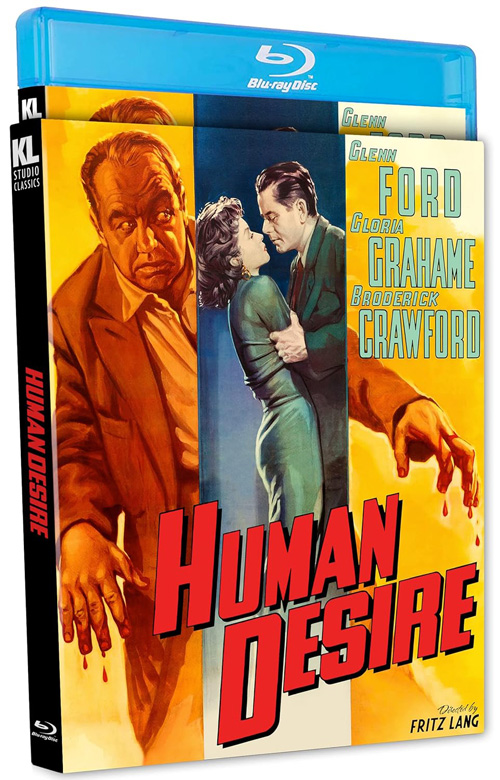
So… a novel by Émile Zola published in 1890 has been made into a movie no less than five times. La Bête humaine(“The Human Beast” or “The Beast Within”) is a gritty psychological crime thriller centered in the world of railway yards and train engineer life, and nearly every character, including the protagonist, Jacques Lantier, is someone with a dark soul. It wasnoir before that term was used to describe art.
A film adaptation was first made in Germany in 1920 by Ludwig Wolff. A more celebrated remake by Jean Renoir and starring the great Jean Gabin as Lantier was released in 1938. The Hollywood version, retitled Human Desire andreviewed here, was made in 1954 by Fritz Lang, the brilliant filmmaker who had fled Nazi Germany in the 30s and resumed what was already a stellar career in Tinsel Town. Two more pictures, a 1957 Argentinian version and a more well known British television reworking in 1995 entitled Cruel Train(directed by Malcolm McKay), also revisited the well-worn tale.
While Renoir’s 1938 rendition of La Bête humaineis generally considered the definitive depiction of Zola’s novel, Lang’s Human Desire is an excellent example of the kind of rough-and-ready films noir that Hollywood had been churning out through the 1940s and 50s. Lang himself had already made several that fit within the trend and style of these often cheap, always black and white, mostly cynical thrillers—Ministry of Fear (1944), The Woman in the Window (1944), Scarlet Street (1945), Secret Beyond the Door (1947), and The Big Heat (1953), among others. The hallmarks of film noir are there—cinematography patterned after German expressionism, contrasting light and dark, shadows, nighttime, smoking, drinking, violence, and, most assuredly, a femme fatale.
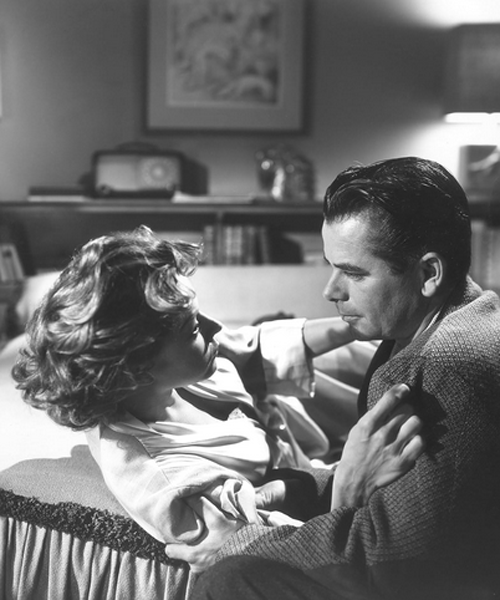
This time the Lantier character, now called Jeff Warren (Glenn Ford), is a much nicer fellow. The violence and rage that existed in earlier versions of the protagonist are not here.He’s a train engineer, recently discharged from the Korean War and back at his old job in the railway yards somewhere not unlike Pennsylvania. He’srather sweet on the daughter of a colleague, a “good” girl andperhaps the only innocent and squeaky clean character in the story. Carl Buckley (Broderick Crawford) also works for the railroad, but he’s a mean drunk and is fired. He has a younger wife, Vicki (Gloria Grahame), who has a questionable past. Carl gets Vicki to visit a wealthy railway customer, Owens (Grandon Rhodes), to try and get him to influence the railway boss to rehire her husband. Carl doesn’t realize Vicki has some history with Owens. Carl gets his job back, but now he’s terribly jealous. He forces Vicki to help him murder Owens during a train ride. They don’t count on Jeff also being on the train and unwittingly becoming involved in the scheme. Jeff falls for Vicki and begins an affair with her, even though he knows she’s likely “no good.” And then Vicki has plans of her own for Jeff to do something about Carl. She believes that if Jeff had killed in the war, then he could do it again. But that, as he says, is “a different kind of killing.”
Yes, it’s quite a typical adultery-murder plot that floats around films noir. We can predict the events of the story before they occur, but we don’t care. Why? Because Fritz Lang’s direction is tight, interesting, full of striking imagery, and straddles the right balance between campy and heightened melodrama. The performances, especially by Grahame, are quite good. The only problem is an ending that might be considered unresolved.
Kino Lorber Studio Classics’ new Blu-ray release of Human Desire is top-notch with a gorgeous restoration that accents the cinematography by Burnett Guffey (who had won an Academy Award for From Here to Eternity and would win another for Bonnie and Clyde). The only supplements on the disk are a nine minute video discussion about the film by, curiously, actress Emily Mortimer, the theatrical trailer, and trailers for other Kino Lorber releases.
Human Desire is for fans of film noir, Fritz Lang, and the trio of stars—Ford, Grahame, and Crawford. Oh, and if you happen to like trains, there are a lot of those in the movie, too!
We revisit the climactic bobsled sequence from the 1969 James Bond classic "On Her Majesty's Secret Service" with George Lazenby's 007 squaring off against Telly Savalas as Blofeld.
Female directors in the film industry are still very much a minority. However, in decades past, the situation was even more frustrating when studios imposed an unofficial "glass cieling" that precluded most women from advancing their careers unless it was in front of the cameras. There were some brave exceptions, however. One of those women to break barriers was actress Ida Lupino, who not only had a successful career as a leading lady but who also helped pioneer public acceptance of female directors. In this 2021 clip from Turner Classic Movies, she is paid tribute to by another acclaimed actress/director, Oscar winner Lee Grant.
Here's the original trailer for "The Devil's Brigade", a production inspired by actual WWII events. Released in 1968, many people felt it was rushed into production to capitalize on the similarly-themed blockbuster "The Dirty Dozen", which was released the year before. In fact, producer David L. Wolper had the movie on his planning board for many years. The film has a sensational cast, fine direction by Andrew V. McLaglen and a stirring score by Alex North.
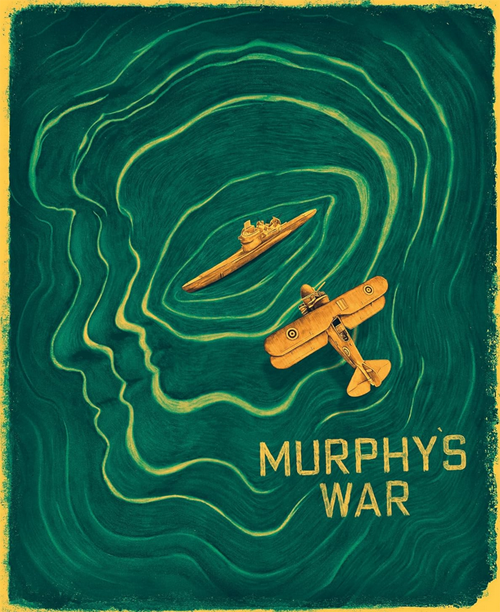
Arrow Films has released director Peter Yates' 1971 WWII adventure "Murphy's War" starring Peter O'Toole as a Blu-ray special edition, loaded with impressive extras. Click here for more info and to order from Amazon.
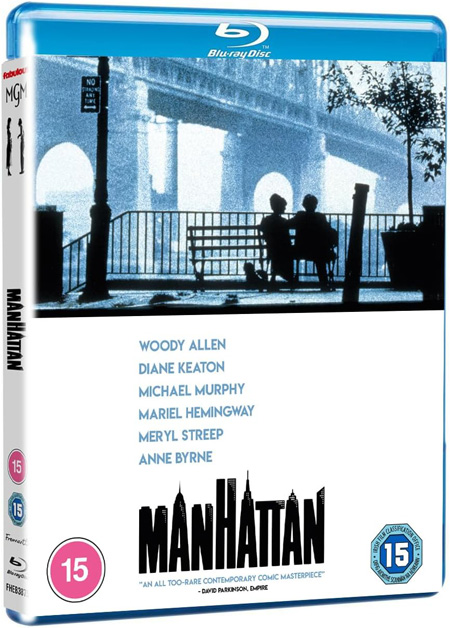
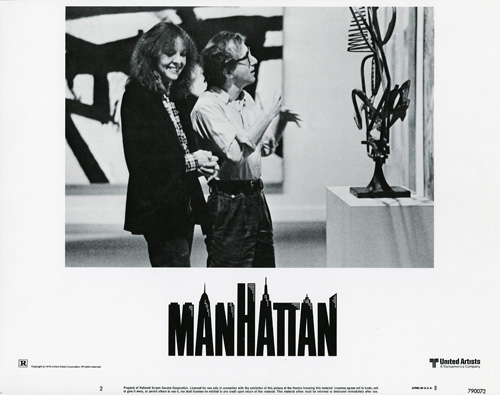
After the dramatic, Ingmar Bergman-esque directorial turn he took
with Interiors (1978) which came unexpectedly on the heels of
his masterfully hilarious Oscar-winning film Annie Hall (1977),
Woody Allen turned back to contemporary New York for a daring film that was
shot in black-and-white and scored with the music of George
Gershwin. Proclaimed as the only truly great American film of the 1970s by
film critic Andrew Sarris, Manhattan is a joy to behold from
start to finish and is quite simply one of the most romantic-looking films of
all-time (though its subject matter in the era of the MeToo movement will
indubitably raise more than a few eyebrows with the allegations of sexual
molestation launched against Mr. Allen). Gordon Willis’s beautiful
photography married with the sumptuous Gershwin music makes me wish that
filmmakers would make black-and-white films today. There are some who do, admittedly,
but they appear to only do it within avant-garde and independent circles.
Manhattan, released on Wednesday, April 25, 1979, stars Mr.
Allen as Isaac Davis, a television writer who is unfulfilled with his life as a
comedy writer. His second ex-wife Jill (Meryl Streep) has left him for
another woman and is writing a book about their marriage. Isaac is 42 and
is dating Tracy (Mariel Hemingway) who is 25 years younger than he is and is
still in high school. He feels very guilty about this, but genuinely cares
for her (this plot point was reportedly inspired by Mr. Allen’s affair with
actress Stacy Nelkin on the set of Annie Hall which was
shooting in 1976, though her part was eventually cut from that film). His
friend Yale (Michael Murphy) is writing a book about Eugene O’Neill and is
married to Emily (Anne Byrne) but has started an affair with high-strung and
neurotic Mary Wilkie (Diane Keaton) whom Isaac initially cannot tolerate but
increasingly grows fond of. Throughout the film we are confronted by these
characters who cannot seem to put their finger on what they want and stick with
it. They are not inherently bad people. They just keep making questionable
decisions. By the end of the film, the only person who seems to have their
head on straight is Tracy and the film ends, like Mr. Allen’s Hannah
and Her Sisters (1986), on a very positive and upbeat note.
The real star of the film is Manhattan itself, with its pulsating
and bustling people and automobiles. Rarely has the city looked so
luminous and beautiful onscreen (if ever). Gordon Willis, the revered
cinematographer of The Godfather films and a good number of Mr.
Allen’s early works, captures Gotham in all its beauty even during an era
when the city was beset by social decay. For the first time in his career,
Mr. Allen forgoes the relative constraints of the 1.85:1 flat ratio to the far
more accommodating 2.35:1 anamorphic Panavision vista and the results makes one
ache for further use of this format.
Manhattan was penned by Mr. Allen and Marshall
Brickman, who also co-wrote Annie Hall. The dialogue in Mr.
Allen’s films has always been a strong point, but here it really shines. His
use of long, uninterrupted takes that first surfaced in Annie Hall
shine here Rarely have onscreen walks and chats been so fascinating.
Manhattan was also one of the first movies to appear
on home video in the widescreen format, which retained much (but not all) of
the film’s original image. I have owned Manhattan on
letterboxed VHS, letterboxed laserdisc with a gatefold, letterboxed DVD, and I
must say that this Region B anamorphically-enhanced Blu-ray courtesy of Fabulous Films is beautiful.
It would be wonderful if Mr. Allen would be open to providing
commentary tracks on his older films, specifically this one which,
unbelievably, he reportedly was so displeased with that he imposed on United
Artists to shelve it and offered to do another movie for free.
Thankfully, they did not take him up on it.
Click here to purchase this from Amazon’s UK site.
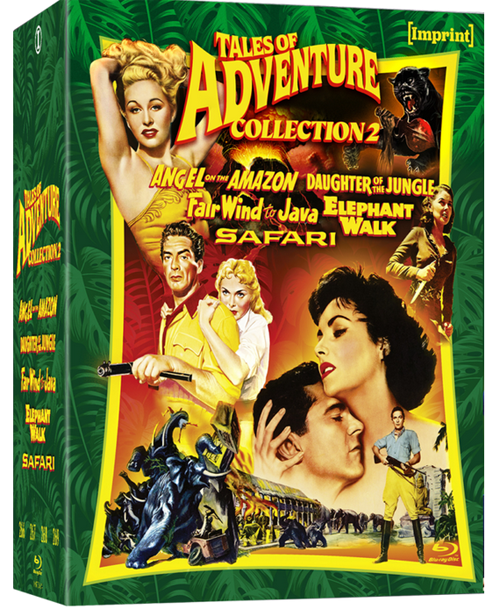
“Tales
of Adventure Collection 2,” a special edition, Blu-ray box set from
Australia’s Imprint Films, gathers five movies from the 1940s and ‘50s with
“wild and dangerous” jungle settings. To
the best of my memory, I don’t recall seeing any of them among the scores of
jungle pictures I enjoyed as a kid in the ‘50s and early ‘60s, either on the
big screen or on local TV morning movie matinees. Of the five diverse selections in the Imprint
box set, three are Republic Pictures productions, the fourth is a Paramount
release, and the fifth bears the Columbia Pictures logo. All five feature superior transfers (the
three Republic entries are transfers from 4K scans of the original negatives)
and captions for the deaf and hard of hearing, and four of them come with
excellent audio commentaries. Younger
viewers be aware, the films tend to reflect attitudes about race and
conservation that were commonplace seventy years ago, but frowned upon today;
you won’t see anything remotely like Black Panther’s democratic technocracy of
Wakanda here.
The
older two Republic releases, both in black-and-white and paired here on one
disc, underscore the studio’s reputation as a purveyor of lowbrow entertainment
with stingy production values. “Angel on
the Amazon” (1948) begins with Christine Ridgeway (Vera Hruba Ralston) trekking
through the Amazon jungle with safari hat and rifle, stalking panthers. It promises (or threatens, if you’re a
conservationist) to become a film about big-game hunting, where wild animals
exist to be turned into trophy heads. But
then Christine’s station wagon breaks down, and she radios for help. Pilot Jim Warburton (George Brent) flies in
with the needed carburetor part, just in time for the party to escape from
“headhunters.” This may be the only
jungle movie in history where rescue depends on a delivery from Auto Zone. Jim is enchanted by Christine, but she has
something to hide and refuses to warm up to his advances. Later, meeting Jim again in Rio de Janeiro,
she becomes frightened when an elderly, apparently harmless man watches her
from a distance. As film historian
Philippa Berry notes on the informative audio commentary for the Blu-ray, the
answer to the mystery revolves around the then-popular theme of physical
effects from psychological trauma, here given a mystical and somewhat absurd
twist. The studio-bound sets and back
projection that waft the characters from the Amazon to Rio and then to
Pasadena, California, are charmingly phoney. George Brent and two other fading co-stars from the 1930s, the
aristocratic Brian Aherne and Constance Bennett, stoutly maintain straight
faces in the backlot rain forest.
“Daughter
of the Jungle” (1949) is even more formulaic, as a young blonde woman raised in
the jungle comes to the aid of pilot Paul Cooper (James Cardwell), a policeman,
and two gangsters in the lawman’s custody when their plane crashes somewhere in
Africa. Called Ticoora by the local
tribe, she is actually Irene Walker, who was stranded with her millionaire
father in their own plane crash twelve years before. As film historian Gary Gerani notes in his
audio commentary track, Ticoora is one of a long line of virginal jungle sirens
in movies that range from the ridiculously sublime, like 1959’s “Green
Mansions,” to the sublimely ridiculous, like 1983’s “Sheena, Queen of the
Jungle.” She can summon elephants with a
Tarzan-like yodel that recalls Carol Burnett’s parodies on her old TV
show. As Ticoora leads the party to
safety, the oily head gangster, Kraik, schemes a way to claim her inheritance,
which awaits in New York. Some viewers
will see Kraik, played by the great Sheldon Leonard with a constant volley of
“dese, dose, and dem” insults, as the only reason to stay with the movie’s plod
through lions, gorillas, crocodiles, and indigenous Africans played by white
actors in greasepaint. Others (I plead
guilty) tend to view unassuming, ramshackle pictures like this one more
leniently, providing we can accept if not endorse their racial attitudes as a
product of their times. Consistent with
Republic’s nickel-and-diming on its B-feature releases, especially those made
in the late ‘40s, the more spectacular long shots of Ticoora swinging from
vines in her above-the-knee jungle skirt were recycled from one of the studio’s
earlier releases. In those scenes, it’s
actually Francis Gifford’s stunt doubles in the same outfit from the 1941
serial “Jungle Girl,” not Lois Hall who plays Ticoora in the new footage. Gary Gerani’s audio commentary provides lots
of information about the cast, including the two obscure leads, Lois Hall and
James Cardwell. Gerani points out that
the Blu-ray print, from the original negative, presents the movie’s full
80-minute version for the first time ever. The 69-minute theatrical release in 1949 omitted some B-roll filler and
some scenes where Paul woos Irene. More
action, less kissy, was crucial for encouraging positive playground
word-of-mouth from sixth graders in the audience—the pint-sized forerunners of
today’s Tik-Tok influencers.
The
third movie retrieved from Republic’s vaults, “Fair Wind to Java” (1953), was
one of the studio’s intermittent efforts to offer more expensive productions in
living Trucolor, with a rousing Victor Young musical score, to compete with
major postwar costume epics from the MGM and Paramount powerhouses. Ironically, Paramount now owns the rights to
Republic’s home video library. In 1883
Indonesia, New England sea captain Boll (Fred MacMurray) picks up the trail of
lost diamonds also sought by a pirate chief, Pulo Besar (Robert Douglas). Obstacles include the pirates, some scurvy
knaves in Boll’s own crew, Dutch colonial authorities, and the fact that the
only person who can direct Boll to the treasure is dancing girl Kim Kim (Vera
Hruba Ralston), who has only an imperfect memory of the route from her
childhood. Substitute Indiana Jones for
Captain Boll, and you’d hardly notice the switch. It turns out that the gems are hidden in a
temple on Fire Island—unfortunately for the captain, not the friendly enclave
of Fire Island, N.Y., but the volcanic peak of Krakatoa. Will Krakatoa blow up just as the rival
treasure hunters make landfall there? Are you kidding? The script doesn’t disappoint, and neither do the FX by
Republic’s in-house technical team, Howard and Theodore Lydecker. A former ice skating star who escaped
Czechoslovakia ahead of the Nazis, Ralston was the wife of Republic studio head
Herbert J. Yates and widely derided as a beneficiary of nepotism who couldn’t
act her way out of an audition. She was
still a punch line for comics in the 1960s, long after most people had
forgotten the point of the joke. In
reality, both here and in “Angel on the Amazon,” she is an appealing performer,
no more deserving of ridicule than other actresses of her time with careers
mainly in escapist pictures. The sultry
but vulnerable Kim Kim was the kind of role that Hedy Lamarr might have played
under other circumstances. Ralston’s
performance is at least as engaging, and she looks mighty nice in brunette
makeup and sarong.
If
you first met Fred MacMurray as the star of “My Three Sons,” as I did as a kid,
it may take some adjustment to see him in action-hero mode. It’’s no big deal when Dwayne Johnson or
Jason Statham slings a bandolier over his shoulder or has his shirt torn off in
a brawl with a pugnacious sailor . . . but Fred MacMurray? When Boll ponders whether or not to trust his
shifty first mate Flint (John Russell), it’s a little like MacMurray’s suburban
dad asking Uncle Charlie if he should trust Robbie and Chip with the family
car. John Wayne was originally
envisioned for the role, following his starring credit in a similar Republic
production, “Wake of the Red Witch,” but MacMurray wasn’t completely out of his
element, having played lawmen and gunslingers in several Westerns before his
sitcom days. Frankly, it’s fun to see
the normally buttoned-down actor shooting it out with the pirates and racing a
tsunami. Imprint includes another
excellent commentary, this one by historian Samm Deighan. As she notes, colourfully mounted and briskly
scripted movies like this were designed to attract the whole family in those
days before Hollywood marketing fractured along lines of audience gender, age,
and race. As she observes, Junior might
not recognise the sado-sexual elements of the scene where Pulo Besar’s burly
torturer (played by Buddy Baer!) strips Kim Kim and plies his whip across her
bare back. All in a day’s work in the
dungeon. But dad likely would have sat
up and paid close attention.
Only
a year later (1954), Paramount’s “Elephant Walk” furthered Hollywood’s trend of
filming exteriors for its more prestigious movies in actual overseas locations
rather than relying on studio mockups, as “Fair Wind to Java” did. Ruth Wiley (Elizabeth Taylor at her most
luminous) travels to Ceylon (now Sri Lanka) with her new husband John (Peter
Finch), the charming and prosperous owner of a tea plantation. Initially, Ruth is enraptured by the lush
countryside and John’s bungalow, Elephant Walk, actually a mansion almost as
large as Grand Central Station and a lot more lavish. But trouble portends as Ruth realizes that
the memory of John’s imperious father Tom, reverently called “the Governor” by
John and the other British residents, still pervades and controls the
household. The elderly head steward,
Appuhamy (Abraham Sofaer), is quietly hostile when Ruth questions the need to
continue running the house exactly as it was run in the Governor’s day. In trying to communicate with the other
indigenous servants and workers, she runs into the barriers of language and
culture. The estate itself, complete
with Old Tom’s mausoleum in the backyard, is built across an ancestral path the
native elephants still try to use as a short cut to their watering holes. Hence its name. Wiley keeps the peripatetic pachyderms out
with a wall. His plantation manager
(Dana Andrews) is more sympathetic to Ruth, and the two fall in love as the
increasingly surly John lapses back into old habits of drinking all night with
rowdy fellow expatriates who camp out in the sprawling mansion. Andrews’ character is named “Dick Carver,”
the kind of name you’re not likely to see on credits anymore outside
Pornhub. I wonder if some moviegoers in
1954 found it funny too?
If
the combination of shaky marriage, illicit affair, and luxurious colonial life on a jungle plantation sounds
familiar, you may be thinking of “Out of Africa” (1985) or the less
romanticised “White Mischief” (1987), the latest examples of this particular
jungle sub-genre of domestic drama in the tropics. As Gary Gerani points out in his audio
commentary, enthusiasts of melodrama will also cry “Rebecca!” in the subplot
about the shadow that “the Governor’s” pernicious, posthumous influence casts
over the married couple. The movie’s
lush Technicolor palate, William Dieterle’s sleek direction, the special FX of
an elephant stampede, Edith Head’s ensembles for Liz, and Franz Waxman’s
symphonic score have an old-fashioned Hollywood polish, shown to good effect on
the Blu-ray. But as Gerani notes, the
script by John Lee Mahin, based on a 1948 novel, offers an implicit political
commentary too. As viewers of “The
Crown” know, British rule was already crumbling in the Third World in the early
1950s and would soon fall, just like Wylie’s wall faces a renewed assault by
drought-stricken elephants in the final half hour of the movie. Thanks to the capable cast, glossy production
values, and a script that takes interesting, unexpected turns, I liked
“Elephant Walk” more than I thought I would.
Terence
Young’s “Safari” (1956) from Columbia Pictures begins with a jaunty title song
to a percussive beat that wouldn’t be out of place in “The Lion King”—“We’re on
safari, beat that drum, / We’re on safari to kingdom come”—leading you to think
that the picture will be a romp like “Call Me Bwana” (1963), “Clarence the
Cross-Eyed Lion” (1965), or the last gasp of jungle comedies so far, “George of
the Jungle” (1997). But the story takes
a grim turn almost immediately. An
American guide and hunter in Kenya, Ken Duffield (Victor Mature), is called
back from a safari to find his 10-year-old son murdered and his home burned by
Mau Mau terrorists. He determines to
find and kill the murderer, Jeroge (Earl Cameron), a formerly trusted servant
who, unknown to Duffield, had “taken the Mau Mau oath.” The British authorities revoke Duffield’s
license to keep him from interfering with their attempts to apprehend Jeroge
and the other culprits, but then they hand it back under pressure from Sir
Vincent Brampton (Roland Culver), who comes to Africa to kill a notorious lion
called “Hatari.” “You know what ‘Hatari’
means, don’t you?” Duffield asks. “It
means danger”—the very tagline used for Howard Hawks’ movie of the same name a
few years later. Coincidence? Brampton is a wealthy, borderline sociopathic
bully who makes life miserable for his finance Linda (Janet Leigh) and
assistant Brian (John Justin), and Duffield doesn’t much care for him
either. But the millionaire insists on
hiring Duffield as the best in the business, and the hunter uses the safari as
a pretext for pursuing Jeroge into the bush. The script juxtaposes Duffield’s chase after Jeroge with Brampton’s
determination to bag Hatari, but the millionaire is such an unpleasant
character (well played by Culver) that most of us will hope the lion wins.
This
was one of the last “big bwana” movies where no one thinks twice about killing
wild animals for sport, and viewers sensitive about the subject may not share
Sir Vincent’s enthusiasm for Ken Duffield’s talents, or the production’s
matter-of-fact scenes of animals collapsing from gunshots. The political material about the Mau Maus is
a little dicey too; the Mau Mau insurrection of 1952-60 was more complicated
than the script suggests. Poster art for
the movie, reproduced on the Blu-ray sleeve, depicts a fearsomely painted
African. Actually, it isn’t a Mau Mau
but a friendly Massai tribesman; Linda makes the same mistake in the movie
before learning that the Massai have agreed to help Duffield track Jeroge. Squirm-worthy dialogue occurs as well, when
Duffield and Brampton alike refer to the hunter’s African bearers and camp
personnel as “boys.” But Terence Young’s
brisk, muscular direction on outdoor locations in Kenya is exemplary, and the
CinemaScope vistas of Kenya in Technicolor are sumptuous. This was one of Young’s four projects behind
the camera for Irving Allen and Albert R. Broccoli’s Warwick Films, preceding
Broccoli’s later partnership with Harry Saltzman when the producers engaged
Young to direct the inaugural James Bond entries. For 007 fans, it may be heresy to suggest
that his work on “Safari” equals that on his best Bond picture, “From Russia
With Love,” but so be it. The Imprint
Blu-ray doesn’t contain an audio commentary or other special features, but the
hi-def transfer at the 2.55:1 widescreen aspect ratio is perfect.
“Tales
of Adventure Collection 2” contains the four region-free Blu-ray Discs in a sturdy
hardbox, illustrated with a collage from the poster art for the five movies in
the set. Limited to a special edition of
1,500 copies, it can be ordered HERE. (Note: prices are in Australian dollars. Use currency converter for non-Australian orders.)
"Number One" (released in certain
countries under the title "Pro") is an off-beat vehicle for Charlon Heston, who was then at his peak of popularity. The fact that the
movie under-performed at the box-office and failed to score with
critics didn't diminish Heston's status as a leading man. He would go on
to star in such hits as "The Omega Man", "Skyjacked", "Soylent Green"
"Earthquake", "Midway"and "Airport '75"- with cameos in the popular "The
Three Musketeers" and "The Four Musketeers". The poor response to
"Number One" doesn't diminish its many merits - and the fact that Heston
was willing to play against type in a largely unsympathetic role. For
the film, he reunited with director Tom Gries, with whom he made the
acclaimed 1968 Western "Will Penny". Curiously, both movies center on
the same theme: a macho man who can't come to grips with the fact that
he is aging and, therefore, his chosen way of life is threatened. In
"Will Penny", Heston played the title character: a middle-aged cowboy
who feels the inevitable aches and pains of trying to maintain a career
that is clearly suited for younger men. Similarly, in "Number One" he
plays "Cat" Catlan, a star quarterback for the New Orleans Saints
football team. Catlan has seen plenty of fame and glory as the team's
Golden Boy and the idol of the crowds. But now he is 40 years old and,
although still in Herculean physical condition compared to most men his
age, he's fallen victim to the constant brutalities he suffers on the
field.
The film opens on a particularly disastrous game in which Catlan
makes some serious misjudgments about plays and bungles some key passes.
The result is an embarrassing loss for the team. The Saints' gruff
coach Southerd (John Randolph) isn't ready to give up on Catlin but
seemingly every other team member is. Catlan is subjected to some cruel
jokes and he has to contend with the fact that a much younger player
(Richard Elkins) is breathing down his neck, hoping to replace him as
quarterback. Things aren't much better at home for Catlan. His
long-suffering wife Julie (Jessica Walter) patiently endures his
mysterious absences, unpredictable mood swings and volatile temper. She
is a very successful fashion designer but Catlan is "old school" when it
comes to the role of wives. He wants Julie to stay home and cater to
his needs. In the midst of one of their frequent fights, he even stoops
so low as to cruelly tease her about her inability to conceive a baby.
Still, she sticks with him even when he confesses to having an affair
with an attractive, self-made woman, Ann (Diana Muldaur). Faced with the
fact that his career is winding down, Catlan reluctantly explores his
options for his post-NFL life. They aren't very enticing. His best
friend Richie (Bruce Dern), is an obnoxious former Saints player who
brags about having gotten out of the game at age 34. He now runs a very
successful car leasing business and lives a playboy lifestyle. He wants
Catlan to work for him, a prospect that doesn't sit well with the aging
quarterback. He also gets an offer from a computer company to work for
them but the idea of dealing of being surrounded by machines in the
confines of an office is repugnant to him. Ultimately, Catlan is
inspired by his wife to go out on a high note. During one of their rare
moments of domestic detente, she convinces him that he still has some
good games in his future if he can shake off the funk and get his
confidence back. The film's climactic game is the very definition of
mixed emotions. Catlan performs well and has his mojo back but the
movie's ambiguous final shot is anything but uplifting.
Tom Gries was a good director for Heston. He somehow managed to tamp
down Heston's larger-than-life personality and afford him the
opportunity to play everyday men. In "Number One", Heston is subject to
the sorts of problems that plague most middle-aged men. He's nervous
about his future. He often takes his frustrations out on the people
closest to him. He tries to reassert his youth by exerting his sexual
prowess through having an affair. Throughout it all, Heston admirably
does not try to make Catlan into a hero. There is a level of sympathy
accorded to him because of the emotional and physical stress he is under
but his sheer disregard for others makes him more a villain than a
hero. (He even refuses to give fans his autograph). Even worse is his
sheer selfishness in how he deals with his wife's needs. He feels
threatened by the success she is enjoying in her own career and
therefore diminishes her achievements. Heston gives one of his finest
performances, ironically, in what was one of his least-seen films.He
gets able support from the woefully-underrated Jessica Walter, whose
performance a couple of years later in "Play Misty For Me" should have
assured her of major stardom (and an Oscar nomination). Director Gries
also utilizes the talents of real-life football players, some of whom
exhibit impressive acting skills. Diana Muldaur also excels as the siren
who lures Catlan into her bed. There is an air of authenticity to the
film, primarily because Gries shot much of it in front of packed
stadiums. (Cinematographer Michael Hugo's work is especially
impressive). Gries also captures the feel of New Orleans back in the
day, capitalizing on the local scenery, jazz clubs and even getting the
great Al Hirt to perform a number and do a bit of acting. About the only
dated aspects of the film concern the off-the-field activities of the
NFL players. Catlan complains that they are paid like peasants, which
was probably true in 1969, but is a rather laughable notion today. Also,
the NFL team is required to wear jackets and ties when traveling to or
leaving the stadium, another rule that would be virtually unenforceable
by contemporary standards.
"Number One" never found its audience in 1969 but hopefully retro movie lovers appreciate its
merits. Th film did have at least one critic who appreciated the movie and Heston's
performance. Writing in the New York Times, critic Howard Thompson
wrote: "Charlton Heston, minus a beard, a loincloth, a toga or the Red
Sea, tackles a starkly unadorned role in one of the most interesting and
admirable performances of his career. If Heston could have been better, we
don't know how." Our sentiments exactly.
The film is currently streaming on Screenpix with an add on subscription for Roku and Amazon Prime subscribers.
Would
you go see a horror film billed as “Makes Night of the Living Dead Look
Like a Kids’ (sic) Pajama Party! Scream so they can find you!!!” Somebody did.
Released in New York City on Wednesday, March 7,1973 as the second feature on a
double bill with Mario Bava’s R-rated 1971 film Twitch of the Death Nerve
(the U.S. title of A Bay of Blood), Amando de Ossorio’s The Blind
Dead actually was given a theatrical release in a watered down, PG-rated
version minus blood, gore and nudity. It is also a tighter cut of the original
(known as Tombs of the Blind Dead) as it also dispenses with some
prolonged meandering that gets old real fast. Does the truncated Stateside
version triumph over the longer original Spanish cut of the film? That depends
on the viewer. As a purist who prefers a director’s original vision, I applaud
the efforts of the uncut version.
Lensed
in 1971 in Spain and Portugal at some truly creeping locales, Tombs of the
Blind Dead, clearly influenced by George A. Romero’s aforementioned highly
successful Night of the Living Dead (1968), is one of the better Spanish
horror films to come out of the 1970s, so much so that it spawned no less than
three follow-ups all written and directed by the original’s writer/director: Return
of the Blind Dead (1973), The Ghost Galleon (1974), and Night of
the Seagulls (1975). The madness begins when Virginia White (María Elena
Arpón) encounters her old college lover Betty Turner (Lone Fleming) at a public
pool. Their congenial attitude quickly becomes strained when Virginia’s friend
Roger Whelan (César Burner) shows up and immediately takes a more-than-platonic
liking to Virginia, inviting her on a train ride that he is taking with Betty.
Female resentment ensues and Virginia takes it upon herself to jump off the
train midway, baggage in hand, and goes off into the ruins of a town named
Berzano that the train deliberately bypasses due to an unsavory past. Making
creepy and effective use of the Monasterio de Santa Maria la Real de
Valdeiglesias, Pelayos de la Presa, Madrid, Spain, the director follows
Virginia through the decrepit structures and, unbelievably, camps out solo
overnight! Her presence awakens the buried corpses of the Knights Templar from
their crypts who attack and kill her, her body found by the train conductor the
next morning when on the return trip. Betty and Roger look for Virginia in
Berzano, and out of nowhere, two police detectives emerge to question them about
their relationship to Virginia. It’s a peculiar entrance into the scene, as
though they were standing “stage left” and issued in front of the camera by the
offscreen director. Betty and Roger make their way to the requisite
know-it-all, The One who comes in at the eleventh hour to explain the goings-on
to them, in this case Professor Candal (José Thelman), who explains to them
(and the audience) who manipulates them into finding his son, and the this
leads to a showdown with the Knights and sets up the film for a continuation.
Spanish horror films of this era were on a par with their Italian giallo
counterparts as both genres flourished with exemplary outings from both
countries. Narciso Ibáñez Serrador’s La Residencia (1969), aka The
Finishing School and The House That Screamed, while not a zombie
film, is beautifully lensed and ends with a creepy and original denouement. Francisco
Lara Polop’s La Mansión de La Niebla (1972), known here as Murder
Mansion, boasts beautiful artwork that belies an otherwise pedestrian
thriller. Jorge Grau’s The Living
Dead at Manchester Morgue (1974), known also as Let Sleeping Corpses Lie
and here in the States as Don’t Open the Window, is, on the other hand,
a key zombie film from this era and is generally regarded quite correctly as
one of the best, and has received stunning Blu-ray treatment from Synapse
Oscar-nominated director Norman Jewison has passed away at age 97. Born in Canada, he served in the Canadian navy in WWII. He made his mark in Hollywood in the mid-1960s. His first directorial effort, the romantic comedy "40 Pounds of Trouble" starring Tony Curtis was a hit. This led to him directing Doris Day and James Garner in "The Thrill of It All", one of the most popular movies of 1963. More hit comedies followed including "Send Me No Flowers" with Doris Day and Rock Hudson and the all-star production of "The Art of Love". Jewison got his first opportunity to direct a drama when the mercurially-tempered Sam Peckinpah was fired from "The Cincinnati Kid" starring Steve McQueen in 1965. Jewison stepped in to replace him, earning critical praise. A string of very popular and diverse films followed including the classic Cold War comedy "The Russians are Coming. The Russians are Coming", the racially-tinged crime drama "In the Heat of the Night" which won the Best Picture Oscar and the classic crime caper "The Thomas Crown Affair". Jewison was hoping to cast Sean Connery in the lead role but was persuaded by Steve McQueen to give him the part because McQueen very much wanted to prove he could play a sophisticated rogue. The film was a major hit and spawned a popular 1999 remake starring Pierce Brosnan.
Jewison's diversity as a filmmaker was illustrated by his direction of the high profile 1971 musical "Fiddler on the Roof", based on the Broadway stage production. Jewison was amused when, upon being hired, he confessed to the United Artists brass that he not Jewish, despite his surname. The irony of him directing the ultimate Jewish musical was not lost on the executives who were Jewish. They believed Jewison could be entrusted with the film and it proved to be a major hit in an era in which many other big-budget musicals had flopped. Jewison was nominated for the Best Director Oscar and would be nominated again for the 1987 smash hit comedy "Moonstruck" starring Cher, who did win an Oscar for the film. Not all of Jewison's films were successful critically and at the boxoffice. Among those that didn't meet expectations were "F.I.S.T." and the screen adaptation of "Jesus Christ, Superstar". His futuristic thriller "Rollerball" under-performed in 1975 but has developed a loyal following in the ensuing years. The political satire "And Justice for All" was well-received as was the film adaptation of the play "A Soldier's Story" but most of his other films were not especially successful critically or commercially, although his 1999 production of "The Hurricane" saw Denzel Washington nab a Best Actor nomination in the true life story of former boxer "Hurricane" Carter, who waged a long campaign to prove that he was unjustly jailed for murder. Jewison's film was a lightning rod for controversy. Carter's supporters welcomed the sympathetic portrayal of him as a victim of a racist justice system. Others accused Jewison of being naive and ignoring considerable evidence that Carter was guilty. Either way, Jewison proved he could still stir things up on the big screen. His last big screen feature film was the little-seen "The Statement" starring Michael Caine.
Norman Jewison was a consummate professional who was respected by his peers and appreciated by movie fans worldwide. He was an early contributor to Cinema Retro and we join film lovers around the globe in mourning his passing. For more, click here.
The first issue of Cinema Retro Season 20, #58, has now shipped to subscribers worldwide. If you haven't received the issue yet, you should be getting it soon. Thanks to everyone who subscribed or renewed. If you haven't done so, what are you waiting for?
Acclaimed films from Todd Haynes, Yorgos Lanthimos, Hou
Hsiao-Hsien, Christian Petzold, Lina Wertmuller, Ken Loach, Andrei Tarkovsky, Jafar
Panahi, Taika Waititi, Oscar Micheaux, Susan Sontag, Jean-Luc Godard, Bruno
Dumont, Jia Zhangke, Bernardo Bertolucci, Fritz Lang and more arrive on
streaming, some for the first time.
Kino Lorber’s recent acclaimed films Chile ‘76, Close
to Vermeer, and new 4K restorations of The Conformist and Millennium
Mambo arrive on streaming for the first time.
Kino Lorber, a leading name in independent film
distribution for over 45 years, has launched KINO FILM
COLLECTION, a new streaming service available in the U.S. on the
Amazon Service via Prime Video Channels for $5.99 per month. The Collection
will feature new Kino releases fresh from theaters, along with hundreds of
films from its expansive library of more than 4,000 titles, many now streaming
for the first time.
Films available at launch include award-winning theatrical
releases and critically acclaimed hits and classics from around the globe
including new 4K restorations of THE CONFORMIST (Bernardo Bertolucci) and key
works by notable directors such as DOGTOOTH (Yorgos Lanthimos), TAXI (Jafar
Panahi), POISON (Todd Haynes), GANJA & HESS (Bill Gunn), THE SCENT OF GREEN
PAPAYA (Tran Anh Hung), A GIRL WALKS HOME ALONE AT NIGHT (Ana Lily Amirpour),
COMPUTER CHESS (Andrew Bujalski), PORTRAIT OF JASON (Shirley Clarke), and A
TOUCH OF SIN (Jia Zhangke). Joining them are entries from the long-revered Kino
canon such as METROPOLIS (Fritz Lang), NOSFERATU (F.W. Murnau), THE CABINET OF
DR. CALIGARI (Robert Wiene), BATTLESHIP POTEMKIN (Sergei Eisenstein),
BIRTHRIGHT (Oscar Micheaux) and THE SACRIFICE (Andrei Tarkovsky), all presented
in the best versions available anywhere. Rounding out the collection are
popular and acclaimed documentaries like BOMBSHELL: THE HEDY LAMARR STORY
(Alexandra Dean), Academy Award®-nominated FIRE AT SEA (Gianfranco Rosi), GRACE
JONES: BLOODLIGHT AND BAMI (Sophie Fiennes), and BILL CUNNINGHAM NEW YORK
(Richard Press).
The Kino Film Collection will be updated monthly with
regular streaming premieres of acclaimed films directly from theaters including
CHILE ‘76 (Manuela Martelli), FRAMING AGNES (Chase Joynt), BRAINWASHED:
SEX-CAMERA-POWER (Nina Menkes), THE SUPER 8 YEARS (Annie Ernaux, David
Ernaux-Briot), COSTA BRAVA, LEBANON (Mounia Akl) and THE WORST ONES (Lise Akoka
and Romane Gueret), alongside curated treasures from the Kino library and cult
film selections from the Kino vault to satisfy genre fans.
December streaming premieres will include a new 4K
restoration of MILLENNIUM MAMBO (Hou Hsiao-Hsien), SONGS MY BROTHERS TAUGHT ME
(Chloe Zhao), CLOSE TO VERMEER (Suzanne Raes), FINAL CUT (Michel Hazanavicius),
BACURAU (Kleber Mendonça Filho, Juliano Dornelles), TOKYO POP (Fran Rubel
Kuzui), TWO SMALL BODIES (Beth B), and more.
Richard Lorber, President and CEO of Kino Lorber, said
"I'm excited about Kino Film Collection as a destination for our newest
films fresh from festivals and theaters, as well as newly launched restorations
of classics and curated selections from our vast library, many streaming for
the first time. Over the last 45 years, we've introduced electrifying new films
from directors at the vanguard around the world to American audiences, and
built a library and brand synonymous with cinematic innovation, distinguished
curation, and enduring quality. The Kino Film Collection will be the place to
go to find the classics of tomorrow and the best of cinema past."
Lisa Schwartz, Chief Revenue Officer for Kino Lorber, who
will oversee the service, said, “The creation of Kino Film Collection is the
latest example of our continued commitment to independent film and to ensuring
our incredible collection remains available for audiences nationwide. Many
streaming services are currently undergoing a shift in their content focus and
consequently many titles are becoming increasingly difficult to find.
Therefore, we felt it was a business imperative to create a dedicated home
where our films would be consistently available to film lovers. This
curated collection allows us to highlight our successful new theatrical
releases as well as repertory films and beautifully restored library classics.”